Showing posts with label western. Show all posts

Sunday, February 5, 2017

The One Inside by Sam Shepard

Hardcover, 192 pages Expected pub: February 7th 2017 by Knopf Publishing Group ISBN13: 9780451494580

This gorgeously-conceived and -written memoir is simply delicious to hear. Bill Pullman reads it, sounding so much like Shepard’s remembered craggy, crusty voice crossing the ranges of a human heart on its journey from teen to seventy years. He is sly, self-serving, and somehow sincere, still sexy, selective, remembering his father’s young mistress, confusing us and himself about when he eventually becomes his father (now “one year older than his father was when he died”) and when any indiscretions become his own.
"…forty years of movie sets….a great blue heron waiting for a frog to rise… the wind moans through the aspens…and Nabokov says the reason he writes is ‘aesthetic bliss’…"
Patti Smith, Shepard’s long time friend and one-time lover, writes the Foreword and she claims the memoir is both “him, sort of him, and not him at all,” containing “altered perspectives, lucid memory, and hallucinatory impressions.” Reading it, we think we know what might be real and what will always be desire. He is a man of a certain age, one foot in the grave and one hand on his genitals; his descriptions of the twenty-something wearing a pink frilly skirt, sitting straight up, knees together, her spine not touching the back of the chair, recall to us hunger, sharp smells, flavor, and oh yes, something the old man had never forgotten….his first lover, the red-haired Felicity, his father’s fourteen-year-old lover.

Nabokov is heralded at the beginning, and his fantastic mental contortions are mirrored throughout the naughty little remembrance of an old man romancing a pretty young thing adrift, his Blackmail Girl. She is not as young as his father’s jailbait and he is older than his father but still working in film. Descriptions of what the production team does to ‘authenticate’ a film in production is impressive and maybe even wasteful and unnecessary. Extravagant, certainly. It is absorbing to hear the details interspersed with his little problem—pretending the little miss accompanying him is friend rather than prey.
"[Feelings about her] were like warm water running down my back."
Comfortable, pleasurable, and maybe not so dangerous. Certainly not wrong. Well, maybe…was it wrong?…what about Felicity? Felicity, we see at the end, was clearly too young. Shepard recalls the name of one of the world’s great prose stylists, Heinrich von Kleist, who is known also for his double suicide in 1811 with a married female friend who was dying of uterine cancer, so she wouldn’t have to die alone.

This book details the metamorphosis of a man, once a boy who, like Felicity, was too young, innocent, shocked by what his body wants and what his mind does, not grousing, not explaining, just writing…describing life through language, lush, foxy, exact, observant…just look, he says, just…listen.
"Who knows what is real anyway?"
We chart, as Patti Smith suggests, the “shifting core of the narrator,” from boy to man, from uncertainty to awareness, from innocence to culpability. He was always “confused and amused by women” but in senescence seeks to grasp a moment, a feeling, a memory. Literature, language, and its portrayal in film or on stage, has been his work for forty years. He may be winding down, but this he can still do: write with clarity, dreams or memories or lies or wishes or denials. This may be a memoir, but who’s to say the memories of an old man aren’t half fiction?

I loved this work. Shepard always read a lot of books but famous writers like Mailer, Capote, or Nabokov confused him. Shepard knew what was important, and stashed language like memory, in red naugahyde suitcases, ready to be pulled out in wonderment years later, and used to describe this world of his, or ours. He may be an ordinary man (who knows?), but he has extraordinary skill. This is a special, wonderful, joyful, ugly, painful look at our past century, a western landscape, and a man in it.
“Good enough for a book.”
I listened to the Penguin Random House production of this memoir, read by Bill Pullman. Check out the portion excerpted below:


You can buy this book here: Shop Indie Bookstores

Saturday, November 12, 2016

An Obvious Fact (Walt Longmire #12) by Craig Johnson

Reading a Craig Johnson mystery is so reassuring. At a time when we have reason to wonder whether our government is working for or against us, here Johnson comes to let us know that there are people of goodwill laying their lives on the line for us every day. The ATF makes an appearance in this novel, and Johnson is kinder to them than he often is to the FBI. The AFT role-play characters that wouldn’t be out of place on the stage, though the guns aren’t toy replicas, and the viewing public is more like the mob.

There is so much information in a Craig Johnson novel, it is sometimes difficult to choose an element to emphasize: geology, geography, popular culture, Indian ways, and in this case … guns and motorcycle rallies. The setting is Hulett, Wyoming, next-door town to the annual Sturgis Motorcycle Rally just across the state line in South Dakota. A very handsome motorcyclist of Cheyenne descent winds up hospitalized, and when Longmire and Henry Standing Bear investigate, they discover that Lola, an old flame of Henry’s, is mother to the boy. Paint from her car is on the wrecked motorcycle.

The ancient battle of the sexes plays out against a backdrop of big stakes, drugs, guns, money. Our perspective is realigned several times as readers struggle to trust anyone in this setting of bikers, races with life-defying odds, secret airports, and glamorous women over fifty years of age who are still dropping the jaws of young, reckless men. The title is explained in the first pages as Henry Standing Bear carries with him a three-volume set of The Complete Stories of Sherlock Holmes: “There is nothing more deceptive than an obvious fact.”

One of the compelling features of Craig Johnson’s novels are that things like MRAPs have a certain kind of logic in one-road midwest border towns. We know the federal government has “retired” some of their military vehicles to towns willing to put up some rationale and some cash, but finding one in Hulett can be a goldmine to an inventive fiction writer. I appreciate Johnson’s sense of humor about these things, giving the vehicle a starring role, but once he mentioned it in the beginning we knew he was going to have to use it before the end.

There is little evidence of the supernatural in this novel, unless one counts the outstanding story-within-a-story about the skeet shoot starring none other than Walt’s foul-mouthed undersheriff Vic, who returned to Wyoming from her failed search for the murderer of her cop brother in Philadelphia. Walt’s daughter in Denver calls a couple of times with news of Walt’s granddaughter, Lola, and with answers to puzzles. Cady is so familiar now to readers of the series that she no longer needs to be identified by name.

Johnson’s series is so easy-going and inventive that it is easy to forget how difficult it is to construct a story where readers are stumped all the way to the end. And all the while we are ambling through some gorgeous country, getting a taste of local habits, and specialities like dinner plate-sized pancakes. For me, the best might be that I discovered the name of a geologic formation that my parents had visited way back before I was born when they travelled across country in an early Ford. Last year I found some photographs tucked away from those early days and knew that place, Devil’s Tower, must be something special, rising as it does 1,267 feet from the plain in northeast Wyoming, the site of America’s first national monument.

Many thanks to a kind friend who sent me a signed first edition of this fine novel. I am so glad I had a copy to pick me up after an emotionally-draining week getting battered at the ballot box. Many of the folks who reside in Walt Longmire’s neck of the woods voted for our new president-elect. It is my everlasting hope that those residents are more like the good guys in Johnson’s novels than the bad ones. A Sherlock Holmes quote seems suitable, since Henry scatters them throughout this episode. “Mediocrity knows nothing higher than itself; but talent instantly recognizes genius.” Let’s hope they know what they were doing this election.

Wyoming's official state motto is "Equal Rights," leading to it being called The Equality State. "Wyoming was the first state to grant women the right to vote in 1869 (more precisely, women were granted the right to vote so there would be enough voting citizens to meet the population requirement for statehood)." [Website of State Symbols]


You can buy this book here: Shop Indie Bookstores

Friday, September 30, 2016

Coyote America by Dan Flores

Dan Flores has done something fascinating in this book, rehabilitating the image of a persecuted carnivore lowest on our opinion roster of animals, including cockroaches and rats. He makes the case that coyotes should be America’s national avatar, displacing the bison or buffalo. Extremely clever, adaptable, and pioneering, the coyote was designated a principal deity by American Indians--North America’s oldest deity, responsible for creating all of North America.

Flores tells us that coyotes live within a couple miles of us at all times now…even those of us in major metropolitan areas. Coyotes are cosmopolitan, and have been living in urban areas since the time of Columbus at least. They are perceptive, wily fellow-travelers with us.
”Suffice it to say here that as we humans head off into an uncertain and probably dangerous future of our own making, it might be wise to keep an eye on [coyotes]. I, for one, am going to be very interested in how coyotes cope with the twenty-first century and what insights we might draw about our own circumstances from a coyote history that so often seems to mirror ours.”
Coyotes are predators, feeding mainly on small mammals, birds, or fruits. They are sociable, hunting in packs. Contrary to the notion that coyotes were responsible for cattle kills, they were nearly always scavengers of large animals as befit their position in the ranking of predators in the larger ecosystem. Very nearly killed off as pests since the end of the nineteenth century, they have none-the-less persevered.

Flores suggests we look to the Indian coyote stories, of which there is a rich seam, to understand human nature: “who better to illustrate that than self-centered, gluttonous, carnal Coyote?”As we began to understand our own animal natures, the study of other social animals leaves “little doubt that…canines also understand equality and inequity…and experience both a rudimentary form of empathy and some basic theory of mind…an essential sense of what in human terms we would call 'right and wrong.'”

Employees of the Wildlife Services’ Predator Research Center, whose greatest advocate is the American sheep industry, is responsible for killing by aerial shooting roughly 35,000 coyotes from the air annually. Even they readily admit that coyotes have personality: “They’re individuals. Like people, some get into trouble.” Sheep farmers claim to lose some percentage of lambs to coyote packs every year. The federal government spends an equal amount of money (the cost of the lambs) to kill or sterilize coyote. Hmmm...a good use of federal tax dollars?

This book is a wildlife biologist’s dream. Readable, eloquent, well-argued, it looks at coyote history from many angles and leads even those of us with reason to dislike the disruptive canines to a grudging admiration and wonder. Of course, sport hunters probably don’t read peer-reviewed ecological articles, but Flores points out that ecosystems tend to develop some balances in response to threats and flourishing in their environment. Trying to kill coyotes takes natural balances out of the equation.

Flores ends with examples of coyote in art, and reminds us again how the animal is portrayed as a caricature of human nature, for example Wile E’s comic overconfidence (remind you of anyone?), unswerving obsession with a goal, and unfailing faith in technology. (Even that swath of red-gold hair has something of the coyote about it.) But I don’t want to carry the metaphor too far. After all, coyote in modern day parlance means a person who sneaks illegal aliens into the U.S. from Mexico.

NPR's David Greene interviewed Dan Flores about this book on coyotes.

Dan Flores is a historian, A.B. Hammond Professor Emeritus at University of Montana-Missoula, who has written several books about the American West and the animals who reside there. This year he also published a book called American Serengeti: The Last Big Animals of the Great Plains, perhaps in conjunction with the movement by Sean Gerrity, president of American Prairie Reserve, committed to wildlife conservation and hoping to create the largest wildlife complex ever assembled in the continental United States. "When complete, the reserve will comprise some 3.5 million contiguous acres (more than 5,000 square miles) of native grassland in northeastern Montana, with a goal of restoring the wildlife abundance the landscape once contained." [National Geographic bio].

Here is Dan Flores addressing the 32nd National Cowboy Poetry gathering about the history of America's Serengeti, and here is Sean Gerrity at an Aspen Institute gathering to elicit donations for his project.


You can buy this book here: Shop Indie Bookstores

Monday, April 25, 2016

The Thicket by Joe R. Lansdale

Paperback, 340 pgs, Pub Oct 14th 2014 by Mulholland Books (first published 2013),ISBN13: 9780316188449

Joe Lansdale is not an old man and yet he has published at least 45 novels and 30 short story collections, sometimes two or three books a year (!), as in 2012, according to Wikipedia. Some of these may be reprints of old favorites because it is difficult to imagine someone publishing quality fiction at that rate. But quality fiction is what I would call this 2013 novel. A young boy, his sister, and his grandad traveling north to Kansas from East Texas in the early part of the twentieth century find themselves at the mercy of a band of marauding cut-throats.

In what may be a signature trait of this author, a reader enjoys the company of what we call 'unusual characters' who represent the kind of resilience and humanity once assigned to heroes in Greek mythology. Race is an abiding subject of discussion in Lansdale’s novels and nearly every novel has at least one vital character who speaks out eloquently on race relations in America.

Eustace is a principled black man of nearly unequaled trustworthiness and equanimity—except when he drinks: then he cannot be trusted by man nor beast. This novel also ruminates on whoredom (Jimmie Sue) and the inequities of perception that result from other physical differences, like dwarfism (Shorty). There is a wild hog, too, who is accepted for what he is and how he is. Hog is a valued member of a select community.
“To some extent I find sin like coffee. When I was young and had my first taste of it I found it bitter and nasty, but later on I learned to like it by putting a little milk in it, and then I learned to like it black. Sin is like that. You sweeten it a little with lies and then you get so you can take it straight.”
Despite the graphic sense of brutality that reigned in the West during the period depicted in this novel, the most enduring sentiment in Lansdale’s novel is that of humor: the author counters each act of senseless brutality by heaping abuse on the perpetrator through description or through the mouths of other characters.

Some characters muse on the nature of man and the “why” of extreme violence. There is no answer to the “why,” Lansdale concludes. It makes no sense no how. Good may triumph over evil, but it ain’t always a sure thing. One has to puzzle out for oneself a sense of what is good and hold onto one’s own values to make the world into what we wish to see.
"Fatty was, in his own way, as dangerous as any Comanche. He was just mean as a snake for no other reason than it pleased him; all those men who had been with were like that, and I wondered then what made a man that way. I didn’t come up with any answers."
I listened to the Hachette Audio production of this novel, beautifully narrated by Will Collier, and highly recommend this method of consumption. Collier makes each individual unique, and Shorty’s accent and manner of speaking elevates his thinking to philosophy. One becomes so attached to the characters in this book we forgive them most of their more egregious transgressions and miss them when we do not see them for a couple of pages. I was terrified Eustace 'bought the farm' in the last shoot-out, and waited anxiously for word of him, that drunken cuss.

There are few folks who can pull off a western these days, and the beauty of Lansdale’s writing is that he doesn’t idealize the turn-of-the-twentieth-century life in the west. It was a lawless, racist, sexist place where one was often at the mercy of men stronger and crueler. But when good people band together, they can often accomplish much, and create the kind of environment in which they want to live. It means a great deal to me that Lansdale reflects us back at ourselves, and shows us possible paths out of the thicket.

Lansdale’s books have spawned an industry: several movies and TV series, as well as graphic novels, have come out of his stories. A new publishing company, Pandi Press, is involved in republishing earlier Lansdale work now out of print. Among the books Lansdale is best known for are the Hap and Leonard series of nine books, featuring a white blue collar war protestor and a gay black Vietnam vet. The Sundance Channel premiered a series based on these books and find them if you can: the series, the actors (e.g., James Purefoy, Michael Kenneth Williams, Evan Gamble), and the writing are all terrific.

Lansdale's stand-alone novel called The Bottoms has received the most critical praise to date, and is currently in film production. Lansdale also writes horror and has a cult following in this genre. Enjoy this author in any of your favorite genres, but don’t miss him.


You can buy this book here: Shop Indie Bookstores

Saturday, May 16, 2015

Dry Bones by Craig Johnson

It is not only kids who are interested in dinosaurs, especially when evidence of the largest Tyrannosaurus rex skeleton ever discovered intact is located on the land of an Indian rancher in Wyoming. Johnson helpfully puts the Acknowledgments for this novel right up front so we can see the degree to which his fiction parallels the actual case of the largest T. rex skeleton ever found, Tyrannosaurus SUE, discovered just over the border in South Dakota. The actual case and the fictional case both become worldwide sensations.

The fact of the dinosaur led me back to this series of novels by Craig Johnson, basis for the long-running TV series called Longmire playing on A&E. Johnson continually surprises me with what he chooses to highlight. In his hands there is an inexhaustible well of stories from which to draw life in Wyoming for us. Johnson bridges the continental divide and makes life in Wyoming vivid to city folk who barely remember that there is country outside their city limits. Better yet, Johnson brings us the mysticism of ordinary life among America’s indigenous population by including unexplained visions and voices that keep his head turned to face danger.

This novel really began for me when Henry Standing Bear made his appearance. He somehow brings with him a calm center that reveals justice. Lots of things happen to ‘the old dinosaur’ that is Longmire. He acquires scars like most folks get haircuts. His emotions sometimes carry away his humor. But Henry Standing Bear, with his careful language (no contractives) and considered responses, is a safe place for me. I suppose his spirit would make a good ghost, were he to be hurt.

But there is time to go before that unthinkable thing. This novel, like others before it, give hints to what is coming, and we are anxious to know how it will turn out. If I had advice for a genre writer, I would point them to the Longmire books and say: study this.

Craig Johnson has to be the hardest working genre writer out there: just look at the promotion schedule for his new book printed below. Every day, a new city. Along with overseeing the TV series and producing short stories and novellas for the season, every year Johnson continues to surprise us with a new installment in the unexpected adventures of Longmire, Vic, Henry Standing Bear, and now Cady and Lola. Reading their adventures is like greeting an old friend.

Which is why, when one of them gets hurt badly, or worse, we need to remind ourselves that this is fiction, and characters are at the disposal of fiction. That happened in this novel to me. I was hurt more than I should be, perhaps, when one of the characters suffers a devastating loss. Somehow it reminded that me that crime novels are about crime and maltreatment when suddenly the jokey manner and friendly folk seem at odds with the subject.

Humor may be a way through the thicket that is life. The wisdom in the novels remain: we learn the value of kindness, fairness, and love, whether between friends, family, or the populace at large. If evil can’t be beat, it can be doubled back on and laid very low…lower than happiness in the order of things.

This story is not so much about dinosaurs as about the response of humans to the possibility untold wealth as a result of dinosaurs. Pity. We already know about greed. What we have still to learn is tied up with the dinosaur.

Events for Craig Johnson’s DRY BONES Tour:

Tuesday, May 12, 12Noon Tome on the Range Las Vegas, NM
Tuesday, May 12, 6PM Collected Works Santa Fe, NM
Wednesday, May 13, 7PM Tattered Cover (Colfax) Denver, CO
Thursday, May 14, 7PM Old Firehouse Bks/Midtown Arts Fort Collins, CO
Friday, May 15, 5:30PM Sunriver Bks & Music/ SHARC Sunriver, OR
Saturday, May 16, 2PM Powell’s (Cedar Hills Crossing) Portland, OR
Sunday, May 17, 2PM Sunrise Mountain Library Phoenix, AZ
Monday, May 18, 12Noon Clues Unlimited Tucson, AZ
Monday, May 18, 7PM Poisoned Pen Phoenix, AZ
Tuesday, May 19, 7PM Book Passage (Corte Madera) San Francisco, CA
Wednesday, May 20, 7:30PM Book Shop Santa Cruz Santa Cruz, CA
Thursday, May 21, 7PM Book People Austin, TX
Friday, May 22, 6:30PM Murder by the Book Houston, TX
Saturday, May 23, 3PM Barnes & Noble Lincoln Park Dallas, TX
Sunday, May 24, 2PM Mechanicsburg Mystery Bks Philadelphia, PA
Tuesday, May 26, 7PM Chester County Books Philadelphia, PA
Wednesday, May 27, 7PM Left Bank Books St. Louis, MO
Thursday, May 28, 7PM BookSmart/ Circle Cinema Tulsa, OK
Friday, May 29, 7PM Books & Co. Dayton, OH
Saturday, May 30, 11AM McIntyre’s Fine Books Pittsboro, NC
Sunday, May 31, 3PM Quail Ridge Bookstore Raleigh, NC
Monday, June 1, 6PM Watermark Books Wichita, KS
Tuesday, June 2, 7PM Once Upon a Crime Minneapolis, MN
Wednesday, June 3, 7PM Mystery to Me / Hotel Red Madison, WI
Friday, June 5, 7PM Anderson’s Bookshop Chicago, IL
Sunday, June 7th, Time TK Printers Row Lit Festival Chicago, IL
Monday, June 8th, 7PM Barnes & Noble Billings, MT

Events for Craig Johnson’s Outlaw Motorcycle Tour:

Sunday, June 14, 2PM Red Lodge Book Red Lodge MT
Sunday, June 14, 4PM Red Lodge Library Red Lodge MT
Monday, June 15, 12 PM Elk River Book Livingston, MT
Monday, June 15, 7PM Country Bookshelf Bozeman MT
Tuesday, June 16, 7PM Fact & Fiction Missoula MT
Wednesday, June 17, 7PM Polson Public Library Polson MT
Thursday, June 18, 7PM Auntie's Bookstore Spokane WA
Saturday, June 20, 12 PM Seattle Mystery Bookstore Seattle WA
Sunday, June 21, 4PM Paulina Springs Books Sisters, OR
Sunday, June 21, 6PM Paulina Springs Books Redmond OR
Monday, June 22, 12PM Burns Public Library Burns OR
Tuesday, June 23, 7PM Betty's Books Baker City OR
Wednesday, June 24, 7PM Rediscovered Books Boise ID
Thursday, June 25, 6PM Haley Public Library Haley ID
Friday, -June 26, 4PM Dubois Public Library Dubois WY
Saturday, June 27, Time TK Mtn Spirit Habitat Groundbreaking Cody WY


You can buy this book here: Shop Indie Bookstores

Thursday, May 14, 2015

All That I Have by Castle Freeman, Jr.

There should be a term for novels that reflect life in the hills and valleys of the eastern United States just as we have a term for novels set on the plains and mountains of the West. Of course, the term "western" encompasses a sense of yearning for new and undiscovered terrain while "eastern," if this book is any guide, might carry a sense of holding in and holding on to old ways of doing things.

The cover copy on this book tells us that Castle Freeman, Jr. is the author of three books but the website Goodreads tells different story. Freeman has been spinning yarns for years and many of his stories get published one way or another…in magazines, in collections, between covers all his own. One thing is sure: Freeman’s the real deal, the genuine article. Backwoods eastern is laconic as the day is long and it takes that long sometimes for someone in his novels to come up with a retort to something said, inferred, or done.

Lucian Wing is the sheriff of a small town—small collection of towns, I should say: seventeen towns with a few people and lots of trees, hills, and room for maneuver. Wingate, Wing’s mentor and sheriff before him, picked Wing as deputy in the time-honored way—by promising a wage cut and little excitement. Wingate sensed Wing was a sheriff at heart; that is, Wing knew the difference between being a sheriff and being a cop.

Freeman paints so well the collection of folks one finds in small eastern towns and gives them words to speak that have us choking with laughter and recognition. Some kids are dumber n’ rocks and will always be that way—figuring the world is there to confound them. They’ll get themselves in trouble for sure but the sheriff’s job is to keep them out of trouble, which is why the sheriff has to be ahead of them every step of the way. People are going to do what they are going to do. Sheriffing is about letting people do what they’re going to do and then clean up afterwards.

Lucian Wing is married. He loves his wife and his wife loves him, but sometimes things get a little off track. At those times, his wife shows him her back and Lucian sleeps on the couch. This little book tells us about the man who can weather those nights on the couch and what he thinks about as he’s doing it. It’s a little like sheriffing.

A portrait photographer comes to town and takes pictures of the local bad boy. Lucian sees the portraits the woman has taken and realizes that the bad boy could be anywhere, in any situation, and he would always carry the same understanding about the world. Which is to say, nothing. The portrait photographer draws a line from the local bad boy to Sheriff Wing and claims they are similar types of “internal” men. Wherever you go, there you are.

This is a slim novel big with ideas and that deep humor that comes with knowledge of the human condition. One could place it beside the work of another author who writes about a sheriff in a town with few people, Craig Johnson writing the Longmire series set in Wyoming, and see parallels and consistencies. This has less action but just as much sheriffing going on.

Castle Freeman, Jr. came to my attention when his novel Go With Me was published. I bought several copies of that book and passed them out to friends and family. I still consider it a classic of its type. Almost all dialogue, it resembles this novel for its observations of humans in their habitat—doing what they’re going to do. I have just learned that that book was recently made into a film starring Anthony Hopkins, Julia Stiles, Ray Liotta, and Hal Holbrook and is due out this year. Read the book. See the movie. It doesn’t get much better than this.


You can buy this book here: Shop Indie Bookstores

Wednesday, April 15, 2015

Into the Savage Country by Shannon Burke

This old-fashioned western set in the Bighorn Range of the 1820s takes us back to the days when reading a novel was pure entertainment. With this third novel, Shannon Burke exhibits once again his deep curiosity about the world and how it works, and his magnificent talent in writing fiction that makes us notice. His versatility of subject matter is extreme: his first two novels were set in modern-day big city-scapes rather than 19th Century landscapes, though his great talent for making morally ambiguous characters facing difficult choices was as suitable then as it is now.

Burke’s second novel Black Flies featured a rookie paramedic on an ambulance crew that serviced New York City’s Harlem district, Station 18. Reviewed here by Liesl Schillinger in the New York Times, it is described as a reading experience not unlike war reporting. It is a deeply felt, visual, and psychological portrait of a young man learning in the school of hard streets and hard blows.

Now Burke’s third novel is also a psychological novel, though set in big sky country rather than the fast lanes of New York City. The young man narrating, William Wyeth, came from a good family who thought humility important in forming character, and he left home angry and eager to flog what he suspected were his natural gifts in the wide world west of the Mississippi, in unsettled lands. From the first pages when we sink into the muddy streets of a frontier-town St. Louis, we are more than a century away from fifty states and a United States that resembles our own.

The real riches in this novel come from thrilling acts of stupidity and the resulting heroism among the team of men who banded together as trappers. We come to know the men, their faults and their skills, and miss them as they meet their end with a crazy bravery that many of us will never know. Two of the men among the band are artists of a sort: one pens a record of the years together and the other sketches with charcoal the scenes they encounter. Another man is so contrary and full of vinegar that the men consider killing him to keep themselves from aggravation. In the end every man is needed for what they bring, good and bad, and it is Burke’s skill that brings this realization home to us.

This wonderful novel brings with it the scent of cold, fresh air and the color of rocks in the streambed of a fast-moving creek surrounded by tall evergreens shading snow. The work is hard, and though the financial gains aren’t usually great, the pleasure that the men take in working outdoors in a constantly changing landscape is payment in part. Indians of various tribes feature in the story, and the tale wouldn’t be the same without their shifting loyalties to the white intruders on their land.

A strong female character, Alene Chevalier, is the heartthrob that balances the male egos-gone-wild, and she doesn’t seem out of place in this romantic view of the western edge of civilization. All in all, this novel has just about everything one would want for a hot summer weekend or a snowbound winter day. The writing is assured, the story ample, and the author capable of involving us in adventures of long ago. Bravo, Burke!

A final note: this would also make a great teen title that teachers could add to a syllabus reading list or summer reads. It is beautifully and engagingly written and so instructive in observation about personalities that mesh or grate. And of course, it fills the mind with images of Indians and the differences in their lifestyles and culture.


You can buy this book here: Shop Indie Bookstores

Wednesday, November 12, 2014

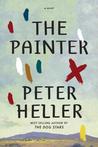
The Painter by Peter Heller

The Painter
"The way death is both near and infinitely remote, the way it freezes and somehow kindles the heat of something grotesque and maybe irresistible and sexy, which is life at its most desperate….this dark yearning is what happens when we idealize anything: the form of a woman, a landscape, a spiritual impulse. We move it closer to the realm of the dead, if not outright kill it."
Well. It’s a word Heller uses almost as punctuation throughout the novel, ending a thought, a conversation, a statement. The word has all the resonance of a bell, signaling the moment we must think for ourselves, decide its inflection, trust our narrator or not. Because we have here an artist who sees the world uniquely and reacts quickly, almost instinctively, to what he sees, to what he senses. He’s dangerous…until he is allowed to express and release his guilt and sadness over the death of his child, until he realizes he has a choice.

A couple of years ago I decided Heller’s debut The Dog Stars was one the best fiction books I’d read that year. After reading this novel I conclude that I am simply susceptible to his writing. His characters’ responses have a physicality so completely "other" from my own that I read his work with a deep curiosity. In this novel Heller addresses the nature of celebrity, the essence of evil, the knowledge of guilt, the awareness of choice, the balm of redemption.

A painter who likes to fish comes upon a man beating a tied horse. Meeting that man again in the dark while fishing a river, the painter kills the man.

I began by listening to this book on audio. I knew from the moment he began talking about fly fishing that I would read it, so I could go slow. Hot sun on cold water, a rushing river, a swirling pool, a limb casting shade…these things I must savor. When he mentioned cadmium yellow, I went out and got the paper copy.

Reading made this more accessible to me. When I saw the way the sections were divided, with gallery descriptions of paintings on display, and noted the spacing of paragraphs, everything slowed to the proper pace and got much more manageable. I sunk into this book like a lead weight through clear water. Heller hooked and played me, only to let me go at the end. It was fun; there is a little regret in being released.

Heller raises important questions about art, and the celebrity of art: does great art require emotional upheaval? He gives us his influences: Stegner, Hemingway, McCarthy, Beam (as in Jim Beam), Homer, Picasso, Delvaux. He answers the question he raises this way: Great art evokes emotion and the artist must be brave. Why brave? Because bravery is breathtaking, inspiring. Was Jim Stegner brave? Perhaps: not in the violence of his killings, but in his resistance to the characterization of criminal, of wrong-doing.
"Paintings [and novels] can take on a life of their own. It’s like stuff happens in them when you’re not looking. The crow and the horse started out as adversaries—I mean the crow would like to eat the horse, if he ever, say, jumped off the cliff and became a carcass. But instead they began to talk. I think maybe the crow cursed the horse. I told you that I thought the crow was telling the horse that he had a choice, that he didn’t have to jump after all. Well, I think that’s sort of like Eve biting the apple. You were talking about Genesis. I think it’s like that, the crow is like the serpent. He is giving the horse the awareness of choice. And with a full knowledge of choice comes a foreknowledge of death."
I can't let this review go without saying that Stegner's walk up to Ten Thousand Waves, the first sex scene with Sophia, and his description of a death-defying chase over mountains and through rivers felt positively lived. But the main argument--the grief-stricken father, the violence (thrice!), the celebrity--lacked some kind of convincing soul. I liked reading it anyway, but it struck me as a blue coyote.

Heller has the goods to write about nature, art, and us ordinary folk...what we feel when we feel deeply. We don't have to murder to screw everything up.

The audio is a Random House Audio production, read by Mark Deakins. The book in hardcover by Knopf is a lovely thing, printed as it is with the paintings’ description as section dividers. One may linger over those descriptions, getting a feel for size, for color, for sense.


You can buy this book here: Shop Indie Bookstores

Sunday, June 8, 2014

Any Other Name by Craig Johnson

Any Other Name (Walt Longmire, #10) The very first sentence of Johnson’s latest Longmire adventure mentions coal trains. Shortly afterward Lucian Connally, Longmire’s old boss and retired sheriff of Absaroka County, tells a story about ways to die on a coal train. I’m not giving anything away by saying that Longmire uses another of his (how many?) lives to escape a coal shuttle train in the course of his investigations. A little more ragged, a little more scarred, he limps toward the future that includes a very pregnant and emotional daughter Cady, and that irrepressible and foul-mouthed Under Sheriff Vic Morretti.

I don’t think I was aware of coal in Wyoming. “The single largest source of coal in the United States, the Powder River Basin contains one of the largest deposits in the world and has made Wyoming the top coal-producing state since the late eighties.” We hear a lot about coal in West Virginia, but I hadn’t thought about it in Wyoming. This information gave me the impetus I needed to look into the (unsurprising) Wyoming Senator John Barrasso’s position on recent changes to EPA standards on carbon emissions. I wish Walt would weigh in on the logic of his representatives. Something along the lines of “Which do you think is more important: our livelihoods or our lives?"

The timeline in this novel is short…I think all the action takes place in a matter of days. Longmire is not in Absaroka County, but in the neighboring Campbell County, where an old friend of Lucian’s has apparently killed himself. In investigating the death, Longmire uncovers a series of kidnappings of young women that no one in Campbell County seems to consider connected. Lucian describes Walt Longmire as a gun: “Once you point him and pull the trigger, it’s too late to change your mind…you’re going to find out [what the mystery is], one way or the other…I’ve never seen him quit, which is where most of ‘em ain’t up to snuff.” And Longmire doesn’t quit on this one, either, though he’d have plenty of reason to do so.

A white buffalo makes an appearance again in this episode, a symbol considered holy and rare and meaningful. Walt has two dream sequences of this creature, which might mean one’s desires will come to fruition, once at the beginning of the case and one near the end. The case was solved, but not without damage. You may need to refresh your memory about the myth by rereading a portion of the earlier episode, HELL IS EMPTY, in which Walt follows a band of escaped convicts to the Cloud Peak Wilderness Area to search for the grave of a victim called White Buffalo. The whiteout snow conditions featured in that earlier episode are reprised here as well. It sounds deadly.

We meet some new and unforgettable characters, including a young rookie, Corbin Dougherty, and the villain Curtis Hansen, nicknamed “Thor.” But mostly the legend of Walt Long-Arm-of-the-Law Longmire continues to build. Craig Johnson’s Longmire has a compelling view of law enforcement that considers shades of gray and has a dial for “intent.” We like him on our side, at our back, and on our bookshelves.


You can buy this book here: Shop Indie Bookstores

Sunday, January 26, 2014

Badluck Way by Bryce Andrews

It feels a privilege to read this acutely observed and deeply felt memoir by a thoughtful, literate, conservation-minded ranch hand in southwest Montana. He worked the Sun Ranch in the upper Madison River Valley of southwestern Montana only one year but did enough thinking for far more than that. In his early twenties, Andrews had experience working summers on a ranch outside of Billings, Montana, and was ready when he saw an advertisement for a six-month position as a Grazing Coordinator and Livestock Manager at the Sun Ranch.

Sun Ranch was centered in an important wildlife corridor in the Greater Yellowstone Ecosystem. Wolves had been reintroduced to the area, and there were large populations of elk as well as grizzlies, lynx, mountain lion, and wolverines. The idea was to integrate ranching into a functional natural ecosystem.

I have mixed feelings about cattle ranching in the west and Andrews does, too: “Often, I was tempted to construe ranching as nothing more than a protracted act of violence.” The fences needed to manage cattle are barriers to free-ranging wild herds, and cattle, managed properly or not, can cause enormous damage to a fragile landscape. But Andrews allows us to consider all this while he shares with us reminiscences that hallow our history in the west: he was a cowboy in the modern day.
“Day followed wild day, and over time amounted to a process of seasonal change. Immersion in that constant cycling was the ranch hand’s highest privilege.”

Wolves play an important part in this narrative. Since reintroduction, they had settled in the Madison River Valley, and one pack in particular, The Wedge Pack, lived above the ranch.
”The Wedge Pack, like most others, was a family unit centered on a single breeding pair. Aerial surveys had reported that two consecutive litters of pups had been successfully raised in the foothills and steep valleys behind the Sun…The ranch had been lucky last year. The wolves had stuck to killing elk, and the cattle had come home fat at the end of the summer.”

But the summer of 2006 was different, and the wolves changed up their diet to include Angus beef rather than just elk. Damage to the herd was responded to in the time-honored way: with a rifle. The revenge-killing of an alpha male wolf seemed to cut both ways for Andrews. Concerned with preservation of the wilderness and wildness of the area, he deplored the necessity of killing the predators in the ecosystem but recognized the necessity for it. “Like the Wedge Pack, we did our best to make a living from a hard place.”

Andrews is a wild thing also, like those wolves he talks about.
”Every night, at or after sunset, I ran the benches and hills of the Sun Ranch. I’ll admit I was looking for trouble. When I saw deer or elk from a long way off, I tried to sneak up on them. Using the features of the land—little dips and swales I had never noticed before—I did my best to get close.

It was wicked, feral fun. I drew near herds of deer, elk, and antelope, sometimes crawling on my hands and knees to stay hidden in the sage and grass. When the animals saw or smelled me, I sprinted toward them, scattering them to the horizon. They always left me in the dust, alone and smiling under a many-colored sky.

I chased everything I could—coyotes, jackrabbits, and a badger who unexpectedly turned to fight. Once, in a moment of extremely poor judgment, I ran a black bear up Moose Creek and then looked over my shoulder all the way back down. There was never any malice in it, only simple joy. I loved to feel the wind, lay claim to my landscape by crossing it, and watch the deer outpace me before disappearing in the rising night.”

Andrews managed to find a job that ordered the priorities in his life: he could be in places and do things he really enjoyed and that matter to him and the larger world. He stepped away from the noise of our everyday lives to observe, think, and write. “I am living at the center of my heart’s geography.” We are lucky he took the time to share his findings and remind us of cowboys and the wildlife corridors left in our hearts.

Marcie Stillman conducts a KUOW radio interview with Bryce Andrews that allows us to understand his motivations: “I was my best self when I was working out-of-doors.” “That landscape had beauty and brutality as its two defining qualities.”

The publisher's website has two short videos of Bryce Andrews talking about his work and his reading. I received a galley of this book from Netgalley in exchange for an honest review.


You can buy this book here: Shop Indie Bookstores

Monday, December 16, 2013

Spirit of Steamboat by Craig Johnson

Spirit of Steamboat: A Walt Longmire Story (Walt Longmire #9.1)
Johnson has gifted us a short, white-knuckled Christmas story that is likely to become a classic. We all know Sheriff Longmire and how he took over the chief law enforcement job in Absaroka County from old Lucian Connally. This story brings them back working together again on a cold and stormy night--Christmas Eve in Montana back in 1988.

This mad twosome seems to go out of its way to test the edges of possibility. In this story, they are doing it for all the right reasons, and at a time when most folks want to be cuddling at home with their families. Central to the action is an old copy of A Christmas Carol which you might want to glance at before or after this slim 100-page novella, just to put you in the mood. This story is just long enough to read after you have laid out gifts “from Santa” under the tree and before heading up to bed.

Bourbon is Connally’s drink of choice…you may want to salute him with a glass after reading this little act of crazy heroism. It does make a good story, a nice little gift for Santa to enjoy, just as though he/she were sitting around with his/her ‘buds’ telling tall tales late into the night…

Merry Christmas, one and all! Hope your year was a great one, but if it wasn’t, 2014 is just around the corner and you can begin again. This little novella is a gift you give yourself. It can be downloaded instantly or ordered in paper from the retailer or your choice using those percentage-off coupons you must be getting in your mailbox. Treat yourself!


You can buy this book here: Shop Indie Bookstores

Wednesday, December 11, 2013

Pinkerton's Great Detective by Beau Riffenburgh

Pinkerton's Great Detective: The Amazing Life and Times of James McParland
For folks who imagine themselves interested in working for the Secret Service, Homeland Security, the FBI, or as a spy, this book can tell you what it was like in the way back in America. You may find you don’t have the constitution for it after all.


This book is subtitled “The Amazing Life and Times of James McParland,” if that really was his name. McParland began his undercover career in the anthracite mines of Schuylkill County, Pennsylvania reporting on the murderous Molly Maguires in 1875. Remarkably, he was so intent upon keeping himself alive amidst the mayhem, he didn’t get to reporting on killings until after the deeds were done. Such was the violence of the crimes that first-hand observer McParland got physically ill…the stress of undercover work gave him severe intestinal problems and his hair fell out in handfuls.

Years of trials and testimony regarding events in Pennsylvania followed and then McParland went West, presumably to get away from those that knew his face. He pursued Butch Cassidy and the Sundance Kid, and worked to bring down strikers working with the Western Federation of Miners. Almost from the start, I admit I found myself disliking this “devout Catholic” who came to be “powerful, successful, and respected…Even decades later the hierarchy of the Catholic Church was still honoring him for his work…as well as for his devotion to the [Denver] parish and his many contributions to the building of Denver’s Cathedral of the Immaculate Conception.” My reservations about the man and my conflicted feelings about law enforcement in the early days of the West undoubtedly tell more about me than McParland. Perhaps popular movies about the period influence me still.

This dogged and detailed history is a must read for those interested in the Molly Maguires, The Wild Bunch, or the beginnings of Pinkerton’s undercover investigations and expansion out West. For those with a more cursory interest, flipping through will yield nuggets that stay with you on your journey to understand our historical underpinnings.


You can buy this book here: Shop Indie Bookstores

Tuesday, September 24, 2013

A Serpent's Tooth by Craig Johnson

A Serpent's Tooth (Walt Longmire, #9) I love this series and it never lets me down. And it didn't this time, either, though I did sense a change in tone. Johnson has a particular sense of humor that seems casual and learned at the same time. It is the result of thoughtful living, with the kind of distance that only long life can bestow. The same jokes or asides on the lips of a younger person would seem impertinent or studied, but somehow Johnson’s observations bring to mind that old cowboy hat Longmire uses--capacious enough to keep off a cold rain, but bruised and ratty with time and has seen better days.

Our old man sheriff has changed a bit--more hardbitten, furious, and full of vengeance. He is less composed and sure of himself and knows perhaps too much of the range of human cruelty. As a result, he is jumpy when it comes to criminal acts, and doesn’t always display that generous and reassuring control that I so appreciate in a law enforcement officer. He needs to be reminded to consider before exacting revenge for a loathsome act of arson.

Longmire references his mountain trip a few stories back in the series—the one where he very nearly met his maker—as a reason for his declining robustness and lack of patience when it comes to chasing suspects. He still takes extraordinary risks in his professional life: witness the fire rescue and facing the man who can throw a stiletto switchblade with uncanny accuracy. It is a little curious then, that Longmire doesn’t display that same risk-taking behavior in his personal life and grab hold of the opportunity that his beautiful and beloved deputy presents. He should jump her bones, marry her immediately, lock in that elusive chance for romantic happiness. At his age he should know how rare and fleeting a thing it is to find love, and how easily it slips away.


You can buy this book here: Shop Indie Bookstores

Tuesday, July 16, 2013

The Son by Philipp Meyer

Hardcover, 576 pages Pub May 28th 2013 by Ecco (first published September 1st 2012) ISBN13: 9780062120397

This is a big summer blockbuster of a novel—a huge book that can keep one occupied for days. The world looks a little different after a session with it—we feel wonder and regret in equal shares: wonder at human diversity and commonality evident at the same time; regret at our inability to comprehend this and share our bounty until it is too late.

Three generations of Texans represented by Eli, Peter, and Jeanne struggle through Comanche raids and the discovery of oil from the mid-nineteenth through the twentieth centuries. Eli is the "son" about whom the others revolve, and his life is the most finely described and keenly felt. But the time and distance we readers enjoy as the generations play out is what brings the book to fruition: life lessons and realizations about the human condition result.

Comparisons have been made of Philipp Meyer with Cormac McCarthy and I can see why: the country is that same hard, brutal, violent landscape that McCarthy paints so memorably. Meyer has his own style, however. Sentences are longer and in this novel the timeline is far longer. We see great expanses of the nineteenth and twentieth centuries through the eyes and voices of three generations. Meyer shifts point of view and time frequently, and he writes in the voice of a woman—an unusual woman that often thinks like a man, it could be argued—but that is something I don’t recall McCarthy attempting.

The threads come together at the end, and we see who sired whom, and which family is still standing. What is remarkable as the story unfolds, is how the large scope of the story smooths out the individual agonies and gives us instead a kind of justice—what we like to call divine justice—but it is really no more than human history to date. If it went on a little longer, perhaps, the wheel would have turned once again. There may be some in the future who have actually learned from our past, but judging from the folks that survive in this book, the hope is a faint one.
Jeanne : "But the slackening. By five she and her brothers were throwing loops. By ten she was at the branding fire. Her grandchildren were not good at anything and did not have much interest in anything either. She wondered if the Colonel would even recognize them as his descendants, felt briefly defensive for them, but of course it was true. Something was happening to the human race.

That is what all old people think, she decided…

When the first men arrived, she told them, there were mammoths, giant buffalo, giant horses, saber-toothed tigers, and giant bears. The American cheetah—the only animal on earth that could outrun a pronghorn antelope.

Her grandsons … went inside to watch television."

Jeanne: "Of course you wanted your children to have it better than you had. But at what point was it not better at all? People needed something to worry about or they would destroy themselves, and she thought of her grandchildren and all the grandchildren yet to come."

Eli: "That I’d done wrong was plain. I was not thick enough to believe I might have saved the ponies from Ranald Mackenzie’s troopers, but you could never say for certain. A single man can make a difference."

Eli: "Toshaway had been right: you had to love others more than you loved your own body, otherwise you would be destroyed, whether from the inside or out, it didn’t matter. You could butcher and pillage, but as long as you did it for people you loved, it never mattered…there is a myth about the West, that it was founded and ruled by loners, while the truth is just the opposite; the loner is a mental weakling, and was seen as such, and treated with suspicion. You did not live long without someone watching your back and there were very few people, white or Indian, who did not see a stranger in the night and invite him to join the campfire."

Peter: "To listen to the three of them talk about the death of Dutch Hollis, you might have thought there had been some accident, a lightning strike, flash flood, the hand of God. Not my son’s. Had to do it, acted on instinct, the sheriff just nodding away, sipping our whiskey, my father refilling his glass.

Considered interrupting them to note that the entire history of humanity is marked by a single inexorable movement—from animal instinct toward rational thought, from inborn behavior toward acquired knowledge. A half-grown panther abandoned in the wilderness will grow up to be a perfectly normal panther. But a half-grown child similarly abandoned will grow up into an unrecognizable savage, unfit for normal society. Yet there are those who insist the opposite: that we are creatures of instinct, like wolves."

Philipp Meyer is a remarkable writer. You really do not want to miss this big, absorbing saga. Meyer has written another novel, American Rust, which was likewise memorable, about living in the Rust Belt in Pennsylvania. These are, for the most part, books about men. But that is fine—he does this with great skill. I think I will always have Meyer on my list of must-reads.


You can buy this book here: Shop Indie Bookstores

Tuesday, January 29, 2013

Albert of Adelaide by Howard L. Anderson

Albert of Adelaide


This is a western, set in the bush of Australia, featuring some very unusual characters, among them a Tasmanian devil, a platypus, a wombat, some wallabies, dingoes, bandicoots, and memorably, a raccoon from California. Strange though it may seem, this is not a book for children, nor is it a story written by an Australian. Together, all these facts weave a wonderfully strange allegory of life’s circuitous journey to happiness and fulfillment and some measure of wisdom.

When a book appears outside of the usual genres, it must be difficult to market. But my favorite reader/writers have been raving about this book since its arrival on the scene in the summer of 2012. And so it goes by word of mouth, and I add my own to the paeans of praise.

Albert is a platypus. Naked and alone in his cage in the Adelaide zoo, he dreams of escape—to a life without incessant examination by “faces smeared with cotton candy and jaws that dribbled popcorn.” He has heard tell of “old Australia” which he conflates with “the Promised Land.” He jumps a freight train, heading north carrying a soft drink bottle filled with water…

Many bad things happen, but there are good things, too. “Old Australia” isn’t quite what Albert imagined, but he’s made some friends and sometimes he still dreams of finding a shady riverbank populated by friendly platypussies. Life is a journey, and in this, we travel along with a thoughtful, civilized life form, slow to anger but fierce in vengeance, who can tell a story that makes us see what we might have done better when we ourselves came upon a band of marauding wallaby, terrorizing dingoes, or facing down the brown snake in a cave or in our office.

We come to admire Albert, and wish him well. We’d like to know him, and sit about the campfire trading stories. What more can we ask of fiction?

A word about the author: he is American who has lived as a general roustabout, a perfect background for a writer. He is currently working in New Mexico as a public defender, where he represents people from Mexico charged with crimes north of the border. He is one of the living writers I’d most like to meet.

When an author tries something completely unusual, and succeeds, we need to take notice and support them in their endeavor. Buy this book. You can pass it on after you’ve had a chance to ramble the Outback.


You can buy this book here: Shop Indie Bookstores

Wednesday, July 18, 2012

As the Crow Flies by Craig Johnson

As The Crow Flies (Walt Longmire, #8)


Longmire seems less like a western sheriff and more like some generalized representation of Justice in this latest in the series. He calms wild fillies (Sheriff Lolo Long), handles wild dogs (Rez Dog), and doesn't pull his revolver when people (Clarence, Lonnie, Artie, Herbert) threaten him. He stays when he should go, and tries to talk his way to truth and safety. And so he does.

His daughter Katy weds, dressed in white buckskin. Longmire describes the scene for us: the scent of cedar, wild sage, and sweetgrass wafting over a meadow at the head of the valley that leads down to the springs. Hanging from poles set in a line, Indian paintbrush tied with pale blue ribbons stir in the breeze. Longmire is asked to give his daughter away and his Indian words “This is my daughter. He may take her” very nearly did me in.

As hard as it is for me to imagine such a kind figure as Sheriff, I am willing to suspend disbelief when Johnson comes out with a new story. This is a terrific series, and if you haven't begun yet, start out with The Cold Dish. Wyoming and Montana never seemed so interesting. Love the addition of Lolo Long, the tall, newly-minted reservation Sheriff just back from Iraq.


You can buy this book here: Shop Indie Bookstores

Wednesday, July 4, 2012

God's Country by Percival Everett

Percival Everett is an American national treasure. He has to be one of the most prolific and best authors you have never heard of. Several years ago I “discovered” him on the shelves of my local bookstore, and ever after have wondered why it took me so long to find him. Every book he writes is different from the one before, and he writes a lot. He is funny, inventive, real, clear, and looks truth hard in the face. I can’t figure out why books of his aren’t on every bookshelf in America. With his repertoire, everyone is bound to find one that makes them sit back in wonder at what he was able to accomplish with words alone.

This book is a western dressed as farce. But nothing is ever strictly one thing or another in Everett’s books, and as always, there is a deep red vein of truth running through it. Our narrator, Marder, runs into Colonel Custer who gives us a piece of his thinking:
”I suppose you’re all too familiar with the heinous activities of one Big Elk…That Indian’s scalp will be the crowning feather in my cap. The heathen has no respect for the ownership of land. I mean, we take it and they want it back, keep coming back. Hunting lands, they say. Fishing waters, they say. That’s not it, though. I know why…I’ll tell you why. To confuse me. To confuse us. To make us question ourselves, our values. We must have more land than we need. It’s essential to our maintaining a balance between greed and hypocrisy, between unhealthy subsistence and needless, uncontrolled growth…”

This is a book for a time when you are sunk in the absurdity of daily life and you seek affirmation, relief, companionship. But it will nudge you as well, for it will remind you that there are good people out there. We just have to be sure not to kill them all off.


You can buy this book here: Shop Indie Bookstores

Monday, August 22, 2011

Hell is Empty by Craig Johnson

Hell Is Empty (Walt Longmire, #7)


A couple of years ago I wrote that it takes a brave man to create a novel that parallels and paraphrases the greats like Shakespeare and Dante. But Johnson takes it on handily: everybody in this new addition to his Sheriff Longmire series reads Dante—a paperback copy makes its way through backpacks and winter whiteouts to mountain peaks and cabin hideouts. It makes me want to go back and wrassle with The Inferno some more. FBI agents, Indians, cops, murderers and gang-bangers--everyone finds something in Dante to quote and apply to their own situation. It helps, I suppose, to have created a long-running character called Virgil, but Johnson also gave us a Beatrice. Perhaps Johnson is letting us in on his grand scheme when he created such memorable characters in the first place.

There is a Homer, too. Homer doesn’t have a starring role, but comes back in with a refrain now and again—a friendly voice with words of warning for Sheriff Longmire who was tasked with turning over a group of misanthropes to a team of FBI taking them to jail sentences far from Wyoming. The turnover goes wrong, a winter storm closes the mountain pass, the convicts escape, and hostages are taken. Hell, it turns out, is not hot, but cold, just as Dante tells us.

Johnson has created characters in this series that make one so glad that we have a west so very different from our eastern shores. Lawmen, Indians, horses, wild animals—Johnson makes trekking big mountains palpable, and we wish, really wish, that we could actually meet people with such depths of compassion and friendly openness as we meet in his books. In this way, he reminds me of Maeve Binchy, who is one of the greats for translating everyday life into conversation. Both Binchy and Johnson write fiction that hints at romance, simply because we know it cannot be true, or real, but we wish it were so. Would it sound silly if I said he makes me proud to be American? Proud, not in the political sense, but in the sense that he has created people and a place and a history that I am glad I can claim is at least partly mine, if only because I am American, too. And I can go to Wyoming whenever I want.

I listened to this audiobook with great pleasure. Narrated by George Guidall, it seems a perfect vehicle for his voice. The reading is a perfect pairing of great writing and great reading.


You can buy this book here: Shop Indie Bookstores

Saturday, July 23, 2011

Wake of Forgiveness by Bruce Machart

Hardcover, 309 pages Pub October 21st 2010 by Houghton Mifflin Harcourt ISBN13: 9780151014439 Literary Awards: San Francisco Book Festival Prize Nominee for General Fiction (2011)

The book is a western in the broadest sense. It is really literature. The language is lush, exquisite, and unforgettable. The work is the debut (!) novel of a young man, but reads as if it were written by a much older man. If I tell you the book is black…dark like I have rarely read, you may be reluctant to dip your head in. But the title has the word forgiveness in it, and it is so. Forgiveness that falls like drops of rain on a parched and cracked soil. It is so unexpected, I didn’t trust it at first. But as one cruelty begets another, one kindness begets another, and so it is with forgiveness. It’s a lesson we need to see again and again to believe.

The main character, Karel, is the youngest of four brothers born to a Czech immigrant farming in Texas at the turn of the twentieth century. Karel’s birth killed his mother, leaving the family warped for the cooling comfort of a loving hand. Life was hard and could be cruel: the boys pulled the plow in the crusty ground until there was a permanent cant to their necks. The family has amassed a large landholding from neighboring farmers when Karel wins land bets jockeying ranch horses. One day a wealthy Spaniard with three nubile daughters makes a race wager.

There will be inevitable comparisons with Cormac McCarthy. Hardscrabble lives lived on the border is the same. The density of feeling is the same. The darkness is the same. I would like to make the case that McCarthy’s work has a lyricism when describing the nature, and the natural way of things, that seems age-old and universal while Wake... focusses more on the blackness in family relations, in men’s hearts. That is not to say Machart doesn’t “do” nature. He is more than skilled in describing the rain, the territory. But nature is not a character, the way it is so central in McCarthy’s work. Machart’s “black”:
“If anything, this was what Karel missed about the company of his brothers—their hardness and loathing had shored up his own, given him title to his own hatred. But there was something else: The older boys had also admired their father—his stubbornness and sharp tongue, the way he refused to beckon the help of other men—and so had Karel, and it was this admiration that he couldn’t cotton to. The reverence for a man you surely hated, the hard plaque of respect that all the bad blood couldn’t scour from your heart. This, too, he and his brothers had shared, and the bile of a common indigestion that rose from the two brands of unsuited feelings had been easier to swallow when there were others around who were burning inside with the same struggle to choke it down.”

Wake... reminds me of a New York Review of Books book that will be republished in 70 years to accolades. “He tells it like it was….” they will say, “A master of writing style…” It is classic, in the ways authors with great skill can paint pictures that seem indelible. But there are reasons why we would not want to wait 70 years to read it. We need to carry the lesson of forgiveness with us every day.

If you read and liked this book, I urge you to pick up another novel by a debut author that I was reminded of while reading Wake...: American Rust by Philipp Meyer, published by Random House. ...Rust won numerous awards, i.e., New York Times Notable Book of the Year, Economist Book of the Year (2009), A Washington Post Top Ten Book of (2009), Kansas City Star Top 100 Book of (2009), Newsweek's "Best. Books. Ever", but I don't think it made the bestseller lists. Don't let these great books languish.


You can buy this book here: Shop Indie Bookstores

Wednesday, March 2, 2011

Junkyard Dogs by Craig Johnson

Junkyard Dogs (Walt Longmire Series #6)


Craig Johnson's books, read by George Guidall, have something of the wise old dad about them. No matter that Walt Longmire, sheriff of Wyoming's Absaroka County, is not so old he doesn't lust after his deputy, the apple-assed Vic Moretti. That just makes him more of a man. And man he is. Bearing all manner of physical insult, he comes out on top once again, chasing his quarry through an 18" snowstorm high in the hills surrounding Red Lodge, Montana.

The ridiculous nature of the events that set off a chain of murders can only be based in truth because no novelist would create such stories for fear his tribe of readers would leave him for dead. In interviews Johnson tells us that he gets the basis for his outrageous stories from his friends in the police, so the one about the man cleaning the chimney in the middle of the winter with a rag soaked in kerosene, and tied with a rope to the bumper of a Durango, has got to be true. Hard as it is to believe. But it is the home-smoked flavor of these great western stories that make this series so...home grown. This is a series I allow myself to savor like a fine cigar. I pace myself, withholding the pleasure of beginning a new story until I feel I have earned a special treat. They are soothing to the soul, funny to the bone, candy for the brain, and oh-so-reassuring for those among us who fear wisdom eludes our public servants.