Showing posts with label America. Show all posts

Sunday, November 27, 2022

Bonfire of the Vanities by Tom Wolfe


Paperback, 690 pages, Pub October 30th 2001 by Dial Press Trade Paperback (first published November 1st 1987), Literary Awards: Ambassador Book Award for Fiction (1988), National Book Critics Circle Award Nominee for Fiction (1987)

This novel doesn’t read now the way it did to me as a younger reader. Deeply explicatory of the ways people arrange their brains to suit the facts that show them in the best light, it is a cynical book but not a cruel one. This is the way people act, moral or not, so we’d best take that feature into account when facing criminal charges.

First published on a fortnightly basis as a 27-part serialization in Rolling Stone magazine in 1984, this first novel of Tom Wolfe was later published, with revisions, by Farrar Straus & Giroux in 1987. With the book publication, Mr. Wolfe became a cause célèbre. He’d been disappointed with the reaction of the public to the magazine serialization and that earlier effort seems to have been almost lost to history:

From The Independent :
It felt all the more ironic given the book’s title. The first vanities bonfire happened in Florence, Italy in 1497 when supporters of friar Girolamo Savonarola publicly burned what they considered vain objects – books, art, music, anything deemed immoral. It’s easy to see Wolfe playing the part of Savonarola, eradicating all evidence of his early attempts at fiction.


A beautiful obituary of Wolfe in Rolling Stone magazine reminds us of Wolfe’s other work, highlighting the 2007 novel entitled, I Am Charlotte Simmons .

Considering Bonfire was Wolfe’s first novel, it was a marvel of description, capturing the technicolor of the Wall Street bond market, the holding pen in the Bronx Criminal Courts Building, as well as the well-padded offices of Reverend Bacon, the profitable nonprofit savant.

The language is the thing to enjoy here. Plot is not this book’s strong suit. I read with real admiration Wolfe’s description of a crime victim, shot dead in the back of a Cadillac: “The victim was a fat man with his hands on his legs, just above his knees, as if he were about to hitch up his pants to keep them from being stretched by his kneecaps.”

Somehow that description blew me away. The next sentence, how the rear window of the Cadillac looked like someone had thrown a pizza against it, confirmed that the victim himself had, in fact, been blown away.

Wolfe claimed in a couple places that there was truth in the saying that “A liberal is a conservative who has been arrested.” That’s his own ‘saying’ and the first time I read it I laughed. When I read it again, I wondered…I don’t think that is true anymore, fifty years later.

So, I am still scratching my head over the title. I am inclined to agree with another reader who has pointed out this is probably less of a bonfire of the vanities than a celebration of them, but perhaps the title refers to the main character, Sherman (Shuhmun) McCoy.

Sherman McCoy, whose name recalls the ‘real thing,’ is in fact, ‘the real McCoy’ insofar as he is a man untouched by human drama to this point in his life. Raised in wealth and working in bonds, he has hardly had occasion to consider what a ‘bump in the road’ might mean to the ordinary man on the street.

In the beginning, McCoy is fearful and respectful, still, of law enforcement and legal matters in general though gradually one can perceive his discernment increasing as time—and his opportunities for incarceration—go on. Perhaps the title is not meant as anything other than the notion that the innocence of man, in the larger and smaller senses, is set alight every day in urban America, were we only aware.


Thursday, September 29, 2022

After the Ivory Tower Falls by Will Bunch


Hardcover, 320 pages, Pub Aug 2, 2022 by William Morrow & Company, ISBN 9780063076990

Of all the theories I’ve examined in the past several years that might explain the ghastly social and political division in our society, the one proposed by political commentator and opinion writer for the Philadelphia Inquirer Will Bunch was one I hadn’t considered. His thesis, the insistence that we all attend college at age 18 or our employment futures are doomed, is one he insists is wrong-headed. The fact that colleges have become profit centers for bankers should give all of us pause. The lack of financial assistance and the subsequent vast raft of unpaid college debt is surely a burden on us all.

After WWII, the GI Bill offered inexpensive educational opportunities for returning servicemen and was so popular that the federal government attempted to extend similar possibilities to the general population in conjunction with state schools.

As Bunch explains it, Ronald Reagan was one of the first to express disdain for the leftist student protesters in the 1960s that the country was basically funding to go to school since the Second World War. Reagan tried to impose tuition increases and reminded taxpayers that ought not “subsidize intellectual curiosity,” but should focus on workplace development, an attitude that entered Republican consciousness and traveled underground until we saw it rear its head in 21st C Wisconsin with the rise of Scott Walker.

Wisconsin Governor Scott Walker left college in his third year, he was so set on school being a road a to a job. Once he got a job, with the Red Cross, what need did he have of an education? [Many of us, looking at his career and justifications for policy set while he was governor, might have much to say on this subject.] His under-financing of state schools within Wisconsin since his ascension to the governorship had tremendous impact on staff and educators, to say nothing of students. To witness the impoverishment of a state, one need look no further. The rural folk complained about the clueless ‘educated,’ all the while the actual educated were leaving the state to its misery by getting jobs elsewhere.

“College started becoming more expensive and less accessible right at the very moment it became critical for getting a job,” writes Bunch. Funding for higher education fell routinely in the 1980s and continued that trajectory: “in 1980, a Pell Grant covered 75 percent of the cost of attending instate public university, but today it’s roughly 30 percent.” No longer was higher education considered ‘public good.’

Funding was withheld from colleges and universities so that the promise of advancement via a debt-free education crumbled. If education were no longer available to ordinary folks without extraordinary funds, they claimed to become centers for “meritocracy.” The deserving, whether exceptional in talent, brains, or need, became the focus of college admissions.

Those with lower incomes “couldn’t afford” school that didn’t promise immediate employment; those with slightly higher risk profiles but no more money entered the debt economy. The change in prospects for younger folks put increasing pressure on their parents to pay for educations whose costs increased annually while state funding decreased in direct proportion.

Bunch suggests the rise of radio was a contributing factor in exacerbating division in rural America. All-day national talk radio was some of the only programming rural folks in many states could access, broadband not being universally available in the countryside. Blanket broadcasting is still happening in Pennsylvania with its wide rural expanses and radio talk show hosts appear to be hyped-up evangelists for grievance about the college-educated.

By the mid-2000s the college dream of meritocracy and affordability had come apart. High-wealth individuals like Jared Kushner were entering the best universities (Harvard) without proven intellectual gifts. College was a business, a business the entire country was paying to keep afloat. Goldman Sacs was even purchasing student debt by the early 2010s, not unlike their willing exposure to sub-prime housing loans. This was the currency of our disablement, the scam of higher ed.

The collapse of trust in the basic agreement—I pay tuition and you give me a job—parallels the widening gap between college graduates and high-school graduates. Political attitudes appear to be defined in its greatest sense by whether or not one attended college or simply high school. Bunch, a father himself, finds the whole discussion about college costs absurd. How can 18-yr-olds ever get out from behind the debt? High school students are essentially blank slates who have little clue what the world offers. Bunch suggests that perhaps instead of paying their debt, we give them a chance to earn their way into college through national service.

It is a good idea, an idea whose time has come and gone and come again. The idea will probably be the source of much further division among political parties, but if there were people seriously thinking about how to go about it, I think it may be time to get it started. Perhaps the naysayers can keep their kids on the corporate track, if they want. The rest of us can give our high school leavers the chance to spend a little time learning about the world firsthand, earning a wage, learning how to work, figuring out what they don’t want to do while thinking about 1) how to negotiate a better deal, and 2) how to keep the world from coming apart at the seams. It wouldn’t be time wasted. Count me a supporter.


Wednesday, July 20, 2022

Horse by Geraldine Brooks


Hardcover, 416 pages Pub June 2022 by Viking, ISBN13: 9780399562969


Horse, the story of a great racing stallion from Kentucky named Lexington, encompasses an arc of American history that cuts still today. Australian author Geraldine Brooks puts her finger on the sensitive places in America’s living history which we as a society have not yet resolved: our relationship with America’s early racial legacy, slavery.

The colonial powers of the 18th- and 19th centuries all have complicated histories with race, but America stands apart as a country built explicitly on the notion of equality for all men. The founders just didn’t ‘cotton’ the connection properly between Blackness, economic prosperity, rights and freedom. The Civil War was meant to set them straight, but it didn’t actually do that. There was nothing civil about it…then or now.

The horse Lexington, described on two continents as the “greatest racing stallion in American turf history,” and slavery have a shared history, both in reality and in this fiction. There are pre-Civil War written and painted records of Lexington’s groom and trainer, both Black men in Kentucky, a state which would hover in-between the Union and Confederate armies and be bled by both.

We hear the story of a White Union soldier who initially finds himself seeking out prisoners “to better understand their minds.” Gradually, he realizes those men “were lost to a narrative untethered to anything he recognized as true.” Author Brooks connects our history with America today.

In a Brooks novel, readers enjoy the author’s passions…for history, science, horses, art…and for her native land, Australia. Brooks doesn’t give her own country a pass in the race relations area, giving voice to a critic of Canberra’s policies. She successfully details examples of microaggressions, some that go out into the world and are recognized for such, just as they land, by all witnesses.

The embarrassment of recognizing one’s own prejudices spills onto the reader, making us cautious but willing to learn more about how these impulses buried deep inside suddenly materialize and how they impact those around us. One of the more interesting characters who brings out the reader’s prejudices remains sketched only lightly in the background: a gruff woman of diminished means who throws out on the sidewalk an old and dirty painting of a horse and to whom we impute a nasty attitude totally dissimilar to our own good intentions.

Horse is a wonderful read, filled with surprising discoveries and twists we do not see coming. In the Afterword, Brooks reminds us that her husband, Tony Horwitz, was a Civil War historian who approved of her turn towards this history in her novel before his untimely and sudden death in 2019. What a wonder that this terrific book was birthed in midst of such great sorrow and loss.


Monday, March 21, 2022

We're Still Here: Pain and Politics in the Heart of America by Jennifer M. Silva


Hardcover, 224 pages Pub Aug 1st 2019, Oxford University Press, ISBN13: 9780190888046

I don’t quite know what to make of this book. I read it because I now live in a state a large portion of whose population is deluged with far right TV and talk radio. A large number of people do not have broadband and therefore often do not know there are newspapers and TV stations which make an effort to substantiate news.

There is a disparity in information: the rural areas have been kept the equivalent of “barefoot and pregnant” by a state legislature that couldn't figure out how to fund failing schools and provide broadband.

This book is a study of Jennifer Silva’s time interviewing residents of a former coal town in Pennsylvania, finding out what their lives are like, how they see their personal and professional trajectories, and who they vote for and why.

Not being a social scientist, I found the stories Dr. Silva shares with us confounding. Maybe someone can come up with solutions for these folks, but the reason they don’t vote is that they basically don’t trust anyone after the life they’ve led. In one of the first couples described to us, Silva writes,
“They are not single-issue voters who prioritize social issues such as abortion or fund control over economic interests, not do they place themselves into clear-cut categories of Republican or Democrat, liberal or conservative. Most of the time, as they attempt to come to terms with their past traumas and future anxieties, they do not think about politics at all.”

Right. Silva’s mentor/thesis advisor might have anticipated this and suggested a less-stressed environment. If Silva was just wondering what was going on in towns like Coal Brook, I would understand that, too, but she admits she’d been hoping to find out what white rural conservatives were thinking about politics when she began.

Soon enough she found out her interviewees were unschooled and inarticulate on the subject of “politics.” She did hear, though, these white residents’ dissatisfaction with Black and Latin “newcomers” to the coal region, former city dwellers and immigrants. So she changed her focus a little to include the newcomers. That was smart, and refocused this work into something approaching Arlie Russell Hochschild’s award-winning Strangers in Their Own Land.

Maybe someone, after reading outcomes for poor white folks who grew up in an abandoned coal town or poor city dwellers who moved in to live inexpensively and get away from inner-city violence, will figure out a way to point these folks in a different direction, in the direction of a life that is more fulfilling and less crushing. But this is way outside my wheelhouse.

Wednesday, July 31, 2019

Gerrymandering in America by Anthony J. McGann, Charles Anthony Smith, Michael Latner, Alex Keena

Paperback, 272 pgs, Pub July 11th 2017 by Cambridge University Press, ISBN13: 9781316507674

This academic look at gerrymandering—how to measure it, how one does it most effectively, and what exactly are its effects—was published in 2016 by Cambridge University Press—yes, the British one. One author, Anthony McGann, is from Glasgow. The other three authors, Charles A Smith, Michael Latner, and Alex Keena, are all professors from CA institutions.

For someone new to the term gerrymandering, this definitely won’t be the easiest entry, but to someone more familiar, it has enlightening bits. They talk quite a lot about Pennsylvania, one of the worst gerrymandered states in the country. You may have heard the State Supreme Court in PA deemed the congressional maps so egregiously gerrymandered they ended up providing a new map to a recalcitrant state legislature in 2018.

After 2011 redistricting, though Democrats had won over 50% of the votes for congresspeople in the state, they managed to win only 5 of 18 congressional seats. After the State Supreme Court passed down the new maps in 2018, Democrats won 9 of 18 seats.

Actually, depending on where Democrats reside, there is no reason why 50% of votes should necessarily translate into half the seats. No one really cared if they didn’t. It was the relative skew that was offensive, and the ugly fact that the state legislators in office did nothing with their supermajority but pass innocuous resolutions, e.g., Dec 12 is Polar Bear Day, and Sept 13 is Healthy Heart Day, and avoid talking about the 18 cities in PA, including Pittsburgh, with lead levels higher than Flint, Michigan.

In Pennsylvania (and Wisconsin and Michigan and…) today, voters must face the horrible problem of having their state legislative districts so gerrymandered that no one will even run against incumbents. We can’t even vote the crooks out.

After the June 2019 SCOTUS decision not to deal with any more gerrymandering problems in federal courts, disenfranchised voters will be forced to bring maps redistricted after the 2020 Census through the state courts again. Meanwhile, nonpartisan volunteer organizations are blanketing the state with petitions to urge legislators to “do the right thing” and voluntarily give up their constitutional right to draw district lines, for the sake of fairness and democracy. So far, legislators haven’t shown interest in anybody's constitutional rights beyond their own.

Claims have been made by some that the self-sorting voters do along partisan lines into cities and rural areas is responsible for the bias in results, not the intentional gerrymander. However, these scholars have concluded self-sorting is not responsible for the extent of the bias in results, and gives examples of several states also with city/rural dichotomies that do not exhibit partisan bias. Many states exhibit extreme partisan bias, Pennsylvania among them.

There is a trade-off between seat maximization and incumbent protection. Regions with competitors packed into one district have extraordinary non-responsive voting blocks in the surrounding districts.
"Put bluntly, if you can pack your opponents into a single district where they win 80% of the vote, you can create [surrounding] districts where you have a 7.5% advantage. It is notable that the number of “incumbent protection” districting plans declined sharply between 2002 and 2012. It seems that more states are districting for national partisan advantage, even though it makes their incumbents slightly more vulnerable.”
The authors make a distinction between partisan bias and responsiveness. “If there is partisan bias, then one party is advantaged over the other…If a districting system has high responsiveness, then it gives an advantage to the larger party, whichever party that happens to be.”

Worst of all, in reviewing what I wanted to say about the pitiable position Pennsylvania’s manipulative legislators have left us in, near the top of the Top Ten Exhibiting Partisan Bias… worst yet is that the states above Pennsylvania in #4 place are states we never hear anything about. No, they are NOT Michigan, Ohio, Wisconsin North Carolina, or Maryland. They are Alabama, Mississippi, Missouri, states with large populations of African American voters so used to being beat up and beat down they don’t even protest anymore. Of course the government is going to steal their vote. Oh, it is enraging.
“...districting is mathematically a very, very difficult problem...”
The California independent redistricting commission may have been partly modeled on the British iteration, called Boundary Commissions. Boundary Commissions are explicitly forbidden from considering partisan data when deciding their maps. This has actually led, in CA as well, to skews that were unintentional but partisan in fact. As a result, CA commissions have made the unusual request that they must consider partisan data in order to avoid it.

A summary of the difference between Boundary Commissions and U.S. election districts and commissions: 1) Britain is not two party, which makes a huge difference in the attempt to gerrymander. People have been known to calculate their vote in order to stymie any gerrymander. That is, there is tactical voting. 2) A source of bias is not a gerrymander but is caused by differential turnout. “Labour tends to win when fewer people vote.” 3) Districts are not the same size nor same population as is required in U.S. congressional and legislative districts. This presents a small bias towards Labour. 4) The authors are not sure what the last advantage is: “If there is something about geographical distribution of support that has given Labour an advantage, it is not clear what it is.” One explanation…is that Labour appears disproportionately successful at winning close races.

Anyway, they conclude there was a partisan bias in Britain for whatever reason after 2010, but it seems to have disappeared by 2015. The Boundary Commissions have no real effect at preventing partisan bias because it explicitly cannot take partisan bias into account: “Fairness between the political parties is not a factor that can be considered.”


Thursday, July 25, 2019

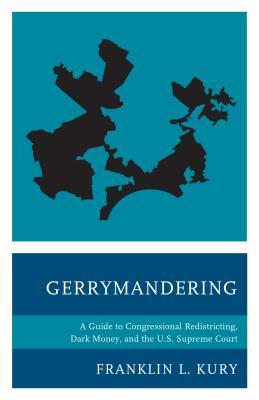
Gerrymandering by Franklin L. Kury

Paperback, 132 pgs, Pub May 4th 2018 by Hamilton, ISBN13: 9780761870258

Franklin Kury is a former member of the Pennsylvania State Senate, serving 1973-1980. Just last year he published a book about Pennsylvania’s bout of gerrymandering after the 2010 census, documented as one of the worst in the nation.

The League of Women Voters challenge to the maps yielded a win for voters. In 2018 the state Supreme Court handed down what has turned out to be a landmark ruling:
“For the first time, those seeking a new Congressional districting plan went to the state courts and relied solely on state law.”
SCOTUS relied on this ruling as they looked at gerrymandering in their decision handed down at the end of June 2019. SCOTUS decided it would not decide gerrymander cases through the judiciary at the federal level because it is inherently political. They cited the PA decision to show that state courts can decide these things, effectively handing the fight back to the states.

Gerrymandered states wonder what exactly that means. If the judiciary at the federal level can’t make the call on what is a gerrymander, why can the state courts decide these things? This is the source of the disagreement between the assent and dissent on the latest SCOTUS decision concerning gerrymandering.

Kury’s book came out before the latest SCOTUS decision, so is merely speculative on how the court would weigh in. Meanwhile, he describes the problem Pennsylvania continues to have with gerrymanders in the electoral districts for state legislative offices. According to the PA constitution, “municipalities and counties should not be divided more than is required by population plus one.”

By that criterion, Pennsylvania’s Butler County should have three state house members, but has seven. It also has three senators, when it should have only one based upon population. Montgomery County should have 13 state house members but it has 18 and twice as many senators -- 6 v. 3. The list goes on. And that doesn’t even touch the problem of cities, chopped to bits, pieces of which are roped in with their rural surrounds.

Pennsylvania’s legislative electoral maps effectively shut out all but one party in power. That party, the Republicans, have such a firm hold on their caucus they don’t even primary their candidates. They hold private local meetings wherein they choose who will go on the ballot. There is only one candidate per office when it comes time to primary. And of course the general has that same single candidate once again.

The minority challenger party can have a raft of candidates to choose from, but because they are not using ranked-choice voting, sometimes a less desirable candidate comes up higher on the list than anyone wants. And since Republican ballots are single candidates, Dems with more than one candidate per office will suffer the count. Don’t even mention Independents or third-party voters: they can’t vote in primaries unless they register with one of the major parties.

Kury’s book explains where the term ‘gerrymandering’ comes from and moves quickly to discussing RedMAP and the Republican attempt to take back the House of Representatives, which they calculated might be done by focusing on ‘cheaper’ state races and controlling redistricting. By ‘cheaper’ they meant less expensive purchases of advertisements, events, and media influencers than trying to put in national candidates the same way. They were right about that.

What is riveting about gerrymandering is that it is so clearly unfair. Pennsylvania is a state that used to take its fairness and integrity seriously. Once awakened to partisan gerrymandering, it is difficult not to see it everywhere. Even states who have tried to fix the problem by instituting an independent citizens redistricting commission have been accused of gerrymandering because of their mapping choices. Kury writes up a few of the more famous instances of independent commissions, which it turns out, come in many different sizes and with a wide range of decision-making authority.

Best of all, Kury’s book lists resources that will help any individual struggling with redistricting issues in their own state to find what happened elsewhere. He discusses redistricting software and some of the issues that arise when one tries to map districts from scratch. That’s the thing with gerrymandering: one wants to see how others dealt with it to see if their solutions will work. For Pennsylvania, the struggle to claw back voters rights continues.

Sunday, July 7, 2019

Beating Guns: Hope for People Who Are Weary of Violence by Shane Clairborne & Michael Martin

Paperback, 288 pgs, Pub March 5th 2019 by Brazos Press, ISBN13: 9781587434136


Shane Clairborne, Christian activist and motivational speaker, and Michael Martin, former Mennonite pastor and founder of RAWtools.com, a company that turns donated weapons into gardening tools, wrote this book about the work they do together. Tired of gun violence in America, the two are traveling the country and speaking out to remind us we are not where we want to be as a country.

Research shows that most Americans already agree with them. Why are our children still dying in mass shootings? We are being help hostage by a profit-making industry that cares little about the lives lost to inadequate gun controls; our “religious right” is actually wrong and has only been mouthing Christianity and not living it; there is a skewed religiosity and a profit motive among preachers and teachers as well, like Jerry Falwell Jr at Liberty University. The words of these two authors reassure me that my reason has not been deceived: I have long thought there is a rot somewhere in traditional religions that is killing the source of our morality.

This long conversational history rounds the bases on reasons we should consider turning our guns into garden tools and shares the sources of the authors’ own decision to spend their energies on this effort. They teach, better than any pastor I’ve heard in many years. They quote the Bible, Jesus, and leaders of nonviolence movements in the past, pointing to the undeniable bottom line that Christians are not meant to arm themselves against those who come to hurt them. They are meant to do as Jesus did during his years on earth: defuse the situation, change the subject, turn the other cheek, and yes, die for one’s beliefs. Because the idea for which he died will never die.

Every few pages, like tombstone markers, pages describe one or another incident of gun violence, naming the victims and reminding us of the circumstances. Most of these twenty or so tombstones are as familiar to us as our own names, horrific and shocking incidences of unnecessary and impersonal violence by people mad with delusion. It is hard to understand how our politicians dare stand in front of us; dare to speak a word to us without offering to protect us by controlling guns.

Shane and Mike have done their research on the NRA, and do not hesitate to point to the ways our nation’s dialogue has been warped by the nominally nonprofit’s profit motive. The NRA boasts some five million members. If we do the math—one-third of 325 million U.S. residents are gun owners—over 90 percent of gun owners are not represented by the NRA. But their lobbying arm keeps politicians flush with cash for their campaigns. This trade-off should be outlawed, but even our courts have refused to look after the people’s interests with regard to this matter.

A chapter detailing “the absurd” of pride in gun ownership recount instances of folly: an instance where a groom posing with a rifle at his wedding accidentally shoots his photographer. Or the Hello Kitty assault rifle handled by a seven-year-old that managed to kill a three-year-old.

In a chapter named “Mythbusting” the authors address things we might be persuaded to believe without evidence, like “Stranger Danger.” Actually, we’re far more likely to be killed by people we know well. Regarding the old standby, “Guns Keep Us Safe,” the argument is so shopworn by now that statistics start to sound like “the absurd” chapter. The men discuss race and guns, veterans and guns, women and guns, and they quote Justice John Paul Stevens of the U.S. Supreme Court as saying the Second Amendment is “a relic of the 18th century.”

This is a worthwhile book, giving us the language and statistics we will need to surprise our opponents into silence, unable to find a reasonable comeback if we are using logic and not emotion. The U.S. has about 270 million guns in circulation, 42% of guns in the world, or 90 for every 100 people. Forty-four percent of Americans personally know someone who has been shot, accidentally or intentionally. Christians are challenged to explain the fact that 41% of white evangelicals own a gun, compared to 30% of the general population. The authors ridicule the defenses they’ve heard for gun ownership among religious people and point out that Jesus teaches countering aggression with creativity, not submission:
”evil can be opposed without being mirrored…oppressors can be resisted without being emulated…enemies can be neutralized without being destroyed.”
Finally the authors remind us that the opposite of love is not hate, but fear. They explain that “fear not” is the most reiterated commandment n the Bible and that powerful people who are afraid are the most dangerous elements in the world. We really do have more to fear from fear itself. We need courage to stand in front of armed neighbors and say no to guns, but these men are handing us the tools.

Shane Clairborne is a Philadelphian when he’s at home, and is founder of The Simple Way, a social services organization in Philly. He is President of Red Letter Christians, a Christian group which mobilizes individuals into a movement of believers who live out Jesus’ counter-cultural teachings and tries to combine Jesus and justice.

Michael Martin teaches nonviolent confrontational skills in addition to beating weapons into ploughshares. These are the kind of Christians I like and admire and would travel to hear.


Saturday, July 6, 2019

The Moment of Lift by Melinda Gates

Hardcover, 273 pgs, Pub April 23rd 2019 by Flatiron Books, ISBN13: 9781250313577

Melinda Gates has a famous name and job, but who knows what she actually does? Running a foundation with assets exceeding that of many countries must carry enormous stresses, particularly for people who understand that injecting cash into a problem may actually make the problem grow. What courage it must take just to try.

This had to have been a hard book to write, what with a crushing schedule, children, and weighty responsibilities, to say nothing of the disparate and discrete problems of women on different continents. I am not saying there aren’t similarities among women’s experiences the world over; I’m saying that, perhaps for the purposes of this book, on each continent Gates honed in on a different critical problem among women that she might be able to affect. In Africa, she showed us women responsible for field work and cultivation. In South Asia, we look at sex workers. In America, it was education. In every country the message was about empowerment and equality.

Gates sounds tentative and naïve to begin which may help her audience connect with her experience. But she has some insights sprinkled all the way along as we follow her progress from Catholic-school Texan to one of the few female programmers at a gung-ho win-at-any-cost Microsoft. Two early insights:
“I soon saw that if we are going to take our place as equals with men, it won’t come from winning our rights one by one or step by step; we’ll win our rights in waves as we become empowered…If you want to lift up humanity, empower women.”
Gates wonders how she could have missed these two insights early in her foundation work, and I did, too, considering this was something Hillary Clinton hammered pretty hard during her years as First Lady and Secretary of State. Both Gates and Clinton had international reach and the massive resources to understand exactly where the latch was to unleash potential and creativity. Why Gates never mentions Clinton is a mystery, unless she is trying assiduously to avoid any political fallout. That can't be right, though, as Gates is pretty fearless weighing in on religious issues which have become political.

When speaking of her Catholicism and her support for birth control, that is, the notion that women must be able to control their own births, Gates says that religion and birth control should not be incompatible. She feels on strong moral ground and welcomes guidance from priests, nuns, and laypeople but “ultimately moral questions are personal questions. Majorities don’t matter on issues of conscience.” Drop mike. My hero. She gives me language to speak to critics who wish to roll back women’s right to choose. It’s not an easy decision but it is a woman’s decision. Otherwise, Christian critics, why did God give this ability to women alone?

Melinda shares some empowerment struggles of her own—in a company and in a household with Bill Gates. She was intimidated, but can you blame her? With support from Bill and from colleagues and friends, she managed to develop her innate ability to cooperate and thereby manage high-performing teams, both at the company and later at the foundation.

Later, Gates asks how does disrespect for women grow within a child suckling at his mother’s breast? Gates places the blame squarely on religion: “Disrespect for women grows when religions are dominated by men.” That is a brave stance, the articulation of which I am grateful. I also came to that conclusion, and it felt a lonely one. I wondered how my moral grounding felt so strong when I learned what I had in the Catholic tradition also. Perhaps our reactions are something along the lines of the questioning, probing Jesuitical tradition?
“Bias against women is perhaps humanity’s oldest prejudice, and not only are religions our oldest institutions, but they change more slowly and grudgingly than all the others—which means they hold on to their biases and blind spots longer.”
When she is wrapping up, Gates shares something that will help all of us in this country as we struggle through the next period, trying to avoid the dangers of political and ideological attacks (from within!) on our constitution and on our future development and ability to face the existential dangers of climate change. She gives examples of women who have brought peace to warring factions in their country and says
”Many social movements are driven by the same combination—strong activism and the ability to take pain without passing it on. Anyone who can combine those two finds a voice with a moral force.”
This, I submit, could be the very key to unlocking the potential of our future. Conservatives complain relentlessly about the yapping left. Essentially, I agree. We have to stop going to the least common denominator.

Women! stand up and show them how to both nurture and progress. Democrats and Republicans, we have way more in common as women than we have differences as political animals. And we have as much at stake. Those who are already empowered can make decisions on their own, so aren’t intimidated by women who may occasionally disagree. Isn't this how we learn? Those who seek empowerment can find it with other women, so join us. I definitely think there is room to work together to achieve something we haven’t yet managed here in the U.S. and need badly: coherence.

Gates’ last point is one close to the hearts of every mother, teacher, groundbreaker:
“Every society says its outsiders are the problem. But outsiders are not the problem; the urge to create outsiders is the problem. Overcoming that urge is our greatest challenge and our greatest promise."
The Left is in agreement with the Right that every member of society must contribute something. No one wants to think they do not contribute. It is up to us to find ways for everyone to do so. And to those who insist they “got where they did by themselves,” well, go live by yourself. Praise your great wealth by looking in the mirror.

Gates has written a thought-provoking and generous book, sharing much of what she has been given.


Wednesday, June 12, 2019

Lead from the Outside by Stacey Abrams

Paperback, 256 pgs, Pub March 26th 2019 by Picador (first published April 24th 2018), ISBN13: 9781250214805

Stacey Abrams learned to not always kick directly at her goal. Watching her stand back and assess a situation can be a fearsome thing. You know she is going to do something oh-so-effective and she is going to use her team to get there, those who mentored her and those she mentored herself. I just love that teamwork.

This memoir is unlike any other presidential-hopeful memoir out there. Abrams has not declared herself for the 2020 race, but running for president is on her to-do list. I read the library edition of her book quickly and wondered why she’d write it this way; she’s a writer and this is written in a workbook self-help style. But something she’d said about ambition was so clarifying and electrifying that I ended up buying the book to study what she was doing.
“Ambition should be an animation of soul…a disquiet that requires you to take action…Ambition means being proactive…If you can walk away [from your ambition] for days, weeks, or years at a time, it is not an ambition—it’s a wish.”
Ambition is not something you can be passive about. You feel you must act on it or you will regret it all your days. Ambition should not a job title but something that helps you to answer “why”.

Now I know why Abrams wrote her book like this. After all, she could have written whatever kind of book she wanted. Her ambition is to have readers feel strong and capable enough to do whatever they put their minds to, whether it is to aid someone in office or be that person in office. She learned a lot on her path to this place and she doesn’t necessarily want to get to the top of the mountain without her cohort. Her ambition is not an office, it is a result.

What Abrams relates about her failures is most instructive. After all, none of us achieve all we set our minds to, at least on the first try. But Abrams shows that one has to be relentlessly honest with oneself about one’s advantages and deficiencies, even asking others in case one’s own interpretations are skewed by fear or previous failure. By writing her book this way, Abrams is unapologetic about some areas she could have handled better, personal finances for instance, that could have been used as a weapon against her. She explains her situation at the time and recommends better pathways for those who follow.

A former member of the Georgia State Legislature, Abrams found herself a different breed of politician than most who had achieved that rank. She was less attuned to social sway than she was to marshaling her intellect to overcome roadblocks to effective legislation. This undoubtedly had some genesis in the reactions she’d gotten her entire life as a black woman. She wasn’t going to wait for folks to accept her; she planned to take her earned seat at the table but she was going to be prepared.

She found that she needed both skills to succeed in business and in politics. She needed the support of a base and she needed an understanding of what would move the ball forward. And she learned what real power means.
“Access to real power also acknowledges that sometimes we need to collaborate rather than compete. We have to work with our least favorite colleague or with folks whose ideologies differ greatly from our own…But working together for a common end, if not for the same reason, means that more can be accomplished.”
Abrams discusses strategies and tactics for acquiring and wielding power and reminds us that “sometimes winning takes longer than we hope” and leaders facing long odds on worthy goals best be prepared for the “slow-burn” where victory doesn’t arrive quickly. But every small victory or single act of defiance can inspire someone else to take action.

If defeat is inevitable, reevaluate. Abrams suggests that one may need to change the rules of engagement so that instead of a ‘win’ one may be happy to ‘stay alive’ to fight another day.

The last fifty pages of the book put words to things we may know but haven’t articulated before. Abrams acknowledges that beliefs are anchors which help to direct us in decision-making but should never be used to block critical thinking, reasonable compromise, and thoughtful engagement.
“Collaboration and compromise are necessary tools in gaining and holding power.”
The GOP also believes this, but I think they use the notion within their coalition: they use discipline to keep their team in order and members may need to compromise their values to stay in the power group. Democrats must hold onto the notion of compromise within and without their coalition to succeed, while never compromising values.

It is difficult to believe there is anyone out there who doesn’t admire Stacey Abrams’ guts and perseverance. Her friends stood by her in times of stress because Abrams made efforts to acknowledge her weaknesses while not allowing them to break down her spirit. She built every pillar of the leadership role she talks about and can stand before us, challenging us to do the same. She is a powerhouse.


Thursday, May 9, 2019

On Earth We're Briefly Gorgeous by Ocean Vuong

Hardcover, 256 pgs, Expected publication: June 4th 2019 by Penguin Press, ISBN13: 9780525562023

This work is called a novel but it is a ball of flame tossed into a dark night, blinding, brilliant, searing. Who knows if it is poetry or novel or memoir; the language fills the mouth and is saturated with truth. We recognize it. We’ve tasted it. We are pained by it. It still hurts.

Something here is reminiscent of the epic poetry of Homer. Life's brutality, man’s frailty, the odyssey, the clash of civilizations, the incomparable language undeniably capturing human experience, these things make Vuong someone who heightens our awareness, deepens our experience, shocks us into acknowledgement of our shared experiences. What have we in common with a Greek of ancient times singing of a war and the personal trials of man? What have we in common with a gay immigrant boy writing of war and the personal trials of man?

The story is clear enough but fragmentary. In a Nov 2017 LitHub interview, Vuong tells us
”I’m writing a novel composed of woven inter-genre fragments. To me, a book made entirely out of unbridged fractures feels most faithful to the physical and psychological displacement I experience as a human being. I’m interested in a novel that consciously rejects the notion that something has to be whole in order to tell a complete story. I also want to interrogate the arbitrary measurements of a “successful” literary work, particularly as it relates to canonical Western values. For example, we traditionally privilege congruency and balance in fiction, we want our themes linked, our conflicts “resolved,” and our plots “ironed out.” But when one arrives at the page through colonized, plundered, and erased histories and diasporas, to write a smooth and cohesive novel is to ultimately write a lie. In a way, I’m curious about a work that rejects its patriarchal predecessors as a way of accepting its fissured self. I think, perennially, of Theresa Hak Kyung Cha’s Dictée. This resistance to dominant convention is not only the isolated concern of marginalized writers—but all writers—and perhaps especially white writers, who can gain so much by questioning how the ways we value art can replicate the very oppressive legacies we strive to end.”
The novel he speaks of is this one. I did not understand that paragraph when I first read it as well as I do now. I am more aware, too, having looked closely for the Western world’s acknowledged historical tendency to erase or ignore pieces of experience not congruent with their own worldview.

The language Vuong brings is exquisite and extraordinary: “The fluorescent hums steady above them, as if the scene is a dream the light is having.” “…the thing about beauty is that it’s only beautiful outside of itself.” “The carpet under his bare feet is shiny as spilled oil from years of wear.” “…repeating piles of rotted firewood, the oily mounds gone mushy…” “He had a thick face and pomaded hair, even at this hour, like Elvis on on his last day on earth.”

Vuong repeats motifs to tie the experiences of one person to the rest of his life, to tie one person’s experiences to those of others: “I’m at war.” “We cracked up. We cracked open.” “…you never see yourself if you’re the sun. You don’t even know where you are in the sky.” “…my cheek bone stinging from the first blow.” “I was yellow.”

A teen, immigrated to the U.S. from Vietnam with his mother, grandmother, and aunt finds himself fleeing his “shitty high school to spend [his] days in New York lost in library stacks,” from whence he, first in this family to go to college, squanders his opportunity on an English degree.

The teen discovers his gayness and does not flee it, though his white lover agonizes and denies all his life. We watch that boy fall, wither, die under the scourge of fentanyl and opioid addiction and Vuong places the scourge in the wider context of an awry world.

Despite (or perhaps because of) the fragmented, shattered nature of the tale, there is a real momentum to this novel, Vuong telling us things not articulated in this way before: a familiar war from a new angle, the friction burn of the immigrant experience, the roughness of gay sex, the madness of living untethered in the world. The language is so precise, so surprising, so wide-awake and fresh, that we read to see.

Last year, in September of 2018, I reviewed Vuong’s first book of poetry, Night Sky with Exit Wounds. The poems had many of the same tendencies toward epic poetry—they were big, and meaningful. Below I have attached a short video of Vuong reading from that collection to give you some idea of his power.


Among his honors, he is a recipient of the 2014 Ruth Lilly/Sargent Rosenberg fellowship from the Poetry Foundation, a 2016 Whiting Award, and the 2017 T.S. Eliot Prize. He is an Assistant Professor in the MFA Program for Writers at the University of Massachusetts at Amherst. He is thirty years old.


Sunday, May 5, 2019

Shortest Way Home by Pete Buttigieg

Hardcover, 352 pgs, Pub February 12th 2019 by Liveright, ISBN13: 9781631494369

Since beginning Buttigieg's book, I have travelled across the country and spoken with lots of folks outside of my usual cabal. Nearly everyone I spoke with had heard of Buttigieg, current Mayor of South Bend, Indiana, running for President as a Democratic candidate. Only one of the people I spoke with mentioned his homosexuality as a reason for his possible failure to connect, and the same person was also skeptical about his age.

Buttigieg himself would remind voters that his age has been the thing that conversely has energized people, particularly older voters, who recognize that their generation left his generation with a big problem when it comes to climate change. Older people who have no stake in what will come are unlikely to move the needle as far and as fast as it needs to move. Time to step aside and hope for fresh ideas. At least that is what Buttigieg is peddling.

When I listen to him talk, I agree. I just want all the old men and women who have left both parties in a shambles with attempts to hold onto power (What power do they exhibit, may I ask? It’s positively derisive.) to leave the stage asap.

This book is easy enough to read, though does not rank with Barack Obama’s Dreams from My Father which broke the mold on literary presidential memoirs. Truthfully, I picked up the book in the midst of an infatuation with Buttigieg’s calm sense and blunt assessments, and before I finished, I felt the bloom had left the rose. I still admire him and definitely consider him a frontrunner but I am not infatuated anymore. This is a good thing. I go into my support of his candidacy with a clear head.

Buttigieg is genuinely talented in languages, and it makes one wish we learned what he did from his linguist mother. One of my favorite of his stories is when he told Navy recruiters that he’d studied Arabic in hopes of landing an intelligence job at a desk somewhere and they wrote down that he’d studied “aerobics.” That is classic SNAFU.

Buttigieg describes the feeling at rallies for presidential candidates Bernie Sanders and Donald Trump. The two rallies had the ambiance of a party, but while Bernie’s parties seem joyous and goofy—Bernie with the finch, Bernie riding a unicorn, buttons featuring glasses and hair—Donald Trump’s parties have a edge, like a party where “you’re not sure if a fight will break out.” This is good storytelling. We know exactly what he is saying and can feel the roil.

What kills me about Buttigieg is that he is so quiet about some of his biggest accomplishments, e.g., he applied for a Rhodes scholarship and got it, he decided to run for president and he is a frontrunner. He doesn't thrash about explaining his calculations: a nobody mayor of a small city calmly and quietly declares an exploratory committee and begins criss-crossing the country before anyone else has even thought to get into the race and captures a lot of press because of his youth and his self-possession.

He could see the Democratic party had lost its way, punctuated by the loss in 2016, to say nothing of the turmoil in what used to be a Republican party. He could see that sitting back and watching ‘the clash of the white hairs’ was not going to advance us because these folks appear bewildered by where we have landed. He thought he could be useful, pointing out the obvious and taking steps to address some of our most urgent issues. Gosh darn it if he isn’t.

One of the more startling and interesting things Buttigieg said about government is that
“some of the most important policy dynamics of our time have to do with the relationships, and the tension, between state and local government.”
I pulled that quote out for you to see because I think this is something national pundits and talking heads miss completely.

Way back in the 1970’s and 80’s Lee Atwater, a Republican strategist, figured this out and moved to capturing the heartland. That strategy has brought us gerrymandering and court-packing and other state-level indications of one-party dominance. But local governments are finding that counties walking in lock-step to the state does not always work for their particular conditions. There is great inequality as a result of GOP leadership at the state level. What is government about anyway?

A Koch Brothers-funded think tank called the American Legislative Exchange Council is pointed to as generating model legislation for adoption in state legislatures and finds sympathetic state actors to carry the bills.
“Legislation is often nearly identical from state to state—so much so that journalists sometimes find copy-paste errors where the wrong state is mentioned in the text of a bill. Tellingly, by 2014, ALEC had decided to expand its model beyond the state level—not by going federal, but instead targeting local policy through a new offshoot called the American City County Exchange.”
Democrats must be willing to compete in red zones—many times it is only because they are not competing that they have less support.

Buttigieg makes the point that many folks got involved in local and county government as a matter of course in their lives, as one aspect of community participation, and they chose the most organized party to help them on their way. That would be the Republican party. They are pretty inculcated with the party line after a few years, but they may not agree with everything the party posts. That is why Indianans could vote for both Mike Pence and Pete Buttigieg. Voters really can read, think, make up their own minds.

We have to be in it to win it. I am more and more reluctant to declare myself Democrat after seeing some of the shenanigans local, state, and national leaders get up to. But I’ll be damned if I’ll sit by and watch the plotters and weavers poison the well. If ever there was a time to stand up and participate with your voices, now is that time. Choose your issues, decide at which level you can intervene, look to see where you might have some degree of influence, and get engaged. No more cheering from the sidelines.


Friday, March 22, 2019

An Unlikely Journey by Julián Castro

Hardcover, 288 pgs, Pub Oct 16th 2018 by Little, Brown and Company, ISBN13: 9780316252164

Memoirs are de rigueur for anyone aspiring to the presidency. And so they should be, to introduce themselves and to give us an idea from where their sense of duty emanates. Nonetheless, it is disorienting to read the memoir of someone in their forties running for president who never mentions travel abroad.

At least half this book is composed of Julián’s life before he was twenty. For those who argue that “youthful indiscretions don’t matter,” here is someone who clearly thinks one’s sense of self and others grows up with you.

While I might go along with that notion of human development, it is the time after age twenty when we have to make decisions that really show who we are. After graduating from Stanford University and Harvard Law, Castro returned to his home city of San Antonio, took a job with a law firm and promptly ran for San Antonio City Council in his home district and won.

Right out of the gate was a big conflict of interest. Castro’s law firm represented a developer who wanted to build a golf course over the city’s aquifer and get a tax break to do it. Castro quit his paying job with the law firm, ended up voting no on the proposal with the backing of 56% of San Antonio residents.

The initial project failed--not because of his vote--but another came right behind it, this time for two golf courses, but with stronger environmental protections and no tax breaks. Castro voted for the project the second time. He uses the example of this project to show the importance of local government work, but also what people can do when they have principled objections and work together.

The experience fueled Castro’s interest in higher office. He lost at his first attempt to run for mayor of San Antonio, and it looks like it was his first big public failure. He felt humiliated. But like everyone who eventually succeeds, he had to pick himself up and do it again, which he did, winning in 2009. After that, he went back and forth to Washington, as head of HUD under Obama, and then mentioned as vice-presidential pick during the run up to the 2016 election.

It takes a special personality to want the blood sport that is politics. Castro learned the power of the people from his mother, who was known for her organizing work. He has a twin brother who absorbed the same lessons and worked alongside him to set up and win elections while they were in college and after. But what makes one reach for the highest office?

We all have to find the answer to that one, and while I am not impressed with those who want to see their names in lights—or gold letters eight feet high—there are people who are at least as capable as the rest of us but who want the limelight. I’m willing to give it to them if it makes sense for the direction we need to move.

Julián Castro is not ready, to my mind, to run for the presidency. I do not get the reassurance he even knows what it is. I don't mind some learning on the job, but look at what Teresa May just went through. There is a largeness to the job that will always exceed our best attempts to put our arms around it. Do I think he would be worthy some day? Maybe.

What we are doing now in our presidential slates--going as old as we can and as young as we can--is unappealing to me. Precociousness is a real thing, and I don't want to stand in the way of talent. To me, Castro for President is premature, but I have to admit the world belongs to the young now, who are going to have to find a way to live in it.


Wednesday, March 13, 2019

Doing Justice by Preet Bharara

Audio CD, Expected pub: March 19th 2019 by Random House Audio Publishing Group, ISBN13: 9780525595762; Hardcover, Pub March 19th 2019 by Knopf Publishing Group, ISBN13: 9780525521129

The United States District Court for the Southern District of New York (SDNY) tries cases that originate in New York’s financial centers, but also covers high-profile cases that have national and international resonance. Over two hundred lawyers and equally as many support staff work to administer law enforcement oversight to eight New York counties. Its resources, reach, and independence have earned it the nickname “The Sovereign Court” among members of the legal profession. SDNY attracts capable and driven prosecutors not distracted by limelight.

James Comey was once Chief Prosecutor of the SDNY for two years (2002-03) before he became Deputy Attorney General of the U.S. At the start of Donald Trump’s presidency, Preet Bharara was Chief Prosecutor of SDNY. He had taken on the role in 2009, nominated by then-President Obama, and developed a reputation as hard-charging.

Bharara was asked to resign his role by Jeff Sessions who had been appointed by the new President Donald Trump to head the Justice Department. Bharara refused. He was subsequently fired, leaving SDNY in March 2017, months into the Trump presidency. New York was Trump’s stomping ground, and the Southern District was the court most likely to prosecute crimes DJT committed, if any, before his ascension to the presidency.

Like anyone leading a group of intensely-committed, capable lawyers holding the powerful to account, Bharara had to develop a set of priorities and criterion which could direct his team to choose from among bad behaviors, determining the prosecutable. Every kind of crime has been tried in SDNY, from crimes of treason, terrorism, mob and gang violence to massive fraud and murder. Bharara reflects that “anybody can be guilty of anything.”

Divided into four sections, Bharara’s book examines first how successful prosecutors select their cases and prepare the evidence they will use in court. Certainly one consideration was whether a case was winnable or not but Comey, in his time as Chief Prosecutor for SDNY, argued that wasn’t the most important criterion: “If it’s a good case and the evidence supports it, you must bring it,” he said, even at the expense of possibly losing the case and adversely affecting one’s reputation and the reputation of the court.

Jesse Eisinger, now a reporter for ProPublica, reported extensively on high-profile cases in his book about the SDNY published in 2017 called The Chickenshit Club. He did not give the credit to Preet Bharara, who he saw as going after “easy” cases featuring insider trading rather than the rampant fraud and financial misconduct that nearly caused the world’s economy to melt down in 2007-08.

Bharara doesn’t address Eisinger’s criticisms directly but suggests getting the job done includes building cases that have the best possibility of success, and showing the public the judiciary is working on their behalf. It is hard to argue that Bharara wasn’t tough on crime. While he may not have secured convictions for the worst abuses of the biggest players responsible for the financial crisis, his offices had 85 straight convictions of insider-trading cases before losing one in 2014.

Bharara’s office also presided over a string of successes in prosecuting instances of cyber-crime, organized crime activity, art fraud, and instances of public corruption, among other things. Whether or not one thinks he was tough enough, his book is informative for what it tells us about our own justice system when it is performed in the biggest fishbowl in the land.

After first introducing the role of prosecutors and some of his cases, Bharara then moves to being effective in a court of law: looking at the importance of preparing the case as though you were arguing for the defendant, judging the judges, reading the court, and expecting unpredictable outcomes and verdicts. “Justice is not preordained.” How badly you want to win the case is often the most important ingredient in winning a case, pushing a prosecutor’s risk-aversion to the dangerous range.

Bharara reads the audio of the book himself, allowing him to tell the stories and place emphases where he wishes. The stories highlight what he was working for: providing a measure of justice to the powerless. Bharara’s job in the judiciary is a very important one in our three-legged system of government and he had a very long, uninterrupted run of it. His predecessors’ tenures could be measured in months. His observations are intrinsically interesting.

Bharara mentioned the importance of his family several times in the book, and knowing the all-encompassing nature of his job, one expects he missed many important family moments. He recounts a scene in which he proudly presents a laudatory article about himself and his work to his teenaged daughter to read. He waited impatiently while she carefully read and then slowly reread portions of the piece. Eventually she responded to his “Well?” with “You’re such a drama queen, Daddy.” Which may be the most succinct capture of a personality we are likely to enjoy.


Monday, March 11, 2019

Truth in Our Times by David E. McCraw

Hardcover, 304 pgs, Pub March 12th 2019 by All Points Books, ISBN13: 9781250184429

This book is written in spirit of an old-time newspaper man regaling cackling, amused, red-nosed patrons in a smoke-filled, dimly-lit bar with personal and singular stories of powerful forces arrayed against a humble man who plays it as though his power is negligible. David E. McCraw may be a down-home guy…as Trump says, he has a soothing, bedroom manner…but his reach is hardly negligible. Don’t be fooled.

Reading this book is every bit as fun as finding oneself under the influence…of a world-class raconteur. We get the inside story on the early days of Trump, when in 2005 Tim O’Brien, then an editor at The New York Times, published TrumpNation and got sued for it. That book is funny and as good a read as this, so get both. In hiring practice, The New York Times must adhere to the No-Asshole Rule (it’s a real thing—look it up).

McCraw goes through the thought and research processes of releasing the couple pages of Trump’s tax returns from 1995, and finding the NYT and Fox News agreeing for what seemed to be the first time in history. He discusses the bizarre beginning to the Trump presidency during which Spicer sought to limit the access of newspapers, certain reporters, and insisted on telling lies about the size of crowds at the inauguration.

When Trump declared the NYT to be “failing,” the senior management couldn’t resist bragging that Trump was doing more for their bottom line than a war. And McCraw doesn’t make any bones about the fact that he stood for press freedom no matter which party The Times was talking to. Hillary Clinton “had a hostility to openness that doesn’t befit a public officeholder…” Truer words were never spoken.

What I admired most about the tone in this book is the big-brain reasonableness of the whole thing. I mean, here we have one of the premier newspapers in the world, with all kinds of talented reporters doing important work, but McCraw recognizes each as individuals and sees the need to tamp down their rage, at times, with the lies and shenanigans happening in the White House and the reporters' impotence, in the end, to do anything but report on it.

McCraw tells the story of Stanley Dearman, a newspaper editor in Philadelphia, Mississippi when three civil rights workers went missing in 1964. For 40 years after, Dearborn kept reminding citizens in print of the unsolved case of the mens’ disappearance, ignoring those who told him to “drop it.” McCraw tells us Dearborn’s work was an example of showing the difference between serving the people and catering to them.

When a reporter wrote a story trying to explain the phenomenon of an ordinary-seeming midwest young man expressing adherence to the philosophies of Hitler, the outrage visited upon the paper led to threats against the reporter’s person and livelihood.
“Dealing with threats against journalists had become a sadly routine part of my work life, but each time a new one surfaced a feeling of discouragement about what the country had become would come over me again.”
I hear that. But perhaps the country has always been this way, that even NYT readers are quick to show their [lack of] understanding about enormously important subjects that reach to our makeup as humans.

McCraw also discusses the case of David Sanger writing a book about cyber warfare based on, it was argued in court, leaks of classified documents from high-level government insiders. This is intensely interesting stuff for those who ever wondered how reporters manage to report on closely-held high-level secrets. Probably most of us would agree with McCraw that “the real problem for America was not the unauthorized revelation but an excess of secrecy.” Later he argues "Secrecy breeds absurdity."

The whole book is a feast of huge stories reaching right into the psyche of America’s collective past, nearly twenty years now of stomach-churning days for someone in McCraw’s position. High stakes, for everyone. I will end before McCraw’s account of the Weinstein story, finishing instead with the decision to publish the 2010 Wikileaks cache and Greenwald & Poitras’ decision to bypass the NYT to have Snowden’s secrets published by The Washington Post and The Guardian.

McCraw sounds disappointed that The Times was bypassed on the Snowden story, and I remember well the criticism of them at the time.
“Maybe we should be better at inculcating all citizens—now all potential publishers—with a sense of social responsibility…I continued to believe the risks that came with freedom were worth the price…I also believe The Times had been right, in its North Korea reporting and other sensitive national security stories, to give the government a chance to responds before publication. Many readers saw that process as a surrender…

“…It was important to debate whether The Times had been timid then or at other times, but context was important: our newsroom regularly decided that the government’s objections were too abstract, not believable, insufficiently weighty, or given by officials too far down the food chain to know, and then resolved to move ahead with publishing. But it’s not a science. Editors sometimes get it wrong. National security is intrinsically the hardest of the calls they have to make…If we are ever forced to defend against a criminal charge, I wanted our legal narrative to be one of responsibility, serious deliberation, and a demonstrable concern about the public’s best interests.”
McCraw ’s book raises some thorny ethical questions and answers one newspaper’s take on many more.


Friday, March 1, 2019

Becoming by Michelle Obama

Hardcover, 426 pgs, Pub Nov 13th 2018 by Crown, ISBN13: 978152476313, Lit Awards: Goodreads Choice Award Nominee for Memoir & Autobiography (2018)

Who would have guessed there would be two such popular and talented writers in one family as there are in the Obamas? I guess we will have to wait to see if their kids, Malia and Sasha, have inherited the gene. Michelle’s book is ravishingly interesting and so smoothly written I was happy sitting there and reading it at the neglect of less pleasurable duties.

The fairy-tale aspect of growing up “with a disabled dad in a too-small house with not much money in a starting-to-fail neighborhood” and ascending to the most admired and coveted house in the land is not emphasized until the last pages. Michelle looks back at Barack’s eight years in office, and how he was followed by a con man with a filthy mouth. The contrast between the two men is not subtle, and neither is Michelle’s distress.

Before the disappointing turnover at the end of Barack’s time in office, the story is filled with hope—hope that Americans will see change for the better in their opportunities, schooling, wages, and leadership. Michelle’s emphasis mostly stays squarely on her own hopes rather than those of her husband, and focuses on her plans to institute mentoring for teens of color, and the building of a system for providing good food for kids in schools.

Michelle made no bones about the fact that she was more a homebody than her cerebral husband who, in one anecdote, laid in bed late one night gazing at the ceiling. When asked what he was thinking about, he sheepishly answered, “income inequality.”

Michelle had come from a family that was large and loud and lived close by one another in Chicago. After claiming an undergraduate degree at Princeton, Michelle moved on to Harvard Law, taking advantage of the momentum. the opportunity, and the expectation that she would achieve what her parents did not. She may not have been timid, but she wasn’t exactly expansive in her view of herself or her life. She acknowledges Barack introduced her to a larger world with different but equally important personal and societal goals and expectations that are shared by millions.

I have seen in comments about this book that Michelle dodged important questions about Barack’s time in office that involved decisions the two of them would have made together, e.g., Reverend Wright, etc. and while her opinion may have added something to the narrative, I tend to agree with “write your own darn story” pushback. Michelle’s considered take on what it meant to her and her family when some people seemed to lay in wait to broadcast misinterpretations of her campaign stump speeches makes it clear we are lucky to get anything more. It is easy for us to forget Michelle was an actual surrogate for Barack. She had a heavy speechmaking schedule and drew such crowds that she finally scored a plane and a team of her own.

Probably the thing I am most impressed with—and what Michelle herself is most proud of—is her raising two consequential young girls in the fishbowl that is the White House. The girls survived, even thrived, in that place, and hopefully will have absorbed some of the grace and resilience of their parents. What we don’t know is what Michelle’s next act will be, for she is still a relatively young and IVy- trained lawyer. We know she doesn’t like politics, never has, but would still like to make a contribution.

Just having withstood the pressures of the White House without cracking and having taken the time to write a book that encourages others to see themselves as aspirants to national office is something to be thankful for. I am also grateful she provided the home life and support Barack needed in such a difficult job with such a difficult Congress. It wasn’t easy for either of them and in many ways it did not turn out as they had envisioned.

The Obamas could have had a more placid life without trying to handle affairs of state, so their attempt to share their strong family values was a kind of blessing. The book is a wonderfully smooth read (or audio!), and is hard-to-put-down. The audio is read by Michelle herself and therefore places the emphases where she wanted. Published by Crown and Random House Audio in North America, this book sold more copies in the U.S. than any other book in 2018 and will be published in 24 languages.

A section of color photographs is reason enough to choose the book over the audio, but the audio is interesting because Michelle herself reads it. She has chosen to discuss things we are intrinsically interested in, like choosing a college, a major, a job, and a husband, and while many of us have had similar decisions to make we would not have had Michelle’s set of choices. The book is absolutely worthwhile.


Thursday, February 21, 2019

Lake Success by Gary Shteyngart

Hardcover, 339 pgs, Pub Sept 4th 2018 by Random House, ISBN13: 9780812997415

I listened to this novel months ago—just about the time it came out. I haven’t been able to adequately put into words how I felt about it. This was the first time I’ve partaken of a Shteyngart novel, and it is more in every way than I was expecting. There is a shadow of Pynchon’s frank absurdity there, and some bungee-cord despair—the kind that bounces back, irrepressible.

Shteyngart’s novel is overstuffed with funny, sad, true, caustic, simplistic, derogatory observations about life in America that somehow capture us in all our glory. He is not dismissive; I think he likes us. The main character in this novel, Barry Cohen, is nothing if not representative of what we have taught ourselves to be: money-mad and self-pitying, educated enough to capture our own market but too stupid to see the big picture. What introspection we have is wasted on divining the motivations of others rather than our own triggers.

Barry is a man America loves to hate. He is a successful hedge fund manager who emerged from the economic crisis in fine shape—it was only his clients who suffered. And his clients suffered because the government finally caught on to some irregularities in Barry’s operations that allowed him to win so much. While the SEC investigated, Barry left Seema, his wife and an attorney, with his son Shiva to see if he could find an old flame. Last he’d heard she was living in the South.

Right there Barry made a big mistake. One doesn’t leave an attorney for another woman. I mean, how stupid do you have to be? Barry and Seema had been doing okay marriage-wise, though it turns out Shiva is autistic. Unable to speak and often looking as though he does not even comprehend what words and comments are directed to him, Shiva is unknowable.

Barry wants to love him, but maybe wants Shiva to love Barry himself more. Seema handles most of Shiva's care which means she cannot work. More and more absorbed with nurturing her son’s growth, she recognizes and relishes small victories in understanding Shiva's internal world while her husband languishes.

Barry Cohen’s odyssey from New York by bus to various destinations in the south features a man with a skill set that serves him surprisingly well when traveling by bus on limited cash, no credit, and a roller-board of fancy watches. He can’t be shamed because he’s a bigger crook than anyone. Dragging around his collection of fancy watches turns out not to be very lucrative—who recognizes their value? But they do get him food occasionally, and a little tradable currency.

Barry spends relatively little psychic energy pondering the sources of his Wall Street wealth, but somehow recognizes it’s probably not worth as much as he was getting paid to do it. His long-story-short gives us cameos of American ‘types’: street-wise salesmen, long-suffering nannies, practical mothers, and money managers who believe their work confers some kind of godliness on their financial outcomes. Because we win, we are meant to win. Yes, this all takes place in the first year of the Trump administration.

Barry Cohen is hard to take. “See, this is the thing about America,” he tells his former employee in Atlanta, a man named Park that Barry keeps referring to as Chinese, “You can never guess who’s going to turn out to be a nice person.” 


Well. Barry is not a very nice person, really. He simply is not reflective enough. We can feel twinges at his angst, but ultimately we make our own beds, don’t we? Barry is tiresome, that’s the problem. His adventures are quite something, but we grow weary of his blind spots and slow recognition that he does, in fact, love his imperfect family. It’s all he’s got, the silly doofus, and they are worthy of his love. We’d rather spend time with them.

In an enlightening interview with The Guardian, Shteyngart acknowledges the story is about racism:
"I think racism undergirds all of this, no question. It’s a huge part of it. When we were immigrants and couldn’t speak the language, the one thing this country told us was: ‘You’re white, there’s always somebody lower than you.’"
Shteyngart thought he might add a gender dimension to the story, and was going to make his main character a woman, but the few female hedge fund managers he found were rational and didn’t take such big crazy risks that they end up blowing up the world. Right, I think. Exactly right.


Tuesday, February 19, 2019

Friday Black: Stories by Nana Kwame Adjei-Brenyah

Paperback, 194 pgs, Pub Oct 23rd 2018 by Mariner Books, ISBN13: 9781328911247, Lit Awards: Dylan Thomas Prize Nominee for Longlist (2019), Aspen Words Literary Prize Nominee for Longlist (2019)

I forget where I first heard of Adjei-Brenyah, but it was about the time of publication in 2018 and the name of his debut story collection was so similar to Esi Edugyan’s much-lauded Washington Black that I wanted to read both to make sure they were separated in my mind. Now it is difficult to imagine I would ever forget the title story “Friday Black,” about a young man in a retail store setting dealing with the sales and buying mania of Black Friday, the day after Thanksgiving and the official opening of the Christmas season. There is indeed something black in the American psyche, that would celebrate a day of such whipped-up and fruitless passion for more than we need or can effectively use.

I did not read the first story in the collection, “The Finkelstein 5,” until long into my perusal of the collection. Just as well, because it stares full-face into the racism we still see and hear all around us today. The characters who are black attempt to fit into white society, dialling up or down their overt display of “blackness” on a ten-point scale they believe the white overculture has created for them.

Adjei-Brenyah draws from the incidental murders of young girls attending Sunday school, of a young man shot as he walked down the night-darkened street of his neighborhood, of a young man so angry at the deaths of the others that he considers, for a moment, fighting back. There is a barely-disguised cameo of the talking heads on right-wing TV talk shows, with Adjei-Brenyah carefully picking out for us the most offensive and patently absurd of their comments regarding white fear of unarmed teens and children of color.

My favorite of the stories in the collection has to be “Zimmer Land.” In this significant piece, which I can imagine being chosen for Best-Of collections until Adjei-Brenyah is old and gray, a young man works at a kind of play-station where members of the community are given the opportunity to see how they would react when their fear or anger instincts are aroused.

Patrons are issued a weapon when they enter the play space set, a paint gun whose force can rupture fake blood sensors in the mecha-suit of the player. Mecha-suits sound like transformer kits, inflating to protect the torso, legs, and arms of players, and to intimidate patrons. Patrons are not told to use the weapons they are issued, but the mere convenience of the weapons is an opportunity, and the rush of shooting is like a fast-acting drug.

Isaiah is black and he is the player white patrons come to test their emotions against in a “highly curated environment.” When Isaiah complains to management that most of the patrons are repeats, coming frequently to fake-kill him and not learning anything new about the sources of their aggression, perhaps even “equating killing with justice,” his bosses tell him his heart better be in the job ‘cause there are others who’ll do the work with real aggression and commitment.

At least four of Adjei-Brenyah’s signature pieces in this collection describe the soul-destroying unreality of America’s retail space, where salespeople are rewarded for up-selling and given praise, if not bonuses, for selling the most [unnecessary] stuff to the most [psychically- or financially-vulnerable] people. We are reminded that there are several ways to make money while hoping to make a living writing, and in Adjei-Brenyah’s case it is retail sales rather than, say, restaurant work or construction. He gives us a look at what we never thought to ask as we made our way through the racks of shirts or stacks of jeans.

Highly praised by other acclaimed writers in front-page and back-cover blurbs, this collection heralds the arrival of someone we will continue to look out for. The ideas behind the work is what is impressive, besides just the writing skill. Adjei-Brenyah knows one doesn’t have to be sky-diving to make the work interesting. It’s about what you’re thinking about while sky-diving.

Late Night comedian Seth Meyers interviews Adjei-Brenyah about this collection:

Book Riot interviewed Adjei-Brenyah and one set of paragraphs stood out:
EM: Reading this collection, I could really feel a lot of non-literary influences in your writing. Like maybe a little bit of cinema and television crept in there as well.
NKAB: Yeah.
EM: Could you talk more specifically about what some of those influences were?
NKAB: Yeah, I grew up reading a lot of serial sci-fi and fantasy. I read Animorphs as a kid. I’m from the Harry Potter generation. But outside of books and stuff, I love anime, from Dragonball-Z to more cerebral stuff like Death Note or this anime called Monster. Miyazaki stuff as well. And what’s cool about that is I was made to view those things as valid for a lot of high-level thought. It’s funny because when you see parodies of anime, there will be people in the middle of fights having really philosophical debates. Anime is really big on that, and that was important to me. When there’s violence, it’s very much couched in “this is why,” and that rubbed off on me, I think.”