Showing posts with label Doubleday. Show all posts

Sunday, November 27, 2022

Shrines of Gaiety by Kate Atkinson


Hardcover, 416 pages, Pub September 27th 2022 by Doubleday Books, ISBN13: 9780385547970


A Kate Atkinson novel is something to celebrate. Britain comes roaring through, “olden” culture perhaps more strongly than that of recent days. This novel is set in the 1920s, a time of great change after the Great War, and a time of gathering wealth…for a few.

The ‘culture’ I speak of that is unique to England is the strength, sophistication and, dare I say, deceptiveness of British women. I can assure you that while America has had strong female leaders, the only women approaching the personalities of everyday housewives Atkinson liberally sprinkles throughout her novels are pioneer women wielding long guns.

Atkinson does her time warp manner of writing again: she trained us all well in her earlier novels (e.g., Life After Life, A God in Ruins) to work through the confusion. All the time she is telling the tale, we are thinking she is misdirecting, forcing us to make connections, to solve a mystery we didn’t even know was a mystery. She must be happy she trained us so well.

It must be exquisitely difficult to write a novel expressing the viewpoints of so many characters and still write it all in a straightforward timeline. It can’t really be done, when you think about it. At some point the reader is going to have to retread some ground. In Shrines, the author doesn’t bother with your confusion: the reader is suffering the same confusion as one of the characters.

But what characters! So many, and so recognizable! The gruff nightclub owner Nellie and her passel of disappointing and dissolute children, the righteous police inspector, the criminal policeman looking for the last best chance, the savvy schoolgirl, the bright, capable and attractive spy. It is such a delicious stew that we don’t care how often she turns the tables on our understanding by introducing another piece of the jigsaw.

It doesn’t make for fast reading, I would say, but it does rather emphasize the pleasures of re-reading. Sometimes books are so good one would rather just wallow there for a week or so, being thrilled again and again with the club-owner’s strong-minded and (one imagines) strong-bodied son of a certain age: not so young as to be green but not so old as to be past falling hard in love.

It did occur to me that readers of Ms Atkinson’s novel must surely be mostly women. Surely the variety of unique women in this novel would overwhelm any man who this way wanders. Women, of course, are completely aware of the range of skills and talents of others of their sex, but those who still think of women as ‘the fairer sex’ may find themselves out of their depth.

This is definitely a mystery, but isn’t all of life? It begins with a mystery and ends with a different one. There are big questions and big surprises: we needed to be reminded, perhaps, that strong drugs were available since the 1800s for those who hungered for them. And those drugs wreaked havoc on societies before ours, in much a similar manner. Abortion was available, but not as safely as we have enjoyed in the past fifty years.

The novel is a triumph. It is a novel for adults—not in the sexual sense—but in the sense of reminding us of aftermath of world war, the horrors of the 1920s for those who had nothing but their passion, and the grotesqueries of those who had too much of everything except passion. And then there were the supposed ‘protectors’ who exploited and abused…these cannot be forgotten. Sometimes it roiled my stomach so, I had to put it aside…when reading of the young girl who wanted to go ‘on stage.’ So hopeful. God help us all.


Saturday, December 30, 2017

Sag Harbor by Colson Whitehead

Hardcover, 273 pages Published April 28th 2009 by Doubleday, ISBN13: 9780385527651, Lit Awards: PEN/Faulkner Award for Fiction Nominee (2010), Hurston/Wright Legacy Award Nominee for Fiction (2010)

The first time I read this book shortly after publication in 2009 I didn’t like anything about it. I didn’t understand Whitehead’s air of casual privilege. I reread it at the end of 2017 because a review by Brandon Harris in the New York Review of Books (Dec 7, 2017) about James McBride’s new collection of short stories, Five-Carat Soul, mentions Sag Harbor as “ravishing.” What did I miss?

The short answer is that I missed everything. But without going back to interrogate that 9-year-ago self, I can’t be sure I didn’t just miss, but dismiss this gorgeously-written growing-up summer reminiscent of Bradbury’s Dandelion Wine. Whitehead surely didn’t have a white girl in mind as his target audience: he spoke to other young boys in a dangerous world who are uncertain, black, and soon-to-be men. This white girl gets to listen in.

This second time I listened to Mirron Willis read the novel and he gave it the voice I needed for comprehension. And yes, I do get it now. That mid-1980’s summer on Long Island gave a look into a boy’s mind, how he thought, what concerned him most, the dangers that lurked at the edges of his testosterone-soaked consciousness. Even his obliviousness to moves made by the few age-appropriate girls in his cohort rang true. Often boys look poleaxed at that age—fifteen—they are thinking of other things while their body is reacting.

What jerked me aware of my whiteness this time was the jokey nature of the not-quite-ready-for-the-world half-man Benji talking about the radio spot his father listened to about the shootings happening regularly and constantly, the shootings of black men, or women, dropped into the news like yesterday’s weather. All of a sudden I was willing to concede that his reality had real, unreasonable, and unexpected death in it, not mine, and I should shut my mouth and listen up.

Once I gave him the reins, I could see and hear the way language was being used, see how capable that boy was of capturing a mood or the attitudes of his friends, his family. When BB guns crop up in the story, they immediately register as danger, despite the innocence all parties have exhibited to now. A group of teen boys testing the puncture power of BB shot from close range…it sets the blood pulsing and the mind reeling. A sense of danger is here to stay.

A short section near the end telling of Benji’s exciting and mysterious older sister Elena is filled with a barely acknowledged yearning for connection so poignant our hearts break asunder. Benji’s discussion of his parents’ marriage, and the father’s oppressive attitudes towards his wife and children, explains an avoidance in the family dynamic with an authenticity that can’t be faked. Benji’s mother “disappeared, word by word” when his father became verbally abusive, and the sense of propriety Benji had developed somewhere led him to close all the windows in the warm house in an attempt to keep the parents' raised voices hidden from the neighborhood. That sense of shame is a just a shuttercock instant in a boy's life: a few years earlier, the youngster would not feel he had the agency, a few years later, he would realize this happens in every marriage.

Some set scenes may challenge our credulousness, though anyone who has lived with a teenaged male may well be taken in: the pot of writhing maggots, the killing of houseflies with a rubber band, the first open-eyed open-mouthed kiss of a girl—all these elements of a parentless summer by the beach ring so true we feel the grit of wind-blown sand between our teeth. The beginning of the last chapter has some of the most beautiful writing I have seen anywhere, about the passage of time and reaching the end… of summer, of youth, of innocence, and somehow more than all that.

This wonderful fiction deserves all the accolades it got at the time, and it makes me curious to try another of Whitehead’s novels, especially the science fiction. I will look at Underground… again, for my own benefit, but I may owe him an apology for a review that did not acknowledge that however he wants to write about his understanding of slavery is a perspective that I have nothing to say about.


You can buy this book here: Shop Indie Bookstores

Sunday, April 16, 2017

Killers of the Flower Moon by David Grann

Hardcover, 352 pages Expected publication: April 18th 2017 by Doubleday ISBN13: 9780385534246

That we as a nation, less than one hundred years after the Osage Indian killings, have no collective memory of these events seems an intentional erasure. The truth of the killings would traumatize our school children and make every one of us search our souls, of that there is no doubt. David Grann shows us that the systematic killings of dozens of oil-wealthy Osage Indians were not simply the rogue deeds of a psychopath or two in a small town in Oklahoma.

The tentacles of guilt and the politics of fear extended to townspeople who earned their reputation as “successful” because they allowed these murders and thefts of property to go on, as well as implicated law enforcement. Grann outlines how the case was solved and brought to court by the persistence of FBI officer Tom White and his band, but Grann is not full-throated in his praise of Hoover's FBI. He leaves us feeling ambiguous, not about White, but about Hoover.

The Osage Indians once laid claim to much of the central part of what is now called the United States, “a territory that stretched from what is now Missouri and Kansas to Oklahoma and still farther west, all the way to the Rockies.” The tribe was physically imposing, described by Thomas Jefferson as “the finest men we have ever seen,” whose warriors typically stood over six feet tall. They were given land by Jefferson as part of their settlement to stop fighting the Indian Wars in the early 1700s.

Jefferson reneged on the agreement within four years, and ended up giving the once-mighty Osage a 50-by-125 mile area in southeastern Kansas to call their own. Gradually, however, white settlers found they liked that particular Kansas farmland and moved onto it anyway, killing anyone who challenged them, oftentimes the legal “owners”. The government then forced the Osage to sell the Kansas land and buy rocky, hilly land in Oklahoma, land no white man would want, where the Osage would be “safe” from encroachment. This was the late 1800s.

In the early 1900s oil was discovered on that ‘worthless’ Oklahoma land and because a representative of the Osage tribe was in Washington to defend Osage interests, he managed to include in the legal agreement of the allotment of Indian Territory “that the oil, gas, coal, or other minerals covered by the lands…are hereby reserved to the Osage Tribe.” Living Osage family members each were given a headright, or a share in the tribe’s mineral trust. The headrights could not be sold, they could only be inherited.

The Osage became immensely wealthy. The federal government expressed some concern (!) that the Osage were unable to manage their own wealth, and so ordered that local town professionals, white men, be appointed as guardians. One Indian WWI veteran complained he was not permitted to sign his own checks without oversight, and expenditures down to toothpaste were monitored. But this is not even the most terrible of the legacies. The Osage began to be murdered, one by one.

When Grann discovered rumblings of this century-old criminal case in Oklahoma, he wanted to see the extent of what was called the Reign of Terror, thought to have begun in 1921 and lasted until 1926, when some of the cases were finally successfully prosecuted. The “reign,” he discovered, was much longer and wider than originally imagined, and therefore did not just implicate the men who were eventually jailed for the crimes. “White people in Oklahoma thought no more of killing an Indian than they did in 1724.” said John Ramsey, one of the men eventually jailed for crimes against the Osage. A reporter noted, “The attitude of a pioneer cattleman toward a full-blood Indian…is fairly well recognized.”

What we learn in the course of this account is that a great number of people had information that could have led to answers much sooner than it did, but because there was so much corruption, even the undercover agents and sheriffs were in on the open secret of the murders. Those townspeople who might be willing to divulge what they knew were unable to discover to whom they should share information lest they be murdered as well. Grann was able to answer some questions never resolved at the time, with his access to a greater number of now-available documents.

Why this history is not better known is a mystery still. Memory of it was fading already in the late 1950s when a film, The FBI Story starring Jimmy Stewart, made mention of it. The 1920s are not so long ago, and some of the people who were children then have only recently passed away, or may even be still living. Among the Osage there is institutional memory, and still some resentment, naturally, and a long-lasting mistrust of white people. Need I say this is a must-read?

The audio of this book is narrated by three individuals: Ann Marie Lee, Will Patton, and Danny Campbell. Interestingly, the voices of the narrators seem to age over the course of the history, and it is a tale well-told. But the paper copy of this has photographs which add a huge amount of depth and interest to the story. This is another good candidate for Audible's Whispersync option, but if you are going to choose one, the paper was my favorite.

A short audio clip of the narration is given below:


You can buy this book here: Shop Indie Bookstores

Saturday, December 31, 2016

Bellevue by David Oshinsky

Hardcover, 384 pages Published Sept 20 2016 by Doubleday ISBN13: 9780385523363

Many Americans, even those who have never lived in New York City, have heard of Bellevue Hospital, certainly of some patients, and probably some of its doctors. Its storied history captures our imagination: it has fearlessly and insistently treated epidemics for centuries, as well as the widest range of disease in our nation’s largest city. For most of its history, Bellevue was a teaching hospital associated with two IV League medical schools, Columbia and Cornell, along with that of New York University. In 1966, Columbia and Cornell turned over their commitment to NYU, who produced distinguished physicians trained on some of the world's most difficult and unusual cases.

Land situated on the banks of the East River, about 3 miles from downtown Manhattan, called Bel-Vue, was leased in 1795 to serve as a hospital for those afflicted with yellow fever. It could be reached by boat, on horseback, or by carriage. It was meant to enjoy cooling breezes and yet be far enough away from the city to avoid spreading infection. Ever since that time, Bellevue has served as a public hospital open to handle the contagious cases for which there is no cure.
"I don’t think there is a disease in Osler’s Textbook of Medicine that I didn’t see," said Bellevue medical intern Dr. Connie Guion in 1916.
Bellevue was the center of the AIDS epidemic in New York beginning in the 1980 and in 1990 Bellevue’s Infectious Disease Specialist Dr. Fred Valentine was instrumental in finding a cocktail of drugs that would keep the infection from progressing. Most recently in 2014, Dr. Craig Spencer, a volunteer with Doctors without Borders, arrived in Bellevue to be treated for Ebola, New York’s only Ebola patient. Aggressive treatment and early diagnosis helped to assure his survival, and he was released three weeks later.

The story of Bellevue is in many ways the story of medicine in the United States, plagued by lack of understanding of the role of sanitation in perpetuating disease, and discovering how lack of family or opportunities might lead to poverty, madness, and despair. Almost from the start, Bellevue had patients unable to pay for their care or explain their malady, and yet they could not be turned away. It has always been a refuge for those who had no where else to go: the homeless, the indigent, the immigrant. Today Whites rank last in ‘patient race.’

Bellevue not only handles disease, but has always handled catastrophic injuries from the city and environs. Oshinsky describes the aftermath of the 1863 Conscription Act riots, riots which began because the poor were drafted to serve in the Union army: the city erupted in mob violence, poor on rich, white on black, native on immigrant, Catholic on Protestant. More than one hundred died, and injuries were grievous.
"This is war zone medicine," a Bellevue emergency room doctor observed in 1990. "You'll never go anywhere in the world and see something we haven't seen here."
In 2001 Bellevue ramped up to take victims of the World Trade Center attack, only to discover an unusual sense of helplessness when few treatable injuries resulted from the incident.

Oshinsky is careful not to whitewash Bellevue’s history. His descriptions can be shocking in what they tell us of conditions there throughout the years. Never particularly well-funded, this public hospital was at the mercy of state budgets and political jockeying, and yet it attracted outsized medical talent by dint of its size, location, and affiliation. The worst bits--doctors operating before antibiotics or anesthetics, or psychotic homeless camping in unused closets—cannot keep the reader from finishing this read in absolute awe of the place.

Bellevue has been rebuilt several times, the latest ribbon-cutting in 1973 after two decades of construction to the tune of $200 million. Twenty-five floors for patients, each an acre or more in size, with stunning views of the river or the Manhattan skyline. Twenty elevators service the space, and the 1200 patient beds. The I.M. Pei-designed (Pei Cobb & Fried) atrium completed in 2005 connects the old buildings with the new.

Bellevue has had famous patients (including exposé-writing journalist Nellie Bly), and famous doctors (Dr. Andre Frederic Cournand and Dr. Dickinson Richards won the 1956 Nobel Prize for their work on cardiac catheterization). The ambidextrous surgeon Dr. Valentine Mott "performed more of the great operations" at Bellevue "than any man living," in the words of Sir Ashley Cooper, England's leading surgeon at the end of the eighteenth century.

Any day at Bellevue is positively epic in scope, novelistic, operatic even. When Oshinsky talks about NYC's Office of Medical Examiner being headquartered at Bellevue in the early part of the twentieth century and managed by Bellevue's chief pathologist, the powerful combination of politics, criminality, medicine, and forensics feels explosive. This is Life writ large, in all its manifestations, and Death, likewise. It is a gigantic, voracious story.

For those interested in the history of medicine, this is a must-read. The heroic pieces of the story are difficult to resist. David Oshinsky won the 2006 Pulitzer Prize for History for Polio: An American Story and knows how to tell a big story. There can't be that many who could do what he has done with this magnificent effort.


You can buy this book here: Shop Indie Bookstores

Saturday, December 24, 2016

Reagan's War by Peter Schweizer

Steve Bannon, now a senior advisor to President-Elect Trump, has a film on his resume that excited some folks, called In the Face of Evil. The film was apparently based on a book by Peter Schweizer—this book in fact. It took some doing, but I managed to get my hands on a copy of the film and I was surprised. It didn’t seem particularly kind to Ronald Reagan, but painted him as a failed actor with a single obsession in his entire life: the destruction of the communist political system. Now, with echoes of Reagan resounding in Trump's tweets ("Let the arms race begin!"), I wonder if the film doesn't tell us what Bannon might be advising Trump to do.

The film used set-ups for shots that one will recognize from old film classics like Metropolis (dark, brooding, shots of creepy overlords), Citizen Kane (dark, brooding shots of politicians with creepy amounts of power), and a couple others, so it seemed like a weird montage by a newbie director who wanted to remind viewers of more important films than his own.

After watching the film, I then wondered about the book: was it as ambiguous about Reagan’s obsession as I felt the film was? Schweizer’s book reads like ad copy from the 1950s, not a book on political affairs published in 2002, and the book precisely illustrates my unease with supposed ‘histories:’
"Along with their children Michael and Maureen, Ron and Jane [Wyman] lived in a beautiful home with a pool on Cordell Drive. He owned a splendid ranch near Riverside, and when he and Jane weren’t at the studio lot, they could be found playing golf at the prestigious Hillcrest Country Club with Jack Benny and George Burns. At night they often dined at the trendy Beverly Club."
Reagan was an executive committee member of the Hollywood Independent Citizens Committee of Arts, Sciences, and Professions (HICCASP) which was accused in 1946 of being a communist front. Reagan instantly supported release of a statement denying support for communists which was opposed by the majority, leading to infighting and Reagan’s resignation. He was shortly elected to lead the Screen Actor’s Guild and became an FBI informant against his fellows in SAG. Wyman divorced him for “mental cruelty” when the two “engaged in continual arguments on his political views.”

Reagan became enamored of Arthur Koestler’s disillusionment with communism in 1948, when he read Koestler’s book, Darkness at Noon and gradually conceived of
”the opportunity to combine his love of movies with his newfound mission to undermine communism. Why not use Hollywood films to undermine the Soviets?”
Ah, the wheels turn, grinding out opportunities. From 1959 through 1963 Reagan honed and developed his anti-communist message, and by the time he gave his “rendezvous with destiny” speech [also called “A Time for Choosing”] in front of a national audience in support of Barry Goldwater at the Cocoanut [sic] Grove, Los Angeles in 1964, he’d been delivering versions of the speech for two years already.

What I take away from this book and my haphazard attempts to fact-check is that it is detailed, fluently-written--even absorbing if one is interested in Reagan's intellectual prowess--but also narrowly-focused, one-sided, un-nuanced propaganda supporting Reagan’s monomaniacal zeal for democracy’s strength in light of the encroachment of communist ideas. Certainly watching the film of the book would take less time, and you would have to ask yourself at the end of it…what kind of men are these that praise Reagan’s strength in defying Russia before, and praise Trump’s cozying up to Russia now?

Is it the clarity of a single motivating idea, and appreciation of strongman attitudes and propaganda techniques that captures Schweizer's and Bannon’s imagination and support? Perhaps communism was the real bugbear, not Russia, and now that Putin is clearly a world-class oligarch in the tradition of democracies and colonial empires the world over, Putin is no longer the threat, but the partner.

There is no doubt that Reagan's arms race and inflexibility 'broke' the less-strong Russian economy. Perhaps Trump hopes to push Russia, China, Iran, and North Korea to the wall in the same way, through the threat of weaponry escalation. A bloodless kind of war, played economically. The deep cynicism needed for this tack misreads our opponents and reflects how the conservative viewpoint in America has developed under Republicans and the Koch brothers' influence.

I’d love to see the insights of others about the book or on Bannon’s film, In the Face of Evil. I hesitate to recommend either one, however, not finding the central ideas sufficiently complicated enough to explain or deliver justice in today’s complex environment. I learned to think differently, growing up, and to seek less autocratic solutions.


You can buy this book here: Shop Indie Bookstores

Saturday, November 5, 2016

Nutshell by Ian McEwan

In my mind’s eye is a vision of McEwan himself opening the door to detectives investigating a murder, and noticing everything about what they do, how they look, how their voices sound. He might begin to play on their curiosity a bit, making leading statements that drift off into nothingness…and then suddenly revive his tale with a stronger, quicker tone when they query his lead. Oh, you author of fictions, who plays so with our heads.

Oh course a real murder is not nearly so amusing as its fictional half-brother, and we get inklings of that in this novel that highlights dark and murky motives for murder from an unusual quarter: a snobbish unborn oenophile who, though he cannot see, has numerous other senses with which to judge his family.

One of the best parts of this novel comes right at the start, when McEwan takes a stab at imagining the first moment of consciousness in a human’s life. Not just any human, but Trudy’s son, likewise son of the psoriatic poet, John, whom Trudy plots to kill during the course of this novel. And oh, such lying words spoken to hide the greed, lust, and revenge were never spoken so beautifully, so smoothly, so unbelievably. For they weren’t believed, not by the fetus, the chief inspector, nor, apparently, by John’s poetess friend.

This delightful novel had the parallels to Shakespeare’s Hamlet that others have pointed to, but among its many other references to earlier works, it was also a crime novel par excellence, with the plot, murder, defense, and getaway offered up with sly asides to those of us who think it might be easy to pull off such a thing when one is two weeks shy of a full term.

But more, McEwan throws in cameos on the state of the world delivered on TV news shows, radio announcements, or earphones-delivered political podcasts and has our not-yet-born listen to discourse on the torments to come. “These disasters are the work of our twin natures. Clever and infantile.” All of which makes the listening fetus feel anxiety and no little umbrage. “Like everyone else, I’ll take what I want, whatever suits me.” Oh yes, son of mine, you no doubt will.

And what of revenge, yearned for by John’s son, who wishes most heartily for John to return and crush the life from his murderers. Following the build-up to the murder while floating in his amniotic sac, our clever fetus realizes he needs to seize his opportunity to avenge his father’s death.

We are treated, in the course of this novel, to writing advice: ‘If it doesn’t come at once, it shouldn’t come. There is a special grace in facility.’ ‘Don’t unpack your heart. One detail tells the truth.’ and ‘Form isn’t a cage.’ In an interview McEwan tells us this advice is “rubbish” he picked up from a Saul Bellow interview he’d heard once. "One really does have to work at it,” he tells us and in this case he'd worked on it solidly for 18 months, doing very little else, all the while assailed by doubts about whether he was completely bonkers to be writing from the point of view of a fetus.

The book is slim, and yet packed with murderous plotting, references to other literature, the state of the world, and the curious position of a fetus so clearly aware of his environment. This of course would take some writerly skill and attention to detail. An earlier draft of this review sounded patronizing regarding the struggle to birth such a piece, though conceiving a novel from the viewpoint of a fetus was…as easy as rolling off a log, from what McEwan tells us. As it should be.

Critics I have read have a tendency to choose favorites from among McEwan oeuvre, utterly discarding a few titles as so much mulch. I feel differently. In nearly every book McEwan brings in world issues we face (like climate change), indicating to me that this author suffers not from a failure of imagination. His sense of humor still reigns supreme, including us in his worldview. He is writing to us, for us. For that we celebrate his skills.


You can buy this book here: Shop Indie Bookstores

Wednesday, April 27, 2016

Speaking Truth to Power by Anita Hill

Anita Hill changed everything. Harassment in the workplace, whether sexual or not, became instantly recognizable, and everyone could see instances of it in their own lives or in those of their colleagues. Hill’s testimony was a watershed from a moment in time when even senators did not know what sexual harassment was to a time when we all could recount instances of pressure in the workplace, even men. An easily imaginable scenario is one where a family man takes a job where he is supposed to spend considerable after-work time with colleagues who prefer drunken forays to strip clubs. Either get along or get sidelined. This is harassment. It is difficult to prove and damaging to one’s reputation, which is why no one wants to bring it up.

Sexual harassment, of course, involves power relationships and the suggestion of sexual favors in return for job security or advancement. I defy any woman ready to retire who has not seen or experienced instances of sexual harassment in their working lifetimes. Sexual harassment is not over, but it is recognized now for what it is. The thing is, Anita Hill never signed up for exposing a truth and educating the world. She never wanted to talk about it after she removed herself from the job she had working with Clarence Thomas and—this is the first place I feel her pain so keenly—talked herself into accepting a job away from the power positions on the East coast doing something she’d initially had no interest in doing: teaching commercial law in a religious-affiliated law school…in Oklahoma. Oh, I hear that.

This book was published in October 1997, six years after Hill testified to the Senate Judiciary Committee regarding the confirmation hearings of now-Supreme Court Justice Clarence Thomas. Despite being terribly impressed with what appeared to be Hill’s calm composure during the hearings, I was still unprepared for the knock-it-out-of-the-park clarity, coherence, and completeness of the entirety of Hill’s experience before, during and after that time.

Hill came from a very centered and closely-knit family with strong religious beliefs. She reminds us as she recounts her family’s history how close slavery is to us now. Her great-grandmother, Alice Elliott, died in 1939 just before the Second World War. She was the last of the family to have experienced slavery first-hand. The statements Anita Hill gave about Clarence Thomas threatened her closeness with her community because she was speaking out against the actions of a black man, something which threatened, in the minds of many, perceptions of the race as a whole. Hill’s religious beliefs were put to the test:
“Even religion turned against me, or I should say was turned against me…[some] purporting to speak for the church or God or both advised me to confess my sins, or worse, condemned me to “burn in hell” for my sin of testifying. Before long a few voices, speaking on behalf of a church or religion, would attempt to console me for the experience I had endured, but not before I had grown to distrust the church, if not religion itself.”


Hill completely and eloquently answers all attacks on her testimony and on her person, laying to rest accusations that she was a “lier” [sic]. She was at the center of a storm for many years following her testimony, and had to live through that as well as the turmoil of a Senate hearing. She worked at the University of Oklahoma Law School where some of the funding for her law school and for an endowed chair being set up in her name was being held back by detractors in the Oklahoma state government. The endowed chair was defunded in 1999, never having filled the seat. By that time, Ms. Hill had moved to New England to teach at Brandeis University in Waltham, Massachusetts. She is there now, teaching Anti-Discrimination Law and Policy (Gender and Race).

This past month Anita Hill’s experience was brought again to my attention, first when Charles P. Pierce, the edgy political commentator for Esquire magazine, suggested that Republicans reluctant to vote on Obama's nominee for the Supreme Court vacancy might prefer Anita Hill to fill the vacancy. First I laughed, then I wondered... This month also the HBO made-for-TV movie on the Clarence Thomas hearings was announced. Not being able to view HBO, I wasn’t able to see it, but I did look for the 2013 documentary film called Anita, which goes through some of the withering un-lawyerly questioning by the senate committee and shows Ms. Hill’s steadfastness under pressure. There is also a section which gives some later context to her career, her marriage, and the work in which she is currently engaged. She has a new book on an important topic, called Reimagining Equality: Stories of Gender, Race, and Finding Home (Beacon Press, 2011), which combines two areas of law which she has taught: the book looks at commercial and anti-discrimination law combined with an examination of culture and society to address the 2008 foreclosure crisis and its ongoing impact.

Anita Hill changed everything. Now even senators know what sexual harassment is.


You can buy this book here: Shop Indie Bookstores

Friday, March 4, 2016

Legacy of Ashes by Tim Weiner

Audio CD, 17 pages Published June 28th 2007 by Blackstone Audio Inc. (first published January 1st 2007)

Tim Weiner deserves enormous credit for amassing such a huge and detailed body of information for us to look at and judge the CIA. He writes history the way I prefer to read it: chronologically. When characters appear before or after their moment in the limelight, Weiner tries to keep them in context of events happening contemporaneously. This is a huge aid to both our understanding and to our judgment. That having been said, this was a difficult book to read/listen to because of the poor assessment of the Agency, because of the accretion of evidence of mistakes and incompetence, because of the massive amount of information readers get about how the Agency operated at different times under different leaders with different mandates.

The easy solutions to repairing or overhauling the Agency when they have done something spectacularly inept--or not done something, like prepare us for 9/11--have all been tried, each unsuccessful in its own way. Weiner has given us the material with which to begin to understand what we as citizens have tasked (and funded) the Agency to do and to ask ourselves if this is still a valid and do-able goal.

Soliciting secrets held by foreign governments can be very difficult work. Most of the time those secrets are revealed because individuals have a reason for wanting to impart the information, a reason that may have little to do with money, though money often does grease the wheels. The information could be disinformation. It takes an unusual person who is willing to use their language skills and familiarity with other countries to live overseas undercover, to deceive, steal, and manipulate their way to secrets. “It’s a dirty business.” [Richard Helms] It would seem the very nature of the work would predicate a small clandestine field arm, therefore limiting the size of the analyst arm.

Weiner starts with the genesis of the Agency, an outgrowth of the Office of Strategic Services which parachuted agents behind enemy lines in WWII Europe to sabotage the enemy and influence the course of the war. While it was put about when speaking with the American public that an Agency that could understand the intent of hostile nations would be better prepared against attack by those nations, really its model was not merely listening, but acting. Immediately upon its conception, a result of the predilection of Agency leaders and because powerful men, including presidents, found the secrecy aspect of the Agency irresistible, the Agency became an instrument, not simply of “intelligence” but of covert action. And every president sought to change (even wanted to abolish) the Agency when its failures became politically unbearable.

The truth is that a spy agency that operates in secret has also often withheld their secrets from the president and his council of advisors. Worse than that, sometimes they tailored the information they gave to the president to suit his predilections.

Weiner gives examples of successes amidst the roster of failures of intelligence. The CIA muscled the Taiwan government into abandoning its plan to develop a nuclear weapon; they managed to cripple the Abu Nidal organization through disinformation; the CIA stymied Soviet attempts to steal corporate software by implanting bugs into targeted software. And Weiner seems to admire, or at least not coruscate, certain CIA officers like Robert Ames, the Arabist scholar-spy memorialized by Kai Bird in The Good Spy: The Life and Death of Robert Ames and who was killed in the Beirut embassy bombing in 1984. Weiner also gives a pass to Robert Gates, former CIA director and Secretary of Defense under two presidents. Weiner acknowledges the extraordinary patriotism and selflessness of certain agents in the field, who tried to accomplish their missions despite the dysfunction at home.

It is easy for us to forget that the Agency was only started after WWII, in 1947. Before that, we used to get intelligence through journalists, businesspeople, and embassies. We did not usually attempt to influence events except through pressure at national levels, among statesmen. When it began, the Agency was obsessed with Soviet power around the world and a balance of that power. Even then our intelligence was faulty, subject to political jostling, and influenced by the fears of our government. Although revolting to learn, it does us no good to turn away from Weiner’s assessment of these years, since millions of Americans before us have made their indignation known and demanded better. It forced changes in an Agency decimated after the fall of the Soviet Union, an event which caught the vast arsenal of analysts completely by surprise.

The Agency underwent several RIFs in its history, and it was even thought that outsourcing to private contractors would provide better intelligence. The result was higher prices for intelligence and less control over agents. Weiner talks us through the failures of several directors, and their determination to make the Agency great again: Charges of too big, too small, too old, too young, too restrained, too wild have all been dealt with in the way one might expect a large bureaucracy might try to change its image. None of the changes have really worked. Finally, because presidents have had difficulty relying on the CIA for accurate information, they now call on a plethora of different agencies for intelligence which are run mostly by current or former military men, and much of the CIA's capabilities are outsourced.

What is undeniable is the secrecy of the organization has come close several times in its history to ruining us. Outside threats are one thing, but many times the Agency was operating to contain threats we created through fear-mongering. The reason our democracy has succeeded as long as it has is because we have managed to maintain some kind of public accountability through transparency. Weiner asserts that Soviet leaders knew before the Berlin Wall fell that the lies and secrets their government kept from their people ultimately ruined them. A large and secret bureaucracy takes on a life of its own that cannot have adequate oversight. It becomes a danger rather than an aid.

Despite his dire assessment of the Agency and its current capabilities, Weiner does not advocate its abolition. He acknowledges it may have an important role to play in spite of the difficulty of its mission and the difficulty of finding the right personnel. He suggests that it may one day be refashioned to fit the needs we have with a leadership that can shape and control it. Until then, however, it is a liability we rely upon at our peril.

The fact that we now experience violence and terror from non-state actors might predicate more changes for the CIA. More agents has been the simplistic solution loudly proposed by at least one presidential candidate (Marco Rubio), but we already know that is hardly likely to produce the desired results. The CIA has always been plagued by its inability to recruit and retain good personnel because of its image and history but also because covert work is very hard to accomplish successfully. It may be time to reduce the size of the Agency once again, which may seem counterintuitive in this time of diverse threats. Getting vast numbers of analysts or agents unsuited to the task is probably not going to yield the kind of information we wish we had.

I remain skeptical that a large bureaucracy can produce intelligence beyond what a large news organization can organize and analyze. I wonder that we have the hubris to influence events in allied countries, or to organize the defeat of leadership in countries with which we are not allied. I have no argument with obtaining information, as long as that information serves to better prepare us for changes which affect us. I note that the largest changes which are bound to affect us profoundly in immediate years, e.g., climate change, do not seem to have registered a blip on the government radar while we scurry to contain events which will not have as great an impact on us. It looks like a kind of overheated masculine-style delusion predicated on fear rather than the rational measure of risk.

Therefore, before eliminating the organization entirely, perhaps we should bring it back to its earliest roots during this time of terrorist insurgency. Keep the organization small and flexible and covert, like our enemies’ organization. Covert undercover work may have been useful during WWII, but it didn’t work well after that. The CIA did real damage to countries around the world by involving themselves with regime change predicated on fear whipped up by our leaders. Surely the American people have progressed beyond that, even if some of their self-proclaimed leaders are still caught in the dark ages.

Weiner told us nearly everything, but he didn’t tell us what became of the analyst(s) who were responsible for the U.S. bombing of the Chinese embassy in Belgrade, reporting that it was a weapons cache.

I listened to the Blackstone audio production of this book, read by Stefan Rudnicki. It was beautifully produced and read, and though Rudnicki mispronounced some people and place names, those mistakes did not obscure understanding. This is a real masterpiece of journalism.


You can buy this book here: Shop Indie Bookstores

Thursday, February 11, 2016

Dark Money by Jane Mayer

Audio CD Published January 19th 2016 by Random House Audio (first published 2016)

It will not be surprise to anyone who has been paying attention that for the past twenty years our political system has been awash in special interest money. Mayer tells us it is forty years. What Mayer does in this detailed accounting is to elucidate the sources of that money and the routes it takes to influence votes. What may be more surprising to readers is how often that money has failed in its mission.

Probably the best reason for reading this book is to see how Jane Mayer allows these individuals and groups to speak for themselves. She quotes from statements spoken by fund raisers at their own gatherings, from the literature distributed under their aegis, and from interviews with associates. Mayer also traces the many shell companies through which the money flows to hide its origins. She documents why the groups feel it is necessary to hide the source of the monies and why the folks involved do not want their names to be known.

Many of the families besides David and Charles Koch who most ardently support far right wing causes are not the self-made men of legend. They are heirs of fortunes who seek to retain those fortunes. The tax laws in our country have been such that persons with enormous fortunes could use a portion of it for charitable giving rather than have it taxed by the government. These generous brethren have decided to do the patriarchal thing: to “give” portions of their fortune to like-minded groups they create to influence the populace. I am not suggesting they don’t work hard at it. They do. Lots of effort has gone into creating an empire on the backs of a people they disparage.

What I cannot reconcile in my own mind is how these folks, experienced in the advantages (and disadvantages) of great wealth, don’t come to the conclusion that money isn’t the point. There have been too many studies on the limits of wealth to ensure happiness for these experienced folks to have missed the central point. Money does buy power, but look at the uses to which these folks want to use their power: to perpetuate their own wealth, despite the documented injury to the environment their companies perpetuate and to the continued abasement of their workforces. Even Koch scoffs at the notion that he needs more money. I just don’t get it.

And, it seems, neither do the American public. Despite libertarian donors of like-minded billionaires pooling their capital donations and pouring hundreds of millions of dollars into influencing the last presidential election, their arch-nemesis Obama was reelected. Of course, he was unable to accomplish much in his term because of the groups were successful in filling the House and Senate with politicians they’d supported financially: the darlings of what is still called the Republican party, e.g., Paul Ryan, Ted Cruz, Marco Rubio, Jeb Bush, among many others. When Mitch McConnell became Majority Speaker of the Senate, he hired a new policy chief who was formerly a lobbyist for Koch Industries. Neither Ohio Governor John Kasich or real estate magnate Donald Trump have a part in the Koch money cabal. But…remind me again, who won in the presidential election primaries in NH this year?

If you have been confused about the obstreperous obstructionism Obama encountered in the House and Senate even after he was elected, twice, to the presidency, you may be interested to learn that the money promised to groups favoring select Republican candidates for the coming presidential election has been estimated to be over $800 million. Apparently the Republican Party itself is the poor step-sister of a shadow organization that dwarfs it in money and reach. These monies have begun in recent years to target local elections and judge nominations. In these arenas dark money seems to have more effect (see the change in the red/blue map of governerships and local districts after 2010), perhaps because national elections get more voters. More voters often translate into more moderate results.

In addition, the money is going to influence academic centers and think tanks. Penetrating academia – a delivery system for the group’s ideology by winning the hearts and minds of college students--has long been on their wish list. Academia is an investment for the Koch’s ambitious designs. Their own literature claims they have funded 5,000 scholars in some 400 universities throughout the country. “Privately funded pro-corporate centers can replace faculty teachings with their own.” The groups are also pouring money into online education, paying lower-income students to take more courses. The intent is to create an “idea pipeline.” I have to say, Bernie Sanders’ proposed free college education sounds better than ever.

But at the end of it all, I am still perplexed. We know the sources of the dark money discussed in this book believe in small government free enterprise. But do they really believe that corporations do not have a responsibility to provide living wages and a non-polluting environment? At the same time company profits and management wages soar. Unfortunately for their argument is the fact that many of the corporate heads financing opposition to regulation are under indictment for pollution caused by their own corporations. They are trying to address this also, changing perceptions by calling their investments “wellbeing” grants.

In the end, what I don’t like about the current system of free enterprise and/or payments for work is that corporations have shown that they don’t do very well at controlling themselves. Corporate governance is beginning to sound like an oxymoron. Corporate boards blame their inability to control costs on the need to make profits for stake-holders or investors, but the salaries and bonuses these boards award themselves at the expense of cleaning up pollution caused by their companies or to avoid paying a living wage to workers make them look foolish (and greedy).

I guess it really is so simple as narcissism: the wealthy come to believe they deserve to be wealthy because they are either smarter or more deserving in some other way. If that is the inevitable outcome of the free market system, I think we can state unequivocally that it does, in fact, need regulation. We could, I suppose, just throw away the whole system. Which, do you think, sources of dark money would prefer?

I think everyone needs to read or listen to this book but if you don’t feel you have the time, go to the library or a bookstore and read Chapter 14. While in previous chapters Mayer tells us how the groups began, which groups and donors comprise dark money, and what they have tried to do, in this final chapter Mayer tells us what is happening now. This is important for how we integrate and process any new information we learn. Mayer has also written several smaller articles in The New Yorker, beginning in 2010. A wonderfully informative January 24, 2016 NYTimes book podcast is also available on this title. Get the information piecemeal if you must, but you will definitely want to inform yourselves.

Link to a list of groups created and sustained by Koch Family Foundations. I listened to the audio of this title, produced by Penguin Random House and narrated by Kirsten Potter. Potter paced the narrative well, and may have tried to inject some excitement into the narrative by using a somewhat sensational vocal modulation. A dry recitation may be more boring, but the material needed no enhancement.


You can buy this book here: Shop Indie Bookstores

Wednesday, February 3, 2016

Books I Wish I Had Time to Read - new and upcoming 2016

Am getting lots of information about interesting books these days and cannot get to them all. However, you bright things out there may be able to enjoy them. Below please find the offerings of a few publishers or authors that I wish I had time to read:

Columbia University Press
Published in 2012, this title just won CUP's Distinguished Book Award. From the CUP website description of this book:
"Wael B. Hallaq boldly argues that the 'Islamic state,' judged by any standard definition of what the modern state represents, is both impossible and inherently self-contradictory. Comparing the legal, political, moral, and constitutional histories of premodern Islam and Euro-America, he finds the adoption and practice of the modern state to be highly problematic for modern Muslims. He also critiques more expansively modernity's moral predicament, which renders impossible any project resting solely on ethical foundations.

The modern state not only suffers from serious legal, political, and constitutional issues, Hallaq argues, but also, by its very nature, fashions a subject inconsistent with what it means to be, or to live as, a Muslim. By Islamic standards, the state's technologies of the self are severely lacking in moral substance, and today's Islamic state, as Hallaq shows, has done little to advance an acceptable form of genuine Shari'a governance. The Islamists' constitutional battles in Egypt and Pakistan, the Islamic legal and political failures of the Iranian Revolution, and similar disappointments underscore this fact. Nevertheless, the state remains the favored template of the Islamists and the ulama (Muslim clergymen). Providing Muslims with a path toward realizing the good life, Hallaq turns to the rich moral resources of Isl...(continued on CUP website)"
Knopf Doubleday, a division of Random House
From the promo materials:
In the late 1890s, Mark Twain made the terrible mistake of pouring his and his wife’s life savings into a publishing company. Needless to say, they lost everything. At the peak of his fame, Twain went bankrupt and at risk of losing control of his most beloved masterpieces, such as Tom Sawyer and Huckleberry Finn, decided to pay the debts quickly by embarking on a round-the-world speaking tour. Along the way, Twain delivered one hundred and twenty-two standup comedy performances — the greatest hits of his career in a ninety-minute one-man show — across the USA in places such as Butte and Spokane, and on to Australia, New Zealand, India, Ceylon and South Africa. The performances were funny, poignant, strangely thought-provoking, and wildly popular. No American author had ever talked his way around the world. And on the cusp of success, his family suffered a horrific tragedy, but Twain survived and returned triumphant to New York City in 1900. [Aside: Richard Zacks sounds a bit of a character, too.]See the website blurb

Penguin Random House
From the promo:
For readers of Lorrie Moore, Jennifer Egan, and Lena Dunham, 13 WAYS OF LOOKING AT A FAT GIRL is a dark, hilarious, acutely written collection of vignettes which skewers our body image-obsessed culture while simultaneously delivering a tender, sympathetic portrait of a difficult but unforgettable woman whose lifelong struggle to lose weight comes at a high cost.
Caustic, hilarious, and heartbreaking, 13 WAYS OF LOOKING AT A FAT GIRL introduces Mona Awad as a major literary talent. From the website blurb


Other Press
From the promo lit:
This best-selling debut novel from one of France’s most exciting young writers is based on the true story of the 1949 disappearance of Air France’s Lockheed Constellation and its famous passengers. On October 27th, 1949, the newest crown jewel in the Air France fleet, the Constellation welcomed thirty-eight passengers aboard a flight from Paris to New York, including the world famous boxer Marcel Cerdan and virtuoso violinist Ginette Neveu. In his best-selling debut novel CONSTELLATION...Bosc is as a detective trying to solve a crime, drawing a spider web of connections that grows exponentially in spectrum; in telling these stories, Bosc brings us to the Italian-American mafia in pre-revolution Havana, to the private love letters of Édith Piaf, to the quickie divorces of the rich and famous in 1940s Reno, Nevada, to his own correspondence with the son of one of the Constellation’s victims.
Go to the website


You can buy this book here: Shop Indie Bookstores

Sunday, October 18, 2015

Street Poison: the Biography of Iceberg Slim by Justin Gifford

“The best pimps keep a steel lid on their emotions…”

At a time when white folk are finally hearing what black folk have been telling us for decades, this biography of pimp-turned-writer Iceberg Slim by Justin Gifford rewards the reader by underlining the major lessons one complicated, flawed, and talented black man learned in his life: that his choices were constrained by his options. Life on the streets was very hard, but Beck excelled, if only for a time, living a life of glitz and glamour and cruelty.

Robert “Iceberg Slim” Beck was a pimp for twenty-five years. He was jailed over and over in his younger years, mostly for trafficking in young women, and in jail he learned much about how to improve his street game. He practiced in jail the rap he’d give to his stable of hookers when he got out again. His introspection and uncommon ability to apply lessons he learned from reading psychology texts gave him an edge on the streets that rocketed him high, only to land him back in prison until he feared he was too old to pimp any longer.

Beck’s street chic and verbal storytelling was so good that he was encouraged to write the stories down, thus beginning his career as author of novels of the street, influencing a generation of black youth, their music, literature, “blaxploitation” movies, style, and attitudes, which, if you have been paying attention in the past thirty years, is not always pleasant to hear.

But the pleasure of this book is reading the ‘how.’ A description of who Iceberg Slim was and what he accomplished does not give a reader the insights this book carries: how life for black people in cities across America was a litany of limited opportunities for meaningful, lucrative work and advancement, how crime and vice became institutionalized as a means to escape poverty, how the lack of access to bank loans for decent housing or small businesses as well as discrimination in real estate markets meant ghettoization in crime-ridden cities. Then those ghetto homes were chosen again and again to be razed when cities needed renovation, roads, upgrading.

Especially thrilling for book critics to read was the beginning of Slim’s writing career: how a small ad in the newspaper looking for “black writers” led to the collaboration of Slim and his then-wife Betty Mae Shaw on acting out, then writing down, vignettes of the street. The novel’s language carries the graphic tenor and tone found among folks in “the game,” and was among the first to use the vernacular to speak directly to the black experience.

Iceberg Slim’s most influential work was Pimp: the Story of My Life, published by Holloway House in 1967.
”He approached writing with the same principle he had used for pimping; both were essentially acts of strategic storytelling. Beck reasoned that the narrative had to be entertaining and fascinating, but it also had to be logical and tightly organized. ‘And, you had to answer, just as you do the whore, all the questions before they are asked. And, you can’t be heavy-handed with it. You have to do it in a casual way. But I didn’t know this was what they call painless exposition that the writing craft speaks about. For every principle I used in Pimp, there is a literary name.’…Beck’s first person confessional followed in a long African American autobiographical tradition, from the slave narratives of Frederick Douglass and Harriet Jacobs to the recent memoirs of Malcolm X and Claude Brown, in addressing the racial inequalities of American society. Beck narrates in gritty detail his life as a pimp both to warn young blacks about the dangers of a criminal life and to hold American society accountable for producing the pimp in the first place.”

The recently announced 2015 National Book Award for Nonfiction went to Between the World and Me by Ta-Nehisi Coates. Coates’ twenty-first century search for his Dream of living peacefully in a quiet, leafy suburb is not so distant from the twentieth century experience of Iceberg Slim:
"Ain’t it a bitch? Ninety-eight percent of the black people back there in Hell will be born and die and never know the joys of this earthly Heaven. There ain’t but two passports the white folks honor. A white skin and a bale of scratch. I sure got to pimp good and cop my scratch passport. Well at least I get a Cinderella crack at Heaven."
Iceberg Slim went on to act out, then write, several other novels of the street, among his most famous Mama Black Widow and Trick Baby, as well as a collection of essays, vignettes and thoughts called The Naked Soul of Iceberg Slim, modelled on W.E.B. Dubois’s The Souls of Black Folk. Beck’s books sold millions of copies, though allegedly Holloway House scammed his contract, enriching themselves while shortchanging the author.

Slim liked his life on the streets with black folk, and lived there to the end, receiving gifts from admirers and letters from fans. As he got older, he liked to watch conservative television talk shows "so that he could see what the enemy was thinking." He blamed Reagan and the New Right for subjecting black life to ever more vigilant police and state control. Beck died April 30, 1992 of a heart attack, brought on by complications from liver disease and diabetes.

The author of this biography of Iceberg Slim is Justin Gifford, an Assistant Professor of English at Nevada State University. In the statement on NSU English Department’s page introducing staff, Gifford writes, "I argue that the crime fiction of Chester Himes, Iceberg Slim, Donald Goines, Nathan Heard, Clarence Cooper, and Roland Jefferson provides a privileged window into the social, spatial, and racial cleavages that emerge at the pivotal moment of America's postwar 'urban crisis.'"

Below I attach a longish excerpt from the biography which gives some historical context to Robert Beck’s environment. I do not reproduce the included footnotes, though indicate with an asterisk where additional materials are cited.
"[Beck’s] next destination was Cleveland. Much like Milwaukee, Chicago, and Detroit, Cleveland had developed its own distinctive black community adjacent to downtown. During the first Great Migration, the Cleveland Real Estate Board started the widespread practice of using restrictive housing covenants to keep African Americans out of white neighborhoods.* Because of these restrictions, African Americans were crowded into a Black Belt that was located in the city’s Central District. It was bordered on the west by the Cuyahoga River and bordered on the east by Fifty-Fifth Street; Euclid Avenue enclosed it to the north, while Woodland Avenue was the main dividing line to the south. In this small rectangular expanse of the city, African Americans often slept in overcrowded kitchenette apartments,, storefronts, garages, and even train boxcars that were divided up to accommodate multiple families.* As in other Midwest industrial cities, blacks had initially come to Cleveland for the plentiful jobs. In the early twentieth century, it was the fifth largest industrial city in America, producing metals, automobile parts, varnishes, and garments. Black men were for the most part excluded from unionized labor and skilled trades; they were employed as barbers, servants, porters, elevator operators, and laborers on construction projects. They did the rough work in railroad yards, foundries, blast furnaces, and iron works factories. Much of this work was temporary and insecure; black men were often the last to be hired and the first to be fired. Black women were typically employed in household service, laundry work, and occasionally in box-making factories, where noxious fumes and dangerous machines made for unsafe and unpleasant work.*

As a result of these geographical and economic conditions, Cleveland’s Central District developed a thriving vice scene. Brothels, saloons, gambling houses, and speakeasies operated all over the black section. Among city leaders and police, there was an unspoken agreement to allow these vice industries to operate with impunity, as these criminal enterprises reaffirmed racist assumptions about the connection between blacks and immoral behaviors. It was also a way for civil authorities to monitor closely prostitution, gambling, and drinking without allowing them to spill over into “respectable” white neighborhoods.*”
Gifford’s thesis about the early-to mid-twentieth century has echoes today in the twenty-first century, if we would only hear it.


You can buy this book here: Shop Indie Bookstores

Monday, November 3, 2014

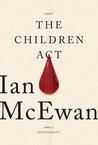
The Children Act by Ian McEwan

The Children Act In calm, clear, patient English McEwan presents a particularly agonizing example of the stunning success and haunting failure of a juridical system, indeed, of a well-tempered, well-disciplined judicial mind. A transcendently wise decision over a matter of life and death cannot save a vital, loving, innocent teenaged boy without concomitant fulfilment of the obligation to prepare him for the world. McEwan’s prose is precise, alluring, devilish, revealing in a paragraph a history, in a pause an acceptance. It is magisterial.

McEwan’s quietly devastating intellectual and legal thriller has the requisite two plot threads, but both occur within the confines of one character, Fiona. One thread traces the crumbling of a long-time marriage between two successful adults on the cusp of old age, and the other is defined by a case Fiona is handling in court. McEwan’s choice to make his central character a judge and a woman brings an undeniable tension to our reading. We are not accustomed to imagining the home lives of judges.

The dissolution, by silence and sighs, of a long-term marriage is distressing enough, but when neither party wants it, it is a kind of willful “suicide” and we are undone. The case that delivers the coup de grâce features a religious young man undergoing medical treatment for leukemia. His faith does not allow a life-saving blood transfusion and Fiona must decide whether he is to live with treatment or certainly die.

It is ungainly to pair the word “children” with “jurisprudence” by any stretch of the imagination, and yet that is something McEwan does here. It is something many family lawyers do every day, day in and day out, for their working lives. The tension created by the cool, educated rationality and judicial restraint exhibited in a hotly debated and divisive case of life-giving treatment versus religious scruple is stomach-churning and mind-roiling. Fiona makes a wise decision hailed by all litigants (view spoiler).

McEwan skillfully manages us by cranking up the tension and releasing it in unexpected ways. On the day Fiona visits the boy in her case to see if he is aware of the consequences of his decisions, she inappropriately experiences a thrill of excitement in contemplation of the hospital visit. Fiona "likes hospitals." She has good memories of her own hospital stay as a child. As she enters, the décor of the hospital parodies the ambiance of an international airport promising different destinations, PEDIATRIC ONCOLOGY, NUCLEAR MEDICINE, PHLEBOTOMY, in signs with motorway lettering. The absurdity of these observations helps us through our approach to the too-terrible-to-contemplate interview. The hospital scene is unexpected, surprising, life-giving--filled with tension and its not-quite release.

Another gorgeous set-piece comes months later. Nowhere had McKwen even hinted at anything so crass as sexism in the high courts. But in one slyly telling scene he has Fiona on assignment in Newcastle, staying overnight without her husband in a drafty mansion with four other judges
“in dark suits and ties, each holding a gin and tonic, [who] ceased talking and rose from their armchairs as she entered.” At dinner, “after a hiatus of polite dithering, it was agreed that, for the sake of symmetry, Fiona should sit at the head. So far she had barely spoken.” During the dinner conversation about ongoing cases under adjudication, one diner solicitously interrupts Fiona’s closest dinner companion with “I hope you realize just how distinguished a judge this is that you’re talking to.”
Just in case you missed her significance.

Even when Fiona is away from court and home there is tension. She has set herself up to open Christmas Revels in the Great Hall, playing Berlioz, Mahler, Schubert on piano in front of colleagues where “standards were punitively high for an amateur affair…It was said they knew a bad note before it was played.” Her schedule permits little time for practice, but when she finally is able to schedule a practice with the barrister with whom she is to perform, he spends acres of precious time ranting about a case he is working on, while we listen and grow anxious.

The lawyerly rants seeded throughout the novel serve many purposes. The first crushes any notion of pure Justice. Any system of justice made by imperfect persons will be imperfect. We also can see the eminent reasonableness of the barristers in their struggle to serve justice. The rants increase the readers’ tension not only because they may be long and complicated but because we know any ruling will be fraught with dissent and division. These things place a judge in an intolerable position. Fiona recognizes in law concerning children “kindness…[is] the essential human ingredient.”

One cannot help but imagine a terrific movie being made from this carefully crafted short novel. Sections of it read like stage directions, so much do we learn from a glance, a setting, a situation. So much of the tension in the relationship between Fiona and her husband is manifestly visual and unspoken, so polite and yet so hurtful. And the boy. We want to see the boy.

McEwan writes with such economy, clarity, humor, and insight that it is always a joy to discover what he will to focus on next. The 2014 hardcover edition published by Doubleday is beautifully printed, and a pleasure to hold, to read. I even like the cover. The novel is a stunning success. Kudos all round on this one.


You can buy this book here: Shop Indie Bookstores

Thursday, January 9, 2014

Lawrence in Arabia by Scott Anderson

Lawrence in Arabia: War, Deceit, Imperial Folly and the Making of the Modern Middle East This book would be a perfect semester-long study for young bucks with an interest in foreign affairs and a willingness to test themselves with knotty problems and harsh realities. Coming into the information with clear eyes and no prior understanding of the histories we have undergone in the past one hundred years, youths that imagine patterning themselves on the legendary stoic T.E. Lawrence will have an education.

Anderson had much primary material at his disposal to create this dense wartime history of The Middle East full of schemes and counter-schemes, spies and double agents, treachery unbound and heroism unheralded. There might be just too much information for me here: I am Swift’s Gulliver, on my back, securely bound with threads of information, staring unblinkingly at the sky and wondering still about Lawrence. The subtitle of the book is perhaps a truer picture of the contents than the title, and the two could be reversed.

Anderson does a masterly job of marshaling the material and propelling the narrative with quotes from the players themselves. One becomes familiar with the skill and treachery of many men besides that of the enigmatic Lawrence. Lawrence is a device: a way into the material and circumscribing it fore and aft. Lawrence had been used before for such ends and at one time he would have been interested to read this many-faceted story of the times in which he lived and how it played out.
Anderson writes: “Since late 1916, Lawrence had waged a quiet war against his own government, and now he had lost. What would soon become clear, however, was that he intended to continue that fight off the battlefield, in the conference halls and meeting rooms of peacetime Paris. He may have asked to leave Damascus out of exhaustion, but it was also to prepare for the next round in the struggle for Arab independence.”
If Lawrence had been given more credence at the Paris Peace Conference instead of stripped of his credentials, things may have been different in the present-day Middle East, though perhaps not much better. Lawrence worked out an agreement for the administration of an Arab-Jewish state in Palestine with then Prince Faisal ibn-Hussein of Syria and British Zionist Chaim Weizmann but the plan was scuttled by the British and French, who had earlier agreed to split the Middle East between them. “…Great Britain and France had taken the discredited Sykes-Picot Agreement and fashioned something even worse; how much worse was evidenced by the myriad fires that had spread across the region almost immediately.”

An alternative history with Lawrence’s involvement after the war, had he not suffered from PTSD, changed his name (twice), retreated to a lonely Indian outpost as a low-ranking British army private, and then died from a motorcycle accident in 1935, would be most interesting. But the Lawrence of the First World War had died shortly after that war, though the man himself lived another seventeen years:
Anderson: ”In Arabia, Lawrence had exerted life-and-death control over thousands, and had cobbled together a cause and an army as he went along. All the while, he had been tormented by a sense of his own fraudulence, the awareness that the men who fought and died at his side were almost certain to be betrayed in the end. As he would suggest in Seven Pillars, and state quote explicitly in letters to friends, after Arabia he never wanted to be in a position of responsibility again: ’The Arabs are like a page I have turned over, and sequels are rotten things.’
Lawrence in Arabia
The 1962 David Lean/Peter O’Toole movie is surprisingly thorough and captured many key events featuring Lawrence recounted here, though emphases and characterizations were tailored to the screen and the sensibilities of the time. With Anderson’s help, we understand the larger context of competing national interests and how the shaping of the Middle East had less to do with T.E. Lawrence, Curt Prüfer, Aaron Aaronsohn, Chaim Weizmann, and William Yale than with Mark Sykes, François Georges-Picot, David Lloyd George, and Georges Clemenceau. The whole globe was watching the unfolding events in the Middle East and everyone had different desires. The event-makers, in the end, did not have the effect of those who watched.


You can buy this book here: Shop Indie Bookstores

Monday, September 10, 2012

The Headmaster's Wager by Vincent Lam

For readers interested in recent Chinese and Vietnamese history and culture, this novel is an intensive course. The tale begins with a young boy born to Chinese parents in Shantou, China during a period of change (the 1930s). The story takes on epic proportions when he relocates first to Hong Kong and then to Cholon (near Saigon) in Vietnam during the tumultuous period when a series of foreign powers (the Japanese, the French, the Americans) fought wars over Vietnam’s governance and managed to turn a home-grown, bottom-up revolution into a full scale civil war.

Lam succeeds in showing us Vietnam in its blisteringly hot lush beauty, its violent history, and its complicated lines of distinction between natives and non-natives and skin colors: white, brown, yellow. The time period is recent and familiar, but the angle is unique. Events in Vietnam in the 1960s and ‘70s already familiar to readers are imagined from the point of view of residents on the ground and give us an eerie dislocation. We begin to perceive the difficult sets of choices people had for living with war and occupation.

We are also treated to remarkable insights into Chinese mores and mindset when this culture can be maddeningly difficult for Westerners to grasp. The backdrop of what we call the Vietnam War makes the story cinematic, particularly one scene when the Tet offensive hits Saigon and spills into Cholon during a celebratory and drunken banquet hosted by Chen Pie Sou, the Headmaster of the title.

There was one area, however, that I thought Lam didn’t get quite right as a novelist. Lam created a complicated and flawed main character in Chen Pie Sou, which should add to the drama of the unfolding story, and does…eventually. But I had difficulty liking Chen (or any of the characters) through Part I and felt dragged into Part II only by obligation. By Part III, I started to marvel at what Lam had managed to construct, and relished the details of Vietnamese life, and Chinese habits.

Vincent Lam is a doctor as well as a novelist, and he has written a couple of nonfiction medical-related books already, one of which is an info-book for the public on a possible flu pandemic. A nonfiction book of stories, Bloodletting and Miraculous Cures: Stories, won many awards and was chosen as a Barnes & Noble Discover New Authors title. This is his first novel.


You can buy this book here: Shop Indie Bookstores