Showing posts with label Recorded Books. Show all posts

Wednesday, September 5, 2018

The Country Life by Rachel Cusk


Audiobook, Pub Oct 1st 2014 by Recorded Books, Inc.; Hardcover, 341 pgs, Pub Jan 1st 1999 by Picador USA (first published June 20th 1997) ISBN13: 9780312198480, Lit Awards: Somerset Maugham Award (1998)

This novel is a fantastically successful parody of a Eighteenth Century novel in which a young woman encounters all sorts of terrors in her first solo foray into the wilds of the country in Sussex. I had the advantage of listening to this novel, brilliantly read by Jenny Sterlin, produced by Recorded Books, but I like to think I would have picked up on the melodrama even if I’d read it.

As an undergraduate reading 18thC literature, I was tasked in one demanding class to “write an paper in the style” of one of the authors we studied that term. This novel by Cusk would be a brilliant fulfillment of that requirement. One would swear one were reading a modern Gothic romance in the style of our very earliest novels like Weiland; or The Transformation by Charles Brockton Brown, written in 1798 or Mary Wollstonecraft Shelley’s 1818 Frankenstein.

All the intrigue, drama, and fear of a young woman’s fancy are amply on display: creaking floorboards, the dangers of walking in the country on public footpaths, leering oversexed male acquaintances, dwarfish figures whose intent, whether good or bad, is undetermined. Stella is simply overtaken with every possible obstacle to living well in Sussex at Franchise Farm, a large, ancient, impressive farming estate owned in perpetuity by the Maddens. Stella has been engaged to be a companion to the Matthew Madden, a teenaged handicapped scion of the family.


Cusk works over our sympathies in this novel so that every couple pages we are changing allegiances with the characters. The story has a darker heart than we’re prepared for by all the ridiculous drama of Stella’s first days at Franchise Farm, but this is meant to be discovered after several hours with the characters, so i won’t reveal it here. Suffice it to say that the overblown prose and extraordinary dilemmas faced by our narrator contrast in a comic way with the utter ordinariness of the rest of the characters, all of whom find themselves watching Stella with some degree of alarm and surprise as she settles in.

I can’t remember when I’ve enjoyed a novel as much, it being so completely unexpected, truly hilarious and absurd, with our heroine, through no intent of her own, ending up several days completely blotto on stolen vodka. The teenaged charge Matthew bears some responsibility for taking advantage of his much-older companion, never having seen someone with as little control or suitability for her position as the lovely Stella. As his mother says volubly, “He’s not retarded, Stella, he’s just disabled.” And very clever and interested he is, too, in all that goes on around him. For once he sees someone nearly as helpless as he is, and he rises to the challenge.

The finish is heartfelt and warm, and we discover that Stella is indeed suited to her position, and in fact we want more of her stumbling ways since she manages to bring out the best in everyone. We have been aghast at the blunt language and contentious attitudes of many of the folks we meet. But they can recognize vulnerability when they see it and do not crush those suffering from it.

I am particularly thrilled to read a novel that describes—and asks us to imagine—what life might actually be like for someone disabled. The group meetings Matthew must attend outside of his school hours are truly horrifying—all authoritarian control and insistence on talking about one’s feelings. Matthew is often overlooked and not appreciated for what he can do well.

Every novel I have read by Cusk is very different from its predecessors but equally funny. Her work is not losing its charm, no matter that I have read nearly all her oeuvre at once. I am even more convinced of my earlier assessment—certainly that Cusk is my favorite living author, but also that she is one of the greats working today. She is especially relevant in a world in which sexual relations have entered the stage of “let’s put it all on the table, dear.”

-----------------
My reviews of Cusk's other books:
Saving Agnes, 1993
The Temporary, 1995 (not reviewed yet)
The Country Life, 1997
A Life's Work: On Becoming a Mother, 2002
The Lucky Ones, 2003
In the Fold, 2005
Arlington Park, 2006
The Bradshaw Variations, 2009
The Last Supper: A Summer in Italy, 2009
Aftermath: On Marriage & Separation, 2012
Outline, 2014
Medea, 2015
Transit, 2016
Kudos, 2018
Coventry: Essays, 2019


Friday, October 21, 2016

Do Not Say We Have Nothing by Madeleine Thien

There is much to admire in what Thien tried to do in this 2016 Booker-shortlisted novel, and judging from the laudatory reviews, she must have succeeded. Personally, I struggled against the style of this novel, which I found cloying, despite the fact that different members of one family each had pieces of the story to tell. I have yet to find the author who can tell me a Chinese fiction that I really enjoy, except for classics like the The Outlaws of the Marsh (Water Margin) and Journey to the West, which have always held me in thrall.

The period of this novel, from the end of the revolution through the Cultural Revolution to Tiananmen is almost impossible not to find interesting as straight history because of the wrenching societal upheavals, personal traumas, the hugeness of the country, and pace of change. What Thien did was to put a face and family history through that trauma and connect that history to the great Chinese migration east, to the West.

Her lens was a good choice for the story she chose to tell, musicians who played western instruments and music, for it is they who were targeted during the Cultural Revolution most harshly, along with other specialists in western thought or sciences. The part about getting “sent down” to the countryside was not as thoroughly fleshed out as it could have been, but she included details which placed many friends and colleagues in far reaches of China long after that decade passed. The dislocation and missed opportunities were apparent in the lives of those she spoke of who had returned, to some extent, to their old lives. The interpretation of western music by Chinese musicians is a fascinating thread that could have been a story in itself, another frustration. Thien's story is both too big and too small.

The Book of Records was a strangely effective tool, if I understood it correctly, to tie together the lives of those past and future, and the samizdat quality of appearing and disappearing chapters had an authentic feel. Citizens had a real fear of the reach of the state. The scenes before and during the Tiananmen incident also had an immersive, completely authentic quality. When Thien talked about the buildup to June 4 on college campuses, the innocence of the students, the terror of the parents, the gradual buy-in by the factories and universities from around the country, the sense of held breath, and the euphoria, these details rang true.

So why was it difficult for me to listen to this novel? It could be the uncomfortable sense of listening to heartstrings, or perhaps it was the Western connection. I'm not sure. This was a nation ripping itself to pieces. Pity is not an appropriate sensation, nor is any sense of a Western mindset. There is much that was pitiable about life in that period, but perhaps it was the lack of distance, or humor, or sense of historical moment that I missed. These small stories against the backdrop of fifty years in the life of a nation in revolution seemed too small, or too magnified. I never felt really engaged.

The last portion about Tiananmen filled in pieces in my understanding of that time and was detailed and involving for me in a way that the rest of the narrative wasn’t. But this is what I mean about the history being much more interesting than the individual stories. Her characters didn’t matter. We are looking at this spectacle of a nation struggling between revolt and control. The individuals are swept away, a distraction to the magnificence of something on the scale of a natural disaster. It seemed too much for her tiny story, though how else could such a thing be described, except in this way? One day we may find someone who has figured that out.

Thien deserves credit for the enormity of what she attempted, successful or not. It seems that those who didn’t already know this history intimately might have found much to interest them. Those who do know China more intimately might, like me, be waiting for a work that even comes close to encompassing even a piece of the inexpressible and unfathomable hugeness of China as we know it, with no inkling of the West. It is the East that interests us, not the West looking at the East.

I listened to the Recorded Books audio production of this novel, narrated by Angela Lin. Beautiful Mandarin pronunciations were dubbed in for place and people names. There were times when I wondered if the paper copy would help me to understand the form and function of the Book of Records, the form of which I only had a hazy idea about after listening for some twenty hours. And I wondered if the paper copy had ideographs copied out, which would add to the reading experience. If one wants the immersive experience and is unfamiliar with China’s recent history, I think I would recommend the Whisper-sync option, so that one could listen or read alternately, or one after the other, perhaps, to capture all the nuance in this big, ambitious novel.


You can buy this book here: Shop Indie Bookstores

Saturday, September 17, 2016

The Bangkok Asset (Sonchai Jitpleeheep #6) by John Burdett

It is difficult to know if Burdett is so far out of touch he is creating a science fiction world or if he is so in touch that we are the ones inhabiting a present we know little of. He repeats often during this book that the West has so destabilized itself with the corruption of our spirituality and morals, and its support of divisive financial and corporate policy that all is left is for it to collapse into a state of oligarchy, state control, and slavery. The natural outcome of this disintegration are the trans-human creatures he introduces to us in this book: creatures bred to control humans.

All the things we liked about the Burdett series are still there but they are wrapped in this new black packaging. Burdett is funny and insightful. I loved his new character, Krom, a smart, capable lesbian with a full-body tattoo and a fierce libido. Burdett has a point when it comes to trans-humans: eventually we are probably all going to be installing little technological aids into our bodies to prevent problems or enhance features…he just jumped the gun a little with his physically perfect though psychologically stunted spawn.

Our beloved Sonchai is struggling with his history. He wants to know who his father is, and for some strange reason his mother has been withholding. In this episode she finally shows him pictures which helps only a little: it was all too long ago and old men often do not resemble their younger selves.

There is a mystery here, but the old police procedural format seems to have gone out the window. This is far more a psychological thriller with super-elements. It is interesting that Burdett chose to call his freaks trans-humans considering we are just going through trans-talk in the States at the moment. One of his Chinese characters, offered a choice of straight, gay, or trans bars, chose trannies as his far-and-away favorite. Perhaps it is the notion of infinitely adaptable human experience? Are we infinitely adaptable?

Speaking of Chinese, there is a strong suggestion of Chinese influence deep in Thai government business, and throughout Southeast Asia, which probably has an element of truth. It would be difficult to imagine they wouldn’t have a great deal of influence, given China’s size, wealth, population, needs, and proximity.
“War is always a balance between wanting to win and needing to survive.”
The book takes a dog-leg into Cambodia to visit the jungle site of Vietnam-era LSD experiments that sort of fit with the search for Jitpleecheep’s search for his father, but it is so dark and weird that it seemed Burdett wanted to add this to the historical record regardless of whether or not it fit perfectly. Is it true? Again, there may be elements of truth, though it is infuriating America’s secret spy agency would have this kind of reach in a country with which we had no diplomatic relations for at least four years in the 1960’s. Maybe it is folklore kept alive by people Burdett meets in Bangkok—it must be very strange at times in Bangkok with all those old operators hanging around.

Burdett also reminds us of three U.S. citizens who self-immolated in front of government buildings to protest the Vietnam War. I’d never heard of this. Alice Herz, Roger LaPorte, Norman Morrison. November 1965. How effectively they were erased.

One reviewer said the book was open-ended, suggesting a further installment in this vein. Perhaps that is true, though I felt Burdett was just offering questions for us all to consider. Who wouldn’t want enhancements of one sort or another? It depends. It depends on what we give up in the process, and what kind of society we eventually want. He has a couple of zinger quotes that seem appropriate to present-day America:
“Haven’t you noticed how childish the West has become? Just when it most needs men and women of mature judgment it seems there aren’t any. Such a society is vulnerable to the most radical manipulation…what do dissatisfied children do? They complain, they cry—but it never occurs to them to rebel effectively…Infantilism and slavery go hand in hand…”
I am only marginally sad to lose Sonchai Jitpleecheep to Burdett’s changing fictional world. It seems Burdett is giving us something new, filled with the insights of a lifetime. Thought-provoking.

A word on the audio: Actor Stephen Hogan does an excellent job with the material but he has a way of dropping his voice to indicate a character's thought or the narrator speaking. The change in register is so great that unless one is wearing headphones, one has to adjust the volume constantly, otherwise the other characters' voices are much too loud. This is only a problem in a car or on a stereo system. A suggestion to Recorded Books then, is that Hogan can drop his voice, but not to such a great extent. The difference in loudness is the problem.


You can buy this book here: Shop Indie Bookstores

Wednesday, January 27, 2016

Splinter the Silence by Val McDermid

Hardcover, 383 pages Published December 1st 2015 by Atlantic Monthly Press (first published 2015)

This ninth novel in the Tony Hill & Carol Jordan series written by Scottish mystery writer Val McDermid brings us a serial killer who preys on opinionated women who take principled stances embodying feminist ideals, e.g., outspoken against domestic violence, deadbeat dads, the living and work arrangements of serial rapists. The police at first dismiss the vituperative online trolls who respond to these womens' blogposts—"it is only words"--until some of those outspoken women end up dead.

Hill and Jordan are long-time McDermid subjects, and the stars of a BBC TV series called The Wire in the Blood, a popular six-season (2002-2008) police procedural starring Robson Green as Tony Hill and Hermione Norris as Carol Jordan. Every two years since the TV series finished, McDermid published another Hill & Jordan mystery. In all that time, Jordan had left the police force and has started drinking far too much far too often. This story began with Jordan refitting an old barn on the outskirts of Bradfield, Yorkshire to live in.

McDermid’s character of Tony Hill always seemed to me far less autistic than Robson Green’s interpretation. Hill does play computer games to give his subconscious time to develop ideas, and he does have a tendency to insert himself into Carol Jordan’s orbit. In this story, Hill intervenes in Jordan’s drinking habit, forcing her to recognize her dependency.

While Jordan is drying out, Hill suggests she think over a problem that so far has not been identified by anyone else as a problem: those outspoken women were dying, presumably at their own hand, in the manner of famous feminists who had committed suicide in the past. Each of the suicides even had pages of books written by the different women they were emulating…so many women, so many role models, different deaths but all with the same idea. It started out as a time-consuming mental activity to keep her from drinking and then links started to appear…

Insomuch as McDermid's crime series also employ elements of police procedurals, this is a delightful look at the top cops who have a meeting early in the action. They sound so much like a group of Shakespeare’s hags around a black, round-bellied pot hanging over a campfire one can practically hear the “Boil, Boil, Toil and Trouble” refrain. The old white men discuss offering Jordan her own shop under their aegis but outside the shop. The team she ultimately assembles has some terrific, familiar characters.

One of those characters, a computer whiz from an immigrant family, is sleeping with a handsome but shallow fellow officer who is always seeking the best path to his own personal aggrandizement. When the computer whiz discovers her main squeeze is leaking information from her investigation, she takes the sweetest revenge—I laughed aloud to hear it. I’m not going to tell you what it is, but believe me, you won’t want to miss it, and you wouldn’t want it to happen to you.

McDermid is so smooth and natural in her writing by now in her Gold Dagger Award-winning career that she makes churning out these psychologically dense personality profiles look easy. Scottish by birth, McDermid now splits her time each year between South Manchester and Edinburgh, where lives with her partner and her son. She began as a journalist and playwright and, inspired by American women crime writers including Sara Paretsky, she developed her own crime-writing style. If you have never seen her speak, you are in for a terrific treat. She has a big personality and clearly enjoys her work on most days. Just type in “Val McDermid interview” in YouTube’s search bar and you will hear many hours of fascinating stories, mostly true.

My personal favorite in these interviews is a short one in which McDermid is interviewing Sofie Gråbøl (embedded below), star of the Danish production of The Killing, a wildly popular multi-season TV hit throughout Europe. If you haven’t yet seen it, do not mistake the American re-do of the television screenplay for the original Danish production, which was mesmerizing. McDermid mentions the sweater Gråbøl wore in the show which became a hit also, spawning an industry.

Also note that one of McDermid’s most famous books, A Place of Execution, was made into a TV mini-series, three parts of which are also available for free on YouTube. I haven’t watched it yet, but you will recognize some of your favorite actors. My favorite is Lee Ingleby, but Robson Green is there also. Enjoy!

I listened to the audio production of this book sent to me by Goodreads FirstReads, narrated by Gerard Doyle and produced by HighBridge Audio, a division of Recorded Books. I still don't understand how the title fits in, though. I never caught the reference to that. If anyone out there figures it out, please leave me a comment.


You can buy this book here: Shop Indie Bookstores

Monday, December 14, 2015

Medicine Walk by Richard Wagamese

Canadian author Richard Wagamese manages to slow our heart rate down with this story of an Ojibwe Indian who lost his bearings, and about an old man and a boy living on a farm carved out of the wilderness. Stories told and listened to form the heart of this novel: one feels sure that if only there were enough stories, things might have turned out differently. But in the end, the larger story—the story of this novel—lets us know that life encompasses both the tragic and the magnificent and to know one, we must know the other.
"When you share stories, you change things."
The land is central to this novel: how it nourishes and refreshes the spirit, how it returns generosity shown it. The old man and the boy live in concert with the land and, having learned its lessons, treat one another with a gentleness and love that approaches the sacred. "Just get it done," is what the old man tells himself and teaches the boy, and throughout their lives together the two of them face difficulties or obstacles with the same quiet fortitude and firmness. They discover the pleasure in bending one’s back to difficult work, and in contemplating the end of a task well done, whether it be straight, square, strong fencing or burying a man, facing east, in stony ground.

The boy’s father, Eldon Starlight, had left his son with the old man because he couldn’t find the strength within him to care for another. When gradually the outlines of Eldon’s life come into focus, we discover his struggles are mostly internal, that despite the gifts of his physical health and strength, he hadn’t enough strength of spirit to see him through the inevitable twists and turns of an unexamined life. His addictions explain, but do not excuse, his inattention to the only things that really matter. Eldon realized, at the end, that he really wanted a connection with his heritage and with the land, and the boy, though he had reason to hate his father, showed just what kind of man he was becoming by honoring him, padding his grave with moss and boughs and sprinkling it over with tobacco. His upbringing and connection with the land developed reserves of generosity within himself that he could share when the world displayed too little. There is terrible pain in the world, but there is also grace.

The section of this novel that deals with Franklin bringing his father to his final resting place, finding his way in the woods, encountering a bear, fishing without line, hunting without a gun, the boy generates love. He is sixteen and a man in all the ways that matter.

The bare simplicity of the narrative, and the clarity of the language both hold a beauty that is rare in novels today and makes this a standout. The harsh reality of someone dying of drink is achingly real and truly described, as is the beauty and bounty of open forest. The relationship between the old man and the boy defines what sustains us in a world that too often feels outside our control. In the end, we are all is nourished, blessed even, by the strength their relationship.
"Feels good to miss things…it makes you know you’re living, that you touched something, that something touched you."
I listened to the audio production of this book, beautifully read by Tom Stechschulte, and published by Recorded Books. I highly recommend this book, this meditation, for centering oneself in a busy world and for reminding us of what is important.

In an interview with CBC Richard Wagamese says that this is his best novel, and that it may lead to another novel or two to flesh out the lives described within. To my thinking, the novel stands on its own, though I would love to see more of this author's work and reprise the feeling I had when I read/listened to it.


You can buy this book here: Shop Indie Bookstores

Wednesday, July 9, 2014

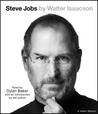
Steve Jobs by Walter Isaacson

Steve Jobs It is sometimes difficult when writing a review of a memoir or biography to separate the writing from its subject. Isaacson did a good job of handling the detritus of a life—there is just so much to examine in the life of Steve Jobs that the biographer must pick out the pieces that seem to make sense of or make sense in a narrative of that life. Isaacson does that. What I found myself missing was the same thing I felt missing in Ben MacIntyre’s A Spy Among Friends which describes the infamous “charm” of Kim Philby: audio/video of the man himself. Fortunately, there are plenty of clips of Jobs online, though what we’d really like to see are unscripted moments rather than product launches.

Isaacson writes that the theme of Jobs’ life was that he always felt “special” or “chosen” and that the normal rules didn’t apply to him. It began, perhaps, when his mother told him he was not adopted because he was abandoned by his birth parents, but because he was chosen by his adopted parents. But he lived his whole life as someone who made his own judgments about the world and its rules. He was not a gentle man, but he had a creativity that he cultivated in himself and others. That was one of his special gifts.

My takeaway has to be that it takes all kinds to build successful products. Obviously a room full of Jobs-like folks wouldn’t work, and Jobs himself admitted that “without Apple and its engineers, I am nothing.” But it also took folks who were willing to work with him on everything else—component deliveries at Apple, music sales for iTunes, filmmaking at Pixar. He was persuasive--the “reality distortion field” was applied to the way he turned one’s head about decisions--and that was another of his special gifts.

A different person could have been successful in the personal computer market, maybe even more successful. Gates was such a person. After all, Jobs and Gates entered an empty market and made a mark. That was be another great gift of his: to see what was needed. That is something not all of us can do. That takes hutzpa and vision. Jobs wasn’t universally successful with all his products: think about NeXT, where he gave himself leeway to build a product the way he wanted but which no one else liked enough to buy. But the architecture of the product Jobs built at NeXT was used later when he returned to Apple.

After some practice Jobs got much, much better at launching products that made a lot of sense and that broke open the way we communicate. To do that, he had to attract the right folks to help him, to cooperate, and to lead. That was another great skill: he could lead.

Finally, he had style. I admit to appreciating his concept of wearing a “uniform.” I appreciate his restraint when it came to consumption and money, even food. He could earn endlessly, but he seemed to realize money was not the point, as it appears to be for some folks. The point was to do what you loved, to be in love. Love was the point.

In a perfect world, an eBook would have video clips of the man in action at strategic moments in his life (e.g., the 2007 Walt Mossberg interview of Gates and Jobs and the Stanford 2005 graduation address)…we wouldn’t have to watch a three-hour product launch, but just clips of the highlights. It is difficult to imagine the force of his personality without seeing him in action.

Because of Jobs’ central role in the personal computing market, his history could be read as a history of the industry. I found it fascinating. Whether Steve Jobs was a perfect man or a flawed man is not really the point, I think. He was a man, as he liked to point out, at the crossroads of science and art. He changed the way we communicate and at least makes us think about the way we do business. He was after excellence in product design and function, and he hoped to create a great company.

I listened to the audio production of this book produced by Recorded Books for Simon & Schuster Audio, narrated by Dylan Baker. I highly recommend it for everyone’s library. I wonder if we would have been as tolerant of the young Jobs as Atari executives were when he arrived on their doorstep with the announcement that he wouldn’t leave until he was hired.


You can buy this book here: Shop Indie Bookstores

Wednesday, August 22, 2012

Broken Harbor by Tana French

Probably by now readers have heard of Tana French, who writes crime mysteries based in Ireland. She has a couple of psychological dramas out there already, like In the Woods and The Likeness. This novel, it seemed to me, exceeds her previous books. She has given us several crimes this time, revolving around a triple murder. There is lots of crazy…crazy that seeps up around everyone’s ankles and slowly, slowly comes up around their noses, threatening to drown the whole lot…detectives and suspects alike.

I listened to this on audio, published by Recorded Books, read by Stephen Hogan. The novel is in the voice of “Scorcher” Kennedy, who gets this major case after a long period working on smaller things. At the beginning he sounds ready, but when his family situation and the case converge and threaten to sink him, he reaches out to save himself.

Broken Harbor has been renamed “Brianstown” when, before the financial downturn, a large new housing development is created out on a strip of land so remote that people feel unmoored, even before the crash forced the builder to pull out. The few sold houses sit amid a ghost community, with unfinished foundations, rusting heavy equipment, and empty, unsold homes. The chilling truth is that this is the largest crime, the theft of lives long before a knife leaves them bloody on the kitchen floor.

Great story.


You can buy this book here: Shop Indie Bookstores

Monday, June 4, 2012

Blue Shoes and Happiness by Alexander McCall Smith

Blue Shoes and Happiness (The No. 1 Ladies' Detective Agency Series #7)


I have just realized I have never reviewed any of Alexander McCall Smith's series, though I have read from each one. McCall Smith's series are primers in "how to be kind." He calmly and rationally helps us to negotiate everyday conundrums that plague us and make us anxious and bitter. The thoughtful reactions he puts in the voice of Mma Ramotswe are kind and comforting, her solutions sensitive and gracious.

If blue shoes can bring happiness, it may be worth owning them even if they are too small. And, there is evil in the world, but most people want to do the right thing. It’s just that people are weak. One should recognize one’s weaknesses: if they are inconsequential or will make your life (or the lives of those around you) a misery to change, it may be better to just live with it.

Mma Ramotswe is a forgiving woman. She doesn’t chide her assistant for small failings, like purchasing blue shoes that are too small, nor does she agonize over her own “traditionally-built” size. She knows she should diet, but if she wants (and deserves!) cake, is it so very wrong to have a small piece?

Every book in this series is a little vacation for the mind. We are given time to consider problems that many of us face, and see how elegant solutions can be found that satisfy. The voice of Lisette Lecat defines the series. Her voice is such a perfect vehicle for the writing that I prefer to listen to these books published as downloadable files by Recorded Books.


You can buy this book here: Shop Indie Bookstores