Showing posts with label thriller. Show all posts

Thursday, May 28, 2020

The Diamond Queen of Singapore (Ava Lee #13) by Ian Hamilton

Paperback, 428 pgs, pub Aug 2020 (ePub May 26, 2020) Spiderline, ISBN13: 9781487002060 (ebook ISBN 9781487002084), Series: Ava Lee #13

The e-edition of Hamilton’s latest in the Ava Lee series is out and you will want to take this trip with Ava as she hits several continents: Amsterdam and Antwerp in Europe, Singapore and mainland China in Asia, and back to Toronto in North America.

Ava’s collecting debts but for a friend, as she had in her early career. It brings back memories. This time it is not debts Ava is following but cold, hard investment theft wrapped up in a not-so-generous evangelical megachurch on the outskirts of Toronto. Hamilton creates the cruelest, most unambiguously unforgivable villains to walk the earth, and places them in a world we recognize. From there, the scandal just gets bigger…

Has anyone read the 14th-century Chinese novel called, variously, The Water Margin, Outlaws of the Marsh, and All Men Are Brothers? It is a rip-roaring 4-volume Song Dynasty yarn, a masterpiece of storytelling, packed with colorful characters whose names tell it all: Little Whirlwind, Blue-Faced Beast, Impatient Vanguard, etc. The epic story tells of 108 bandits who live by the margin of Liang Shan Marsh and pursue justice by unconventional means.

Hamilton’s story this time has elements of this ancient tale. He named his thieving church leaders Cunningham, Rogers, and Randy. Ava’s triad connection in Chengdu, Han, is blustery and loud, his crass manner and crude-but-effective methods modeled on characters in the ancient tale. Han uses his fists when words are not enough. He carries a large weapon to focus the attention of his opponents on their limited options.

I adored this tale for these elements, and for outlining and pointing to the real and acutely painful problem that Ava uncovers in the course of her investigations, something that has been plaguing the West, particularly the United States and Canada, for some years now. The problem has its source in China and concerned North Americans have wondered how on earth this is happening without and/or despite Chinese government oversight.

The answer to that question echoes what we hear when contemplating the indescribably painful political atmosphere in the United States: it is completely within the realm of the country’s leadership to stop the trouble. For some reason beyond our understanding, the leadership prefers chaos. God help us all.

Another fantastic addition to Hamilton’s box of jewels.

P.S. If you are going to pick up Outlaws of the Marsh, please choose Sidney Shapiro’s translation, the language of which made me fall in deeply love with Chinese culture, habits and humor. Shapiro’s word choices make the ancient book immediately relevant, laugh-out-loud funny, and the long read tireless.


The Chow Tung Series
Fate (Uncle Chow Tung #1)
Foresight (Uncle Chow Tung #2)
The Ava Lee Series
The Water Rat of Wanchai (Ava Lee #1)
The Disciple of Las Vegas (Ava Lee #2)
The Wild Beasts of Wuhan (Ava Lee #3)
The Red Pole of Macau (Ava Lee #4)
The Scottish Banker of Surabaya (Ava Lee #5)
The Two Sisters of Borneo (Ava Lee #6)
The King of Shanghai (Ava Lee #7)
The Princeling of Nanjing (Ava Lee #8)
The Couturier of Milan (Ava Lee #9)
The Imam of Tawi-Tawi (Ava Lee #10)
The Goddess of Yantai (Ava Lee #11)
The Mountain Master of Sha Tin (Ava Lee #12)


Monday, May 18, 2020

Fate (Uncle Chow Tung #1) by Ian Hamilton

Paperback, 304 pgs, Pub Jan 22nd 2019 by Spiderline, ISBN13: 9781487003869, URL: https://houseofanansi.com/products/fate, Series: Uncle Chow Tung #1

This trilogy began as an aside to the long-running Ava Lee series by Ian Hamilton. Ava Lee, you will remember, was mentored by a much-older man called Uncle who wasn’t a relative but who became closer than blood. Before he died, they worked together collecting debts around Asia. Later she learned he held the highest-ranking post in a Hong Kong triad, as Mountain Master.

Earlier in the Ava Lee series we were treated to Uncle’s passing, replete with noisy, atonal bands playing discordantly at his funeral march. The detail in that description was lovingly crafted, introducing us to a lively, diverse triad scene that we sense has been something of a fascination for Hamilton. We revisit in greater detail here since this title begins with the death of the Mountain Master who preceded Uncle in the role.

For those readers who have despaired of office politics, this book may bring on a kind of PTSD. Triad life appears to be office politics with machetes and sub-machine guns. The leadership team all have very cool monikers, like White Paper Fan, Red Pole, and Straw Sandal, all of which operate under the Deputy Mountain Master, the Vanguard, and the Incense Master. They don’t sound scary.

This trilogy begins with Uncle Chow Tung leaving mainland China with his financée in 1959 and then jumps to 1969 where the action of this novel takes place. The action in the follow-on books appear to be spaced by a decade. Next up is Foresight.

The Chow Tung Series
Fate (Uncle Chow Tung #1)
Foresight (Uncle Chow Tung #2)
The Ava Lee Series
The Water Rat of Wanchai (Ava Lee #1)
The Disciple of Las Vegas (Ava Lee #2)
The Wild Beasts of Wuhan (Ava Lee #3)
The Red Pole of Macau (Ava Lee #4)
The Scottish Banker of Surabaya (Ava Lee #5)
The Two Sisters of Borneo (Ava Lee #6)
The King of Shanghai (Ava Lee #7)
The Princeling of Nanjing (Ava Lee #8)
The Couturier of Milan (Ava Lee #9)
The Imam of Tawi-Tawi (Ava Lee #10)
The Goddess of Yantai (Ava Lee #11)
The Mountain Master of Sha Tin (Ava Lee #12)
The Diamond Queen of Singapore (Ava Lee #13)


Saturday, May 16, 2020

The Mountain Master of Sha Tin (Ava Lee #12) by Ian Hamilton

Paperback, 360 pgs, Pub July 2nd 2019 by Spiderline, ISBN13: 9781487002039, Series: Ava Lee #12

Reading several Ava Lee books in a row is intense but this series can sustain close reading and I needed to catch up on all that has been happening. I want to be ready to contemplate the TV film series, whenever it manages to present itself.

Hamilton has managed, in the last three books of the Ava Lee series, to create a parallel trilogy detailing the life of Uncle Chow Tung, Ava’s mentor for the first years of her career as a forensic accountant and debt collector. That trilogy includes Fate, Foresight and Fortune: The Lost Decades of Uncle Chow Tung.

In this installment of the Triad Years, Ava goes to Hong Kong to handle a defection among the collection of allied triads working under the aegis of the Shanghai organization of Ava’s friend, Xu. It has gotten personal for Ava, too: someone Ava has relied on to help her since Uncle’s death, Lop, has been shot and is near death.

During the course of the novel, we see Ava unusually decisive about life-and-death decisions: she plots the ambush of the defecting HK triad under the leadership of a figurehead who had once tried to kill her. At the same time she seeks to rehabilitate a drug- and alcohol- addicted film director on the mainland. It may seem she is a bundle of contradictions.

All this gang payback deepens her relationship with those that survive the fighting, and destruction is avoided. But Ava’s relationship with the Shanghai triad is more expansive even than before. The action takes place entirely in Hong Kong.

I haven’t a clue whether or not the relationships exposed herein exemplify real triad behaviors. I can only guess that if other books Hamilton has written cut close to the bone, this one may as well. If you ever wondered what hit teams are thinking while involved in shootouts, this may provide some clarity. Spoiler: there is always collateral damage.

The Chow Tung Series
Fate (Uncle Chow Tung #1)
Foresight (Uncle Chow Tung #2)
The Ava Lee Series
The Water Rat of Wanchai (Ava Lee #1)
The Disciple of Las Vegas (Ava Lee #2)
The Wild Beasts of Wuhan (Ava Lee #3)
The Red Pole of Macau (Ava Lee #4)
The Scottish Banker of Surabaya (Ava Lee #5)
The Two Sisters of Borneo (Ava Lee #6)
The King of Shanghai (Ava Lee #7)
The Princeling of Nanjing (Ava Lee #8)
The Couturier of Milan (Ava Lee #9)
The Imam of Tawi-Tawi (Ava Lee #10)
The Goddess of Yantai (Ava Lee #11)
The Mountain Master of Sha Tin (Ava Lee #12)
The Diamond Queen of Singapore (Ava Lee #13)


Friday, May 15, 2020

The Goddess of Yantai (Ava Lee #11) by Ian Hamilton

Paperback, 405 pgs, Pub Dec 4th 2018 by Spiderline, Orig Title: The Goddess of Yantai, ISBN13: 9781770899506, Series: Ava Lee #11

It is tempting to point to the many truths this series of books tell about contemporary society in China/Asia and suggest that events described are real, that just the names and locations have been changed to protect the innocent.

This particular story takes on the film industry in China, notorious for its propagandist control over messaging. We imagine what it must be like for contemporary artists and actors to thrive in such conditions. Or perhaps not so much.

A great deal is happening at once in this installment and Ava, now enamored of a beautiful movie actress, has toned down her jet-setting lifestyle to a Beijing hutong apartment and zhajiang noodles and sweet and sour soup at a streetside canteen. Plots and revenge dominate the lives of movie industry players, and illicit sex tapes of young and now-famous actors and directors threaten to take down storied careers.

Author Hamilton is working with a new editor after a successful run of eleven books in his series of Ava Lee, forensic accountant, investor and practitioner of bak mei, an ancient and deadly martial art. Things do seem a little different, just like Ava curbing her propensity to fly to several continents over the course of two days. She gets hurt in this one, too. She’s been hurt before, but it seems like she might have been a little slow in reacting to a thrust by a thug: “he was faster than he looked.”

A few loose threads were left open, but we know as the book closes what the next installment will bring and that is impelling. I noticed when I ordered the twelfth book in the series that there is a new, shorter trilogy giving the backstory of Uncle, Ava’s mentor who died in his eighties. Hamilton is looking to free himself up to imagine new lives and situations. Keep your eyes peeled for Fate, Foresight and Fortune: The Lost Decades of Uncle Chow Tung.

The Chow Tung Series
Fate (Uncle Chow Tung #1)
Foresight (Uncle Chow Tung #2)
The Ava Lee Series
The Water Rat of Wanchai (Ava Lee #1)
The Disciple of Las Vegas (Ava Lee #2)
The Wild Beasts of Wuhan (Ava Lee #3)
The Red Pole of Macau (Ava Lee #4)
The Scottish Banker of Surabaya (Ava Lee #5)
The Two Sisters of Borneo (Ava Lee #6)
The King of Shanghai (Ava Lee #7)
The Princeling of Nanjing (Ava Lee #8)
The Couturier of Milan (Ava Lee #9)
The Imam of Tawi-Tawi (Ava Lee #10)
The Goddess of Yantai (Ava Lee #11)
The Mountain Master of Sha Tin (Ava Lee #12)
The Diamond Queen of Singapore (Ava Lee #13)


Monday, June 3, 2019

Beyond All Reasonable Doubt (Sophia Weber #2) by Malin Persson Giolito, translated by Rachel Willson-Broyles

Paperback, 480 pga, Pub June 4th 2019 by Other Press (NY) (first published January 1st 2012), Orig Title: Bortom varje rimligt tvivel, ISBN13: 9781590519196, Series: Sophia Weber #2

This legal thriller bursts out of the gate from the first pages, easily capturing the attention of anyone who has ever been, or known, a teenaged girl. At the same time it underlines and validates the well-deserved success of Swedish novelist Malin Persson Giolito, who won Best Swedish Crime Novel of the Year for her English-language debut Quicksand.

Persson Giolito has not so much captured the crime thriller genre as reinvented it for a sophisticated and cosmopolitan audience. We may never have set foot in Scandinavia but we certainly know their crime writers. Quicksand was optioned and produced as a Netflix Original Series, and debuted worldwide in April 2019.

This story is presented as a case of possible wrongful imprisonment; as each new fact is uncovered, our vision blurs and we are not sure if we have corrupt law enforcement, a scam trial, evil parents, or #MeToo run amok. The victim is fifteen and a model student. A doctor is in jail for her murder. A female lawyer in mid-career is asked to look into the case by her old professor, as a favor. Reluctantly, this lawyer begins to investigate the old case, now fifteen years past, and sees the possibility of retrial or release.

The story has resonance, the subject is personally interesting to everyone, and Persson Giolito’s writing is sharp and insightful. She adds short propulsive chapters of character development to bind us to the characters. We see marriage with the boredom left in, and then later, the exquisite and intimate tenderness. We enjoy the sight of a woman exhausted by the mental and emotional toil of lawyering take a 3-ton sailboat out on a northern ocean by herself in March for a week. We recognize the misplaced pride of the old professor who may have sabotaged his protĂ©gĂ©’s case because he wanted the recognition due her.

This novel is just being published in time for summer reading this year and I urge you not to pass this one by when you are developing your summer reading list. It is definitely an immersive rain day read at the beach, but will keep anyone occupied for what it tells us about the psyche of young girls, the legal system in Sweden, and the state of criminal forensics in Europe. Apparently everyone looks to England for “the latest equipment” and to America for discoveries in the field: the TV show CSI makes the actors look authoritative beyond all reason.

The final third of this novel is reason to read through to the end. It is utterly without formula and gripping for that. I don’t think anyone will predict how this legal case might turn out. Americans may have a view of Sweden as famously liberal sexually, but what struck me beyond the fact that fifteen is considered the “age of consent,” is how similar our wealthy classes appear to be in terms of social development. In other words, a teenager is a teenager is a teenager, with all the teenaged angst fairly shared around the world.

Women will feel a bond with Persson Giolito after reading this novel. She is, after all, a professional woman making her way in what used to be called “a man’s world.” Male supremacy has not ended yet, but there are chinks in the wall. Persson Giolito has her main character make casual comment about the backlash that plagues a professional woman making any kind of public statement that could conceivably be the subject of controversy; she describes the now all-too-familiar online and media trolling that is difficult to survive, emotionally, personally, professionally.

The backlash often comes in the form of sexual attack. When I examine my own thinking, I have to admit the most outrageous swear word still taboo is the C word, only recently publicly breached and used in mixed company, but still not normalized. When we get mad, we get sexual. Persson Giolito also makes reference to the court of public opinion: how bad information about a person may be introduced into the public sphere through social media and is almost impossible to combat. This is partly why this book feels so contemporary, and cosmopolitan. Women and men must deal with this new world now.

Persson Giolito is now a full-time writer based in Brussels. In an earlier incarnation she worked as a lawyer for the biggest law firm in Scandinavia and as an official for the European Commission. She is a writer of enormous gifts, and her invention looks like the real deal. Her perceptions are invariably enlightening. Her description of winter sailing made me want to pound my chest Tarzan-style. Women are just getting better and braver and that is a good thing.


Friday, August 4, 2017

The Fall Guy by James Lasdun

Hardcover, 256 pgs Pub Oct 18th 2016 W. W. Norton & Company ISBN13: 9780393292329

Ever since I read It’s Beginning to Hurt, a collection of stories by James Lasdun, I have eagerly picked up any writing of his I could find. He comes from a long line of self-aware male novelists who point to themselves, the human condition with its male inadequacies, and laugh with us, e.g., Julian Barnes, Ian McEwan, Graham Swift, and further back, Kingsley Amis and P.G. Wodehouse. That Lasdun is not as broad as these last two, matters not at all for what it is he perceives and is able to convey.

Lasdun may be one of the most underrated novelists of whom I am aware. A new novel of his should be an event, and widely heralded. Instead I came upon this novel published last year in a library display. All my other reading had to wait until I had a chance to see what he was doing in this extraordinarily chilling horror novel in which the unspooling of mystery is embedded in the comfort the characters enjoy.

There is a threesome: a wealthy banker, his beautiful wife, and a talented cousin. There are some stressors: the banker has been laid off, the wife has an artist’s eye but not an artist’s income, and the talented cousin lost his last investment in a restaurant of which he was chef. However, it is summer, and the three escape city heat to enjoy the cool of the summer house in the Catskills, time to refuel one’s energies for the stretch ahead.

The vacation idyll has a butterfly garden, a pool house, privacy hedges, large airy rooms, and a fully stocked kitchen. The chef shops for local produce using the banker’s seemingly inexhaustible supply of funds to prepare gorgeous meals of diverse and exciting courses, accompanied by wines from an extensive cellar that the banker enjoys replenishing in his free time. Everything is lovely until, suddenly, one character in the piece appears in town outside of the role assigned them…

On one foray to the tiny shops in town servicing the vacationers, the chef sees the wife driving to an apparently secret assignation. Lasdun cleverly constructs this novel so that whatever happens after, our sympathies are at war with our understanding. Tiny, shocking revelations mentioned almost as afterthought set alarm bells clanging, turning around hours of conclusions we have already made from the details Lasdun gives us.

This is a deeply disturbing novel, perhaps the more so because we are lulled into believing that none of these likable and ordinary-seeming characters can harbor dark secrets. But, we discover, one of the three is indeed twisted, and even when we get an inkling of the truth, we are not willing to completely believe the evidence of our eyes. After all, Lasdun did leave out something crucial when we were first constructing our own narrative.

Tell me the following passage, which comes late in the story, isn’t calculated to give you chills. Can we even trust the author?
“It was still raining when he went to bed. The pines stood dripping behind the guesthouse, dark and immense. Glittering strings ran from the unguttered octagonal eaves. He opened the door and slid the suitcase out from under the bed, half expecting, as he always did, the things inside to have rearranged themselves, so bristlingly volatile had they become in his imagination. They lay exactly as he had left them.”
Loved it. To me this is a perfect summer read—drifting in and out of consciousness by the water—one instinctively feels something is wrong, but a stray sentence jolts us awake, sending heart rate pounding. Terrific little psychological thriller.


You can buy this book here: Shop Indie Bookstores

Sunday, March 19, 2017

Celine by Peter Heller

Hardcover, 352 pages Pub March 7th 2017 by Knopf Publishing Group ISBN13: 9780451493897

Peter Heller is completely his own man, his work unlike anyone else’s. Almost everything we love about a Peter Heller novel is here in spades: descriptions so fresh we can smell the creek water, glimpses of people so painterly a photograph would ruin the image, a manly strength and confidence that gives his main character a tiny swagger when confronting mother bears, bad-ass motorcyclists, or CIA operatives with orders where their hearts used to be.

Heller places a woman at the helm of the story this time, and his Celine is exceptional. She is too big a character to describe here; Heller allows her depths to unfurl slowly, each mention of her like fine dining--surprising, unusual, uniquely satisfying. She is too daring a character to be created out of whole cloth, so she must be modeled on someone Heller has bulked up for the occasion. One feels slightly jealous such a character exists outside of our experience.

Celine is a private investigator. She works with her husband, Peter, who hails from Maine and says “ai-yuh” to indicate agreement. “My Watson,” Celine suggests, “or I may be his Watson, but nobody knows because he doesn’t say much.” Celine doesn’t do infidelity or corporate intrigue, the usual PI work. She looks for missing children, missing parents, or helps those who are desperate or destitute. Her focus makes us wonder what got her into the ‘family’ business exclusively.

This felt to me to be the most personal of Heller’s novels. The Penguin Random House website tells us
Born and raised in New York, Heller attended high school in Vermont and Dartmouth College in New Hampshire. Winner of the Michener fellowship, he received an MFA in both fiction and poetry from the Iowa Writers’ Workshop.
He is writing what he knows, and we are there, listening to his voice, sense of humor, and perceptions when Celine and Peter sit around a daytime campfire outside the shack of L.B. Chicksaw Chillingsworth, the tracker. It’s maybe not as plausible as Heller makes it seem, but is warming, interesting, and plausible enough.

The detail that 68-yr-old Celine has emphysema from a former four-pack-a-day habit added something to this story. It added realism: we often read stories of talented investigators who are strong, clever, and attractive. We don’t often see the limitations under which most folks labor. This handicapping serves the imagination of readers: Celine is closer to readers’ world and all the more admirable for it. A protagonist with a flaw makes for more interesting pursuits. Besides, her skill set with a pistol is enviable and more than makes up for not being able to run away from bad guys.

The attention Heller lavishes on guns is not so much indulgent as generous. He is able to impart a bit of his fascination to us, his readers, particularly if we know a bit about the pieces he describes. He is entirely correct in observing that, as precision instruments, they are gorgeous pieces of work, and he shares cleaning, oiling, and polishing techniques as though we were sitting beside him, watching him work. Being able to shoot well seems a communicative skill useful in today's world, able to make points that words simply can’t.

My favorite character by far was the rarely-speaking Pete, or Pa, as Celine often called him. Celine and Peter had a fierce bonding going on, so thoughtful are they of one another. Pete’s intensity of care was entirely necessary to someone with Celine’s health history, for she experienced terrible moments of not being able to breathe, and Heller was able to convey to us Pete’s desperation to find help. My least favorite character was Gabriella, a character Heller wasn’t as successful in fleshing out. He almost got there, but I never had a sense of her as an adult woman with a child of her own rather than as a teen who had lost her father.

The standout difference between this book and Heller’s earlier works, each of which have been different from one another in terms of genre-type, is that this book is longer. The length did not improve the experience for this reader. The novel could have been pared further, words rearranged for elegance or streamlining, but Heller's work doesn't strain. There is something to be said for not taking oneself or one's work too seriously. Regardless, I thought this a wonderful mystery/thriller and would gladly enter into conversation with Heller again. His painterly attention to detail, fulsome imagination, and his locales are hard to pass up.

It turns out that the novel is a thinly-disguised memoriam of Heller's mother, who sounds like a very special person. Two articles explain the connection is here and here.

I listened to the audio of this book, read by Kimberly Farr and produced by Penguin Random House Audio. Farr managed some of Maine's language peculiarities, though she added a Katherine Hepburn-like upper class drawl to Pete that became endearing only eventually. He was IV-educated after all, so perhaps he could claim the blue blood accent. Celine came through perfectly, as Heller had intended.

Below find a short excerpt from the audio reading by Kimberly Farr:


You can buy this book here: Shop Indie Bookstores

Thursday, January 7, 2016

The Blue Line by Ingrid Betancourt

Ingrid Betancourt’s fiction debut is a smart, sophisticated, compelling psychological thriller about the nature of marriage, love, and revenge. Socially relevant and politically astute, it has a restraint, grace, and fluency few novelists master.

Set in Argentina in the late 1970’s, and the United States in the early 2000’s, the chapters outline a time of political tumult and its aftermath in Argentina, through the rise of a military junta and a notorious period called the “Dirty War” in which many regime opponents are jailed or disappeared. While the novel’s cover description describes the use of magical realism, the inherited prophetic capabilities of some of the characters did not reach the otherworldly heights of that narrative technique as seen in the work of other South American authors. The capacity to glance briefly into the future and possibly to tweak the outcome of events allowed the mystery and thriller elements of the novel to involve readers by anticipating moments of crisis.

The story is narrated by Julia, one of the “seers,” who is educated into the mysteries of her gift by her aunt, who is similarly blessed. It appears the gift must be used with courage and compassion or it will be taken away. Julia falls in love with a young man, Theo, who is involved in protests against government corruption in Argentina. When Julia and Theo are separated, jailed, beaten and tortured for their resistance to the regime, one of Julia’s visions suggests a moment when escape might be attempted.

Years later, Julia will discover what happened to Theo while she spent time raising their child. Julia and Theo get back together, but they both have changed much in the intervening years. The book opens on Julia contemplating the meaning of one vision suggesting Theo is romantically involved with someone new.

The exquisite use of language and the precise observations about the nature of marriage and motherhood raise this book to the level of literature. We are treated to a the tiny changes in a husband’s habits when he takes a lover, how a child abused at school behaves when he returns home in the afternoon, how a distracted but loving mother acts when her child insists on playing, reading, or stories to stretch the limits of bedtime.

Years after escaping Argentina, Julia returns to Buenos Aires to meet with the newly-established Argentine Forensic Anthropology Team:
"She was too early. She was tempted to get a coffee and do a bit of exploring. A swarm of stalls offering photocopying, printing, and binding services, stores selling electronics, and an invasive billboard gave the area the feel of a bazaar. Pedestrians and cars moved around amid the noise and the pollution. Julia pushed open the heavy wooden door and entered the [dilapidated building covered with graffiti]. Inside, the air was cool and the noise from the street was muffled. Light filtered into the lobby through etched glass panels. Facing her was an old-fashioned cage elevator with a folding metal door, which didn't look entirely reassuring. She was overcome by the desire to leave without going any farther."
The sophistication of the novel lies in its assumption that readers will accept that some mysteries, just as in life, will never be answered. The novel also raises questions of accountability, retribution, and recompense for abuses suffered under a regime gone mad, and encourages readers to imagine how one would react when confronted with a perpetrator of those crimes, sometimes years after the fact, when one is living a new life in a different country. Betancourt manages to present important ethical and political dilemmas and make them thrilling.

Betancourt was a presidential candidate in Colombia’s 2002 national election when she was taken prisoner by FARC, a guerilla organization ostensibly promoting an agrarian and anti-imperialist platform but operating by extortion, kidnap, illegal taxation, and drug sales. Betancourt was held captive six and a half years in the jungles of Colombia until a covert military operation freed her, three American contractors, and eleven Colombian police in 2008. Betancourt wrote a nonfiction memoir about her ordeal demonstrating her ravishing literary talent, called Even Silence has an End (2008). Her first memoir, Until Death Do Us Part: My Struggle to Reclaim Colombia (1989), was a bestseller in France.

Betancourt's talk at Vanderbilt University in 2010 gives listener's some idea of her hostage ordeal, what she learned about herself and about human beings in duress. Those insights is what she is able to convey in this novel.


You can buy this book here: Shop Indie Bookstores

Wednesday, December 2, 2015

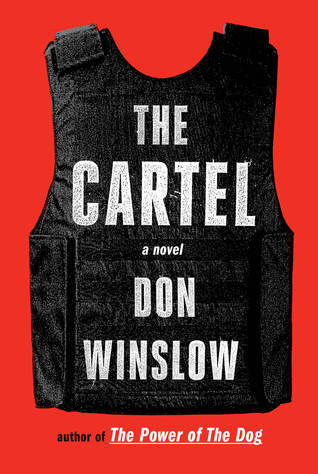
The Cartel by Don Winslow

This is a huge book in every way—for its effects on people’s thinking and actions, in its implications for drug policy worldwide, and in the scope of its historical documentation. It is very up to date. In the remarkable interview at Politics & Prose, the Washington, D.C. bookstore published online by Slate magazine (07.13.15), Winslow describes the genesis of this book and his writing process.

For writers, this downloadable Soundcloud podcast is a must-listen for how one approaches a critically relevant subject with large amounts of historical data. For U.S. residents, this is a must-listen for its implications on recreational drug use, U.S. spending on the drug war, and Winslow's take on U.S. policy on drugs. It is worth noting that no government official contacted Winslow when the book came out, though he got plenty of response from cops--supporting him. Winslow didn’t want to write this book but he gradually came to realize he “felt like a deserter from a war” and that he could no longer turn his face away from, and neglect to speak of the violence against the innocent residents of Mexico.
“If I were south of the border, looking north, I would have questions about corruption.” [Winslow @ Politics & Prose]
Winslow’s fictional account of the drug wars in Mexico and the United States is the longest and most important of his work to date, and it is sensational in every way. Winslow has long been recognized for his ability to catch a fascinating slice of the California community, a subset of surfers relaxing into their ‘fun in the sun’ lifestyles. In this huge, sprawling duo of novels, first The Power of the Dog followed by The Cartel, we have a much more sustained effort of imagination, research, and writerly skill that aligns so closely with headlines, a reader might be forgiven for mistaking Winslow as an intimate of the Mexican drug wars. It is also a song of praise for the journalists who risked everything to cover the story. Winslow used news reports to fictionalize events in a way that gets at the motivations and the darkness and corruption on both sides of the border. This is fiction, but what fiction!
“You do not revenge a murder by killing. You revenge it by living.”
The story itself revolves around the fictional DEA cut-out Art Keller, and the head of the Sonoran [Sinaloan] cartel, Adán Barrera [Joaquin Guzman]. They had been pursuing one another for years and when Barrera escaped jail in the United States to return to his drug kingdom in Mexico, Keller came out of hiding to find him and bring him to justice. Winslow ties in actual years of drug trafficking over the U.S. southern border with a very intimate portrait of both men and their organizations. A reader will be familiar with many of the gruesome violence recounted here—so violent it doesn’t seem believable—and will be grateful to Winslow for making it personal.
“Americans take their strength from victory. Mexican strength derives from their ability to suffer loss.”
Winslow does not fail to highlight the role of women in communities throughout Mexico, demonstrating for protection by the police and army. Women often went on record about attacks against their families in a brazen attempt to shame the leaders and the cartels and to show a kind of solidarity with their community. “I have no way of accounting for that kind of courage, for that kind of moral backbone, for that kind of grace,” says Winslow [Slate]. This is a novel about the extremes of human depravity, corruption…and goodness.
“There is such a thing as evil…[and] the world holds horrors…”
Winslow’s deep immersion in research for America’s border war on drugs has led him to hold an opinion and to become a public spokesperson for a point of view on how we are managing: “things are worse than ever before.” The cartels are now advertising their violence, like ISIS, in order to spur recruitment and in order to intimidate. In the last section of this book, the cartels move from narcotrafficking to narcoterrorism, the two phenomena borrowing from one another.

In an interview in Esquire with Tom Junod, Winslow talks about his thinking on whether or not the legalization of marijuana in the United States will tamp down the cartel’s power in Mexico:
"Look, here's my stance, if that's what you're asking for. I think all drugs should be legal and I wish nobody used any of them. I have no problem with people smoking a little dope. But it always amazes me where people who are so persnickety about buying fair trade coffee, and farm-to-table beef, and about where their chicken was raised, think nothing of buying marijuana, which in all likelihood was raised by murderers, sadists, sociopaths, and in a lot of cases harvested by slave labor. So I don't want to harsh anyone's buzz, but I think that's something that we need to look at because we really are in so many ways responsible for the violence in Mexico through our schizophrenic attitude toward drugs, including marijuana. We spent billions of dollars trying to keep it out and we spend billions of dollars buying it—and it's that conflict that allows the cartels to survive. So as marijuana is legalized, the cartels are getting ready for that in terms of trying to go legit. But on the other hand, you have to understand that the cartel's product is not the drug. The cartel's product is control of the trafficking routes. It doesn't matter what the item is, whether it's marijuana or coke or meth or heroin or blue jeans or bottled water, their product is the plazas, it's the neighborhoods, it's the ability to control those trade routes, okay? So, once marijuana becomes actually legal and starts to grow more in the United States and there's no problem getting it across the border up from Mexico, there will be other products. Because the product doesn't matter."
Winslow points out that the “product” now is, in fact, stronger opiates like cheap heroin. Regarding ‘corruption’ on this side of the border, Winslow cites our incarceration problem and how that relates to racism. Drugs weren’t regulated until black people got in on the action. Then we went after them with a vengeance. Winslow sounds Pynchon-esque in his insistence that we think.

This novel doesn’t seem to be getting the critical attention it deserves. It doesn’t look, feel, or sound like a genre novel, except in its pace. If it is not on the lists of important novels published this year, it should be--should have been--in contention for the major prizes. It is a terrific work of imagination that targets important societal issues, is based on historical events, and it challenges us to do better, in our drug habits and in our spending on drug wars. What more can a reader ask from literature?

I listened to the Blackstone audio production of this book, read by Ray Porter. It is a primo listening experience, but I had a look at the book, and that’s good also. Get either, or both. You can’t go wrong here. Buy yourself and your friends a Christmas present you will never forget. Inform yourselves.


You can buy this book here: Shop Indie Bookstores

Tuesday, December 1, 2015

White Leopard by Laurent Guillaume

Laurent Guillaume is a former police officer and mobile commander in the Val de Marne section of Paris, southeast of the city. When he transferred to the DEA-like section of drug enforcement, he was stationed in Mali, Africa, where most of the drugs headed for Europe are transshipped. Guillaume sets this novel in Bamako, Mali and his main character, Souleymane Camara, is a private investigator formerly of the French police, living on the lam in Mali where he feels at home.

Camara is a light-skinned black man, not completely accepted in his native France, nor in Mali, which his father called home. He has a protector of sorts in the head of police in Bamako, a childhood friend of his father’s, and a background in crime detection, so he waits for trouble to come to him, working for clients needing help.

The opening sequence in this novel is so tightly written we are drawn in before we can spot what lies ahead. A French law student in financial troubles is unwitting courier to drug traffickers, and Camara is called in to extricate her. What we get are cartel-like deaths with chainsaws, a road trip through Mali along the Niger, an overnight in the open sleeping on top of the jeep, satellite phones and long-range camera lenses for finding out who is allowing the drugs into the country.

For readers who hope to travel the world in books, or read a book from every country, this should definitely go on your list. For readers who simply wish to know more about what is happening in Mali now, you will be pleased to have a glimpse behind the curtain with this fast-paced and realistic thriller. France has a long tradition of producing great mystery and thriller writers and this author is definitely on that list.

The smooth and fluent translation by Sophie Weiner makes this an easy recommend.


You can buy this book here: Shop Indie Bookstores

Friday, June 12, 2015

The Infatuations by Javier MarĂ­as, translated by Margaret Jull Costa

MarĂ­as chooses a female character, Maria, to narrate this European-style psychological thriller with a slow reveal that turns on a dime in the final chapters. Maria works in a publishing company and every day on her break from work she sees an intriguing couple, married, having coffee together. They look so happy and in love that Maria finds herself looking forward to seeing them in the coffee shop. Sometimes she overhears scraps of conversation and pieces together a life for them without them taking notice of her.

On the very first page of this novel we learn a man is murdered. It is the man of the couple Maria is so interested in. Maria tells us the last time she saw the man was the last time his own wife saw him. It didn’t seem fair, she thinks, for them to share that intimacy for she didn’t even know his name until she saw the report of his death on television.

MarĂ­as, Maria: the names one suspects are intentionally close in sound and structure for it is very rare to find a character give up her thoughts so completely to an author. In this novel MarĂ­as resides inside the mind of Maria, and almost everything that she thinks over a period of weeks and months is recorded here for us to consider. The world from her view gives us a distance from the victim, his wife, his friend, and the perpetrator of the crime.

This novel addresses some themes: the closeness of love and envy; our closest friends could become our greatest enemies; love and distaste; the uncertainty that comes with intimacy. In the following brief video interview composed by his publisher, Penguin Random House, MarĂ­as talks about an oft-encountered theme in his work: betrayal.


MarĂ­as’ style--reflective, reflexive, recursive, chatty, digressive—would not work if it weren’t at the same time fiercely intelligent and deeply thoughtful. He is funny, too, as though he has caught onto a joke before we had and can explain it to us. The author is like translator himself, seeking for ways to express an idea, a word, a concept. Long, long sentences and paragraphs punctuated with ellipses and em-dashes show the ongoing thoughts of the narrator and her interpretation of what she finds out when she introduces herself to the wife of the murdered man.

After listening to this novel, my first foray into MarĂ­as’ work, I went looking for information about the author. His Goodreads site mentions Proust, William Faulkner, and the German writer Thomas Bernhard as influences, and it is not difficult to see these influences in the ebb and flow of internal dialogue that runs alongside the action in this novel.

I listened to the audio of this title produced by Penguin Random House, translated by Margaret Jull Costa and read by Justine Eyre. The translation is extremely impressive for stream-of-consciousness writing and reading, perfectly understandable and involving. A capacious mind and a brilliant translator will keep one occupied for days.


You can buy this book here: Shop Indie Bookstores

Wednesday, June 3, 2015

Losing Faith by Adam Mitzner

Legal thrillers are not a genre of fiction I read a lot of simply because good ones are so thin on the ground. I do remember picking up Scott Turow’s great thriller Presumed Innocent and being rapt. To this day it sets a standard against which other writers are judged. I should also state for the record that I am no legal scholar. The morass of legal considerations which might keep a confessed criminal from punishment make me anxious.

Adam Mitzner’s third novel is a curious thing. There seemed to be a large hole in the logic of the case he brought to our attention, which I realized later was supposed to create suspicion in the reader’s mind about the facts laid out by the author. Unfortunately, I was instead confused as to how we got here in the first place: it seemed Judge Nichols was well and truly screwed no matter what she did…and then she was murdered.

The successful head of a large New York law firm, Aaron Littman, involves himself sexually with a married federal court judge, Faith Nichols, who happens to be on the short list for the Supreme Court. Six months after they begin their liaison, she is the presiding judge over a case Aaron is arguing. Neither party recuses themselves. Aaron loses the case & his client goes to jail. The relationship ends.

When Faith is murdered, evidence of the relationship comes to light and Aaron is in the frame for the deed. The bulk of the novel revolves around Aaron’s trial.

Mitzner seems to present correctly the technical bits about objections and evidence but I wasn't sure he got the motivations of the characters right. One could argue that a legal thriller is really a psychological drama and the thoughts and motivations of the characters are at least as important as physical evidence, which as we all know, can be ambiguous, tampered with, lost, or destroyed.

I think by now all of us can imagine a powerful man, say the head of a large New York law firm, with a zipper problem. It is harder to imagine the flip side of that: a Supreme Court nominee willing to risk her career and her future for a relationship that could go nowhere. And Aaron’s associate Rachel did not have enough motivation to perjure herself under oath, to my mind. Love, sure. Gratitude, maybe. Promise? Hope? Nah. Maybe a man could do it, like Aaron’s mentor Rosenthal, for instance.

Anyway, it is an interesting set of circumstances that Mitzner provides and it is a good book to take to the beach. It is involving enough to keep you guessing and working out what the characters (and the author) could have done differently.


You can buy this book here: Shop Indie Bookstores

Monday, June 1, 2015

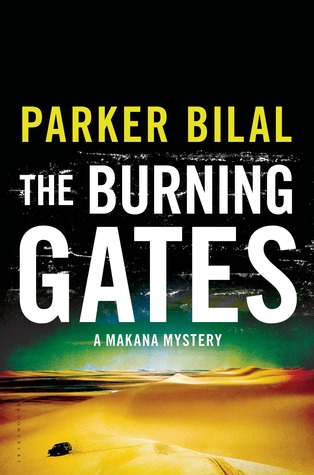
The Burning Gates (Makana #4) by Parker Bilal

London-born, Spain-based Parker Bilal is on my short list of great thriller writers writing today. His Makana Mystery series features a private investigator originally from the Sudan and now working in Cairo. Bilal gives us all kinds of atmosphere, politically-relevant motive, morally-complex characters, and a beating heart. His writing is blessedly free from idiom and extraneous storylines—the exotic setting and complexity of his main character’s life is enough to keep us off balance and searching for familiar ground.

In this installment, U.S. government contractors have gone off the reservation in Iraq to pursue a former high-ranking military official from the old Iraq regime who appears to be profiting from his theft of Kuwaiti ‘war spoils’ which was the impetus for U.S. involvement in the First Gulf War. It is now 2004, and the Egyptian political scene is chaotic while private investigator Makana wends his way between bribe-takers, informants, and status-seekers, seeking justice.

We get a street view of Cairo’s neighborhoods as Makana does his rounds, and have the opportunity to see how Cairenes operate day-to-day. Best of all are characterizations of some of the less wealthy inhabitants of the city: we see where they live, how they live, what they think, and how they eat. Cairo has always been a cosmopolitan place. Its location in the heart of the Middle East give it a unique perspective, and the central character in this series, Makana, allows us to look at the region with an even further remove.

Parker Bilal is the pen name of Jamal Mahjoub, who publishes award-winning literary novels under his own name.


You can buy this book here: Shop Indie Bookstores

Thursday, February 26, 2015

Interview with Alen Mattich, author of Marko della Torre series set in Croatia


British author Alen Mattich began publishing the Marko della Torre series in 2012 with Canadian publishers, House of Anansi. In July 2015 his work will be available in the United States for the first time. The series is set in the early 1990s in the region of the former Yugoslavia. Observers of international affairs will recall that NATO’s first involvement in Bosnian and Yugoslavian wars came shortly after the events related in this series. Review: ZAGREB COWBOY

Mattich has a light touch, however, and we get our history while laughing at the antics of a group of spies from the breakup of states who are less aligned by nationalism or political persuasion than by personal aggrandizement and fear of retribution. Real life mysteries like "Who Killed Olaf Palme?" and the "Massacre at Vukovar" are related with just enough material to make one wonder what did actually happen, conceivably leading readers to investigate more thorough histories and source materials, which Mattich thoughtfully provides in his Acknowledgements. Review: KILLING PILGRIM

Below Mattich answers a few questions about the origin of his series and about his literary forbears and influences. This is the kind of fiction I like best--international fiction that brings real events into focus. After all, written history often has fiction woven into its fabric, albeit not as funny as this, and the close up view of Croatia is worth all the time spent with this unusual group of characters. Review: THE HEART OF HELL

1. You have a profession as a financial journalist for Dow Jones and The Wall Street Journal. Do you find writing novels relaxing?

I'm not sure relaxing is the word. Maybe I write instead of relaxing, say watching TV, which I haven't done for years, or reading novels, which only makes me feel guilty for not doing my own writing. But in a way writing novels helps to distract me from my own life and its problems and demands. And though sometimes it's exhausting writing my novels in the evenings and writing for a day job--when I'm in the thick of both I can sometimes write 15,000 words a week for weeks on end--there's enough variation between the two to keep me going.

2. The della Torre series takes a unique angle on genre fiction and none of the traditional classifications (mystery/thriller/spy) seem to fit. How do you classify it?

I would probably classify the books as thrillers. That's how I envisaged them anyway. But really they're stories about relationships between people in difficult circumstances and about some not very nice choices otherwise ordinary people were forced into by totalitarian governments.

3. Does your work have literary antecedents or influences?

I'm sure it does. I can list some of the conscious ones, but there are plenty of unconscious ones too. I'm a big fan of Elmore Leonard's books. His writing is spare, has a tremendous momentum and is full of humour. I feel that a lot of otherwise well written books miss out on humour. Finding things funny, even in the most desperate of circumstances is an innately human characteristic. Humour has an important social function. Ignore it and you miss a big slice of how people interact (even if most people aren't actually very funny). But because Leonard wrote genre fiction his work isn't generally regarded as seriously as books by literary writers. A mistake, I think. I also enjoy George Macdonald Fraser's Flashman books. That's a rare anti-hero, a thoroughly rotten, self serving rogue who it's impossible not to like and cheer for. Flashman was a model for Strumbić, who is my favourite character and one I'd like to live on. I enjoy Simenon's atmospheric descriptions, which I'd hoped to mirror, though I'm not sure I succeeded. And there are a number of east European writers from the Cold War era who wrote about the struggle of living during the Second World War and under Communist regimes, people like Danilo Kis, Milan Kundera, Josef Skvorecky, Tadeusz Borowski, Ivan Klima, Solzhenitsyn, Shalamov, Vasily Grossman and numerous others whose words have seeped in over the years.

4. You write so intimately of Croatia. Why there?

Zagreb Cowboy started as a KGB book set in Moscow. I wasn't far into it when I went to visit my parents who'd returned to Zagreb from the U.S. after retiring. It was January. The city was coldly beautiful, atmospheric. In the evening, gas lamps were lit in the old town, the streets were empty, trams ground through the Hapsburg part of the city, and I thought, why am I writing about Moscow, a city that's been done endlessly by people who know it so much better than I when here's a city full of history and exotic charm that I know well and which is almost entirely absent from popular literature. I have family in a hidden village in a deep valley not far from Zagreb, and so that featured as Strumbić's hideaway villa. And I have other relatives in Istria, an almost unknown corner of Europe that is soaked in history and spectacular scenery.

5. I note you studied at McGill University in Montréal, Canada. Is that why you decided to have your novels published there? Are you also published in Europe?

My closest friend at McGill--and since--is a writer and editor who's now based in Ottawa. He'd been at me to write a novel for years, decades even. So when I started writing my airport novel, I also sent it to him, chapter by chapter. He didn't edit, but he offered encouragement. And he also passed along my book to his agent in Toronto. The agent liked it and signed me up. The agent also knew that the publisher House of Anansi were looking to expand their newly founded crime imprint Spiderline but weren't having much luck finding interesting new books. So almost the minute I finished Zagreb Cowboy I had both an agent and a publisher. Anansi bought the world rights which means they can choose to sell the book on to other publishers elsewhere including Europe. But they haven't so far.

6. When you have time to read novels, what kind of novels do you read? What books make you laugh?

I don't read as much as I should. I just don't have the time. My day job is fairly demanding and my four children and my wife need to be reminded every once in a while that I exist. Most of my reading I did in by my early 30s. Having said that, in the past couple of months I've read Shalamov's Kolyma Tales, John Williams' Stoner and Augustus, the latest Bernard Cornwell Viking book, which I've forgotten the title of but they're pretty interchangeable, the first of Mary Renault's Alexander trilogy and I've reread Evelyn Waugh's Sword of Honour trilogy and Jerome K. Jerome's Three Men in a Boat, which is perhaps the funniest book ever written. Elmore Leonard can be pretty funny too, while Kingsley Amis' Lucky Jim is the second greatest comic novel ever written.

7. Did you read Thomas Picketty’s Capital in the 21st Century and if so, what did you think?

I read parts of Picketty when I had a review copy, but didn't review it because I couldn't summarise his thinking in a fair and clear way. It's not a book that's easily digestible and a better way into it is through reviews written by various economists (don't ever read just one though, to get a sense of what he's saying you need to read four or five long reviews from different economic perspectives). So my thinking of the book is entirely derivative. Having said that, in my day job I often write about the economically harmful effects of excessive inequality. It's not an easy subject to write only a few paragraphs about, so I'll leave it at that.

8. Will we see more of Marko della Torre and Julius Strumbić or do you have something else in mind?

I've written a children's book set at the start of the Second World War and based around the Dunkirk rescue that my agent is currently trying to sell. And I have three or four chapters of at least half a dozen books on the go, one a historical fiction, another a romance, another a children's story and one about a corrupt corporate troubleshooter. I'll see which one holds my attention to the end. As for della Torre and Strumbić, I don't have any intention of writing more in the series. But circumstances can change.

You can buy these book here: Shop Indie Bookstores

Tuesday, February 10, 2015

A Kim Jong-Il Production by Paul Fischer

This work of creative nonfiction will undoubtedly catch many Asia-watchers by surprise. Facts about North Korea are thin on the ground here in America, but this book blasts open a personal history of Kim Jong-Il with a canny, graceful, and wise commentary that is far beyond what anyone else has been able to manage. It is an enormous feat of research, but more than that, it is so compulsively readable that we are held captive.

It begins detailing the history of two individuals who were instrumental in the South Korean film industry in the 1940s and 50s. Before you ask how relevant that information is to us today, just remember that the author is a film producer who claims these early films have a cult following now, perhaps because of the Gangnam rage that has spread worldwide, and has opened a glimpse into a world never before considered worthy of serious study. We couldn’t have a better introduction to film in South Korea nor have we ever had a more detailed look at the North Korean film fanatic Kim Jong-Il, who kidnapped the two leading lights in the South Korean film industry to bolster his own propaganda machine.

The beautiful and talented South Korean film star Choi Eun-Hee was kidnapped first. Fischer compares her favorably to Marilyn Monroe (with whom she was photographed) in terms of star quality and stage presence. Choi's former husband, the film director and producer Shin Sang-Ok, was taken later, though because he’d tried to escape he was imprisoned in North Korea for a number of years. Eventually they were reunited in Pyongyang and began producing films for Kim Jong-Il’s ailing film industry. This book is partially based on their memoir of their time in captivity and their successful escape to the West.

Perhaps more importantly, we learn a huge amount about the Kim regimes. This material may be out there somewhere, in a hundred escape memoirs, spy reports, or academic papers but I have never seen so much information about Kim Jong-Il and North Korea in one place before. Besides all this great new information, the writing is absolutely first-rate, the story fantastic, and the immersion into film so well-informed that it seems like a trick.

Who is Paul Fischer and how does he know so much about North Korea? The Introduction and Afterword discuss sources, and mostly my concerns about veracity of content were allayed. It may be possible that no one ever bothered before to gather together the dispersed information in just this way before. I just don’t know. Frankly, it is Fischer’s skill that is simply stunning, besides the vast trove of collected information about the Kim regime and North Korea. Fischer's sentences are rich and coherent in a way writers only dream of, and the sections pass easily into one another while we readers are led deeper into the intricacies of film lore and the strange and frightening propaganda machine of Kim Jong-Il.

I have no idea whether or not Shin Sang-Ok and his wife Choi Eun-Hee were abducted or if they defected to North Korea. In my mind it is regrettable either way but not particularly relevant now. It is not what I focused on. I have heard some of the details of kidnapping, of prisons, of life in North Korea, but nothing like this detailed look north of the 38th parallel. This book has everything: grandeur, mystery, terror, and a fluency that makes this tremendous storytelling no matter what side of the political spectrum you fall on.

This book must be labelled creative nonfiction because of the conversations recounted verbatim and the reconstructions of scenes so complete you would think Fischer 'produced' them. I don’t care. If one-fourth of the information in this book is true we have made great headway in understanding and demystifying a completely obscure regime. You will recall the splash Truman Capote made with his fictional recreation of the nonfiction event he wrote about in In Cold Blood. Let’s call this in the same vein until we can verify, but remember this man Paul Fischer. He has burst on the literary scene with a truly stupefying and important offering. If he can make films the way he can write we are in for a real treat.

I listened to the Random House Audio production of this book, beautifully read by Stephen Park. I have ordered the Flatiron Books print edition to look it over more carefully. As I say, books like this don’t come along very often. To think this was a debut that took about two years to put together is extraordinary.

Paul Fischer answers a few questions here. Boston radio station WGBH's Forum Institute filmed a portion of Fischer's reading at the Harvard Bookstore in February 2015. That YouTube video is available here.

You can buy this book here: Shop Indie Bookstores

Monday, February 9, 2015

Nobody Walks by Mick Herron

Nobody Walks This looks like the beginning of a delicious new spy/crime/mystery series by the veteran literary thriller writer and CWA Dagger Award winner, Mick Herron. The emphasis in Herron’s books is less on kinetics and more on character development. Already he has treated us to classic portraits including the bald and bewigged head of MI5’s Intelligence Service, Dame Ingrid Tearney, and the pale and twitchy successful games producer, Vincent Driscoll. But his main character, Tom Bettany, is one we expect to see again.

Where do disaffected British spies go when they leave the service? Thomas Bettany, a.k.a. Martin Boyd, leaves Britain and scuffles around the rougher parts of France where nobody much wants to know anyone’s personal history. Bettany lost his wife to cancer, and suddenly his estranged son turns up dead in London. Bettany had always figured on reconciliation, but that won’t happen now. So, how does a young man die suddenly? Bettany goes to find out and ends up walking smack into folks looking for him.

Mick Herron already has a host of good mysteries to his name, but he has refined his skills with this one. This is fun and involving--a great book for a day of too hot sun or heavy snowfall.

Soho Press is publishing this new series and the earlier Slough House series which included Slow Horses and Dead Lions.


You can buy this book here: Shop Indie Bookstores

Thursday, October 30, 2014

For the Dead by Timothy Hallinan

The trinity at the center of this series, Poke, Rose, and Miaow, has our allegiance. I prefer to think of them as a triumvirate because of their power. Poke has soul, Rose is sexy, and Miaow has knowledge of the streets that no child should ever have.

The Rafferty’s use their powers together in this latest installment of the Poke Rafferty series to bring down a corrupt power broker hiding in the police force. They had a little help (well, okay, a lot of help) from Andrew, Miaow’s best mate and school chum, and his contacts in the Vietnamese embassy. Hallinan keeps us riveted as Miaow escapes the nets laid for her and Andrew demonstrates his computer wizardry. They are teens, with all the confusion, angst, and drama of teens, and we ache for them…and their parents.

Hallinan may be unsurpassed in character creation. Miaow, Poke’s adopted daughter from the streets, is brought into clear focus when we listen to her confidence when confronting the hitmen who chase her. She learned too early how to escape the traps of bad men. The personality quirks of Rose and Poke, and their patter together, have the comforting tension of two distinct, discerning individuals who nonetheless respect and love one another. It is a pleasure to see what Hallinan will choose to highlight in his novels, because there is always a ring of truth.

A powerful cop is setting up kills that benefit him financially and “solving” the cases with the help of coerced police lower in the hierarchy. Things start to unravel when Miaow and Andrew buy an iPhone 5 on the black market. In pursuing the aggressor, Poke is mainly impotent except for his rage…but he has intelligent friends with mythic powers, and as a team, they each use their special skills to resolve the issue satisfactorily. Moments of finely-calibrated tension are seeded throughout the novel impelling the reader to the nail-biting finish.

Hallinan introduces us to two unforgettable characters. One is a cop in a backwater precinct who is brought to Bangkok to work on this case because of her extraordinary computer skills. Her name is Kwai Clemente, part Filipino, and she has eyes that people cannot help but comment upon. Though she barely says a word except “yes, sir” in this story, but one cannot help but want to see her again. Writers, take a look at how Hallinan did this. Hallinan creates characters that actually think, breathe, and bleed so that we feel some kind of connection with them.

The second person we cannot forget is the Western bank manager who refers to Thais as “these people” and who, after ordering only for himself at a luncheon, strongly suggests to his dining companions what they should order. “Pink-faced and closely shaven,” James Kalmenson is “a finger-snapper and finger-pointer,” “indulges in…imperious post-colonial behavior,” and “has no obvious shortage of self-regard.” We don’t long to see Kalmenson again because his type is easy to find, alas.

One reviewer calls this series a literary thriller, and I agree with that characterization, though I would put the emphasis on literary. I admit to a short attention span for thrillers as a genre because the characters often seem like cut-outs whose purpose is to propel the action. Hallinan’s thrillers are the opposite. There is riveting action, but it is the characters we come to see.

Poke is a hapless sort. The one time he could have done some damage to a bad guy he didn’t have his gun. (view spoiler) But we’re riveted anyway because—and this is another of Hallinan’s tone-perfect choices--women and children might be victims, and that we couldn’t bear.

If you haven’t read Hallinan yet, you do not have to start at the beginning, though you may wish to go back later to sop up every delicious drop of this mystery series. The Fear Artist (Poke Rafferty #5), for instance, won all kinds of praise among taste-makers for its white-knuckled swerve into international espionage. Hallinan does it all.

You can start reading the series here. What you need to know is that Poke Rafferty is a writer who occasionally sidelines as a private investigator, Rose is a former Bangkok prostitute who has happily retired, and Miaow is a now-teenaged former street kid the two have adopted. This odd threesome has the love and joy and anguish of all the world within their encircling arms.


You can buy this book here: Shop Indie Bookstores

Sunday, June 22, 2014

I am Pilgrim by Terry Hayes

I Am Pilgrim: A Thriller British-born Terry Hayes’ filmography runs to nearly twenty films. Perhaps best known in the U.S. for Mad Max Beyond the Thunderdome, he was also script writer and producer of Dead Calm, the horror/thriller that featured a couple alone on a yacht on the Great Barrier Reef when murderers come calling.

Now, Hayes' debut novel is an espionage wunderkind that was originally published in 2013 in England by Bantam and Transworld Press and came out this summer in the U.S. Re-released in hardcover this year by Atria and in audio by Simon & Schuster, it is making a huge splash in the summer reading market.

I just finished two nonfiction spy histories: Ben MacIntyre’s new A Spy Among Friends about spies in Britain and Kai Bird’s The Good Spy about American spies. I thought I was done with spies for awhile, so imagine my surprise to discover Hayes writes about espionage as well. But Hayes’ operative, code-named Pilgrim, is run straight from the White House (!) by The Whisperer, an old White House insider who appears to be dying, maybe from throat cancer. (?)

Hayes luxuriates in the ability to tell detailed backstories about all his characters, for a novel has the potential to have far more of everything than a screenplay. Like many mysteries and thrillers, this novel has the de rigueur two threads: A young white lesbian is killed in New York City and a terrorist gets mujahideen training in Afghanistan. What is absolutely gob-smacking is how the two threads actually come together in Turkey.

The proof that a U.S. billionaire was murdered in Turkey has the most far-fetched daring inter-continental plot solution--even the characters themselves are skeptical. But brazen and ingenious it is, and one has to hand it to Hayes. He brings his understanding of film to the world of fiction.

Perhaps I am a little risquĂ© for some folks, but I would suggest this story is a young adult title. The level of detail of actions and motivations would make it exciting reading for teens. There is some gun violence, but bodily harm is mostly done to Pilgrim himself. Since Pilgrim is describing it, it’s more interesting than fearsome. The good guy Pilgrim does some bad things, but his heart is in the right place. Even the bad guy, undeniably evil, has reasons for what he does. There is one person, however, that is bad through and through. That is the killer of the young woman in New York.

The story solves both crimes, but one killer escapes to kill another day, which must be why this book is called Pilgrim #1 on Goodreads. The first book of a series, it is sure to garner a large and enthusiastic audience. I listened to this on Simon & Schuster audio, read very capably by Christopher Ragland, and was provided with the audiobook by Simon & Schuster in exchange for an honest review.

Thriller readers everywhere are sure to be entranced with this finely constructed mystery and I immediately recommended the title to members of my family who enjoy thrillers.


You can buy this book here: Shop Indie Bookstores

Saturday, October 26, 2013

The Prone Gunman by Jean-Patrick Manchette

The Prone Gunman
The novel is so tightly plotted one can barely tear oneself away. It is slim enough to read in an evening, however, if you are so inclined. Manchette wrote screen plays also, and the writing in this novel is spare enough to read almost as an outline with its own stage directions.

A hitman completes what he thinks is his final job, deposits his take with his financial advisor, then heads back to find the woman he left behind whom he hopes is still waiting for him ten years later. She hasn’t been waiting.

Machette is a master of cool, though his hitman does betray his nerves on occasion, by irritability, or by a tightening of the lips. The language is so un-upholstered, we zip along from one hideout to another, watching our hitman eliminate threats until his old boss comes hunting him down—for more work, or to close his file—we can’t be sure.

It occurs to me that someone learning a language could use this book to effect. Sentences are short and punchy and generally only have one clause:
"To get back to Paris, they headed towards Orléans, where they got on Autoroute A10. It was cold but dry. The little van went fast."
A generation of thriller writers benefitted from Manchette’s oeuvre. He brings the thrill back into the genre. How Manchette manages to grab (and hold) us with so little verbiage is the real mystery.

City Lights Books publishes this novel and 3 to Kill. The New York Review of Books publishes Fatale. I have been heavy into things French since beginning the TV series available to stream on Netflix called SPIRAL. If you haven't seen it, you are missing something grand.


You can buy this book here: Shop Indie Bookstores

Wednesday, October 10, 2012

The Fear Artist by Timothy Hallinan

The Fear Artist


Hallinan has a series featuring Poke Rafferty, an Anglo-Asian male living in Bangkok. In Hallinan’s hands, Bangkok becomes an international center of intrigue focused on its restive Muslim south and juggling its overheated, overaged male spy population who had happily retired themselves only to be called back into harness. More importantly, Hallinan has created his most interesting and powerful female character yet, Ming Li.

Ming Li is the Anglo-Chinese step-sister of Poke and she aids his latest attempt to uncover a psychopath bent on destroying those who know his shadowy past. Young, (female), smart, (vulnerable), and irreverent, Ming Li blasts through accepted modes of spycraft to intuit actions of the players in advance. She does not spare her brother who, as a member of the male ruling class, had no need to learn lessons of body language and intent early on.

What I loved: 1) Poke Rafferty’s humanity. When attacked by a man with a gun, he manages to save his attacker before rushing off to save himself. Fearful as Poke might have been, he was a good man first. Rafferty is willing to believe the best of people he suspects, reserves judgment on their behalf, and stretches to preserve their basic dignity despite their iniquities—not including the really bad man who deserved everything coming to him. 2) Ming Li. Where Rafferty sees ambiguity, Ming Li cuts through the dross with a rapier mind and lays flat broad swathes of bad folk. 3) The way the author ratchets up the tension by having a long-winded Russian collaborator slow the action with pages-long detail at a critical moment when Rafferty (and readers!) just want the facts. It’s a gentle, funny way to tense us up and preserve forward momentum.

Hallinan did very well in raising the temperature of this thriller, but he didn't succeed without flaw: I disliked what I saw as the artificial character of “Treasure” when I first met her. Later, I realized how entirely possible it was to have such a character, neglected, abused, and exploited, when a psychopath is in charge. But the psychopath and the daughter felt like weak links.

And herein lie my only quibble: I would have preferred, were it at all possible, to have a bad man with more ambiguity, depth, and moral equivocation than our bad man here. He was so dark, he seemed like a caricature, and made everyone else a little like a caricature also. I believe the general outline of these characters and places are quite the real thing, with only a few of their sketch lines missing.

But you know what? It would have been a completely different book had Hallinan made it difficult for us with moral ambiguity. One could even argue the bad man wasn't as bad as he made out, since he did something uncharacteristic for his nature at the end of the book, one assumes because he was a father after all. And after the big event in the final pages, only one body was found instead of two, so one of the two that were "taken out" will be back, I fear. Which will it be?

I like Hallinan’s books very much, and when one needs a dose of the heat and flavour of Southeast Asia, or of Thailand's wonderful, complicated "anything goes" acceptance, I recommend having your moral compass realigned by reading a couple of Hallinan's books. Onward [Buddhist] soldier…and tell us more tales.


You can buy this book here: Shop Indie Bookstores