Hardcover, 304 pgs, Pub July 2nd 2015 by William Collins (HarperCollins UK), ISBN13: 9780007554836), Lit Awards: Goodreads Choice Award Nominee for Memoir & Autobiography (2015)
I listened to this remarkable story, read by Josie Dunn and published by HarperCollins Publishers UK, with a degree of disbelief. Certain parts of the story agree with what I’d learned already about the lives of North Koreans, the general trend of their escapes, and their orientation in South Korea as refugees. The author was young, seventeen, when she decided to cross the frozen Yalu in winter and go see her relatives in Shenyang, China.
She’d had no idea where Shenyang was—that I actually could believe. And as a privileged (for North Korea) teen, she was accustomed to getting her way or being ignored. Certainly maps were not easily found, just as they weren’t in China, either, thirty years ago. The period in this book covers approximately 2000-2012, a period when Hyeonseo Lee spent ten years in China working then flew to South Korea to request asylum.
Her own path to freedom was relatively smooth; she’d learned to be wary of revealing much about herself from childhood and was not easily deceived. Being young and attractive gave her the benefit of the doubt in China, but she wasn’t able to escape every attempt to corral her into exploitative jobs. She lived on her wits and managed, eventually, to eventually pass as Chinese-Korean. With this identity she was able to procure a passport (and a new name). She lived in China ten years.
I don’t want to spoil the adventure for those who aren’t familiar with her story, but it is a doozy. Her family in North Korea had a good songbun (status or name) which they exploited to bring goods in from outside the country. An uncle actually sold heroin. Her mother brought in all manner of household goods and occasionally methamphetamines! Hyeonseo’s brother began doing much the same illicit and illegal import work, bribing border guards, etc. after Hyeonseo left. Apparently her departure was officially overlooked, perhaps as the result of a bribe.
The story rings true, and she’s told it so many times by now that there are all kinds of suggestive chapter endings which propel one to turn to the next chapter. Apparently Ms. Lee met with President Trump with some other defectors in the White House in January 2018 before the president’s departure to Singapore to meet Kim Jong Un. She has given many talks about her experience and that of her family, including a TED talk I have posted below.
This is a defector story you probably haven’t heard, and you might want to see what everyone is so excited about.
Below please find a 12-minute TED talk by Hyeonsan Lee:
Tweet
Showing posts with label suspense. Show all posts
Tuesday, September 18, 2018
Wednesday, December 2, 2015
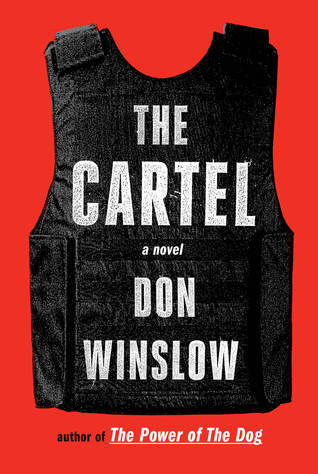
The Cartel by Don Winslow
This is a huge book in every way—for its effects on people’s thinking and actions, in its implications for drug policy worldwide, and in the scope of its historical documentation. It is very up to date. In the remarkable interview at Politics & Prose, the Washington, D.C. bookstore published online by Slate magazine (07.13.15), Winslow describes the genesis of this book and his writing process.
For writers, this downloadable Soundcloud podcast is a must-listen for how one approaches a critically relevant subject with large amounts of historical data. For U.S. residents, this is a must-listen for its implications on recreational drug use, U.S. spending on the drug war, and Winslow's take on U.S. policy on drugs. It is worth noting that no government official contacted Winslow when the book came out, though he got plenty of response from cops--supporting him. Winslow didn’t want to write this book but he gradually came to realize he “felt like a deserter from a war” and that he could no longer turn his face away from, and neglect to speak of the violence against the innocent residents of Mexico.
In an interview in Esquire with Tom Junod, Winslow talks about his thinking on whether or not the legalization of marijuana in the United States will tamp down the cartel’s power in Mexico:
This novel doesn’t seem to be getting the critical attention it deserves. It doesn’t look, feel, or sound like a genre novel, except in its pace. If it is not on the lists of important novels published this year, it should be--should have been--in contention for the major prizes. It is a terrific work of imagination that targets important societal issues, is based on historical events, and it challenges us to do better, in our drug habits and in our spending on drug wars. What more can a reader ask from literature?
I listened to the Blackstone audio production of this book, read by Ray Porter. It is a primo listening experience, but I had a look at the book, and that’s good also. Get either, or both. You can’t go wrong here. Buy yourself and your friends a Christmas present you will never forget. Inform yourselves.
You can buy this book here:
Tweet
For writers, this downloadable Soundcloud podcast is a must-listen for how one approaches a critically relevant subject with large amounts of historical data. For U.S. residents, this is a must-listen for its implications on recreational drug use, U.S. spending on the drug war, and Winslow's take on U.S. policy on drugs. It is worth noting that no government official contacted Winslow when the book came out, though he got plenty of response from cops--supporting him. Winslow didn’t want to write this book but he gradually came to realize he “felt like a deserter from a war” and that he could no longer turn his face away from, and neglect to speak of the violence against the innocent residents of Mexico.
“If I were south of the border, looking north, I would have questions about corruption.” [Winslow @ Politics & Prose]Winslow’s fictional account of the drug wars in Mexico and the United States is the longest and most important of his work to date, and it is sensational in every way. Winslow has long been recognized for his ability to catch a fascinating slice of the California community, a subset of surfers relaxing into their ‘fun in the sun’ lifestyles. In this huge, sprawling duo of novels, first The Power of the Dog followed by The Cartel, we have a much more sustained effort of imagination, research, and writerly skill that aligns so closely with headlines, a reader might be forgiven for mistaking Winslow as an intimate of the Mexican drug wars. It is also a song of praise for the journalists who risked everything to cover the story. Winslow used news reports to fictionalize events in a way that gets at the motivations and the darkness and corruption on both sides of the border. This is fiction, but what fiction!
“You do not revenge a murder by killing. You revenge it by living.”The story itself revolves around the fictional DEA cut-out Art Keller, and the head of the Sonoran [Sinaloan] cartel, Adán Barrera [Joaquin Guzman]. They had been pursuing one another for years and when Barrera escaped jail in the United States to return to his drug kingdom in Mexico, Keller came out of hiding to find him and bring him to justice. Winslow ties in actual years of drug trafficking over the U.S. southern border with a very intimate portrait of both men and their organizations. A reader will be familiar with many of the gruesome violence recounted here—so violent it doesn’t seem believable—and will be grateful to Winslow for making it personal.
“Americans take their strength from victory. Mexican strength derives from their ability to suffer loss.”Winslow does not fail to highlight the role of women in communities throughout Mexico, demonstrating for protection by the police and army. Women often went on record about attacks against their families in a brazen attempt to shame the leaders and the cartels and to show a kind of solidarity with their community. “I have no way of accounting for that kind of courage, for that kind of moral backbone, for that kind of grace,” says Winslow [Slate]. This is a novel about the extremes of human depravity, corruption…and goodness.
“There is such a thing as evil…[and] the world holds horrors…”Winslow’s deep immersion in research for America’s border war on drugs has led him to hold an opinion and to become a public spokesperson for a point of view on how we are managing: “things are worse than ever before.” The cartels are now advertising their violence, like ISIS, in order to spur recruitment and in order to intimidate. In the last section of this book, the cartels move from narcotrafficking to narcoterrorism, the two phenomena borrowing from one another.
In an interview in Esquire with Tom Junod, Winslow talks about his thinking on whether or not the legalization of marijuana in the United States will tamp down the cartel’s power in Mexico:
"Look, here's my stance, if that's what you're asking for. I think all drugs should be legal and I wish nobody used any of them. I have no problem with people smoking a little dope. But it always amazes me where people who are so persnickety about buying fair trade coffee, and farm-to-table beef, and about where their chicken was raised, think nothing of buying marijuana, which in all likelihood was raised by murderers, sadists, sociopaths, and in a lot of cases harvested by slave labor. So I don't want to harsh anyone's buzz, but I think that's something that we need to look at because we really are in so many ways responsible for the violence in Mexico through our schizophrenic attitude toward drugs, including marijuana. We spent billions of dollars trying to keep it out and we spend billions of dollars buying it—and it's that conflict that allows the cartels to survive. So as marijuana is legalized, the cartels are getting ready for that in terms of trying to go legit. But on the other hand, you have to understand that the cartel's product is not the drug. The cartel's product is control of the trafficking routes. It doesn't matter what the item is, whether it's marijuana or coke or meth or heroin or blue jeans or bottled water, their product is the plazas, it's the neighborhoods, it's the ability to control those trade routes, okay? So, once marijuana becomes actually legal and starts to grow more in the United States and there's no problem getting it across the border up from Mexico, there will be other products. Because the product doesn't matter."Winslow points out that the “product” now is, in fact, stronger opiates like cheap heroin. Regarding ‘corruption’ on this side of the border, Winslow cites our incarceration problem and how that relates to racism. Drugs weren’t regulated until black people got in on the action. Then we went after them with a vengeance. Winslow sounds Pynchon-esque in his insistence that we think.
This novel doesn’t seem to be getting the critical attention it deserves. It doesn’t look, feel, or sound like a genre novel, except in its pace. If it is not on the lists of important novels published this year, it should be--should have been--in contention for the major prizes. It is a terrific work of imagination that targets important societal issues, is based on historical events, and it challenges us to do better, in our drug habits and in our spending on drug wars. What more can a reader ask from literature?
I listened to the Blackstone audio production of this book, read by Ray Porter. It is a primo listening experience, but I had a look at the book, and that’s good also. Get either, or both. You can’t go wrong here. Buy yourself and your friends a Christmas present you will never forget. Inform yourselves.
You can buy this book here:
Labels:
America,
audio,
Blackstone Audio,
crime,
fiction,
journalism,
Knopf,
Latin America,
literature,
series,
suspense,
thriller,
true crime,
war
Wednesday, September 30, 2015
Katherine Carlyle by Rupert Thomson
This novel has the spine-tingling atmosphere of an episode of Netflix’s original series Sense8. Chance, coincidence, gambles, even miracles figure into the actions of a young woman seeking to make sense of her life and her mother’s death. The distinct sense of foreboding that pervades the pages comes partly from us: we are involved, judging the character’s choices against our own. The main character cannot be sure how this will play out, either. "I feel new. I’m a blank slate. A gamble…" This is a teenaged alienation story that does not run to drugs, alcohol, nor sexual perversion.
Katherine (Kit) Carlyle was an IVF baby who had been kept as a frozen embryo for eight years before she was implanted in her mother’s uterus with two other embryos. She was the one who survived, and from her years waiting in limbo, we know her conception and birth was a kind of gamble. Kit is nineteen and living in Rome when we meet her. Somehow Kit claims a kind of DNA memory of that pre-time of frozen suspension, and finds herself going in search of those origins when she feels abandoned by her parents--her mother to death, and her father to a peripatetic career.
Kit is a woman who doesn’t always have the motivations we associate with a woman of her wealth, beauty, and intellect. She is young but her naïveté is paired with a world consciousness that few people over thirty can claim. She also has waist-length hair. When I pointed out to friends that this seemed a male fantasy, one man said “not so fast: women with very long hair tend to obsess over it.” It turns out that hair is like a talisman in this novel, a touchstone upon which feelings, actions, and behaviors turn.
Author Rupert Thomson has published nine other novels, one described by critic Jonathan Miles writing for Salon.com as "disquieting" for the horrific scenes of sexual abuse depicted. Thomson, now sixty years old, has been praised for his sentence craft and is often in the running for major literary prizes. One suspects it is his unusual sense of story rather than his writing talent that advances other authors over him to win prizes. In this novel, for instance, the palpable sense of doom and danger does not often play out: we readers are bloodied but whole. There is a rape scene late in the novel, but it is not graphic and is only implied.
More disturbing are the dreams and fantasies of the young woman, who likes to imagine her father searching for her, trying to find her. She writes letters to him, and despite accusing him of not loving her enough, she dreams that he will feel anxious moments trying to locate her with the few clues she has left behind. The author adds to our sense of unease by italicizing a sentence that could only be said by an older person to a younger one: "Even negative experiences contribute to the sum of who you are." There is a sense of inevitability about pain and exposure, though Thomson does not do his worst, to Kit nor to us, in this novel.
Thomson’s work may simply be too uncomfortable to win the prizes, but this novel stands as an entry in the new literature being written that gives us a sense of being untethered in time and space. Thomson’s characters appear to acknowledge and accept the many mysteries that come with interactions with new people. It remains an open question whether his reading public wants that, too.
**Rupert will be participating in a series of events in the US this fall. Please see below for a list of readings and interviews for the novel KATHERINE CARLYLE.**
You can buy this book here:
Tweet
Katherine (Kit) Carlyle was an IVF baby who had been kept as a frozen embryo for eight years before she was implanted in her mother’s uterus with two other embryos. She was the one who survived, and from her years waiting in limbo, we know her conception and birth was a kind of gamble. Kit is nineteen and living in Rome when we meet her. Somehow Kit claims a kind of DNA memory of that pre-time of frozen suspension, and finds herself going in search of those origins when she feels abandoned by her parents--her mother to death, and her father to a peripatetic career.
Kit is a woman who doesn’t always have the motivations we associate with a woman of her wealth, beauty, and intellect. She is young but her naïveté is paired with a world consciousness that few people over thirty can claim. She also has waist-length hair. When I pointed out to friends that this seemed a male fantasy, one man said “not so fast: women with very long hair tend to obsess over it.” It turns out that hair is like a talisman in this novel, a touchstone upon which feelings, actions, and behaviors turn.
Author Rupert Thomson has published nine other novels, one described by critic Jonathan Miles writing for Salon.com as "disquieting" for the horrific scenes of sexual abuse depicted. Thomson, now sixty years old, has been praised for his sentence craft and is often in the running for major literary prizes. One suspects it is his unusual sense of story rather than his writing talent that advances other authors over him to win prizes. In this novel, for instance, the palpable sense of doom and danger does not often play out: we readers are bloodied but whole. There is a rape scene late in the novel, but it is not graphic and is only implied.
More disturbing are the dreams and fantasies of the young woman, who likes to imagine her father searching for her, trying to find her. She writes letters to him, and despite accusing him of not loving her enough, she dreams that he will feel anxious moments trying to locate her with the few clues she has left behind. The author adds to our sense of unease by italicizing a sentence that could only be said by an older person to a younger one: "Even negative experiences contribute to the sum of who you are." There is a sense of inevitability about pain and exposure, though Thomson does not do his worst, to Kit nor to us, in this novel.
Thomson’s work may simply be too uncomfortable to win the prizes, but this novel stands as an entry in the new literature being written that gives us a sense of being untethered in time and space. Thomson’s characters appear to acknowledge and accept the many mysteries that come with interactions with new people. It remains an open question whether his reading public wants that, too.
**Rupert will be participating in a series of events in the US this fall. Please see below for a list of readings and interviews for the novel KATHERINE CARLYLE.**
EVENTS
ST PAUL, MN
Twin Cities Literary Festival – 10/17
NEW YORK, NY
Bookcourt – Talk, Q&A, Signing – 10/19/15
Greenlight Bookstore in conversation with Rebecca Mead – Talk, Q&A, Signing – 10/20/15
Center for Fiction in conversation with w/ Rebecca Carol – Talk, Q&A, Signing –10/22/15
BOSTON, MA
Boston Book Festival – 10/24/15
You can buy this book here:
Labels:
British,
Europe,
family,
fiction,
France,
Italy,
Other Press,
parenting,
Scandinavian,
suspense,
travel
Tuesday, February 10, 2015
A Kim Jong-Il Production by Paul Fischer
This work of creative nonfiction will undoubtedly catch many Asia-watchers by surprise. Facts about North Korea are thin on the ground here in America, but this book blasts open a personal history of Kim Jong-Il with a canny, graceful, and wise commentary that is far beyond what anyone else has been able to manage. It is an enormous feat of research, but more than that, it is so compulsively readable that we are held captive.
It begins detailing the history of two individuals who were instrumental in the South Korean film industry in the 1940s and 50s. Before you ask how relevant that information is to us today, just remember that the author is a film producer who claims these early films have a cult following now, perhaps because of the Gangnam rage that has spread worldwide, and has opened a glimpse into a world never before considered worthy of serious study. We couldn’t have a better introduction to film in South Korea nor have we ever had a more detailed look at the North Korean film fanatic Kim Jong-Il, who kidnapped the two leading lights in the South Korean film industry to bolster his own propaganda machine.
The beautiful and talented South Korean film star Choi Eun-Hee was kidnapped first. Fischer compares her favorably to Marilyn Monroe (with whom she was photographed) in terms of star quality and stage presence. Choi's former husband, the film director and producer Shin Sang-Ok, was taken later, though because he’d tried to escape he was imprisoned in North Korea for a number of years. Eventually they were reunited in Pyongyang and began producing films for Kim Jong-Il’s ailing film industry. This book is partially based on their memoir of their time in captivity and their successful escape to the West.
Perhaps more importantly, we learn a huge amount about the Kim regimes. This material may be out there somewhere, in a hundred escape memoirs, spy reports, or academic papers but I have never seen so much information about Kim Jong-Il and North Korea in one place before. Besides all this great new information, the writing is absolutely first-rate, the story fantastic, and the immersion into film so well-informed that it seems like a trick.
Who is Paul Fischer and how does he know so much about North Korea? The Introduction and Afterword discuss sources, and mostly my concerns about veracity of content were allayed. It may be possible that no one ever bothered before to gather together the dispersed information in just this way before. I just don’t know. Frankly, it is Fischer’s skill that is simply stunning, besides the vast trove of collected information about the Kim regime and North Korea. Fischer's sentences are rich and coherent in a way writers only dream of, and the sections pass easily into one another while we readers are led deeper into the intricacies of film lore and the strange and frightening propaganda machine of Kim Jong-Il.
I have no idea whether or not Shin Sang-Ok and his wife Choi Eun-Hee were abducted or if they defected to North Korea. In my mind it is regrettable either way but not particularly relevant now. It is not what I focused on. I have heard some of the details of kidnapping, of prisons, of life in North Korea, but nothing like this detailed look north of the 38th parallel. This book has everything: grandeur, mystery, terror, and a fluency that makes this tremendous storytelling no matter what side of the political spectrum you fall on.
This book must be labelled creative nonfiction because of the conversations recounted verbatim and the reconstructions of scenes so complete you would think Fischer 'produced' them. I don’t care. If one-fourth of the information in this book is true we have made great headway in understanding and demystifying a completely obscure regime. You will recall the splash Truman Capote made with his fictional recreation of the nonfiction event he wrote about in In Cold Blood. Let’s call this in the same vein until we can verify, but remember this man Paul Fischer. He has burst on the literary scene with a truly stupefying and important offering. If he can make films the way he can write we are in for a real treat.
I listened to the Random House Audio production of this book, beautifully read by Stephen Park. I have ordered the Flatiron Books print edition to look it over more carefully. As I say, books like this don’t come along very often. To think this was a debut that took about two years to put together is extraordinary.
Paul Fischer answers a few questions here. Boston radio station WGBH's Forum Institute filmed a portion of Fischer's reading at the Harvard Bookstore in February 2015. That YouTube video is available here.
You can buy this book here:
Tweet
It begins detailing the history of two individuals who were instrumental in the South Korean film industry in the 1940s and 50s. Before you ask how relevant that information is to us today, just remember that the author is a film producer who claims these early films have a cult following now, perhaps because of the Gangnam rage that has spread worldwide, and has opened a glimpse into a world never before considered worthy of serious study. We couldn’t have a better introduction to film in South Korea nor have we ever had a more detailed look at the North Korean film fanatic Kim Jong-Il, who kidnapped the two leading lights in the South Korean film industry to bolster his own propaganda machine.
The beautiful and talented South Korean film star Choi Eun-Hee was kidnapped first. Fischer compares her favorably to Marilyn Monroe (with whom she was photographed) in terms of star quality and stage presence. Choi's former husband, the film director and producer Shin Sang-Ok, was taken later, though because he’d tried to escape he was imprisoned in North Korea for a number of years. Eventually they were reunited in Pyongyang and began producing films for Kim Jong-Il’s ailing film industry. This book is partially based on their memoir of their time in captivity and their successful escape to the West.
Perhaps more importantly, we learn a huge amount about the Kim regimes. This material may be out there somewhere, in a hundred escape memoirs, spy reports, or academic papers but I have never seen so much information about Kim Jong-Il and North Korea in one place before. Besides all this great new information, the writing is absolutely first-rate, the story fantastic, and the immersion into film so well-informed that it seems like a trick.
Who is Paul Fischer and how does he know so much about North Korea? The Introduction and Afterword discuss sources, and mostly my concerns about veracity of content were allayed. It may be possible that no one ever bothered before to gather together the dispersed information in just this way before. I just don’t know. Frankly, it is Fischer’s skill that is simply stunning, besides the vast trove of collected information about the Kim regime and North Korea. Fischer's sentences are rich and coherent in a way writers only dream of, and the sections pass easily into one another while we readers are led deeper into the intricacies of film lore and the strange and frightening propaganda machine of Kim Jong-Il.
I have no idea whether or not Shin Sang-Ok and his wife Choi Eun-Hee were abducted or if they defected to North Korea. In my mind it is regrettable either way but not particularly relevant now. It is not what I focused on. I have heard some of the details of kidnapping, of prisons, of life in North Korea, but nothing like this detailed look north of the 38th parallel. This book has everything: grandeur, mystery, terror, and a fluency that makes this tremendous storytelling no matter what side of the political spectrum you fall on.
This book must be labelled creative nonfiction because of the conversations recounted verbatim and the reconstructions of scenes so complete you would think Fischer 'produced' them. I don’t care. If one-fourth of the information in this book is true we have made great headway in understanding and demystifying a completely obscure regime. You will recall the splash Truman Capote made with his fictional recreation of the nonfiction event he wrote about in In Cold Blood. Let’s call this in the same vein until we can verify, but remember this man Paul Fischer. He has burst on the literary scene with a truly stupefying and important offering. If he can make films the way he can write we are in for a real treat.
I listened to the Random House Audio production of this book, beautifully read by Stephen Park. I have ordered the Flatiron Books print edition to look it over more carefully. As I say, books like this don’t come along very often. To think this was a debut that took about two years to put together is extraordinary.
Paul Fischer answers a few questions here. Boston radio station WGBH's Forum Institute filmed a portion of Fischer's reading at the Harvard Bookstore in February 2015. That YouTube video is available here.
You can buy this book here:
Thursday, October 30, 2014
For the Dead by Timothy Hallinan
The trinity at the center of this series, Poke, Rose, and Miaow, has our allegiance. I prefer to think of them as a triumvirate because of their power. Poke has soul, Rose is sexy, and Miaow has knowledge of the streets that no child should ever have.
The Rafferty’s use their powers together in this latest installment of the Poke Rafferty series to bring down a corrupt power broker hiding in the police force. They had a little help (well, okay, a lot of help) from Andrew, Miaow’s best mate and school chum, and his contacts in the Vietnamese embassy. Hallinan keeps us riveted as Miaow escapes the nets laid for her and Andrew demonstrates his computer wizardry. They are teens, with all the confusion, angst, and drama of teens, and we ache for them…and their parents.
Hallinan may be unsurpassed in character creation. Miaow, Poke’s adopted daughter from the streets, is brought into clear focus when we listen to her confidence when confronting the hitmen who chase her. She learned too early how to escape the traps of bad men. The personality quirks of Rose and Poke, and their patter together, have the comforting tension of two distinct, discerning individuals who nonetheless respect and love one another. It is a pleasure to see what Hallinan will choose to highlight in his novels, because there is always a ring of truth.
A powerful cop is setting up kills that benefit him financially and “solving” the cases with the help of coerced police lower in the hierarchy. Things start to unravel when Miaow and Andrew buy an iPhone 5 on the black market. In pursuing the aggressor, Poke is mainly impotent except for his rage…but he has intelligent friends with mythic powers, and as a team, they each use their special skills to resolve the issue satisfactorily. Moments of finely-calibrated tension are seeded throughout the novel impelling the reader to the nail-biting finish.
Hallinan introduces us to two unforgettable characters. One is a cop in a backwater precinct who is brought to Bangkok to work on this case because of her extraordinary computer skills. Her name is Kwai Clemente, part Filipino, and she has eyes that people cannot help but comment upon. Though she barely says a word except “yes, sir” in this story, but one cannot help but want to see her again. Writers, take a look at how Hallinan did this. Hallinan creates characters that actually think, breathe, and bleed so that we feel some kind of connection with them.
The second person we cannot forget is the Western bank manager who refers to Thais as “these people” and who, after ordering only for himself at a luncheon, strongly suggests to his dining companions what they should order. “Pink-faced and closely shaven,” James Kalmenson is “a finger-snapper and finger-pointer,” “indulges in…imperious post-colonial behavior,” and “has no obvious shortage of self-regard.” We don’t long to see Kalmenson again because his type is easy to find, alas.
One reviewer calls this series a literary thriller, and I agree with that characterization, though I would put the emphasis on literary. I admit to a short attention span for thrillers as a genre because the characters often seem like cut-outs whose purpose is to propel the action. Hallinan’s thrillers are the opposite. There is riveting action, but it is the characters we come to see.
Poke is a hapless sort. The one time he could have done some damage to a bad guy he didn’t have his gun. (view spoiler)[He just raged at the guy, and hit him with his belt buckle. (!) (hide spoiler)] But we’re riveted anyway because—and this is another of Hallinan’s tone-perfect choices--women and children might be victims, and that we couldn’t bear.
If you haven’t read Hallinan yet, you do not have to start at the beginning, though you may wish to go back later to sop up every delicious drop of this mystery series. The Fear Artist (Poke Rafferty #5), for instance, won all kinds of praise among taste-makers for its white-knuckled swerve into international espionage. Hallinan does it all.
You can start reading the series here. What you need to know is that Poke Rafferty is a writer who occasionally sidelines as a private investigator, Rose is a former Bangkok prostitute who has happily retired, and Miaow is a now-teenaged former street kid the two have adopted. This odd threesome has the love and joy and anguish of all the world within their encircling arms.
["br"]>["br"]>["br"]>["br"]>["br"]>["br"]>["br"]>["br"]>["br"]>["br"]>["br"]>["br"]>["br"]>["br"]>["br"]>["br"]>["br"]>["br"]>["br"]>
You can buy this book here:
Tweet
The Rafferty’s use their powers together in this latest installment of the Poke Rafferty series to bring down a corrupt power broker hiding in the police force. They had a little help (well, okay, a lot of help) from Andrew, Miaow’s best mate and school chum, and his contacts in the Vietnamese embassy. Hallinan keeps us riveted as Miaow escapes the nets laid for her and Andrew demonstrates his computer wizardry. They are teens, with all the confusion, angst, and drama of teens, and we ache for them…and their parents.
Hallinan may be unsurpassed in character creation. Miaow, Poke’s adopted daughter from the streets, is brought into clear focus when we listen to her confidence when confronting the hitmen who chase her. She learned too early how to escape the traps of bad men. The personality quirks of Rose and Poke, and their patter together, have the comforting tension of two distinct, discerning individuals who nonetheless respect and love one another. It is a pleasure to see what Hallinan will choose to highlight in his novels, because there is always a ring of truth.
A powerful cop is setting up kills that benefit him financially and “solving” the cases with the help of coerced police lower in the hierarchy. Things start to unravel when Miaow and Andrew buy an iPhone 5 on the black market. In pursuing the aggressor, Poke is mainly impotent except for his rage…but he has intelligent friends with mythic powers, and as a team, they each use their special skills to resolve the issue satisfactorily. Moments of finely-calibrated tension are seeded throughout the novel impelling the reader to the nail-biting finish.
Hallinan introduces us to two unforgettable characters. One is a cop in a backwater precinct who is brought to Bangkok to work on this case because of her extraordinary computer skills. Her name is Kwai Clemente, part Filipino, and she has eyes that people cannot help but comment upon. Though she barely says a word except “yes, sir” in this story, but one cannot help but want to see her again. Writers, take a look at how Hallinan did this. Hallinan creates characters that actually think, breathe, and bleed so that we feel some kind of connection with them.
The second person we cannot forget is the Western bank manager who refers to Thais as “these people” and who, after ordering only for himself at a luncheon, strongly suggests to his dining companions what they should order. “Pink-faced and closely shaven,” James Kalmenson is “a finger-snapper and finger-pointer,” “indulges in…imperious post-colonial behavior,” and “has no obvious shortage of self-regard.” We don’t long to see Kalmenson again because his type is easy to find, alas.
One reviewer calls this series a literary thriller, and I agree with that characterization, though I would put the emphasis on literary. I admit to a short attention span for thrillers as a genre because the characters often seem like cut-outs whose purpose is to propel the action. Hallinan’s thrillers are the opposite. There is riveting action, but it is the characters we come to see.
Poke is a hapless sort. The one time he could have done some damage to a bad guy he didn’t have his gun. (view spoiler)[He just raged at the guy, and hit him with his belt buckle. (!) (hide spoiler)] But we’re riveted anyway because—and this is another of Hallinan’s tone-perfect choices--women and children might be victims, and that we couldn’t bear.
If you haven’t read Hallinan yet, you do not have to start at the beginning, though you may wish to go back later to sop up every delicious drop of this mystery series. The Fear Artist (Poke Rafferty #5), for instance, won all kinds of praise among taste-makers for its white-knuckled swerve into international espionage. Hallinan does it all.
You can start reading the series here. What you need to know is that Poke Rafferty is a writer who occasionally sidelines as a private investigator, Rose is a former Bangkok prostitute who has happily retired, and Miaow is a now-teenaged former street kid the two have adopted. This odd threesome has the love and joy and anguish of all the world within their encircling arms.
["br"]>["br"]>["br"]>["br"]>["br"]>["br"]>["br"]>["br"]>["br"]>["br"]>["br"]>["br"]>["br"]>["br"]>["br"]>["br"]>["br"]>["br"]>["br"]>
You can buy this book here:
Tuesday, September 30, 2014
The Paying Guests by Sarah Waters
In none of the glowing reviews for the lavishly talented fiction writer Sarah Waters did I get a sense of the overwhelming sense of dread and darkness that infused this novel. Waters captures something in humans that is not pretty to look at, no matter how the two young women central to the action squirm to avoid condemnation. 1922, London. Frances belongs to a genteel household which includes only herself and her mother now at the end of WWI which had taken off her brothers, and finished her father. To pay the bills, she invites two boarders, "Len and Lil," newly married, to take up residence in the upstairs rooms. As Frances begins to hate pushy, overbearing, and snide Len, she simultaneously finds herself attracted to Lil. When Frances and Lil come together physically, I found myself disturbed—not so much by the idea of sex between two young women—as by the niggling sense of emotional coercion by Frances. As the story proceeded, that unease did not abate. And even Lil finally sees it in the final chapters: "You always bully me, Frances."
The story is a long one, and we are drawn into the world of criminal courts and family relationships that complicate the budding romance between the two central characters. The sense of disaster hangs over one quite palpably as the relationship between the two starts to fray under the strain of their involvement in the criminal case before the courts. One might say that neither woman showed herself to advantage in the maelstrom of accusations and public interest, and therein lie the darkness: no matter that we readers knew of their role and could exonerate them, there was still something devious, in their hearts and in their actions, that made us dislike and distrust them nonetheless.
This is a marvelous bit of writing that could make us so uneasy and feel the looming darkness in every scene. Much has been made of the sensuality with which the two women took to their bed, but even that made me uneasy. Lil was married but had never been properly “loved” and was therefore susceptible to someone who could bring her to orgasm. But sex, wondrous though it is, is not love after all. This is what I mean about “emotional coercion.” I think Frances knew this, and despite that knowledge, acted in her own self-interest and without the love she needed to make us more comfortable with her actions.
Sarah Waters’ writing is beautifully crafted but dark: Louise Welsh dark (The Cutting Room, The Bullet Trick); Patricia Highsmith dark (The Talented Mr. Ripley, Strangers on a Train). This was my first read of her fiction, and I admit surprise that she is so widely hailed by mainstream readers. Such a long book requires days of attention, and that darkness stays with one long after. Her roster of critical successes speaks to her talent.
I listened to the audio of this title, generously provided by Penguin Random House Audio, and narrated with great skill and terrific accents by Juliet Stevenson.
You can buy this book here:
Tuesday, September 23, 2014
The Secret Place by Tana French
Until I’d navigated the shoals of Irish teen speak in Skippy Dies by Paul Murray, I might have been dismissive of the enormous skill it takes to recreate the speech patterns of a dozen teens. By now I am inoculated against scorn for the abbreviations and slangerizing of words that compose ordinary conversation, and parse much more quickly now.Tana French’s sleight of hand places in parallel the confusing world of just-awakening teens alongside squads of police learning their craft in the harsh and unforgiving world of crime. By juxtaposing the two groups, we see the seeds of the men and women the teens will become.
St. Kilda’s Girl School and St. Colm’s Boy’s School are just across the way from one another, and the boarders of each mix at dances or in the town shopping arcade called the “Court.” They try on their adult selves like clothes at the thrift shop—delighting and discarding with snide remarks and zings of pleasure.
French slowly unfurls her story, showing us how teens so close to the right answer in the test that is life can actually get the wrong result. It is agonizing to share in the desperation of lovely, lonely girls seeking a closeness together they all feel but cannot preserve. French creates marvelously complex and fully realized girls, boys, cops, but one stands out: Holly Mackey, daughter of Frank Mackey, the detective introduced in Faithful Place. Holly is sixteen with a mind like a steel trap. One can’t wait to see what she will become.
Two detectives, Antoinette Conway of the Murder Squad and Stephen Moran of Cold Cases, work together for a day and a night on the year-old death of one of the Colm boys. Loners both, they approach the case from different directions. Antoinette takes a flashy MG to the tony school to “Get the respect.” Stephen would prefer to drive “an old Polo, too many miles, too many layers of paint not quite hiding the dings. You come in playing low man on the totem, you get people off guard.” Antoinette faces criticism and office taunts straight on, with hostility. Stephen instead sidesteps the sarcasm and, joshing back, lowers the tension while awaiting his moment to outshine the club boys.
Detective Frank Mackey, both admired as well as feared, makes an appearance during the investigation and suggests the younger cops “go along [with their lesser colleagues] to get along.” Both reject his advice and earn his grudging respect. This may be French’s point after all: one must cleave to the notion there is something you care about more than the adulation of crowds. There may not be as much wisdom as needed in crowds after all.
French involves us completely with the subterfuges of the young folk in the book. We know how teens are: smart, secretive, seductive in what they choose to share. But we also know they are not as clever as they think they are, and they cannot outrun the ghost of youth.
I listened to the audio of this book alongside the paper copy. Stephen Hogan and Lara Hutchinson alternated reading and though the narrative shifted from the year-old lead-up to the murder and the current investigation, points of view were capably interleaved. I was rapt for the duration of this stellar mystery.
You can buy this book here:
Wednesday, August 13, 2014
Invisible Murder by Lene Kaaberbol & Agnete Friis
This Danish mystery series featuring Red Cross nurse Nina Borg in modern-day Copenhagen follows a long line of deliciously cosmopolitan and yet delightfully local novels translated and published by Soho Crime. Reading a few of the mysteries by these illustrious authors will give the reader an indication of the quality associated with Soho Crime: James Benn, Cara Black, Jassy Mackenzie, Leighton Gage, Timothy Hallinan, Martin Limon, Peter Lovesay, Qiu Xiaolong, Helene Tursten, Akimitsu Takagi, Matt Benyon Rees. Lene Kaaberbol and Agnete Friis are in good company. Crime and intrigue is all the more complicated in a Danish society famously known for its liberality.Invisible Murder is the story of a young gypsy Hungarian boy seeking to gain some control over the fates of his family by looting an old hospital left to rot by departing Russian occupiers. He intends to sell leftover X-ray equipment to the highest bidders in Europe, leaving himself and his family exposed to the most rabid and calculating bottom-dwellers in the criminal syndicate.
We meet Nina Borg, a Red Cross nurse volunteering outside work with illegal immigrants to Denmark, and members of the Danish Counterterrorism Units who are chasing whomever accessed known terrorist sites on the internet while in their jurisdiction. We get a fascinating peek at the concerns of Danish society today, and the impetus for crime from the most underserved and exploited communities in the EU.
This novel is the second in a series, and as such the authors may have missed an opportunity to present Nina Borg in the depth first-time readers need to accept her leading role. The book was long and complicated—perhaps more complicated than it needed to be. Some judicious editing or more time spend reducing the work to its essentials would have aided our understanding and interest starting out, but the action picked up in the last third and it stands as a solid entry in this crime series.
BTW, I just noticed that amazon is running a special e-Book price for The Boy in the Suitcase (Nina Borg #1) at $1.99 for a limited time if you think you want to read this series from the beginning. (8/13/14)
You can buy this book here:
Labels:
crime,
Europe,
fiction,
immigrant experience,
mystery,
religion,
Scandinavian,
series,
Soho,
suspense
Sunday, June 22, 2014
I am Pilgrim by Terry Hayes
British-born Terry Hayes’ filmography runs to nearly twenty films. Perhaps best known in the U.S. for Mad Max Beyond the Thunderdome, he was also script writer and producer of Dead Calm, the horror/thriller that featured a couple alone on a yacht on the Great Barrier Reef when murderers come calling. Now, Hayes' debut novel is an espionage wunderkind that was originally published in 2013 in England by Bantam and Transworld Press and came out this summer in the U.S. Re-released in hardcover this year by Atria and in audio by Simon & Schuster, it is making a huge splash in the summer reading market.
I just finished two nonfiction spy histories: Ben MacIntyre’s new A Spy Among Friends about spies in Britain and Kai Bird’s The Good Spy about American spies. I thought I was done with spies for awhile, so imagine my surprise to discover Hayes writes about espionage as well. But Hayes’ operative, code-named Pilgrim, is run straight from the White House (!) by The Whisperer, an old White House insider who appears to be dying, maybe from throat cancer. (?)
Hayes luxuriates in the ability to tell detailed backstories about all his characters, for a novel has the potential to have far more of everything than a screenplay. Like many mysteries and thrillers, this novel has the de rigueur two threads: A young white lesbian is killed in New York City and a terrorist gets mujahideen training in Afghanistan. What is absolutely gob-smacking is how the two threads actually come together in Turkey.
The proof that a U.S. billionaire was murdered in Turkey has the most
Perhaps I am a little risqué for some folks, but I would suggest this story is a young adult title. The level of detail of actions and motivations would make it exciting reading for teens. There is some gun violence, but bodily harm is mostly done to Pilgrim himself. Since Pilgrim is describing it, it’s more interesting than fearsome. The good guy Pilgrim does some bad things, but his heart is in the right place. Even the bad guy, undeniably evil, has reasons for what he does. There is one person, however, that is bad through and through. That is the killer of the young woman in New York.
The story solves both crimes, but one killer escapes to kill another day, which must be why this book is called Pilgrim #1 on Goodreads. The first book of a series, it is sure to garner a large and enthusiastic audience. I listened to this on Simon & Schuster audio, read very capably by Christopher Ragland, and was provided with the audiobook by Simon & Schuster in exchange for an honest review.
Thriller readers everywhere are sure to be entranced with this finely constructed mystery and I immediately recommended the title to members of my family who enjoy thrillers.
You can buy this book here:
Labels:
adventure,
Atria,
audio,
debut novel,
fiction,
foreign affairs,
Middle East,
S+S,
series,
spies,
summer reads,
suspense,
teen,
thriller
Friday, March 21, 2014
A Marker to Measure Drift by Alexander Maksik

This astonishingly good story by Maksik tests our empathy levels. We live beside a homeless woman on a Greek volcanic island in the Mediterranean. Jacqueline her name is, named after Kennedy’s wife. It is hope, I think, that makes her parents name her this, for how can they know what she will become, how she will look, how she will act?
But Jacqueline lives up to the dignity of her name, living as she does in an ocean cave, or in parks under old cypress trees, or in abandoned buildings overlooking the sea. We walk with her when she buys almonds, or a peach and a tomato. We ache with her when she sleeps on concrete that gets cold at night, awaking bruised and aching in the morning. She does not think overmuch, but remembers in puffs, like smoke: the voice of her mother curling around her, smelling strongly of gin and lime but fading off into the air, leaving her bereft with lingering memories.
”Nostalgia, her father said, is from the Greek. Nostros, to return home. Algos, pain.This is the story of Jacqueline, who leaves Liberia during the civil war, who escapes her life but not her memories of that life. There is an almost unbearable tension in this novel, despite the languid, sunny days and lack of action. We recognize something in this lost woman, and in the kindnesses of strangers who see something broken in her that needs tending. We are drawn into this story and we walk the rest of the way on our own volition, much like Jacqueline does, not sure where she is going. It is very powerful writing.
Nostalgia, her father had once told her at lunch, is homesickness.”
I read this book on the recommendation of Anthony Marra, author of A Constellation of Vital Phenomena, who mentioned this title in an interview. In the Acknowledgements to this book is a nod: “To Anthony Marra, partner in writing what we do not know.” He also credits the journalist Tim Hetherington, among others, for his film: Liberia: An Uncivil War and his book Long Story Bit by Bit: Liberia Retold. Helene Cooper’s memoir, The House at Sugar Beach: In Search of a Lost African Childhood was also a reference.
Maksik and Marra have done something that is not advised in writing programs: they write about what they do not know, have not experienced. That both brilliantly succeeded in this puts paid to that advice, with the caveat that the skills required here are extraordinary. Maksik wrote his story in the voice of a young black woman from an African country torn with strife. And he reminds us, just as Sonali Deraniyagala does in her eviscerating memoir Wave, that the way to rediscover ourselves after loss is to remember, not to forget.
It makes me hopeful, this work. The painful, jagged, soul-destroying story of Liberia at war, in the hands of Maksik, reminds us of what is possible when there are people like him holding up mirrors.
You can buy this book here:
Saturday, October 26, 2013
The Prone Gunman by Jean-Patrick Manchette

The novel is so tightly plotted one can barely tear oneself away. It is slim enough to read in an evening, however, if you are so inclined. Manchette wrote screen plays also, and the writing in this novel is spare enough to read almost as an outline with its own stage directions.
A hitman completes what he thinks is his final job, deposits his take with his financial advisor, then heads back to find the woman he left behind whom he hopes is still waiting for him ten years later. She hasn’t been waiting.
Machette is a master of cool, though his hitman does betray his nerves on occasion, by irritability, or by a tightening of the lips. The language is so un-upholstered, we zip along from one hideout to another, watching our hitman eliminate threats until his old boss comes hunting him down—for more work, or to close his file—we can’t be sure.
It occurs to me that someone learning a language could use this book to effect. Sentences are short and punchy and generally only have one clause:
"To get back to Paris, they headed towards Orléans, where they got on Autoroute A10. It was cold but dry. The little van went fast."A generation of thriller writers benefitted from Manchette’s oeuvre. He brings the thrill back into the genre. How Manchette manages to grab (and hold) us with so little verbiage is the real mystery.
City Lights Books publishes this novel and 3 to Kill. The New York Review of Books publishes Fatale. I have been heavy into things French since beginning the TV series available to stream on Netflix called SPIRAL. If you haven't seen it, you are missing something grand.
You can buy this book here:
Thursday, January 31, 2013
Slow Motion Riot by Peter Blauner
Blauner belongs to that group of writers who excel at honing the edge of large city life: it feels big, dangerous, and completely outside the control of any individual, much like a slow motion riot in fact. Originally published in 1991, this novel won an Edgar and was named a NYT International Book of the Year. Now, on the occasion of its publication as an ebook by Open Road Media, it is being reoffered to the reading public. For those of you who like your reads gritty and real, don’t miss it this time around.
The novel opens in a Probation Office where an idealistic young man, Baum (or Bomb, as he is called by some), hopes to make a difference and tells of his clients--the felons and the misdemeanors. There is true madness here, and despair and confusion, and a withering boredom borne of ignorance. The story hinges on three of Baum’s clients, and one of his coworkers. In a series of chapters much like looking into separate apartments throughout the city, we are privy to the thinking and activities of these individuals, which gives us an insight Baum doesn’t necessarily share. We sense violence on its way long before it is played out.
If a reader were to plot this novel on a contour map, one would see Baum pushing a large iron ball up a steep hill. There is gathering potential in the first, slower half of the novel. In the second half, the ball slips its constraints and rolls free. There is a crushing energy and destructive quality to the path of the story that will keep readers riveted, so stay on course to this critical juncture.
Blauner calls his books social novels with an element of suspense. That sounds right. You will want to read what Blauner himself says about his own books, since his style is clear and he’s willing to share. He is deliberate in his choices and his constructions are not haphazard. It takes him several years to write a book, of which this is only the first. You may find you would like to follow him through his oeuvre, for he has chosen a distinct subject area that may be underserved in our literature. I note that Blauner says his books sold better in Europe than in America at first.
This book was published twenty years ago, and while it is beginning to have some telltale signs of age, one could read it as current. In fact, the social consciousness of the young is arguably stronger today than it was then, and for this reason, it may be just the right dose of highly embroidered imagination for a young market. I recommend this title, or choose another of his later novels. This is an unusual writer who has something unique to offer, and it would be a shame to overlook him in the rush for the next bestseller.
You can buy this book here:
Tweet
The novel opens in a Probation Office where an idealistic young man, Baum (or Bomb, as he is called by some), hopes to make a difference and tells of his clients--the felons and the misdemeanors. There is true madness here, and despair and confusion, and a withering boredom borne of ignorance. The story hinges on three of Baum’s clients, and one of his coworkers. In a series of chapters much like looking into separate apartments throughout the city, we are privy to the thinking and activities of these individuals, which gives us an insight Baum doesn’t necessarily share. We sense violence on its way long before it is played out.
If a reader were to plot this novel on a contour map, one would see Baum pushing a large iron ball up a steep hill. There is gathering potential in the first, slower half of the novel. In the second half, the ball slips its constraints and rolls free. There is a crushing energy and destructive quality to the path of the story that will keep readers riveted, so stay on course to this critical juncture.
Blauner calls his books social novels with an element of suspense. That sounds right. You will want to read what Blauner himself says about his own books, since his style is clear and he’s willing to share. He is deliberate in his choices and his constructions are not haphazard. It takes him several years to write a book, of which this is only the first. You may find you would like to follow him through his oeuvre, for he has chosen a distinct subject area that may be underserved in our literature. I note that Blauner says his books sold better in Europe than in America at first.
This book was published twenty years ago, and while it is beginning to have some telltale signs of age, one could read it as current. In fact, the social consciousness of the young is arguably stronger today than it was then, and for this reason, it may be just the right dose of highly embroidered imagination for a young market. I recommend this title, or choose another of his later novels. This is an unusual writer who has something unique to offer, and it would be a shame to overlook him in the rush for the next bestseller.
You can buy this book here:
Tweet
Subscribe to:
Posts (Atom)