Showing posts with label decision-making. Show all posts

Thursday, January 18, 2018

Blankets: A Graphic Novel by Craig Thompson

Paperback, 592 pgs, Pub Aug 18th 2003 by Top Shelf Productions (first published July 1st 2003), ISBN13: 9781891830433, Lit Awards: Harvey Awards for Best Graphic Album of Original Work, Best Artist (for Craig Thompson), & Best Cartoonist (for Craig Thompson) (2004), Salón Internacional del Cómic de Barcelona for Premio del público a la mejor obra extranjera (2005), Will Eisner Comic Industry Awards for Best Graphic Album–New (2004)

Wow. Every bit as earthshaking and meaningful as Marjane Satrapi’s Persepolis, this graphic novel by Craig Thompson published in 2003 by Top Shelf is one thoughtful Americans do not want to miss. Christian evangelical notions of life on earth and what comes after are a huge part of the narrative of our nation. Even today when our population is more diverse than ever, the history of these core beliefs within our citizenry continue to affect the direction of our politics.

Teenagers instilled with these notions rarely have the intellectual wherewithal to question those received ideas. Paradoxically, perhaps because of those early teachings and the constraints of his upbringing, the author--the main character in this memoir--has the discipline and strength to look squarely at his life, the beliefs of his parents, and think again.

This graphic novel won two Eisner Awards, three Harvey Awards, and two Ignatz Awards in 2004 and a Prix de la critique for the French edition a year later. A strict Christian evangelical family raises two sons in rural Wisconsin; we watch the boys grow up from sleeping together in the same room/same bed they move to their own rooms, go to summer camp, get harassed at school, romance a girl.

Sometimes graphic novels get a few things right, like the artwork, or the pacing. In this case, Thompson seemed to get everything right. The growing up story is poignant and real and revealing about farm life in Wisconsin in a close-knit religious family. Craig goes to visit his girlfriend Raina who lives in the snowiest city in the contiguous United States, in the Upper Peninsula of far north Michigan....in winter. We are treated to Raina's home life as well, another Christian family who struggles under enormous pressures.

Graphic novels are especially impressive because they must portray characters from an endless array of angles, and in this case, we recognize a character as he grows over a period of years. Moreover, we are feeling that character struggle with the promises and constraints of his religion and the actual manifestation of those teachings that he can see. When Craig’s pastor suggests he consider a religious calling, Craig seriously contemplates the idea.

The graphic novel drops into lower gear here and we see the quality of the intellect behind the work. Craig’s thinking and research into the Bible is Jesuitical, deep and challenging, and he is left with too many unanswered questions and lingering doubts. Different mentorship probably would have produced a different result. This portion of the book is careful, allowing Craig to slip away, leaving the door to his family open, and conflict at bay.

Thompson’s drawing skill is exceptional and smart, unmistakably capturing movement from life. The group scenes are especially exciting; for example, he might draw a high school cafeteria with many tables of students doing all manner of shenanigans. It is Bruegel, in ink. Thompson didn’t hold back on this book: it is 582 pages, not including the credits. He took the time to draw out his religious questioning and didn’t rush us through his moments of insight and revelation.

I especially appreciated the belly laughs he led us to near the end of the memoir when some of the church elders in his hometown warned Craig not to consider going to art school, lest it lead him to sin. Our hearts nearly break with what the teen will miss if he doesn’t follow his passion, but again he manages to avoid confrontation while following his dreams.

Thompson has continued his remarkable success, and in 2011 Pantheon Books published Habibi, a book Thompson had begun working on in 2004 after traveling in Europe for a time. Influenced by Arabic calligraphy and Islamic mythology, Thompson tells us  "I'm playing with Islam in the same way I was playing with Christianity in Blankets.” [Wiki].

Below I have posted two videos of Thompson demonstrating and discussing his work. The first is short and covers his childhood and all books. The second is a 56 minute interview, with slides, of Thompson discussing Habibi. This man completely knocks me out; I am wowed by his work, and the depth and scope of his intellect. Highly recommended.


You can buy this book here: Shop Indie Bookstores

Saturday, December 9, 2017

Tattoos on the Heart by Gregory Boyle

Hardcover, 240 pgs, Pub Mar 9th 2010 by Free Press (first pub March 9th 2009) ISBN13: 9781439153024 Awards: Goodreads Choice Award Nominee for Nonfiction, Debut Author (2010)

It could be the thing I like best about Boyle’s stories are the changes made to one word of common phrases so that the meanings come up again, fresh and clear and relatable, like “wash your iniquities,” or “I hear your cancer’s in intermission.”

The other thing I enjoy Father Boyle’s work for is to hear how he takes the thoughts and work of others to meditate on. In this book he quotes the poet Mary Oliver many times, Rumi, Mother Teresa, Pema Chödrön, among others. There is always something interesting in what those leaders of thought say, and also in how Father Boyle chooses to apply their lessons to his daily life and ministry.

And let’s put this in perspective. I am not a religious person, having become inured to such teachings in Catholic schools—how did they manage to strip the joy and beauty out of love, for cripes’ sake? And then, of course, the scandal that enveloped the Catholic Church, revealing even ordained ministers to be hypocrites…

Since then I just try to pay attention. When goodness appears in our daily life, what happens? When evil appears, what happens? How to deal with evil? How to consider the bad things people do? How to love the people who do these bad things? Father Boyle gives us his answers to these questions. He’s interesting, and he seems to be able to transform bad attitudes into good ones.

He has written only two books, both of which are wonderful to read, but are also good texts for meditation, since his writing style are short…parables, really. Boyle has a M.A. in English, and his ability to write may reflect his interest in reading. But take for example, his paraphrase of Mother Teresa:
“We’ve just forgotten that we belong to each other.”
You can put that at the beginning of a tale or at the end. It says it all.

This book was written some years ago and I am reviewing it in 2017, when I discovered it. It turns out Sarah Silverman interviewed Father Greg Boyle in Nov 2017 shortly after his second book, Barking to the Choir was published. Her questions ask this important religious leader how we are supposed to deal with someone who does wrong, but on a spectacularly large scale...not a homeboy, but a Trump? Father Boyle has been ill some time, suffering from leukemia, so all of us who know of his work are eager to hear how he would respond.

Sarah Silverman's interview with Father Boyle comes at the end of her piece (start 15:33).


You can buy this book here: Shop Indie Bookstores

Friday, November 24, 2017

Reset: My Fight for Inclusion & Lasting Change by Eileen Pao

Hardcover, 274 pgs, Pub Sept 19th 2017 by Spiegel & Grau, ISBN13: 9780399591013 Lit Awards: Shortlisted 2017 Financial Times & McKinsey Business Book of Year Nominee

I venture to guess that anyone reading Ellen Pao's personal experience about the discrimination she alleges at the hands of partners in the Silicon Valley venture capital firm Kleiner Perkins will find something in it with which to identify. I don’t expect anyone disbelieves her account. The cliquish melodrama of board meetings or the exclusionary after-hours drinking and strip clubs will be familiar to many, not all of them women. The truth is, the watch-your-back lifestyle of partners out for themselves in a corporate environment can get pretty ugly, particularly when large amounts of money are thrown about.

Pao is just one of the first women to document how such exclusionary behaviors affects so-called attempts to diversify management away from white men who probably [should] feel a little uncertain about sitting atop a corporation that is supposed to have its hand wrapped around the zeitgeist. But any uncertainty these white men feel about their position is no excuse for discrimination based on sex, color, sexual orientation.

Let’s face it: Ellen Pao is one very special individual, but she’s not going to change American corporate culture all on her own. She merely points out how childish corporate culture can become when adults with family responsibilities and an obligation to think outside the box and be challenged in their thinking try to find ways around those obligations.

Ellen goes through whole sordid, tiresome saga of being given seats in the back of the room, not being invited to business dinners (or even some business meetings!), of being asked to get the coffee or pass the cookies, chapter and verse, yada yada, but here it is, bluntly:
”As my time in venture wore on, more and more I began to notice my colleagues’ desperate unwillingness to depart from what they knew. The fear seemed, to me, to come from social anxiety. Almost all these men—and they were nearly all men—were awkward with each other and filled the awkwardness with clunky, inappropriate conversations. They might spend a full hour discussing porn stars and debating their favorite type of sex worker…Some would check out and flirt with the much younger administrative assistants—half to a third their age—and some would make racist jokes that weren’t funny…Or sexist jokes…week after week after week, and sometimes more than once in the same day.”
I will take a stab at suggesting that we’ve all been there…in high school. Ellen Pao grew up Asian American in a white world. She knows all about different. She knows about Asia and she knows about America. Not exclusionary. Not arrogant. Not, in fact, entirely sure of herself, despite three IV-league degrees in engineering, law and business. But she’s had enough of the chortling adolescents with sexual hand gestures—in school and at work.

Pao’s loss against Kleiner Perkins may define her, but not in the way the partners thought. Ellen Pao is not only a star, but a thought leader. At the end of this book detailing her discrimination case against the venture capital firm Kleiner Perkins, she writes of work done as CEO of reddit. They were one of the first internet firms to take down user content that was anti-social, hate speech, pornographic, or harassing. Those are difficult decisions to make. No other company was able to make that decision until she had. After reddit she set up a venture, Project Include, to help early- to mid-stage tech firms diversify their leadership and management teams. She acknowledges change is hard, that it won’t happen on its own, and that lessons her team has learned can be useful for firms wanting to start but who are overwhelmed with choices.

This book is not merely Pao’s side of the Kleiner Perkins lawsuit. It is Pao’s take-aways from that soul-crushing experience. This book is how you know this woman is going to power up and over any obstacle in her way. The thing she seems to understand is that diversity is, well, diverse. Not everyone thinks alike. That can divide a group, but Pao is betting that making people feel comfortable speaking out, contributing, and showcasing their special talents will bring a cohesiveness that will make the group succeed. Let’s hope so. Be prepared for something radical. And watch this woman. My money’s on her.

Some extremely nasty commentary took place in the media before, during and after the Kleiner Perkins lawsuit, including this somewhat absurd piece in Fortune by Fox News contributor and now Fortune executive editor Adam Lashinsky and Katie Benner. The authors point out a real logical inconsistency: that Ellen Pao’s “jaw-dropping” and “bold” lawsuit against Kleiner Perkins “flew in the face of past criticisms levied against her by Kleiner partners — that she was passive, that she waited for orders, and that she was risk-averse.” Pao answers all the questions raised in this article fully and adequately, even eloquently, in this book. As I contend, I’ve seen these behaviors before. Theirs don’t make sense. Hers do. I’m with her.


You can buy this book here: Shop Indie Bookstores

Wednesday, September 6, 2017

On Tyranny by Timothy Snyder

Paperback, 128 pgs Pub March 28th 2017 by Tim Duggan Books Orig TitleOn Tyranny: Twenty Lessons from the Twentieth Century ISBN13: 9780804190114

Snyder, a professor of history at Yale University, has written a pamphlet reminiscent of Thomas Paine’s Common Sense written in 1776, at America’s beginning. Snyder’s pamphlet contains twenty admonitions for us to consider as we pay attention to the political environment we see right now in the United States. The first sentence of Snyder’s Prologue brings us right back to our founding fathers, the Constitution, and the democratic republic they envisioned.

It’s a small book, the quarter-page size running slightly more than one hundred pages. A word about the publisher, Tim Duggan Books of Crown Publishing: Duggan's list is fascinating and diverse, and heavily international. This is the kind of work I crave, and gravitate towards. In any case, the relative brevity of this particular book may leave a few notions unclear that Snyder fully intended to illuminate for us. We need to be careful in reading, combing it over until our questions are clarified, calling them out and talking with others about them if not.

There is no reason for me to deny I agree with Snyder’s take on the present administration and the henchmen that carry out the damaging policies dreamed up by our thoughtless, fearful leader. For that reason I was all set to clap through a review, stamping it with my approval. Imagine my surprise, then, to find myself slowing down and viewing what Snyder has decided to spotlight with a critical eye.

The very first point Snyder makes caused me to back up, circle around, scratch my head until it finally dawned on me that we probably agree. What Snyder says is 1. Do Not Obey in Advance which in my parlance would be, “Do not anticipate your leader’s orders.” The example he gives is
“In 1941, when Germany invaded the Soviet Union, the SS took the initiative to devise the methods of mass killing without orders to do so. They guessed what their superiors wanted and demonstrated what was possible. It was far more than Hitler had thought.”
Snyder goes on to say that “anticipatory obedience means adapting instinctively, without reflection.” Yes, I agree that the eagerness to be agreeable can make fools of us. Even if we are in the uniformed services, Snyder argues, we have the responsibility to 7. Be Reflective if You Must Be Armed. “Be ready to say no” and stand up for our values.

19. Be a Patriot. The word patriot has been so bandied about we are no longer sure what it means any more. Snyder tries to help us think critically about this concept. In addition, he exhorts us to remain skeptical and 11. Investigate and still 10. Believe in Truth. The world is changing rapidly and dangers are all around us. We must 17. Listen for Dangerous Words and do not allow words to be hijacked and used against us. We can reclaim our vocabulary and the language of reason, but it requires speech, action, dissent.

To give us feel a measure of stability and solidarity in a political world in which we no longer have faith, Snyder suggests we 2. Defend Institutions: we created institutions to protect citizens from changes in attitudes and government. We must defend them now, when they come under attack, so that they continue to be able to protect us when needed.

And when Snyder exhorts us to 3. Beware the One-Party State, he means
“We believe we have checks and balances [in government], but have rarely faced a situation like the present: when the less popular of the two parties controls every lever of power at the federal level, as well as the majority of statehouses. The party that exercises such control proposes few policies that are popular with the society at large, and several that are generally unpopular—and thus must either fear democracy or weaken it.”
We must be strong, 18. Be Calm When the Unthinkable Arrives, and 20. Be As Courageous As You Can. "If none of us is prepared to die for freedom, then all of us will die under tyranny." When I read these words I thought of the bravery of the man during the Tiananmen Incident in 1989 who was wearing a white shirt and holding grocery bags in each hand as he stood in front of rolling tanks. It wasn’t just that man who showed extraordinary bravery, but the soldier in the tank whose orders were to reach the square. He stopped, disobeying orders, and for all he knew, would bear the wrath of his superiors. That’s when we know the values hold.

This book is also available on audio, produced by Random House Audio and read by the author. A sample is given below. #Resist


You can buy this book here: Shop Indie Bookstores

Tuesday, August 15, 2017

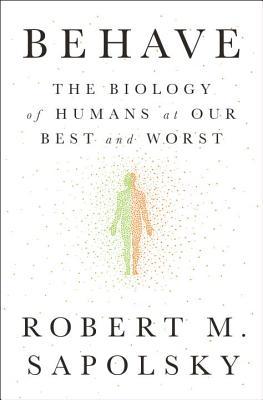
Behave: The Biology of Humans at Our Best and Worst by Robert M. Sapolsky

Hardcover, 790 pages Pub May 2nd 2017 by Penguin Press ISBN13: 9781594205071

Whatever your discipline of study, this book has some degree of relevance, considering as it does human biology. I wish to convey that this book is aspirational for everyone, even the author himself. He readily admits to gaps in his/our knowledge about human biology, but he tries to give us, in this mighty interdisciplinary work synthesizing a lifetime of observation and thought, the current state of knowledge and points to areas for further study.

Don’t be intimidated by its size or erudition. The author is amazing but he has always been approachable. Just flip through, stopping where something catches your eye. You will find yourself absorbed, amazed, provoked. Notice the chapter headings: the last several chapters are about humans doing the right thing…or not. The first several chapters reference those later chapters, showing how what he is telling us is related.

What we do and how we act is related to our biology..all of it…like neurobiology, endocrinology, genetics, the relevance of which he attempts to be very careful and specific about explaining. He goes back in time, bringing in examples from our ancient history to show how things have changed and how culturally conditioned our reactions and responses are to stimuli. Each chapter ends with a summary, and the book ends with insights he has developed over years of study.

Skim these to see if there is something more you wish to pursue. The studies he discusses in each section are referenced by authors focusing on different aspects of human knowledge and you may already be familiar with them. The concepts explored underpin much of what we understand about human behavior and morality. The work of Steven Pinker, cognitive scientist and currently professor of psychology at Harvard, is described by Sapolsky as “monumental” and is given its own critique late in this book.

Sapolsky is not arrogant. He writes this book not to show off his knowledge, but to share his knowledge, which is why he tries to make it as readable as possible without dumbing it down. It is a work to be grateful for. One of the more moving moments in the work comes near the end, after over 600 pages of science and Sapolsky is talking about doing the right thing. He introduces us to Anglican cleric John Newton, born in 1725.

Newton composed the hymn “Amazing Grace” but that is not what Sapolsky wants to tell us. Newton is remembered as an abolitionist, mentor to William Wilberforce who worked through parliament to outlaw slavery in the British Isles. But he didn’t start out that way. Read the story for yourself--plan to read the whole back-end of the book because you won’t be able to stop with Newton—about individuals, ordinary individuals making a difference and doing the right thing.

Sapolsky may be a great scientist, but he is great writer and a great teacher. He makes us think and challenge our own assumptions. He tries to answer questions as they arise and he does not intentionally obfuscate. He does not dodge and only occasionally dismisses, and only then when an argument falls of its own weight.

If you wish you had the background to soak up everything he says but do not, go for one of his earlier books which he wrote as a younger man, less burdened by all he has studied. They display his trademark intelligence and humor and are as much fun as a barrel of monkeys book on baboons.


You can buy this book here: Shop Indie Bookstores

Friday, June 9, 2017

Strangers in Their Own Land by Arlie Russell Hochschild

Hardcover, 288 pages Pub August 16th 2016 by New Press ISBN13: 9781620972250

The concept of this book is exactly what I had been thinking about for the past two years. I am so grateful for Hochschild for structuring a study to investigate the political divide in the United States as evinced by Louisiana, a deeply conservative red state facing environmental degradation and widespread poverty. Hochschild focused on a single issue upon which voting age people might be expected to converge in attitude, environmental pollution, and ended up asking a question which illuminated other attitudes: why do those living in polluted states want less federal oversight from environmental agencies rather than more?

The statistics and studies Hochschild shares at the end of this book are very useful for placing beside the statements, beliefs and attitudes of those she interviewed in Louisiana to judge discrepancies. Hochschild found that many attitudes are not based in economic self-interest so much as emotional self-interest, something with which every person struggles in our lifetimes. Sometimes our emotional response to a problem or issue colors our perceptions, and puts our economic self-interest at odds with what we decide to believe. (There are lots of examples of this in everyday life anywhere: a mother allows an adult child to move back home rent-free while looking for a job, a sister lends money to a drug-addicted sibling promising repayment, etc.)

Hochschild postulates that the individuals she interviewed belonging to the Tea Party in Louisiana were reacting to preserve emotional self-interest rather than economic self-interest with regard to environmental pollution controls (or the lack of them). She concludes these folks experienced a psychological high of belonging to a powerful, like-minded political majority, and as a part of this group felt released from politically-correct rules that usually govern polite society. [It might be worth noting a similar phenomenon is exhibiting in liberal groups with the campus demonstrations refusing permission to conservative speakers, or by destruction and violence during protest marches.]

Looking over the work Hochschild did in Louisiana, we realize that doing sociological research in the field is messy and hard to categorize. In order to determine if there was a shared narrative that connected the attitudes and emotions of the people she interviewed, Hochschild generated something called a “deep story,” which removes the particular facts and judgments that define individuals and just tells us how things feel to those individuals.

The Tea Party supporters she interviewed agreed that the deep story Hochschild generated did resonate with them and could be said to define them: That life is hard, and they must endure; that they felt like they were waiting in line, patiently, for their rewards for working hard but they see federal government-subsidized line-cutters getting benefits before the hard workers, i.e., Negroes, women, immigrants, refugees; the government appears to be helping the line-cutters using taxpayer money and is therefore antithetical to the hard-workers; God teaches how to endure; gay people were not godly; America, especially the America of their youth when fish and fowl were plentiful and air and water were clean, was something to preserve; everything was changing so much they’d begun to feel like strangers in their own land, not getting the benefits citizenship in America promised.

The connection between pollution and jobs gets tangled in the subjects’ emotional self-interest and they can’t seem to extricate themselves from a loop created by what they hear from their former corporate employers, from their state representatives (Bobby Jindal was in office), and from Fox News. It almost seems as though when corporate representatives said they would not clean up the river/lake pollution, that the pollution is not that bad, or they could not afford to clean up, residents felt powerless. In order not to feel powerless, they blamed someone else, like the federal government, or the line-cutters.

The people Hochschild interviewed for this study* were subject to the most egregious environmental pollution I have ever heard of. In some cases their houses were destroyed or blown up by gas leaks, the rivers surrounding their houses were so polluted plants and animals died when in contact with it. The interviewees were retired or near retirement. Their neighbors and spouses were dying of various cancers.

At the end of the study, when she was drawing her conclusions, Hochschild was remarkably restrained. She’d become friends with these folks, and though she might occasionally, gently, point out areas of disagreement with them to see what they might respond, for the most part it did not appear that she interfered with their belief system. Her conclusions were that these people, who struggled their entire lives to make a living, who were often lied to by those with power over them, felt a kind of collective excitement to be part of Donald Trump’s supporters where they felt secure and respected, and were released from the bonds of political correctness, e.g., caring about those further back in the line, the needy around the country, around the world.

Personally, I think it might be the release from political correctness that made everyone so giddy to be part of Trump’s team, because let's face it, the man was not respectful. Though he was rich, he was low class; he made it look as though his level of success was attainable to ordinary folk. There is a certain amount of willful delusion and economic self-interest in these beliefs, it seems to me. I understand compassion fatigue, particularly when one’s own world is so needy, so I am not going to criticize that. There is, however, something we [should] all learn as we grow older that these smart, mature, experienced folks don’t seem to have grasped, and perhaps this is our fundamental disagreement: Happiness and satisfaction in life is not a zero-sum game.

Although we might be able to feel sympathy, empathy, compassion—something other than steaming anger—for individuals in the world Hochschild studied, I don’t think it is so easy to do the same for a group. I found myself steeled against their resistance to coherent argument on commonsense pollution controls. They can react with their emotional self-interest if they wish, but I don’t think it is healthy if I do as well, because then we’re at loggerheads. If I react with my economic self-interest, we are likewise at loggerheads. These people want what I want, e.g., family, community, a measure of security. They must want a clean environment as well. We disagree on how to get there. I don’t see that changing unless perhaps we agree to set standards of accountability and hold each other to those standards.

This was really a spectacular study, enormously important, and deeply skilled in execution. I am in awe of how the author was able to approach the problems she could see in our society, measure them, and explain what she found to us. This book was published in 2016, the result of at least five years of labor and study. It was a 2016 Finalist for the National Book Award for Nonfiction.

*[We never get an explanation why younger people, with presumably more at stake, less history in the area, and more energy for resistance to corporate interests, were not interviewed for the study, except maybe it was necessary to limit the scope of the interviewees so they could all operate from the same deep story.]


You can buy this book here: Shop Indie Bookstores

Monday, May 22, 2017

My Life with Bob by Pamela Paul

Hardcover, 256 pages Pub May 2nd 2017 by Henry Holt and Co. ISBN13: 9781627796316

Coming out at this time of year, Pamela Paul’s memoir is reminiscent of a commencement speech, albeit book-length and one just as interesting for the parents as for the graduates. It is a blast to listen to an obsessive reader share her thoughts on books, her travels and travails. Bob is her lifelong companion and record, her Book of Books, the place she can note what she has read. It gives date of completion, and, because Paul tried to read books about the countries or cities she visits or lives, we deduce a sense of location. It is her book of memories then, a record of where she has been.

Paul was the single daughter born into a family of seven sons. Despite the expected in-house torture and rough-housing, her psyche remained remarkably intact, though her parent’s divorce may have had more effect than discussed here. She did emerge as a reader, an introvert, and from a young age wanted to write. In this book she has boldly decided to write about what she’s read in the context of her life, and astonishingly, it is interesting. We enjoy retracing her faltering steps as a burgeoning adult, in which she recalls with uncommon accuracy the embarrassed and confused feelings of a teen.

France plays a large role in Paul’s life. Although her American Field Service (AFS) experience in a small town in suburban France was not as she imagined, it set the table for her next visit and the one after that. Eventually she found a family in France that became a second home, a family that subsequently attended her weddings and met her children. This kind of close long-term relationship defines Paul, I think. We all have trajectories, but not all of us cultivate the path as we go so that it becomes personal, the impact felt on both sides.

Paul’s decision after college to go directly to Thailand without the usual scramble for underpaid work at home was prescient but daring. She’d not get another chance to see that part of the world with any depth, though the China portion of the trip gave me the screaming heebies. It sounded perfectly horrendous, completely uncomfortable, filled with sickness and incomprehension. The China trip was her father’s idea, and it never became hers. The unmitigated disaster of that trip reminds us that we have to own our journey, start to finish, for us to manage it with any kind of finesse.

There was a marriage that lasted a year. The utter heartbreak Paul experienced does not lacerate us: from the moment she begins to speak of her first husband we are suspicious. She is much too happy much too soon. Love is one thing. Blindness is another. In my mind I modify Thoreau to read: beware all enterprises that require giving up a large, rent-controlled flat in New York City...
"…the minute a subject veered from the fictional world, the private world, the secluded, just-us-on-top-of-the-mountain world, into the greater, grittier territory below, the nonfictional world, my husband and I had serious differences…Even when we each happily read those same books about the perfidy of man, we read them in opposite ways…this kind of book contested my essentially optimistic view of the world rather than overturned it…whereas for him, the world really was that bleak, and the books proved it."
Here you have, folks, a political difference so profound it can break nations in two. Ayn Rand’s work became Paul’s personal standard for judging viewpoints. Paul admits--she who practically worships books--that she threw one of Ayn Rand’s books in the trash after reading it, so that no one else would be polluted by its ideas. I laughed. I did the same thing, though I contemplated burning it before I did. In my tiny garage-turned-apartment in New Mexico, I wrestled with Rand’s horrifying vision of a society of go-getters and decided that to burn her book would invest it with too much significance.

I loved reading about Paul’s poor dating experiences after that. She was inoculated against irrational exuberance after her divorce, but she still wanted intimacy. She manages to share with us chortle-inducing instances of “okay, I’ve had enough of that” with some of the men she met later. My favorite might be the time a boyfriend convinces her that he’d been to the Grand Canyon before and so can show her “the best way to see it.” Har-dee-har-har. This memoir is a great example of smart and funny, gifting us many moments of remembering our own worst histories and reinforcing for younger women coming along that our judgment may be the only thing separating us from a much worse time of it.

Pamela Paul is now books editor of The New York Times and no longer has to struggle to find the coin to buy a new book. She is the best kind of editor for all of us because she is has read widely and acknowledges the draw of genre fiction while communicating her admiration for the range of new nonfiction that helps us cope with our history and our future. She is also an interested and informed consumer of Children’s lit and Young Adult titles, which aids me immeasurably since these are not my specialty and therefore necessitate me seeking assistance from a trusted source.

Access to all there is out there comes with its own set of stresses, but Paul has extended her reach by asking some of the best writers in the country to read and review titles in the NYT Book Review, and to talk about their selections on the Book Review Podcast, available each week from iTunes as an automatic download. Her guests and her own considered opinions help to narrow the field for us.

This is a great vacation read, not at all strenuous, yet it is involving. Imagine the unlikeliness of the concept: an introverted reader and editor writes a book about her life…reading…and it is interesting! Totes amazeballs. It occurs to me that Goodreads is one big Bob. I’m so glad Paul put the effort in to share with us: big mistakes don’t have to be the end of the world. It depends what happens after that. See what I mean about commencement?


You can buy this book here: Shop Indie Bookstores

Monday, April 10, 2017

The Rules Do Not Apply by Ariel Levy

Hardcover, 224 pages Pub March 14th 2017 by Random House ISBN13: 9780812996937

Ariel Levy always believed she could be a writer. Her mother told her it was a good idea, a normal thing for a pre-teen to aspire to, something for a teen to aim for. She was in her late teens when she wrote for New York magazine about a bar in Queens where enormously heavy women danced for men, and presumably women. The women wore brightly colored clothes, high heels, and sequins for anyone who lusted for heavy. It made the women feel desired.

Levy was allowed to grow up thinking that sexuality was not always obvious; that one might, in fact, be in love or lust with someone not one’s spouse. One might even consider all the world to be possible partners, not just someone of one’s age and race and perhaps not even of the opposite sex. If some might think that would add to the complexity of decision-making—who would take one’s virginity and when—to Levy it made things easier. Decisions about who to sleep with wasn’t difficult. It was easy to undo. One could just change one’s mind.

I grow anxious with so many options, and have difficulty embracing such a cultivated sophistication about the possibility of lust for everyone I meet. Levy’s descriptions of her sexual life and gender fluidity gave me the feeling of viewing a Diane Arbus photograph: fantastic, queer, different, other. I think I may have convinced myself that gay and trans love and sex was like straight love and sex, only with different partners, but listening to Levy makes me reassess. I find I don’t really want to know. Please don’t tell me more. It makes me uncomfortable. Do I need to know to be fair?

When Levy writes some kind of magic happens. I heard an excerpt of her memoir very late one night on the radio. She told us about the death of her infant while she visited Mongolia. The story made me feel sick, but it was as fascinating as it was grotesque: I couldn’t not listen. I think of her traveling around the world, picking people to marry. The man she chose after she lost her baby she describes as having no family left at all, his parents dead, his wife divorced, his children in college, and his country, South Africa, in the throes of a government change. He was living and working in Ulan Bator.

That kind of rootlessness is something very edgy, and not comforting. Only people that are forced would choose that space. Who goes into something always looking for the back door? Isn’t that a way to fail trying?

Ariel Levy is a terrific writer, but I can't say I really like reading her. The exact way she describes how we discover alcoholism in someone close to us, how it feels new, constantly surprising, and always denied made me feel foolish for having been taken in so many times, just like that. It is just all so hard to believe. We just doesn’t understand, the way it presents. It looks like something else. We want to believe the lies—what a mess it will make—until one day the mess is already a fact and impossible to avoid. It just makes us feel so stupid. Human failure. The ways we sabotage ourselves. And all the time, it is worse for the alcoholic. Because it will never go away.

This woman is too much, just like she says in the beginning of this memoir. She thinks the world is just there for her, and she will use it up. She will use herself up. She will use us up. When her spouse admits to alcoholism, Levy feels betrayed. Yes, but, we protest, it is worse for the spouse. She is the one who can’t get out of the hole. But Levy keeps intellectualizing it as if the bad things that happen are targeting her.

Levy's struggle leaves me feeling like I went through much of it, too. Chris Abani writes fiction the way this woman writes nonfiction. I listened to the audio of this, produced by Penguin Random House and read by the author. Levy has an expressive voice and is able to put emphases in the work where she wants to push us a bit. She is something quite outside my experience.


You can buy this book here: Shop Indie Bookstores

Thursday, January 26, 2017

Building the New American Economy by Jeffrey D. Sachs

Hardcover, 152 pages Expected publication: February 7th 2017 by Columbia University Press ISBN13: 9780231184045

Jeffrey Sachs’ new book, which runs about 150 pages, has a Foreword by Bernie Sanders. Sachs directly addresses the new Trump administration, and makes suggestions about our nation’s priorities. Sachs wrote it fast, since the election, and it shows. He'd supported Bernie, but Sanders was not explicit when it came to running the government. These are Sachs' ideas, but knowing there is someone in political life that he supports helps to flesh out Sanders' ideas as well.

Sachs allows that we might be able to comprehend priority spending of the government, so shares some national budget particulars:
“Federal taxes account for about 18 percent of GDP, mostly income and payroll taxes…Together with state and local taxes, the total tax collection of all levels of government amounts to around 32 percent of GDP.”
On the spending side, first is military spending at 5% of GDP. Next is what Sachs calls “mandatory spending” but what Republicans call “entitlements:” Medicare, Medicaid, Social Security, income support programs, etc. This is a rising share of GDP, at 12.6%. The third category of spending is interest payments of government debt, which will rise when interest rates increase. Public debt to national income is about 75%, and average interest charges on that debt are at about 1.5% of GDP per annum. Finally, we have non security discretionary spending, or our investment in the future, which in the scenario Sachs talks about here, doesn’t even make it to the drawing board unless we take on further debt.

The reason Sachs gives us is that income taxes, etc are only 18% of GDP while military, mandatory spending, and interest payments alone are 19%. He is a smart guy, and he may be right, but if you are asking us to decide on which categories or programs to cut, I will need to see the whole budget, many thanks. [Unfortunately the graphs and charts are not reproduced in the ebook of this pre-publication galley.]

Anyway, Sachs suggests we cut military spending and increase discretionary spending commensurately, leaving the other categories to be adjusted in smaller ways. In theory, I don’t have a problem with this. I have lately weighed good and bad in American foreign policy in the past fifty years, and see lots of room for a reduced role, though one has to acknowledge the vacuum of leadership is going to be filled, perhaps by a country we don’t admire much, or at all.

When we abdicate as a superpower, we also jettison some of the trust and reliance of our allies, as some of their positions and spending were predicated on our own. It is a much more fragmented and divided world, a world that may not be so amenable to policies the U.S. supports. And Sachs’ proposals for the future are all about global cooperation. He suggests that we use our military spending instead on global development projects, which will keep some portion of goodwill headed our way.

Sachs also recommends a value-added tax like they have in Scandinavia which would raise another 3-4% of income. The huge discrepancies in income from top to bottom of the U.S. income ladder will still be there, they just won’t be as great, and more in line with the world’s other great democracies. Sachs is even willing to consider restructuring corporate taxes, like Trump has already proposed, but only “if combined with an end to corporate loopholes and foreign tax deferral provisions.” Definitely one of the main income disparities is who even pays taxes in the U.S.

Sachs looks not very far into the future and see some major changes in our economy: an end to internal combustion mobility and the beginning of a low-carbon lifestyle, regardless of government leadership. It would help if government was in front, using their think tanks and scientific offices to help direct some of the changes, but what we really have to guard against is allowing entrenched corporate interests to hijack our future and investment money. We can decide these things without government, though.

Trump has stated he wants states to make their own decisions on many things we have in the past asked the federal government to do. States with wealth, educated workforces, and well-funded universities (like Massachusetts, California, and New York) may make out very well, drawing more similarly-minded folks to them, and exacerbating the cross-talk divisiveness among the states. They’d have to capture taxes from individuals who wish to work, but not live, in their states. But my feeling is, if we can’t work together within our own country, how can we expect to work across national boundaries on important issues like climate change, exploration, and energy supplies?

When Sachs discusses the changes in the workplace, I find my credibility meter reading low. I agree that even educated workers will be replaced in the modern economy as computers and machines get more capable. But Sachs is suggesting that older, experienced workers pay some part of their wages to younger people who cannot find jobs.

Hello! We’re already doing that! It’s called taxes, and it is a stupid idea. Older workers, whether they want to believe it or not, are going to die, and if they haven’t mentored young people to get experience and be able to take on the stress of creativity everyday, they may be surprised when the whole show goes tits up. [This was Hillary Clinton’s problem. She thought she needed to do everything herself.]

We cannot continue to have older workers stay in the workplace as long as they want—and continue to decline—keeping younger folk from earning and gaining experience, let alone spur creativity. May I suggest this is a real problem? People who have been working for forty or fifty years cannot keep up, no matter what they believe about themselves. And it is not good for the country.

Sachs has one idea towards the end that is kind of interesting: that Wall Street be tasked with earning and churning the financial investment monies for our infrastructure retooling. I actually really like that idea, and think the incentives could be restructured to focus on this. Once the wonky windfall profits not only on Wall Street, but everywhere in corporate America, are tempered with reasonable tax policy and closing of tax havens and loopholes, people might remember they must play well with others. We don’t have long, however: we should already be well into flood abatement.

There are lots of other things lightly touched on in this book, including a discussion of why “free trade” is not free for everyone. Sachs has a blog where he makes notes and posts articles and media accounts that he find interesting or thinks we need to discuss. In the summer of 2016, his important and informative discussion about the election, globalization, immigration, and Brexit was subsequently picked up by NPR and discussed on radio. He pointed to what is now called “populist” anger and explains the real substantive issues behind this. Jeffrey Sachs is professor of economics and sustainable development at Columbia University, former director of the Earth Institute, and special advisor to UN Secretary General Ban Kin-moon. He is the author of The End of Poverty.


You can buy this book here: Shop Indie Bookstores

Tuesday, January 24, 2017

Nicotine by Gregor Hens, translated by Jen Calleja

Paperback, 157 pages Pub January 10th 2017 by Other Press; November 4th 2015 by Fitzcarraldo Editions (first published March 3rd 2011) Orig Title Nikotin ISBN 1910695076 (ISBN13: 9781910695074)

The story Hens tells of his struggle with nicotine addiction sometimes makes us laugh, though of course addiction is anything but funny. And he had it bad, real bad. The time he spends detailing his addiction is time he still indulges, for a little while, his obsession with nicotine, a drug which Will Self tells us in the Introduction is like taking an upper and downer at the same time:
"The first few drags after a period of abstinence induced head spin and dry mouth, while a drowsy numbness crept over my extremities. Soon enough this narcotics phase was succeeded by excitation: spit balled in my mouth, my palms itched, my heartbeat accelerated—in my own small and unsophisticated way, staring at the algal scurf on the duck pond, I believed I could achieve something."
Maybe only people that know what he is talking about can laugh at that. But Hens picks up where Self leaves off, his short history of relapses an opportunity to forgive himself and to try to understand what happened physically and psychologically—nicotine is psychoactive—to cause and stoke his need. And to laugh in the face of his addiction is a kind of fierce refusal to submit: "I’ll write my way out of my addiction by telling its story."

Addiction stories tell us something about humans, plot points on a neuroscience graph. Mikhail Bulgakov wrote a moving monograph of a country doctor suffering from morphine addiction. And I will never forget reading Carolyn Knapp describe her addiction to alcohol, how just the sound of ice against glass would calm her down, as she pictured in her mind a glass, clouded with cold and beaded with sweat. It cheered her up, and took away brain strain. Hens’ addiction was something like that: he enjoyed running into groups of smokers huddled in doorways, imagining that they are smoking on his behalf, for his inner contentment. Sometimes he even nodded to them, until he realized they might think him predatory or odd.

There was a time when everyone seemed to smoke. Hens reminds us what it was like growing up with parents who smoked, in his case chain-smoked in a closed vehicle for hours while he and his brothers clustered in the back seat, wreathed in a dense, noxious cloud. When he reached his destination, he and his brothers would stumble, wooly-headed and thirsty, from the car, exhausted from their journey. Certainly his aunt, who was paid a monthly pension in cigarettes in lieu of cash but who smoked only occasionally, might have had something to do with his parents’, and subsequently his own, cigarette habit.

But his recognition that “my personality is a smoker’s personality” must have come from his early family life, when smoking in secret was a way to both defy his parents and earn their love. How confusing the roots of addiction become when examined closely, and how, ultimately, irrelevant. Whatever the reason, he had to break his love affair with tobacco. He was a connoisseur; tobacco was a hobby, a kind of art, something that gave him pleasure but which became as necessary as eating. He was obsessed, addicted, planning his consumption. His life, his passion for sports, and his lover were suffering.

Every person dealing with addiction experiences it in their own way, and Hens recalls for us several others writers who have explicitly chronicled their nicotine habits, among them Italo Svevo, for whom the last cigarette, which Hens begins to familiarly call “LC,” was always remembered with great intensity and affection, while the relapse cigarette was always the one Hens himself craved: “…the rush of relapsing is a very special gift… a kind of investment that would be paid back five or ten times over.”

Hens recalls a heavy smoker friend of his who could get on an airplane for a flight of eight or more hours and suffer nary a twinge of desire for the length of the flight: “There’s no point in thinking about something that’s forbidden, he says.” That friend would do well in America, I think, while Hens himself, once forbidden to smoke, can think of nothing else.

Apparently studies done on rats at Duke University by Theodore Slotkin
"confirm that the consumption of nicotine during adolescence leads to permanent neurological and functional changes that cannot be reversed. The changed structures are still detectable even after the (addictive) behavior has been stopped, an effect that is especially pronounced in male animals."
Hens is philosophical about this, unable to say what he could have done even had he known as an adolescent. He reminds us every couple of paragraphs that he no longer smokes. It is a thought, a chant, a wish, a dream, an aspiration. It is a fact.

The book has a strangely old-fashioned feel, perhaps because smoking is so long out of fashion now in America, and because of an anecdote about Hens spending a summer in Chungking Mansions in Hong Kong, “filling a pile of notebooks...in just my underpants…which never became the great postcolonial novel I had intended…” Can Chungking Mansions still exist? But Hens’ writing is a little addictive, too, as when he veers delightfully off topic several times, once to relate a cycling accident which involved him waking up, bandaged, in the “reanimation” department of a strange hospital. It freaked him out, understandably.

For anyone who has ever considered writing about a psychological obstacle, addiction, or other obsession, to rid oneself of it, this is a fine example of how one man has managed to make his life larger, richer, and more meaningful than his scourge.

Two terrific reviews of this title have recently been published, one in The New Yorker, and one in the New York Times.


You can buy this book here: Shop Indie Bookstores

Thursday, November 3, 2016

Weapons of Math Destruction by Cathy O'Neil

Hardcover, 259 pgs, Pub Sept 6th 2016 by Crown, ISBN13: 9780553418811, Lit Awards: Goodreads Choice Award Nominee for Science & Technology (2016)

O’Neil deserves some credit right off the bat for not waiting until her retirement from the hedge fund where she worked to tell us the secrets of how corporations use big data (our data). Underlying the collection and use of big data is an attempt to utilize efficiencies in the market place for goods, money, and talent. Big data ostensibly can also “set us free” from time constraints and uneven knowledge dispersal. Conversely the opposite is often true. We are at the mercy of how our own data is shredded and packaged, and errors in the model can mean mutually assured destruction—for the school, corporation, family.

The book starts with examples any readers who actually picked up this book to read might recognize: the chances of getting into a major university. O’Neil doesn’t go into the actual algorithms but just explains the variables chosen to populate the algorithms. Just when I was wondering who this book is targeted at, since after all, we kind of know how to get into university already, she comes up with examples of big data messing with aspirations that are still (hopefully not) in our futures.

She addresses the real pain-in-the-ass nature of minimum wage jobs where the inadequate part-time hours are constantly changing to maximize profits for owners and to screw with employees ability to plan their life, their children’s lives, and the children’s caretaker’s lives. O’Neil addressed the situation in 2009 when Amex decided to reduce the risk of credit card nonpayment by reducing the credit ceilings on users who shopped at certain stores, like Walmart. She shows us the way micro-targeting ends up using data to perpetuate inequities in opportunity and “social capital.”

The hardest part of reading this book (there is no actual math), was keeping my mind on what O’Neil was saying. Every time she'd mention another example of the ways big data was screwing us over, my mind would wander to experiences of my own, or ones I’d heard from friends, family, or others. This is real stuff, and just when I thought that it would be an excellent book for those with skills and interest in social justice to take to an interview with Google, Amazon, or a big bank, in she comes with another example of how the “fixes” are almost worse than the disease (Facebook’s method of who your friends are determining your credit risk).

But O’Neil reminds us big data, mathematics, algorithms, etc. aren’t going to go away.
"Data is not going away. Nor are computers—much less mathematics. Predictive models are, increasingly, the tools we will be relying on to run our institutions, deploy our resources, and manage our lives. But as I’ve tried to show throughout this book, these models are constructed not just from data but from the choices we make about which data to pay attention to—and which to leave out. Those choices are not just about logistics, profits, and efficiency. They are fundamentally moral."
Exactly. We still have to use our brains, not just our computers. It is critical that we inject morality into the process or it will always be fundamentally unfair in some way or another, especially if the intent is to increase profits for one entity at the expense of another. One simply can’t include enough variables or specifics. Some universities have begun to audit the algorithms—like Princeton’s Transparency and Accountability Project—by masquerading as people of differing backgrounds and seeing what kind of treatment these individuals receive from online marketers.

O’Neil suggests that sometimes data might be used to good effect by targeting frustrated online commenters with solutions to their issues: i.e., affordable housing info, or by searching out possible areas of workplace or child abuse and targeting that area with resources. She wades into national election data and notes that only swing states get candidates attention, suggesting, by the way, that the electoral college has outlived its usefulness to the citizenry. Algorithms are not going to administer justice or democracy unless we find a way to use them as a tool to root out inequities and try to find ways to deliver needed services where they are deficient.

When I look at the totality of what O’Neil has discussed, I am inclined to think this book is best targeted to thoughtful high schoolers and college-aged students who are thinking about planning their careers, who have a penchant for mathematical and computer modeling, and who think their dream job might be with an online giant. I’d be happy to be disabused of this notion if someone wants to challenge my thought that much of this information is known to many of us who have been out of school for awhile and who have been paying attention to our online experiences and junk mail solicitations. But it is always interesting to read someone as coherent and on the side of social justice as Ms. O’Neil.

It might be noted that Jaron Lanier in Who Owns the Future? (2013) also talks about the use of big data to steer our thinking and makes a preliminary suggestion that individuals should be paid for their data—for data that is collected about them, for profit. It is an interesting discussion as well. Love these intersections of technology and humanity.


You can buy this book here: Shop Indie Bookstores

Tuesday, September 13, 2016

Hope for a Cool Pillow by Margaret Overton

Many end-of-life discussions have been popular these past couple years, but this one is a little different. It comes at the discussion from a different angle, and it is an angle I have not seen well-articulated, certainly not by a doctor.

For one thing, it is intensely personal, especially in the beginning. Overton claims to be an introvert, but she does an awful a lot of reaching out in this book. I laughed aloud at one joke she told on herself:
At her nursery school, they often played musical chairs, “which I loathed and which may have scarred me for life. I still worry about adequate seating. Usually some poor kid who was not paying attention got stuck without a chair. Then he stood awkwardly and felt blazingly stupid while everyone else sat comfortably and looked smug. It was a terrible game.”
It is hard not to like this woman flinching yet at a child’s game. But, in a way, this book is about paying attention so you can lie as comfortably as possible on your own deathbed.

As a doctor, Overton has the viewpoint, motives, and reaction to incentives of a doctor. But here she is talking about the health care system and why it doesn’t seem to work for everyone (according to statistics, we might say anyone) in this country. I have never personally seen a doctor question in detail the incentives of the system, but Overton does here. She is very thought-provoking, particularly because she doesn’t give us easy answers. She acknowledges the questions, and asks us to do the same.
”The last six months of life accounted for roughly twenty-five percent of our Medicare spending….We try really hard to revive the people least likely to benefit….doctors often operate to fix something that will not save a dying patient, and in doing so avoid the difficult conversation with patients and caregivers about their prognosis and what they want.”
So, it is not so different from Atul Gawande’s Being Mortal, except that she gives a little responsibility to doctors, many of whom are not trained nor equipped for this conversation.

If a person with good health insurance and a terminal disease is in the hospital, is there any reason to limit treatment? She suggests that a for-profit private system of healthcare may not give us the kind of incentives, treatments, and quality of life (or quality of death) we desire.
”I find the concept of for-profit hospitals appalling. There’s an inherent misalignment of motives in the “business” of medicine. Physicians have a moral and financial incentive to provide excessive care to people who can pay for it as long as they have a heartbeat.”
She interleaves her narrative about taking a three-part post-graduate course at Harvard on hospital administration with the declining health of her father and her mother, and with experiences she is having in the hospital. Mostly she wants to share her grief, her expertise, her thinking, and her care. She seems the best kind of friend to talk with about end-of-life issues.

Her father had urged on her the need for preparation, and attention to these matters. He managed very well, until his cancer diagnosis. After many treatments meant to extend his life rather than cure his cancer, things got grimmer. He decided he’d had enough, and his preparation meant his family did not have a hard time of it.

Overton’s mother was a different story, and many of you will recognize the more lingering death of a dementia patient. However, even this wasn’t as painful as some of us experience, due to that planning again. The real problem comes when someone has no family to help, as is the case with many patients Overton sees in the hospital at the last stages of their lives, treated callously by an ever-changing roster of medical care personnel, and unable to make clear decisions.

I find it fruitful to hear the experiences of a doctor, and note she says “Personally, I don’t want to live into my nineties.” Her recommendation is that we do not wait on thinking about these things because life is fragile, and you don’t want to be one of the 45% of patients without advanced directives. Your life, in that case, would no longer be your own.

Totally inappropriately, I am adding a note that Overton introduced me to the Dunning-Kruger effect, which is something I thought I'd invented, frankly. It is the notion that incompetent folks may be too incompetent to know how incompetent they are. It is a very useful construct, particularly in these times.


You can buy this book here: Shop Indie Bookstores

Thursday, May 26, 2016

The New Tsar: The Rise & Reign of Vladimir Putin by Steven Lee Myers

During the election pre-season in America, I was as surprised and intrigued at the support for Donald Trump as the rest of the thinking universe (not the pundits, of course). As I laughed at his unscripted policy-free speeches and intentionally note-worthy off-the-cuff remarks, I remember thinking I would love to see the effect of his ‘shock and awe’ campaign on someone like Putin. I thought Trump would be too unpredictable and outspoken for Putin. I am ready to take that back. In a weird kind of way, both men, neither political operatives at the start of their careers, are a similar kind of not-liberal, not-conservative, whatever-works nationalist kind of politician. And both have created a cult of personality to facilitate a kind of one-man rule.

Myers allowed me to catch this glimpse of Putin at his start in government as an ordinary man unused to and previously uninterested in political power. When he began in the Sobchak Leningrad government, he may or may not have been involved in skimming from contracts he arranged with the newly burgeoning private sector after the dissolution of the Soviet Union. He certainly was in a position to do so, and many of the people he awarded contracts did so: he formed firm friendships and nurtured loyal apparatchiks in Leningrad that reappear throughout his political career. But it is also true that Russia in the early 1990’s was a wild place with many crime lords jockeying for power. Putin’s family was targeted at least once. Putin did not at that time appear to have the trappings of new wealth, though we learned only recently of monies in his name from the Panama Papers. It is possible that his wealth accumulated from later dealings.

It has always been difficult to understand why Putin was reputed to enjoy such wide public support in Russia, but I realize now that our media reporting emphasized bad judgment and outcomes while Russian media outlets emphasized good intent and nationalism. Myers gives a far more nuanced picture of Putin growing into his role as president—prime minister—president again in this book. If Putin didn’t begin as a friend to oligarchs, he gradually relaxed into the role. He began as a man with he stated goal of “making Russia great again.” He could see that some people were gaming the system by purchasing national reserves of commodities improperly priced and selling them at more realistically priced international values. This was not illegal at the time, just morally suspect. Rather than trying to fix the system of laws that allowed this rape of mineral and energy resources to continue, Putin selectively applied legal and taxation rules on the books to hamper, entangle, or otherwise inhibit the activities of people who did not work closely with him.

Myers charts the hardening of Putin’s character, from his shock and dismay upon learning that Yeltsin had chosen him as a political successor to his chagrin upon learning that his chosen successor, Medvedev, had both an opinion and a weakness that didn’t partner Putin well. And what was very clear in Myers’ telling was the perception of U.S. foreign policy decisions by Russians and Putin. By the time Edward Snowden comes on the scene late in the book, we laugh at Putin’s pleasure in pointing out political dissidence and jail is not just a Russian thing.
”Ask yourself, do you need to put such people in jail, or not?”
Putin was more confident during his second presidency and yet the moment he assumed power the second time his poll ratings began to fall. It was the moment citizens realized that there was really no conversation, no political discussion going on. It only takes twenty years for a political climate to change irrevocably: ask Hillary Clinton. In twenty years, young people with no historical memory bring a new clarity to what is happening right now, with no regard to what came before. Pussy Riot called out Putin; Sanders’ supporters are calling out Clinton.

Putin operated, and operates now, by relying on a close and loyal group of political “friends” from his time in the FSB and his time working for Sobchak in Leningrad. Loyalty is so prized that it would not surprise me to learn that some of the political murders committed during Putin’s reign were not “ordered” by himself. It seems entirely possible to me that elements in a large bureaucracy might prove their loyalty by eliminating static that was damaging to the leader. The problem with a large bureaucracy is that it can take on a character of its own and is not easy to change.

A really strange event occurred early in Putin’s first presidency: the bombing of the apartment buildings in Moscow and the sacks of FSB-sourced explosives found in the apartment building in Ryazan. These incidents have never been satisfactorily explained, and could be an example of a bureaucracy grinding out [imperfect] solutions to perceived problems that impact Putin & Co. In a case like that, or in the case of sheer incompetence (also an enduring feature of large bureaucracy), it is not hard to see Putin keeping mum out of loyalty to those he is protecting. Bill Browder’s account of his time making money hand-over-fist in the 1990’s in Russia, Red Notice, mentioned that powerful figures known to Putin wanted the real estate on which those apartment buildings were built and were meeting resistance. Some actions, like poisoning political opponents or shooting reporters in the the stairwells of their buildings, are simply too crude, destructive, and beneath the dignity of someone in power to imagine they are a “command.” Whatever the truth of the matter, this did not have to originate in the Kremlin to be horrifying in its motivation. It does appear, however, that it was condoned by the Kremlin since a good explanation was never uncovered.

One of the things that motivates Putin is the expanding power of NATO in Europe. Putin still thinks in terms of great powers and feels he is being hemmed in by Western Europe nibbling away at his satellite countries. It is hard not to sympathize. Certainly that is happening, and will continue to happen in a Clinton presidency, further exacerbating Putin’s bellicosity, and sense of infringement and inferiority.

Russia is a huge country. “Too big, really” says Ian Frazier in his big book Travels in Siberia. Putin says its size and different cultures is the reason there cannot be a representative democracy like that in America. Since even America doesn’t seem to the have the process working very well at the moment, it is difficult to pretend to know what difficulties arise when trying to restore the kind of power that was shattered by the overthrow of the tsar in the twentieth century in Russia. The only thing I would concede is that ruling Russia must be a very difficult job, particularly when one is looking backward. One must look ahead, not backward, when one is leading, it seems to me.

I feel like I have gotten a terrific education reading this book and am much better able to parse news coming out of Russia, Europe, and the Middle East today. I can now put Putin into the context vis-a-vis U.S. diplomatic relations. Clinton must be the last person Putin would want to see be elected president in the United States, and in some ways Trump is as unpredictable as Putin has claimed he has tried to be. But I am not recommending a vote for Trump. I think a better choice might be neither of these two.


You can buy this book here: Shop Indie Bookstores

Friday, April 8, 2016

What Money Can't Buy: The Moral Limits of Markets by Michael J. Sandel

Hardcover, 256 pages Published April 24th 2012 by Farrar, Straus and Giroux

Michael Sandel is a storyteller. His stories are amusing ones like those in Freakonomics: A Rogue Economist Explores the Hidden Side of Everything, but Sandel’s stories urge us to look deeper: to look meaning rather than just personal gain. Perhaps not everything should be for sale. Sandel’s stories make us wonder what our responsibilities are in the marketplace economists have made for us. He prods us to ask ourselves if the world we have is the one we want. Judging from the reaction of the populace to the presidential election in 2016, I would guess most of us have are not satisfied with what we have wrought.

The good news is that we can make different choices. We just have to think about it. Do we want advertising for McDonald’s on public buildings, schools, or police cars? Do we want someone betting how soon we will die so as to take advantage of our life insurance policies? Do we want a cash payment to store nuclear waste near our homes? Sandel presents these real, documented offerings to us and shows us what the outcomes have been.

This is an easy, non-taxing read. There are no references to philosophers and only the barest rudiments of what is called economic theory, and yet the work is permeated with “the stuff” of these two disciplines. It is the raw materials, the everyday dilemmas with which we need to work. I have seen some of Sandel’s examples from newspapers in recent years, but there were still several I never encountered before. Like the one about the school in Israel where the parents kept showing up late to pick up their children. The teachers levied a fine for parents late for pick-up, and transgressions actually increased. The parents began to regard the fine as a fee. When school officials removed the fine a couple of months later, transgressions increased again. It became the norm to disregard the pick-up time, and more parents became aware that others were transgressing. They began to think it was okay to make the teacher work overtime. In this case, I guess I would suggest making the fine really punitive, not merely suggestive, to see if that made a difference, though exceptions for real excuses would have to be considered.

Sandel had me laughing and cringing: what about hunting Atlantic walrus in Canada? Atlantic walrus had become so rare in the 20th Century that Inuits were the only ones allowed to hunt them. Inuit leaders asked the Canadian government if they could sell some of their walrus quota to big-game hunters for $6,500.
”[Big game hunters] for not come for the thrill of the chase or the challenge of stalking an elusive prey. Walruses are unthreatening creatures that move slowly and are no match for hunters with guns…C.J. Chivers compared walrus hunting under Inuit supervision to ‘a long boat ride to shoot a very large beanbag chair.’ The guides maneuver the boat to within fifteen yards of the walrus and tell the hunter when to shoot…The appeal of such a hunt is difficult to fathom…[but] markets don’t pass judgement on the desires they satisfy.”

Another desire Sandel discusses is prostitution, something that has been in the news just this week when France decided to fine buyers paying for sex. Apparently legalization of prostitution in the Netherlands has led to gang control of the business, and in Germany human trafficking has continued unabated. Sandel asks whether we can really still bare-facedly argue that sex between “consenting” adults when one is paid is without moral ramifications. “Certain moral and civic goods are diminished or corrupted if bought and sold:” prostitution could be regarded as a form of corruption that demeans women and promotes bad attitudes toward sex. This is the argument used in Scandinavian countries, and now France.

Towards the end of the book, Sandel quotes two economists who believe that virtue and love are scarce resources. (Among some of us, I am sure that is true.) He points out that some philosophers have taken another view: that civic virtue dies if it is not nourished, practiced, and that it grows, not depletes, with every instance of it. Love similarly. Love is not something we should preserve, but spend at every opportunity, for its return is exponential.

Sandel wades into many hot-button issues and calmly explains alternate ways of looking at a problem. He is clear enough for first year college students, even high school students. His moral and ethical ways of thinking allow us to challenge current thinking about issues facing us today. I preferred Sandel’s book on Justice: What's the Right Thing to Do? but hope he will keep writing. One day, perhaps, the thinkers among us will conclude “free-market” economists really have no clothes and that money is not our only currency.


You can buy this book here: Shop Indie Bookstores

Tuesday, April 5, 2016

Justice: What's the Right Thing To Do? by Michael Sandel

Hardcover, 308 pages Published September 15th 2009 by Farrar, Straus and Giroux

Michael Sandel is something of a “moral rock star” according to the Financial Times, with hordes of acolytes the world over. It is easy for me to see why. This book, published in 2009, discusses theories of fairness and freedom that have been the basis of political discourse and civic structure in the U.S. for some fifty years, bringing us to the state of affairs we currently observe in our market-(un)regulated society. Sandel suggests that we may get twinges now and again that something is amiss in our transactional economy, with the mad rush to acquire more, and our knowing the cost of everything does not reflect the value of anything…of anything that really matters.

Sandel has a very smooth, well-practiced style filled with amusing or absorbing ethical and moral choices that have been presented to us over the years, some of which we (or the Supreme Court) may have responded to but not resolved to our satisfaction. Sandel waits for the end of his book to wade into the abortion issue, when we have been well-steeped in philosophical theory for hours. I was hoping for that. I have never bought into any of the increasingly shrill and limited arguments on either side of that debate, and felt we were missing something essential in our thinking. Sandel gently points to why the arguments of neither side satisfy our craving for justice and suggests there may be another way to look at the issue. You will need to go there to see what he suggests.

If we look at the theories of justice that have been incorporated into our thinking and political constructions since Immanuel Kant (1724-1804) and John Rawls (1921-2002), we have first the principle of respect for an individual because they are human with the capacity to reason (Kant) and the notion of social and economic equality and basic liberties for all (Rawls). Sandel gives lots of examples how these actually play out in a society based on the rule of law. We get tied up with some people questioning equality, and some questioning fairness. Sandel thinks we might want to look again at what Aristotle said about political philosophy. Defining rights requires us to figure out the purpose or end of the social practice in question. And justice is honorific, that is, we need to reason out what it is we are trying to achieve, what virtues we want to promote by reward through justice.

It does seem to be a step we have skipped. We need to question and define again, together, the “good life.” We need to look at the ends, the virtues we hope to achieve by rewards of wealth or position. I would be surprised if many people did not share my sense that there is something seriously amiss in the way we are valuing both the productive capacity of the populace and our physical “plant,” that is to say, our land and resources.

Sandel writes of the importance of language, how we fulfill our natures when we deliberate with others about right and wrong, good and evil, justice and injustice:
"Language, a distinctly human capacity, isn't just for registering pleasure and pain. It's about declaring what is just and what is unjust, and distinguishing right from wrong. We don't grasp these things silently, and then put words to them; language is the medium through which we discern and deliberate about the good."
He writes that we are not merely individuals, which has been America's cri de coeur, but products of our history. We have narrative lives as part of a clan, tribe or nation; we have a past, We can be held responsible for the wrongs of our tribe. From this, Sandel does not dismiss the idea of reparations for slavery. This is another subject for which I sought some kind of basis; now I have the words to explain it.

Sandel remarks on the need to restore community. Wealth disparities allow us to live apart from one another when we need to interact more; we need to see what is true and what is only imagined. We need to influence one another. In the prevailing philosophies espoused by the political parties, either the one in power or the one challenging it, something is missing, something important, like meaningful debate about who we are as people, as Americans. In this book, Sandel talks about some of those things I could sense were missing but couldn’t articulate. It has to do with values—the real ones, not the price of a Birkin bag. The lack of recognition about what is important has led us to unconscionable wealth disparities and trite but vicious debate on the political stage. Unless we address what is really important, it ultimately does not matter who wins the election. That way hell lies.

Sandel is much feted around the world for his discussions of justice, but in the Financial Times interview linked above he tells us that his ideas achieve less resonance in two countries: the United States and China. As a result of his celebrity, he has several TED talks posted on YouTube (links below) which cover some of the material in his books, and the course he teaches at Harvard is posted online as well. Sandel is very clear in expressing difficult concepts, so I recommend you go straight to him rather than take my word for it.


TED Talk on The Lost Art of Democratic Debate

TED talk on The Moral Limits of Markets


You can buy this book here: Shop Indie Bookstores <