Showing posts with label interview. Show all posts

Friday, June 9, 2017

Strangers in Their Own Land by Arlie Russell Hochschild

Hardcover, 288 pages Pub August 16th 2016 by New Press ISBN13: 9781620972250

The concept of this book is exactly what I had been thinking about for the past two years. I am so grateful for Hochschild for structuring a study to investigate the political divide in the United States as evinced by Louisiana, a deeply conservative red state facing environmental degradation and widespread poverty. Hochschild focused on a single issue upon which voting age people might be expected to converge in attitude, environmental pollution, and ended up asking a question which illuminated other attitudes: why do those living in polluted states want less federal oversight from environmental agencies rather than more?

The statistics and studies Hochschild shares at the end of this book are very useful for placing beside the statements, beliefs and attitudes of those she interviewed in Louisiana to judge discrepancies. Hochschild found that many attitudes are not based in economic self-interest so much as emotional self-interest, something with which every person struggles in our lifetimes. Sometimes our emotional response to a problem or issue colors our perceptions, and puts our economic self-interest at odds with what we decide to believe. (There are lots of examples of this in everyday life anywhere: a mother allows an adult child to move back home rent-free while looking for a job, a sister lends money to a drug-addicted sibling promising repayment, etc.)

Hochschild postulates that the individuals she interviewed belonging to the Tea Party in Louisiana were reacting to preserve emotional self-interest rather than economic self-interest with regard to environmental pollution controls (or the lack of them). She concludes these folks experienced a psychological high of belonging to a powerful, like-minded political majority, and as a part of this group felt released from politically-correct rules that usually govern polite society. [It might be worth noting a similar phenomenon is exhibiting in liberal groups with the campus demonstrations refusing permission to conservative speakers, or by destruction and violence during protest marches.]

Looking over the work Hochschild did in Louisiana, we realize that doing sociological research in the field is messy and hard to categorize. In order to determine if there was a shared narrative that connected the attitudes and emotions of the people she interviewed, Hochschild generated something called a “deep story,” which removes the particular facts and judgments that define individuals and just tells us how things feel to those individuals.

The Tea Party supporters she interviewed agreed that the deep story Hochschild generated did resonate with them and could be said to define them: That life is hard, and they must endure; that they felt like they were waiting in line, patiently, for their rewards for working hard but they see federal government-subsidized line-cutters getting benefits before the hard workers, i.e., Negroes, women, immigrants, refugees; the government appears to be helping the line-cutters using taxpayer money and is therefore antithetical to the hard-workers; God teaches how to endure; gay people were not godly; America, especially the America of their youth when fish and fowl were plentiful and air and water were clean, was something to preserve; everything was changing so much they’d begun to feel like strangers in their own land, not getting the benefits citizenship in America promised.

The connection between pollution and jobs gets tangled in the subjects’ emotional self-interest and they can’t seem to extricate themselves from a loop created by what they hear from their former corporate employers, from their state representatives (Bobby Jindal was in office), and from Fox News. It almost seems as though when corporate representatives said they would not clean up the river/lake pollution, that the pollution is not that bad, or they could not afford to clean up, residents felt powerless. In order not to feel powerless, they blamed someone else, like the federal government, or the line-cutters.

The people Hochschild interviewed for this study* were subject to the most egregious environmental pollution I have ever heard of. In some cases their houses were destroyed or blown up by gas leaks, the rivers surrounding their houses were so polluted plants and animals died when in contact with it. The interviewees were retired or near retirement. Their neighbors and spouses were dying of various cancers.

At the end of the study, when she was drawing her conclusions, Hochschild was remarkably restrained. She’d become friends with these folks, and though she might occasionally, gently, point out areas of disagreement with them to see what they might respond, for the most part it did not appear that she interfered with their belief system. Her conclusions were that these people, who struggled their entire lives to make a living, who were often lied to by those with power over them, felt a kind of collective excitement to be part of Donald Trump’s supporters where they felt secure and respected, and were released from the bonds of political correctness, e.g., caring about those further back in the line, the needy around the country, around the world.

Personally, I think it might be the release from political correctness that made everyone so giddy to be part of Trump’s team, because let's face it, the man was not respectful. Though he was rich, he was low class; he made it look as though his level of success was attainable to ordinary folk. There is a certain amount of willful delusion and economic self-interest in these beliefs, it seems to me. I understand compassion fatigue, particularly when one’s own world is so needy, so I am not going to criticize that. There is, however, something we [should] all learn as we grow older that these smart, mature, experienced folks don’t seem to have grasped, and perhaps this is our fundamental disagreement: Happiness and satisfaction in life is not a zero-sum game.

Although we might be able to feel sympathy, empathy, compassion—something other than steaming anger—for individuals in the world Hochschild studied, I don’t think it is so easy to do the same for a group. I found myself steeled against their resistance to coherent argument on commonsense pollution controls. They can react with their emotional self-interest if they wish, but I don’t think it is healthy if I do as well, because then we’re at loggerheads. If I react with my economic self-interest, we are likewise at loggerheads. These people want what I want, e.g., family, community, a measure of security. They must want a clean environment as well. We disagree on how to get there. I don’t see that changing unless perhaps we agree to set standards of accountability and hold each other to those standards.

This was really a spectacular study, enormously important, and deeply skilled in execution. I am in awe of how the author was able to approach the problems she could see in our society, measure them, and explain what she found to us. This book was published in 2016, the result of at least five years of labor and study. It was a 2016 Finalist for the National Book Award for Nonfiction.

*[We never get an explanation why younger people, with presumably more at stake, less history in the area, and more energy for resistance to corporate interests, were not interviewed for the study, except maybe it was necessary to limit the scope of the interviewees so they could all operate from the same deep story.]


You can buy this book here: Shop Indie Bookstores

Thursday, June 11, 2015

The Ask by Sam Lipsyte

It’s a war out there. And this book is about war crimes. The kind that happen when failed painters take jobs as development agents for the arts departments of mediocre universities, sucking up to successful wealth-creators to ask them to support the drug habits of university arts brats who produce drek. But the tap of money from wealthy donors was running dry, and our failed painter Milo Burke was now a failed development agent.

Milo’s last big “ask” was to Mr. Ramadathan who had mortgaged his electronics store so that his son could “craft affecting screenplays about an emotionally distant, workaholic immigrant’s quest for the American dream.” It had meant a trip to Mr. Ramadathan’s dusty showroom in an outer borough where only used video game consoles and an old floor fan were on display.

I adored this beginning to Lipsyte’s deeply funny and intentional novel, highlighting as it does a reality of sorts behind the absurd “asks” of college development offices, and the wildly improbable and inappropriate demands of many university students in today’s America.

Lipsyte’s narrator, Milo Burke, is hovering close to the edge of despair. Despite his confusion and frustration over the strange things people do and say and how we live, Milo is not a cynical man. He loves his wife and son, and wants nothing more than to be able to provide for them. He worries about being a good dad to Bernie, his lumberjack-mouthed preschooler with a foreskin fixation.

A neighbor Milo liked “could pull off the role of loving and attentive parent with a lit cigarette in his mouth..or in his stubby fingers, which he’d hold with such care away from his daughter’s braids when she charged over to collapse on his lap and file howling grievance against her brother’s style of playhouse play… He was a throwback papa…horseshit of course, but it warmed the cheap parts of me.” That man died with his entire family, “wiped out by a beverage truck on the Brooklyn-Queens Expressway” one day, leaving Milo musing that man never had to worry about being a shitty father, leaving debts because of his cancer from cigarette smoking. But Milo still had to worry about being a shitty father because he was alive. Poor confused Milo was envious of a dead man, an unrepentant cigarette smoker.

Antihero Milo hits up his own mother for a decent-sized contribution, whether to his rent fund or his college-fund, we are unsure.
Mother: "How much?"
Milo: "Ten thousand."
Mother: "Absolutely not...the system’s rigged for white men and you still can’t tap in..."
Milo: "Okay, you wrinkled old spidercunt, have it your way."

I have to say, literature that gives me great swear words is always a draw. Shakespeare did it, Lipsyte does it.

Milo doesn’t believe in cockamamie conspiracy theories, nor those that say happiness might have something to do with acceptance and love. It’s all part of the trick, the scam to get us to believe that our rage and resentment is our own problem--something we might need to deal with because we look f—ing ridiculous blaming anything outside of ourselves for not seizing every opportunity to find true sources of happiness and love and fulfillment in the wealthiest, if not the greatest, country on earth. A war within; a war without.

Lipsyte keeps the metaphor about war working when he introduces a story about a home invasion featuring Milo and his college buddies, one of whom is his next big “ask,” the interweb magnate Purdy. But Purdy, like all big potential donors, has an “ask” of his own before he concedes to any kind of “give.”

Purdy’s illegitimate son Don is an actual soldier, returned from Iraq...without his legs. He has two new ones, made of titanium, but generally speaking, he did not come off the better for that exchange. He is still angry. He is angry because of the insipid American culture he sees around him, his sacrifice made flesh. Don manages his rage another way from what we know Milo will do. He had different training.

I came on this book because I had a long car trip coming up; I flipped through the mostly ghastly offerings at my local audio library and came across this title. Sam Lipsyte’s name rang a distant bell but I couldn’t remember why. I looked him up on Goodreads to make sure I wasn’t going to get a romance (you know, like “The Proposal”) and saw a very queer video interview that made me sure I was going to borrow this book. I present it to you here:


Mark Savras is an author and the man behind the blog The Elegant Variation. That blog never really changed very much while I listed it on my own blog for a year or so-—hoping, perhaps, to catch reflected glory. A Milo move, I think now. I watched this darn video clip a couple of times to make sure I didn’t misinterpret what I thought I saw. Savras was really out to lunch, wasn’t he? A little like our boy Milo?
Milo, looking at his hands: “I stared at my own hands: soft, expressive things, gifted even, like specially bred, lovingly shaved gerbils.”

I listened to this Macmillan Audiobook brilliantly read by the author. I am quite sure Lipsyte is the only one who could have read this with the attitude and emphases it needed to reflect the true confusion and pathos of our antihero, Milo. I saw an Audiofile review complaining the listener had to “pay attention every moment” which seems a queer kind of criticism to me. The audio won a Listen Up Award and a Publisher’s Weekly Award. It is available for Whispersync on Audible.com and I would recommend that choice: you will want to go back and see his jokes in print—he is very funny. And check out that Isaac Babel reference. I plan to.


You can buy this book here: Shop Indie Bookstores

Saturday, February 21, 2015

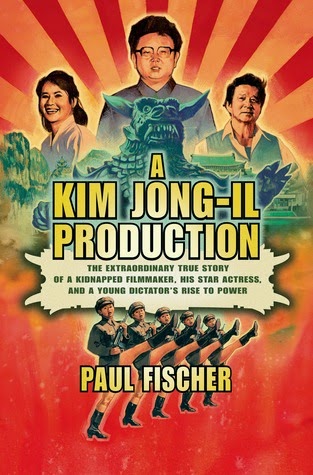
Interview with Paul Fischer, author of A Kim Jong-Il Production: The Extraordinary True Story of a Kidnapped Filmmaker, His Star Actress, and a Young Dictator's Rise to Power

Paul Fischer’s book took me by surprise. I had read some memoirs of escapees from North Korea, some novels, and some 'experience memoirs' from people who had either visited North Korea or worked there. I read the papers. I still knew next to nothing about the Kims and their regimes, in power since the 1940s.

In this debut piece of long-form nonfiction, reviewed by me earlier in this blog, Fischer gives us details about the film-crazy but otherwise undistinguished "Dear Leader" Kim Jong-Il, son of "Great Leader" Kim Il-Song. Jong-Il had a specialty—an interest in foreign film--and he and his father used that interest with the fervor of preachers: to shape thought. As film producer himself, Fischer may have been perfectly suited to diagram the heart of the Kim enigma.

Fischer generously agreed to answer my questions about his writing process, and his thinking on other matters below:

1. The writing in A KIM JONG-IL PRODUCTION was so involving at the same time it was informative. Did the structure sort itself out while you were writing or did you begin with a narrative structure and fill in the pieces with research?

I did a lot of research to start with, and then when I felt I had enough to get started I started writing, even though I was still researching at the same time. I researched all the way through, really: I was always on the lookout for more details, for something extra that was sharp and revealing and could save me three paragraphs with one great detail or sentence. I had a rough structure to start with, and that didn’t really change, except for the first reel of the book, which leads up to the kidnappings themselves. In the first several drafts of the book it was very, very long and very, very detailed, and absolutely didn’t have that balance you’re talking about, between being gripping and being informative. We even played around with using flashbacks and all that but it just felt forced. It took a lot of work to sculpt that down to what felt like the right balance. After the kidnappings themselves the narrative has this very clear, very organic forward momentum, and I knew as long as I went with that, stuck with the story, and didn’t digress, I would be ok.

--photo courtesy of WGBH Forum Institute--The entire video of Fischer's reading at Harvard Bookstore is available here.


2. You landed a behemoth publisher for your first book. How was your proposal pitched? That is, did you have just a concept, only one chapter, or was most of the work done?

I had a very, very detailed proposal. My agent was very clear and very rational about this: I’d never written anything before, this was a larger-than-life story that would only work if written with some kind of rigour, and the only way we’d get the best publisher for it would be if we proved I could be trusted to write a book like this and see it through to the end. I didn’t want to “waste” time on such a long proposal, when I could be writing the book itself, but I understood the logic and my agent was very good at nudging me into agreeing. We spent months on this proposal that ended up being forty thousand words — the book itself is about a hundred and eight thousand or something — and included an outline, a breakdown of methodology, a marketing pitch, everything.

I don’t really know of any other agents who would have done that. Everyone else I met talked to me about working on a twelve-page proposal, something like that, and I'm dead certain I never would have been with the publishers I have now if that’s all we’d done. And, to be honest, because having written something that was forty thousand words long, writing something that was a hundred didn’t feel that daunting anymore.

3. What did your writing day look like? You did a lot of traveling for this book. Did you need to keep a writing schedule to keep the work going and was that difficult?

I wrote first thing in the morning, I didn’t stop until I had two thousand words, and I always stopped at a point where I knew what I was looking to write next, so that I would start up again easily the next morning, instead of picking up again first thing in the morning somewhere I was stuck and frustrated. Those were the only three rules. Early on two thousand words was daunting and took me the whole day; but later on I got two thousand words cracked out by lunchtime and carried on and could get three, four times that in a day. I tried not to worry about whether it was two thousand great words until I had a whole first draft written — I worried about that once it was out of my head and on the page. For a first draft it just mattered that it was at least two thousand words, every day, six days a week.

4. Did you learn anything from visiting North Korea that you didn’t already know from your interviews?

I did, tons. I found photos and books and maps that are very hard, or expensive, to find outside of North Korea. Mostly it was the mindset that was really informative. For ten days I personally, 24/7, underwent the way the state micro-manages your experience of itself, and tries to control your perception of reality. I kind of understood that from the research, but I didn’t feel it in my gut until I was there, with guides who were lying to me, and they knew they were lying to me, and they knew that I knew that they were lying to me, but you still all continue this charade. It’s a very surreal, unsettling, upsetting feeling, when you know how much people there are truly suffering — a suffering no one mentions. A writer friend of mine who read the book told me this lovely thing that the North Korean sequences felt to him like “something happening three or four rooms away in a parallel universe,” which is something sort of intangible that I wouldn’t have understood how to express just from books and interviews.

5. What led you to film production in the beginning of your career and do you think that is something you plan to continue?

I do, I’d love to write a book and then make a film and then write a book and then make a film…the best of both worlds. I still think of myself as a film producer first. As for the first part of the question, I’d always wanted to be a film director, and then I went to film school and quickly learned I wouldn’t be particularly great at it. But I produced a couple of classmates’ short films, and I found I really enjoyed that process: of making things happen, of enabling someone more unique and creative than myself to make something special, and protecting and supporting them as they did so. The logistical and business parts of film producing I enjoy. The creative aspects, where a writer or director has something different and fragile they’re trying to do and they need someone to help them make it real, is literally the best feeling I’ve ever had doing anything, ever.

6. Since you are familiar with the language of film, have you ever considered screenplays?

I’ve co-written a short, and I’ve also spent the last six or seven years trying to write a TV mini-series about Laurence Olivier and Vivien Leigh, which I'm only just finishing now. That’s been a great school in researching real lives, in really trying to write things that are truthful and accurate but also dramatic and revealing, without sacrificing one to the other.

I love working with screenwriters so much — it’s such a great collaborative process, trying to figure it out together — that I hope I can do both: write some films myself when they’re really close to my heart, and defer to another writer when I know they can do a better job than I would.

7. What is the best novel you have read recently and the best recent nonfiction title?

Oh that’s hard. The Zone of Interest [by Martin Amis] is incredible writing. Karl Ove KnausgÃ¥rd — I usually find books like those self-indulgent, but every page he writes is so alive it engages all my senses and some of his sentences and paragraphs take my breath away and I need to stop and sit with them before I continue reading. I just read Independence Day, which is the first Richard Ford book I’ve read, and it did the same to me.

Non-fiction — Ghettoside [by Jill Leovy] moved me and made me really angry at the injustice described, in equal measure. I just finished The Disaster Artist [by Greg Sestero and Tom Bissell] today and it made me cry with laughter.

8. What advice would you give to someone hoping to emulate your success?

I had confidence, curiosity, and an itch to scratch: I needed to write it. If no one read or published it, I’d have written it anyway, because I wanted to spend time in that world and make sense of it and tell that story. I guess I knew that one of my strengths as a producer is to cut through to what works in a piece of material, to have a decent bullshit detector as the saying goes, and that that would serve me well with something like this.

I can’t remember who said this, but you either do it for the process or you do it for the reward, and life’s a lot happier if you do it for the process, because you have no control over the reward. So that would be it: if you’re doing it for the reward, don’t do it.


You can buy this book here: Shop Indie Bookstores