Showing posts with label Open Road Media. Show all posts

Saturday, December 3, 2016

TrumpNation by Timothy L. O'Brien

Tim O'Brien restored my sense of humor. I was belly-laughing by the end of this book. O'Brien was sued by the Donald over the reporting in this book, twice, but if anything, O'Brien makes the Donald look bombastic rather than purposely evil. At first I was disconcerted by O'Brien's breezy style, but by the middle of this book I understood that the style matched the subject matter. I started laughing when O’Brien tells us about the fight headlined daily in the New York papers between developer Trump and Mayor Koch in the 1980s. I even got to the point where I was thinking, like Trump’s wives, “That’s just Donald. He does it to everybody.” He is a braggart and a smooth-talking operator. Everyone knows he is lying, but because no one takes him seriously, what he says doesn’t matter.

But that’s all over now. Now people must take him seriously, and it is difficult to change early impressions. The only thing we do know is that among the powerful, nearly everyone is waiting for him to trip up and hang himself. No one, except perhaps Giuliani, has any loyalty to this guy. After all, Trump has insulted them, lorded over them, sued them even. He won the election, yes, but if he blows it, they will dump him faster than Brutus stabbed Caesar.

Now, to this book. It was initially published in October of 2005, long before politicos around the nation were speaking of him the same breath as Bush, Romney, and Obama. Their worlds did not overlap. A second edition of the book was published June 2016 with a new Introduction (described here in the Washington Post) which should give you some idea of O’Brien’s writing style and attitudes towards the Don.

The thing that I began to warm to in O’Brien’s telling is that this is actually funny. Donald is a gad-dang charlatan, for cripes' sake. Everyone knows that, especially the dour-faced Republicans who opposed him during the campaign. And they are all lawyers. Donald has so much objectionable, actionable, lying behaviors behind--and presumably ahead--of him that they can take him down at any time they decide to put their little minds to the task. It just depends how long they can keep him on their leash. This has nothing to do with “popular opinion.” That pleasantry will go right out the window when the politicos decide enough is enough. Brutus and Caesar.

Anyway, this book is a hoot. I first read David Cay Johnston’s The Making of Donald Trump which allowed me to relax into this more casual history. Both books have great stories about Trump in conflict with one powerful billionaire after another. I particularly liked the story about Trump so admiring the Plaza Hotel that he bought it despite its flaws at a price which began to suck his wallet dry.
"This isn’t just a building, it’s the ultimate work of art," Donald said of his hotel. "I was in love with it…I tore myself up to get the Plaza."
It’s nice to know there is some sentiment in the guy, even if it is only for a building and not for the blond bombshells he married to amuse himself and dazzle us. Somewhere along the time O’Brien recalls the testimony from Steve Wynn, Las Vegas developer, discussing Trump(1) do I begin to see that Trump’s election is a fluke, and that he is hanging again by his toenails to this high bar he has managed, by luck and bravado, to scale. But there isn’t much underneath him, and it is just a matter of time before the Washington establishment declares “This emperor has NO clothes!”

Endlessly amusing if one can detach the real-world implications of Donald Trump as President of the United States, this book should be required reading for those too distressed to listen to news since the election. It is a reality inoculation to stave off despair. We knew we had a lot of work to do to repair the political system. Now we have no choice. It is not a question of “if” or “when.” The answer will have to be “now.” Be prepared to become involved.

(1)Steve Wynn on Donald Trump:
"No sane or rational guy would respond to Trump," Wynn responded. "His statements to people like you, whether they concern us or our projects, or our motivations, or his own reality, or his own future, or his own present, you have seen over the years have no relation to truth or fact. And if you need me to remind you that, we’re both in trouble. He’s a fool."
Turns out Steve Wynn is classified in an Esquire report as Trump's "friend." It seems Trump is a more reasonable man in person.


You can buy this book here: Shop Indie Bookstores

Tuesday, January 14, 2014

At the Shores by Thomas Rogers

At the Shores

The northern state border of Indiana doesn’t nestle in the arms of Lake Michigan but kisses its bottom curve. And what a kiss it is. “High dune, grass covered, tree crowned” shoreline stretches for miles along the wave-torn lake and it is here that the story of Jerry Engels, adolescent, unfolds.

This coming-of-age story was first published by Simon & Schuster in 1980, but a few years ago it was revived by Other Press and now has just been re-released by Open Road Media in ebook format. Thomas Rogers died at age 79 in 2007.

It is 1950s Midwest. Jerry Engels is White, Protestant, and the son of a Standard Oil executive. His girlfriend, Rosalind, is an heiress and outclasses him a little. Since his early days Jerry enjoyed the company and caresses of his sister, his mother, and his classmates and always felt girls were more interesting and intriguing than boys. An unreflective young man, he has many friends, and his body and urges develop faster than his restraint.

I always felt there was a class of men who operated primarily on orders from their genitals and this book gives us a good example. The time, style, and world created here are reminiscent of John Updike—when White men ruled the world and their desires were the most important thing in it.

Rogers captures something fast in this novel, in both senses of the word. There is something edgy, forward, illicit in the dreams and actions of young Jerry, as well as something lasting and built into our culture: the unconscious privilege of a White man well born. I will not deny a certain impatience with the circuitous, faulty, and deafening logic of a young man ruled by his hormones. But it is as clear a picture of teenaged confusion and angst as we may find without the further complications wiser eyes may bring to a summer idyll. My parents would have said Jerry wasn’t busy enough.

Any joy I felt came from Rogers’ pitch-perfect description of the lake and its beauty, back when summer vacations were just that. Rogers is at his most eloquent when describing the Lake Michigan shoreline—the clarity of the water, the softness and heat of the sand, the nature of the waves, the intensity of the changing skies.
”Pale blue in the calm mornings, cloud darkened in the afternoons, wind roughened and white-capped during storms, the lake was always awaiting him…the sandbars below developed unexpected pockets…through the clear water…against the fine sand on the [sunlit] bottom…[where] only minnows and silver perch and a turtle [could be seen].
This might just be the perfect summer read. Imagine discovering this on the shelves of some summer house cooling in the dark shade of fragrant pines. It might cause one to break out the watercolors.


You can buy this book here: Shop Indie Bookstores

Monday, December 9, 2013

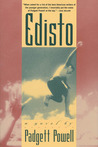
Edisto by Padgett Powell

Edisto For years I’d heard about folks interested to get a first edition copy of this novel, so I’d assumed it was a classic. Written in the time before Goodreads, it does not have a long history of reviews there, but I trust many members have read this classic since it first came out in 1985. Republished now as an ebook under the aegis of Open Road Media, this little gem gets a new airing.

A young boy grows up in his single mother’s beachside home in South Carolina. She works all day as a professor so often leaves him to his own devices. He makes friends among the locals, his maid’s friends, and chums at the local public school. Thinking that a little encouragement from birth might make a difference in his development into a writer of repute, his mother surrounds his crib with classic literature. He is given a notebook in which to record his adventures.

Our boy, Simons (pronounced Simmons) Everson Manigault, is twelve. He has a vocabulary that belies his chronological age, but there is much about the world he still needs to learn. The mysteries of adulthood top his list.

Written in dialect and in the sketchy way of a journal, this may be a little hard to follow at first, but rewards the reader in the end. I recommend plowing through, for by the end you have entered into the language, the time, the place, and the ethos. Circling back to the start once again, you will realize how much you understood, and how much you would still like to glean from this marvelous harvest. We understand, deep in our bones, what has happened here, and how the world, truly a mystery to an adolescent who has no grasp of larger issues, appears to unfurl in all its tattered glory.

You can buy this book here: Shop Indie Bookstores

Wednesday, February 27, 2013

Good Bait by John Harvey

Good Bait

I have a lot of time for John Harvey.


Harvey writes British police procedurals with a deep intelligence and special flair. He does it all—the characterizations, the humanity, the procedure, the mystery--and then throws in a little music, a little talk about literature, food, wine…man, I just love this stuff. He is another of those authors whose books I save until I want a surefire weekend read-a-thon going on.

Harvey is certainly the equal of Ian Rankin or Kate Atkinson, so if you like those popular authors, prepare for something special with Harvey. It looks like several of his books are being reissued this year or shortly thereafter. He has a couple of series, one that features main character Charlie Resnick and one with Frank Elder. These series don't go on forever, though we might like it if they did. Harvey takes time crafting his books and we never get "full."

Definitely check him out if you haven’t already. He’s been writing a long time, and like Rankin and Atkinson, he just gets better as he goes along. Best of all, he provides us his influences at the end of this book, giving us some insight into his creative process. Harvey praises Ladder of Angels by Brian Thompson as one of the finest crime novels in recent decades. I have never heard of this author, and my guess is you haven't either. I am pleased to get a recommendation from an author I admire.

This stand-alone novel follows two separate investigations in different parts of England which end up circling the same house: the house of a drug and sex trafficker. We follow both threads which rarely overlap, one investigation led by a thirty-something black female homicide investigator based in London, and one led by an old copper close to retirement, shunted to a quiet out-of-the-way Cornwall precinct to finish off his duties. We like these folks. They don’t have their perceptions skewed, just sharpened, by their line of work.

“Good Bait” is a jazz song, recorded many times by different artists. You might want to snag one (or several) of those recordings to prepare for settling down with this fine novel.


You can buy this book here: Shop Indie Bookstores

Thursday, January 31, 2013

Slow Motion Riot by Peter Blauner

Blauner belongs to that group of writers who excel at honing the edge of large city life: it feels big, dangerous, and completely outside the control of any individual, much like a slow motion riot in fact. Originally published in 1991, this novel won an Edgar and was named a NYT International Book of the Year. Now, on the occasion of its publication as an ebook by Open Road Media, it is being reoffered to the reading public. For those of you who like your reads gritty and real, don’t miss it this time around.

The novel opens in a Probation Office where an idealistic young man, Baum (or Bomb, as he is called by some), hopes to make a difference and tells of his clients--the felons and the misdemeanors. There is true madness here, and despair and confusion, and a withering boredom borne of ignorance. The story hinges on three of Baum’s clients, and one of his coworkers. In a series of chapters much like looking into separate apartments throughout the city, we are privy to the thinking and activities of these individuals, which gives us an insight Baum doesn’t necessarily share. We sense violence on its way long before it is played out.

If a reader were to plot this novel on a contour map, one would see Baum pushing a large iron ball up a steep hill. There is gathering potential in the first, slower half of the novel. In the second half, the ball slips its constraints and rolls free. There is a crushing energy and destructive quality to the path of the story that will keep readers riveted, so stay on course to this critical juncture.

Blauner calls his books social novels with an element of suspense. That sounds right. You will want to read what Blauner himself says about his own books, since his style is clear and he’s willing to share. He is deliberate in his choices and his constructions are not haphazard. It takes him several years to write a book, of which this is only the first. You may find you would like to follow him through his oeuvre, for he has chosen a distinct subject area that may be underserved in our literature. I note that Blauner says his books sold better in Europe than in America at first.

This book was published twenty years ago, and while it is beginning to have some telltale signs of age, one could read it as current. In fact, the social consciousness of the young is arguably stronger today than it was then, and for this reason, it may be just the right dose of highly embroidered imagination for a young market. I recommend this title, or choose another of his later novels. This is an unusual writer who has something unique to offer, and it would be a shame to overlook him in the rush for the next bestseller.


You can buy this book here: Shop Indie Bookstores