Showing posts with label digital. Show all posts

Friday, April 10, 2015

The Circle by Dave Eggers

As a novel this huge piece of work has almost too many faults to name, but Eggers’ imagination and style makes the experience of reading or listening to it a special kind of pleasure. Filled to the brim with fledgling discussions of privacy, freedom, fairness, democracy, and control, the novel has in its DNA all the previous great works who have posed the questions “What is privacy and is it good?” and “What is democracy and is it good?” and “What is personal freedom and is it good?”

This is a long but easy read because it brings us a glimpse of a world many of us have only heard of and yet cannot help but be intensely curious about: the campuses of the technology giants like Google or Facebook. The company in this novel is called The Circle, based loosely on what is known of the more famous real life companies. We have heard enough, perhaps, to know Eggers is not making all of this up: the campus, company structure, and internal reporting requirements are drawn (and undoubtedly exaggerated) from life. But the mania and mindthink of bright young things anxious to gain approval in a large, successful, innovative, and fast-moving company is perfectly believable.

Eggers creates a character, Mae, who unwittingly is drawn into becoming the “voice” of company philosophy. Her not-well-thought-out responses to carefully posed and invasive questions by the company leadership are too-highly praised and said to exemplify what the human populace really wants. Her soundbites are clipped and pasted to the walls of the media space created by the company as though she had expressed the unfettered will of all the people, when in fact, Mae had been groomed, prodded, bullied, corrected, corralled into making the utterances that became an command that can not be challenged.

I enjoyed Eggers’ imagination and willingness to engage the important subjects of technology, privacy, education, and democracy but grew weary before the end. This may be a great book for teens who may have a larger appetite for the glamour of high technology campuses and need a point hammered home by a thousand blows. Part of the story involves Mae developing a crush on someone she does not really know, as well as instructive incidents ill-considered sex with someone she doesn’t even like. These ring true, as does the celebrity side of Mae’s meteoric rise to stardom at The Circle.

Certainly the questions at the heart of Eggers book are not merely for teens. The pace and direction of our lives leaves little doubt that technology has changed concepts of privacy, celebrity, and participatory democracy. These are issues we need to consider now. Opting out of the whole system is not really a possibility. In Eggers book, the person that tried that did not end well and he ended early. Eggers also points out that our politicians are not going to do this for us, being “bought” as it were by corporate interests. This is up to reasonable people taking reasoned positions and fighting like hell.

I listened to the audio of this title, produced by Random House Audio, read by Dion Graham. Graham did a terrific job, especially with the Human Resources folk at The Circle. The absolute conviction in the right of the company to know all came through in their voices and gave this a very spooky feel.


You can buy this book here: Shop Indie Bookstores

Saturday, November 8, 2014

No Place to Hide by Glenn Greenwald

No Place to Hide: Edward Snowden, the NSA, and the U.S. Surveillance State Snowden and Greenwald were afraid the information they’d risked everything to expose would be ignored or shrugged off by the public, so inured are we to the pervasiveness of “threats” and its counterbalance “surveillance.” In one of the later chapters, Greenwald addresses the idea of privacy, and why we need it:
“Only when we believe that nobody else is watching us do we feel free—safe—to truly experiment, to test boundaries, to explore new ways of thinking and being, to explore what it means to be ourselves…it is in the realm of privacy where creativity, dissent, and challenges to orthodoxy germinate.”
This statement contains both the reasons for and reasons against the massive state surveillance program executed under the aegis of the National Security Agency.
“We shouldn’t have to be faithful loyalists of the powerful to feel safe from state surveillance. Nor should the price of immunity be refraining from controversial or provocative dissent. We wouldn’t want a society where the message is conveyed that you will be left alone only if you mimic the accommodating behavior and conventional wisdom of an establishment columnist.”

The last two chapters of this book are extraordinarily thought-provoking: Greenwald shares his thinking on privacy and the purpose of journalism, or "the fourth estate." He is clearly angry, but his anger serves a purpose. Greenwald won several awards for his reporting on Snowden, including being named one of 2013's Top 100 Global Thinkers by Foreign Policy magazine (along with Snowden). The last two chapters of this book tell us why.

Elsewhere in the book Greenwald discusses meeting Snowden and introducing him to the world and he shares some actual screenshots of the material provided to him by Snowden. Undoubtedly some of this material and the accompanying discussion of it will help bad actors realize the extent of U.S. oversight of their activities, and allow them to think of ways to evade detection. In that sense, this has undone some of what our security agencies have put in place.

But neither Greenwald nor Snowden are traitors in the absolute sense. Mass surveillance itself makes detecting and stopping terror more difficult. There is too much information. These two shined a light on that important caveat. Greenwald and Snowden also reveal how the machinery of protection can and is being used alternatively…to obtain economic, financial, and political advantages, e.g., trade data, negotiation talking points, private correspondences between a foreign leader and her advisors…and how it can be used to monitor us, should the need arise.

We may not feel the danger now, said the frog in the warming pot. But the danger is clear, all completely beside the fact that individuals within the surveilling organizations have access to the data, anytime, anywhere. “People are willing to dismiss fear of government overreach when they believe that those who happen to be in control are benevolent and trustworthy.” How many of us can say this for successive political administrations that change party affiliation?

But what is monstrously clear to me is large numbers of people involved in instituting and executing the series of programs revealed by Greenwald and Snowden believe they are “protecting the state,” when in fact they may be doing the opposite. In the past I recall wondering how mass delusion was possible. Isn’t this another case of the phenomenon? The convincing arguments about fixing security failures have given way to clever folks believing “collect it all” is in the public interest. How they can believe it day after day, year in year out must be that their education and their economic livelihood are tied up in it: all high tech entities are involved. The system becomes inescapable. And they can’t talk to anyone about it.

I think Greenwald makes an eminently reasonable argument when he says that we have made the threat of terrorism an argument for dismantling the very protections that make our system of government so unique and so exceptional and so universally admired. We go to the dark side on that path. We have other examples of countries that have made such choices, some still operating today. I do not think that should be our goal.

Greenwald defines the concept of the “fourth estate” thusly: “those who exercise the greatest power need to be challenged by adversarial pushback and an insistence on transparency; the job of the press is to disprove the falsehoods that power invariably disseminates to protect itself. Without that type of journalism, abuse is inevitable.”

Regarding journalistic objectivity, Greenwald is blunt: “The relevant distinction is not between journalists who have opinions and those who have none, a category that does not exist. It is between journalists who candidly reveal their opinions and those who conceal them, pretending they have none.” I admit that has been an issue that has bothered me for years, having discovered a remarkable lack of objectivity in newspapers even in choosing which stories to run and which to withhold.

The final chapter in this book is a mighty indictment of the powerfully connected U.S. media establishment and celebrity reporters and finally tells me why Snowden went to Greenwald with his information, as opposed to any other news organization. It also relaxes to a certain extent the tension I experienced at the beginning of the book upon learning of Greenwald’s adversarial and aggressive stance, though I can’t help but worry that I am now being managed by Greenwald.

I think everyone can agree that Snowden, Poitras, and Greenwald are brave folks. Whatever else folks have been calling them, that, at least, is the truth.


You can buy this book here: Shop Indie Bookstores

Monday, October 27, 2014

The Snowden Files by Luke Harding

The Snowden Files: The Inside Story of the World's Most Wanted Man Radio and TV coverage of the Snowden leaks were spotty. This book helped to fill in the details, background, and what happened since Snowden showed up in Moscow. Snowden himself, and his girlfriend Lindsay Mills, are fleshed out a little more, and I learned why an American would go to British journalists, the Guardian, with the information he had purloined. It turns out the British, specifically their top-secret telecommunications monitoring arm, GCHQ, collaborated with the NSA: “We have the brains: they have the money. It’s a collaboration that’s worked very well.” [Sir David Omand, Former GCHQ Director] No shortage of egoism and despotism to go around, then.

Snowden was a right-wing libertarian in early writings on the web as a user he called ‘TheTrueHOOHA’. It was frankly unsettling for me to read/listen to his thinking as a teen, and see his progression to action. To use his words, he would like to be viewed as a patriot who believes in the right to privacy enshrined in the U.S. constitution. When I’d first learned of his leaks, I was startled. Listening to his first interview on TV, I was admiring. After reading this book, I am unsettled.

Luke Harding, a Guardian reporter, outlines the Snowden action for us with a minimum of sensationalism but with some incredulity at the scope of the revelations. And the news is pretty sensational. Harding gives a little background into Snowden’s early development, and his foray into working as a U.S. government contractor specializing in the protection of U.S. government communications. Snowden’s amazed and amazing reach into the lives of others via their private data transfers must vindicate the paranoid. While I have my doubts that any world leader or business executive thought their telecommunications were truly secret, Snowden’s revelations are startling in the scope of the data collection and in the holes in the system, e.g., a relatively low-level contractor had access to the material.

I should probably state from the get-go that I do not fear my government. I grew up in an age where inaction was much more to be expected than action; incompetence and bureaucratic bungling was much more common than overreach. I was not subject to the kind of totalitarian control experienced in Eastern Bloc countries, the Soviet Union, or China, but we have those examples to know it can happen. I believe the president and his minions who claim that the government is not listening to the communications of private citizens. They simply do not have the capacity, nor the interest, to do that. However, they now apparently have the means, and individuals within governments can have a deleterious effect upon the stated objectives of government. Snowden has shown us a place where an individual might have an outsized effect to his purported role.

Knowing just what I know now, if I had to make a judgment on Snowden’s fate, I might say he should go to court congruently with the leadership of the NSA and the GCHQ. I don’t think it would have been possible for him to “go up the chain of command” to protest this data collection. It is ridiculous to contemplate that anyone would have listened to him, given the reaction from our fearless leaders upon learning of his revelations. But I wish things had gone differently…for him and for us.

I listened to the Random House Audio version of this title, very ably read by Nicholas Guy Smith. I had a look at the paper copy as well, and found it concise enough that the momentum never lagged. Since Guardian reporters were the ones that initially broke this story, it is reasonable that they are the ones to write the details of what happened and the follow-up. I can’t imagine there is a person out there who wouldn’t be interested in this topic. Inform yourselves. This is going to be a political topic for some years to come.


You can buy this book here: Shop Indie Bookstores

Wednesday, July 9, 2014

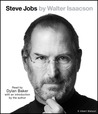
Steve Jobs by Walter Isaacson

Steve Jobs It is sometimes difficult when writing a review of a memoir or biography to separate the writing from its subject. Isaacson did a good job of handling the detritus of a life—there is just so much to examine in the life of Steve Jobs that the biographer must pick out the pieces that seem to make sense of or make sense in a narrative of that life. Isaacson does that. What I found myself missing was the same thing I felt missing in Ben MacIntyre’s A Spy Among Friends which describes the infamous “charm” of Kim Philby: audio/video of the man himself. Fortunately, there are plenty of clips of Jobs online, though what we’d really like to see are unscripted moments rather than product launches.

Isaacson writes that the theme of Jobs’ life was that he always felt “special” or “chosen” and that the normal rules didn’t apply to him. It began, perhaps, when his mother told him he was not adopted because he was abandoned by his birth parents, but because he was chosen by his adopted parents. But he lived his whole life as someone who made his own judgments about the world and its rules. He was not a gentle man, but he had a creativity that he cultivated in himself and others. That was one of his special gifts.

My takeaway has to be that it takes all kinds to build successful products. Obviously a room full of Jobs-like folks wouldn’t work, and Jobs himself admitted that “without Apple and its engineers, I am nothing.” But it also took folks who were willing to work with him on everything else—component deliveries at Apple, music sales for iTunes, filmmaking at Pixar. He was persuasive--the “reality distortion field” was applied to the way he turned one’s head about decisions--and that was another of his special gifts.

A different person could have been successful in the personal computer market, maybe even more successful. Gates was such a person. After all, Jobs and Gates entered an empty market and made a mark. That was be another great gift of his: to see what was needed. That is something not all of us can do. That takes hutzpa and vision. Jobs wasn’t universally successful with all his products: think about NeXT, where he gave himself leeway to build a product the way he wanted but which no one else liked enough to buy. But the architecture of the product Jobs built at NeXT was used later when he returned to Apple.

After some practice Jobs got much, much better at launching products that made a lot of sense and that broke open the way we communicate. To do that, he had to attract the right folks to help him, to cooperate, and to lead. That was another great skill: he could lead.

Finally, he had style. I admit to appreciating his concept of wearing a “uniform.” I appreciate his restraint when it came to consumption and money, even food. He could earn endlessly, but he seemed to realize money was not the point, as it appears to be for some folks. The point was to do what you loved, to be in love. Love was the point.

In a perfect world, an eBook would have video clips of the man in action at strategic moments in his life (e.g., the 2007 Walt Mossberg interview of Gates and Jobs and the Stanford 2005 graduation address)…we wouldn’t have to watch a three-hour product launch, but just clips of the highlights. It is difficult to imagine the force of his personality without seeing him in action.

Because of Jobs’ central role in the personal computing market, his history could be read as a history of the industry. I found it fascinating. Whether Steve Jobs was a perfect man or a flawed man is not really the point, I think. He was a man, as he liked to point out, at the crossroads of science and art. He changed the way we communicate and at least makes us think about the way we do business. He was after excellence in product design and function, and he hoped to create a great company.

I listened to the audio production of this book produced by Recorded Books for Simon & Schuster Audio, narrated by Dylan Baker. I highly recommend it for everyone’s library. I wonder if we would have been as tolerant of the young Jobs as Atari executives were when he arrived on their doorstep with the announcement that he wouldn’t leave until he was hired.


You can buy this book here: Shop Indie Bookstores

Thursday, July 3, 2014

Steve Jobs' Life by Design by George Beahm

Steve Jobs' Life By Design: Lessons to be Learned from His Last Lecture
George Beahm is an unabashed fan of Steve Jobs and has written a previous book called I, Steve: Steve Jobs In His Own Words. Beahm takes publically available information and quotes from Jobs and gives them depth and context. It is painstaking work, and Beahm treats Jobs more like an oracle than a man. But the book does what good nonfiction should do: it whets ones appetite for more information.

Just to be clear, we never actually get the text of Jobs’ only graduation address to Stanford University students in 2005, though we get a web link to it. Beahm “builds on what Steve Jobs said in his address and sheds light on its explicit and implicit themes.” He picks out the threads of that short speech and shows us how those themes played out in Jobs’ life. Beahm calls it “Connecting the Dots” as Jobs does in his commencement speech. “You can't connect the dots looking forward; you can only connect them looking backwards,” Jobs told his audience in 2005.

Jobs speech was a good one. It told his audience that although he is lauded today as a success, he did experience failure. He tells them if they have something they love to do, failure is just part of the process, and necessary. And he says love is central to the meaning in our lives.

Finally, Jobs tells us Memento mori: Remember that you will die. You don’t have long on earth, so take advantage of your time and don’t waste it living someone else’s life. Be daring.

In the bibliography, Beahm cites Walter Isaacson’s biography called Steve Jobs as the standard against which all other works will be judged. I am most interested to start that as soon as possible. Beahm’s book reminds us that a man of great creativity was once among us, and impels us to glean lessons from his life.

I received an advance of this title from librarything.com in exchange for an honest review.


You can buy this book here: Shop Indie Bookstores

Sunday, February 27, 2011

The Net Delusion by Evgeny Morozov

The Net Delusion: How Not to Liberate The World


Morozov is debunking the notion that internet access = internet freedom. In fact, he tells us that internet "freedom" is a term with no meaning in the conventional sense since it implies that users are free to say what they like and use the technology for their own ends. But, his argument goes, if one user (an authoritarian regime, say, with a reason to dampen enthusiasm for democratic reforms) controls any points of internet access, or subverts the open sharing of ideas on social networking platforms to their own ends, "freedom" immediately becomes compromised.

Morozov compiles an extraordinary collection of examples from around the world of how this is happening now, and challenges (especially U.S.) policy makers to acknowledge that funding bloggers or promoting social networking sites is not an adequate response in and of itself to authoritarian regimes and/or dictatorships. He argues persuasively that U.S. Secretary of State Clinton’s speeches on Internet freedom do not adequately address the issues of authoritarian control, and suggests that only by closely aligning stated country-specific political policies with the promotion of Internet access in these same countries will produce the results the U.S. government seeks.

In other words, we have to stop talking out of both sides of our face. We can’t suppose that financing a corrupt regime on the one hand and supplying financing for anti-regime bloggers on the other is going to produce creditable results. And when it comes to Internet freedoms, one size does not fit in all cases. Some governments have embraced the Internet revolution so thoroughly that they are closely intertwined in the social networking sites, uncovering dissidents and following their adherents. Some have only the crudest knowledge of and reaction to social networking: witness the Internet shutdown for several days during the protests against Egyptian government.

At first I thought Morozov was arguing for international regulation of the Internet and perhaps even self-policing by internet services providers. But I realized he is far too realist to imagine that international regulation (were it even possible) would be practically effective and that asking internet service providers to police is even more frightening than the authoritarian regimes he opposes. But his contention that the Internet too often “empowers the strong and disempowers the weak” is probably true. However, adding even fractionally to the access of the disempowered means proportionally huge gains in their knowledge and connectivity with ideas and others sharing their beliefs. As messy and inadequate a poorly-regulated Internet may be, it has undoubtedly had some effect on information dissemination to good effect. It is now up to those shackled masses to bend their minds to the task of building better governance than that which they have had to suffer in the past.

Wednesday, December 29, 2010

I Live in the Future by Nick Bilton

I Live in the Future: & Here's How It Works


Nick Bilton is extremely upbeat in his assessment of where we're going with information sharing. In fact, one might accuse him of having the tail-wagging enthusiasm of a convert. He does, in fact, call himself a "borderline digital immigrant" rather than a "digital native." He may be aiming this narrative at an audience who does not already spend much of it's time online, and instead is aiming at "digital immigrants" who feel somewhat battered by cyberspace's firehose information portals. He takes a unique angle on information sharing in Chapter One where he investigates the way the porn industry has changed their online presence over time to adjust to the needs and wants of adherents. The chapter was undoubtedly orginial research, but I thought it overlong and after awhile, rather off-putting. Chapter Two tells us about the past (undoubtedly the past informs the future) but the ideas weren't new and though they may have rounded out the piece somewhat, I thought he was lolly-gagging on the way to a point. I gave him to page 90, by which time I'd underlined more stuff than in any previous book. I skipped to the last chapter, at which point he tells me something I'd read years ago: Jeff Gomez in Print is Dead. Gomez left something imprinted in my brain that resonates to this day: [to parphrase] "It's not how you read something, it's the ideas that count."


Bilton tells us that he "no longer feels a shred of information overload, content anxiety, or fear that I might be missing something, online or off" because he relies on his anchoring communities (friends, family, and online associates) to funnel information to him. Research shows that "most people do." Bilton introduces us to the term "homophily," the concept of living within a segregated bubble in any community. He asserts that "we see drastically more opinions and viewpoints than we do in traditional media such as television and newsprint." Could it be that the traditional news media made a (crude, perhaps, but sincere) attempt to be fact rather than opinion? He cites extensively from an article published 2010 Gentzkow & Shapiro University of Chicago which concludes that there is "no evidence that the Internet is becoming more segregated over time," and therefore are not being herded into silos of thought and opinion.

I'd like to believe this, but the research of one article does not make the case for me. I feel like I have the evidence of my eyes to tell me that there has been a hardening of position amongst the populace, and a greater incivility and lack of respect for another's opinions. I think people may be shoring themselves up in positions taken for no other reason than their friend (or, god forbid, a celebrity) takes a position, and the way people get information on the web allows them to feel justified in even unreasonable positions because so many people out of their group will support it. A mob mentality, if you will, borne out on a scale the world has never before seen.

The author explains a series of dueling opinion pieces between himself and George Packer (author of Assassin's Gate and a New Yorker staff writer) regarding the value of constant connection. The dueling positions are described in detail and he admits that impassioned responses supporting both sides came down in greater numbers in support of Packer's position. But Bilton seems to be saying that one cannot hold back the tide. Who wants to? When Bilton next tells us that "digital natives do not distinguish between mainstream stories in the mainstream media such as newspapers and television and those created by their peers," I'd say we have more a generational divide here. The digital natives are clever and all, but really, when Bilton says that "online name recognition and trust may be more important than simply affiliating with a trusted institution..." I begin to shut down. I read him only because he was the NY Times correspondent for electronic developments, so you can see I am not a digital native.

I picked up this book because of a one-liner by Jonah Lehrer endorsing it. I get sucked in every time. I don't know Jonah Lehrer. I just read one of his books and admired it. But he's just doing what authors do: endorse other authors books in hopes that his own will be recommended fairly. I admit to feeling something akin to rage the further I read in Bilton's book, but perhaps it was just terror.

Friday, May 1, 2009

Print is Dead: Long Live the Digital Book by Jeff Gomez

Print Is Dead: Long Live the Digital Book


For almost a year now, I've made a big effort to understand the changes in the publishing industry. I must admit I was terrified to think that "news" would be left to fingernail blurbs on the Yahoo homepage. I was equally terrified to think that I would have to use my extensive education and valuable time to search a variety of sources for news, recent books, or publications that interest or inform me. I can do it, I know, but how many others will? And what does this mean for an informed electorate in a democracy? I was afraid, but I am much less so now. The changes are taking us to a new place.

Gomez plants us firmly in the debate about book publishing, articulating the pressures on those currently producing and selling the book as product. He discusses the electronic updates that are rocking the industry and the changing publicity and marketing avenues. Things are changing so fast, it is amazing his observations are not out of date already.

I found the book immensely useful for stimulating fruitful discussion and thought...and hope.