Showing posts with label fishing. Show all posts

Sunday, May 6, 2018

The Death & Life of the Great Lakes by Dan Egan

Paperback, 384 pgs, Pub Apr 10th 2018 by W. W. Norton Company (first pub Mar 7th 2017), ISBN13: 9780393355550, Lit Awards: Helen Bernstein Book Award Nominee for Excellence in Journalism (2018), Los Angeles Times Book Prize Nominee for History (2017), Goodreads Choice Award Nominee for Science & Technology (2017), J. Anthony Lukas Work-in-Progress Award (2015)

Egan separates a couple of salient facts by the length of a book, but I here eclipse the space between them:
※ The Great Lakes are the largest expanse of freshwater in the world.
※ The Great Lakes are in the midst of a slow-motion ecological catastrophe begun by opening to the St. Lawrence Seaway and the Atlantic.
※ Freshwater is the world's most precious natural resource.
※“The intuition is that a very large lake like this would be slow to respond somehow to climate change. But in fact we’re finding that its particularly sensitive.”
After the last election I became laser-focused on Wisconsin. I watched as a traditionally blue state voted red, and kept Governor Scott Walker and Speaker of the House Paul Ryan in office through severe gerrymandering that could not be reversed even by mandate from federal judges. The Wisconsin gerrymandering case was forced to our country’s highest court, and SCOTUS's decision on the fairness of such twisted districts should be heard before the November 2018 election. But decisions made by the severely gerrymandered Republican legislature has been allowed to impact and will continue to impact Lake Michigan’s watershed at a time when it needs urgent attention.

A proposed $10 billion investment in Paul Ryan's District #1 by Taiwan's Foxconn, maker of touch screens for the iPad, was inked in 2017. Foxconn will use 7 billion gallons of water from Lake Michigan per day, five billion of which will be used outside and not returned to the lake's watershed area. By the end of Egan's book, contracts like this and that made with Waukesha city, a suburb of Milwaukee also outside the watershed area, take on far greater meaning.

Lake Michigan and the rest of the Great Lakes have been under pressure from invasive species through the Seaway to the north and from the south through the Sanitary & Ship Canal to the Mississippi. Just when scientists managed to tackle the problems caused by one devastating species, they would encounter another, even more overwhelming, until we arrived where we are now, with toxic algae blooms regularly threatening the water supplies of major cities that use lake water for drinking water.

Besides that, we discover the increases in the lake’s winter temperatures means increases in the lake’s summer temperatures, encouraging evaporation and shrinkage of water area. This, along with pollution of existing supplies and inevitable demands from rapidly drying areas of the country who have gone through their aquifers is increasing the pressures on scientists to refresh and preserve this enormously important natural resource. It requires attention and political support, and one fears what would happen should business-influenced politicians force through compromises that have short-term gains for the few and long term consequences for the many.

Dan Egan is a reporter at the Milwaukee Journal Sentinel and has been researching and reporting on the Great Lakes for at least a decade. He has done something we rarely encounter: he has made science and history come alive. As I did my own research into the political conditions in Wisconsin, I thought it would be important to learn more about Lake Michigan which plays such an important role in the life and economy of the state but I expected Egan’s book would be struggle to read. Instead I found it completely riveting and hard to put down. When was the last time you said that about a science/geography/history book?

A few years ago I read another nonfiction title, Boys in the Boat, by Daniel James Brown that was similarly involving. Although the history of the Washington crew team competing in the 1936 Olympics in Hitler’s Germany is long over, Brown made the book completely propulsive and un-put-down-able. That is the way I feel about Egan's book.

One threat to the lakes follows another, and our hearts squeeze as we hear of dangers and disasters in the last couple of years. It feels absolutely critical that we pay attention to the resource--fresh water--scientists have been telling us for half a century is in limited supply and which has everything to do with life on earth.

I can’t recommend this title more highly. Egan should definitely be on award lists for this title, and indeed has already scooped a couple. The W.W. Norton paperback came out last month (April 2018) and the Random House Audio production is likewise terrific, narrated by Jason Culp. Below please find a clip.


Wednesday, November 12, 2014

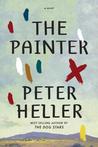
The Painter by Peter Heller

The Painter
"The way death is both near and infinitely remote, the way it freezes and somehow kindles the heat of something grotesque and maybe irresistible and sexy, which is life at its most desperate….this dark yearning is what happens when we idealize anything: the form of a woman, a landscape, a spiritual impulse. We move it closer to the realm of the dead, if not outright kill it."
Well. It’s a word Heller uses almost as punctuation throughout the novel, ending a thought, a conversation, a statement. The word has all the resonance of a bell, signaling the moment we must think for ourselves, decide its inflection, trust our narrator or not. Because we have here an artist who sees the world uniquely and reacts quickly, almost instinctively, to what he sees, to what he senses. He’s dangerous…until he is allowed to express and release his guilt and sadness over the death of his child, until he realizes he has a choice.

A couple of years ago I decided Heller’s debut The Dog Stars was one the best fiction books I’d read that year. After reading this novel I conclude that I am simply susceptible to his writing. His characters’ responses have a physicality so completely "other" from my own that I read his work with a deep curiosity. In this novel Heller addresses the nature of celebrity, the essence of evil, the knowledge of guilt, the awareness of choice, the balm of redemption.

A painter who likes to fish comes upon a man beating a tied horse. Meeting that man again in the dark while fishing a river, the painter kills the man.

I began by listening to this book on audio. I knew from the moment he began talking about fly fishing that I would read it, so I could go slow. Hot sun on cold water, a rushing river, a swirling pool, a limb casting shade…these things I must savor. When he mentioned cadmium yellow, I went out and got the paper copy.

Reading made this more accessible to me. When I saw the way the sections were divided, with gallery descriptions of paintings on display, and noted the spacing of paragraphs, everything slowed to the proper pace and got much more manageable. I sunk into this book like a lead weight through clear water. Heller hooked and played me, only to let me go at the end. It was fun; there is a little regret in being released.

Heller raises important questions about art, and the celebrity of art: does great art require emotional upheaval? He gives us his influences: Stegner, Hemingway, McCarthy, Beam (as in Jim Beam), Homer, Picasso, Delvaux. He answers the question he raises this way: Great art evokes emotion and the artist must be brave. Why brave? Because bravery is breathtaking, inspiring. Was Jim Stegner brave? Perhaps: not in the violence of his killings, but in his resistance to the characterization of criminal, of wrong-doing.
"Paintings [and novels] can take on a life of their own. It’s like stuff happens in them when you’re not looking. The crow and the horse started out as adversaries—I mean the crow would like to eat the horse, if he ever, say, jumped off the cliff and became a carcass. But instead they began to talk. I think maybe the crow cursed the horse. I told you that I thought the crow was telling the horse that he had a choice, that he didn’t have to jump after all. Well, I think that’s sort of like Eve biting the apple. You were talking about Genesis. I think it’s like that, the crow is like the serpent. He is giving the horse the awareness of choice. And with a full knowledge of choice comes a foreknowledge of death."
I can't let this review go without saying that Stegner's walk up to Ten Thousand Waves, the first sex scene with Sophia, and his description of a death-defying chase over mountains and through rivers felt positively lived. But the main argument--the grief-stricken father, the violence (thrice!), the celebrity--lacked some kind of convincing soul. I liked reading it anyway, but it struck me as a blue coyote.

Heller has the goods to write about nature, art, and us ordinary folk...what we feel when we feel deeply. We don't have to murder to screw everything up.

The audio is a Random House Audio production, read by Mark Deakins. The book in hardcover by Knopf is a lovely thing, printed as it is with the paintings’ description as section dividers. One may linger over those descriptions, getting a feel for size, for color, for sense.


You can buy this book here: Shop Indie Bookstores

Saturday, July 12, 2014

The Mockingbird Next Door by Marja Mills

The Mockingbird Next Door: Life with Harper Lee Nelle Harper Lee only ever published one book, the American classic To Kill a Mockingbird. Apparently she never wrote another, and rarely appeared in public, though in 2007 she traveled to Washington, D.C, to accept the Presidential Medal of Freedom from then-President George W. Bush. When Marja Mills went to Monroeville, Alabama in hopes she could score an interview with the reclusive Ms. Lee, she had little idea that they would become friends and neighbors in years to come.

Nelle in 2007
Harper Lee--The Presidential Medal of Freedom Ceremony in 2007

Marja Mills was working at the Chicago Sun Times when she first approached Harper Lee by letter in 2001. At the time, “Nelle” as her friends called her, was worried that an unauthorized biography of her would destroy her privacy and reputation so she consented to Mills interviewing her friends and neighbors. The resulting 2002 article gives insight into what Nelle and her sister Alice had been doing since Nelle Harper Lee’s first and only novel won the 1961 Pulitzer Prize.

Harper Lee in the 1960's
Harper Lee in the 1960's in Alabama

Alice Finch Lee was ninety years old in 2001, and was still practicing law in Monroeville. Nelle Harper Lee was 76. Both sisters were unmarried and had been living together since at least 1964 when Nelle stopped giving interviews. “I would not go through the pressure and publicity I went through with To Kill a Mockingbird for any amount of money,” she told the close friend Reverend Thomas Butts. Acerbic of tongue and sharp of wit, Harper Lee no longer wrote books for publication, though she continued to write on a manual typewriter right up until 2007 when she suffered a serious stroke.

Mills’ early article became the kernel of this much longer book due out just as the PBS documentary Freedom Summer airs to celebrate the 50th anniversary of the Civil Rights Act of 1964. Mills, herself suffering from a debilitating Lupus diagnosis, moved into the neighboring house of the Lees’ and shared their stories and their lives for a year and a half in the first decade of the 21st century. She wrote at a "glacially slow" pace due to her illness, and perhaps to preserve the sisters' privacy a little longer. Mills now shares with us her experience living beside the woman who wrote the “Best Book of the 20th Century,” according to Library Journal.

This book does not pretend to be a biography in the full sense of the word. Mills never did get an on-the-record interview with Harper Lee. She was able to interview Alice and Nelle’s friends extensively over a period of years and used that material to compile this book about Nelle’s habits (catfish and laundry), interests (reading and talking), and personality (“hell and pepper”). The pace of the book is Southern slow and languid, and what I learned about the great author made me sad. The celebrity of her first and only novel was so overwhelming, insistent, and enduring that she never wanted to do it again. Think J.D. Salinger, Thomas Pynchon, and others whose first success became their cross to bear.

Harper Lee remained an avid reader particularly of histories, Lord Macaulay Thomas Babington Macaulay in particular. Jane Austen was a favorite novelist. Her tastes in film were a little more pedestrian, with Mills recounting the Nelle’s Netflix rental of a Wallace and Gromit animated film. Lee spent part of every year in New York and this reader is pleased her anonymity allowed her to enjoy the common pleasures to be found there. She kept her lifelong friendship with Gregory Peck and his family, and she is quoted elsewhere as saying he was part of the best film adaptation of a book ever made.

I needed to be reminded that Truman Capote was a childhood friend of Harper Lee, and she went with him to research his nonfiction novel, In Cold Blood in Holcomb, Kansas. Earlier, they’d ended up living in the same apartment building in New York City, where the 20-something Harper Lee began writing.

Harper lee & Truman Capote
Harper Lee and Truman Capote

There must have been “something in the water” down there in Monroeville for two writers of such stature to come to the nation’s consciousness about the same time. One might almost think the imagination and talent of each infected and spurred the other to greater achievement. Joshua Wolf Shenk has a book coming out in August 2014 called Powers of Two (Houghton Mifflin Harcourt) which makes the case for creativity often coming from pairs…and not singly. Though the two did not cooperate on their work generally, their friendship may been a spur to a competitive talent that made both their work great.

Mills was careful to preserve the privacy of Harper Lee and her book begins slowly, but eventually we get a clear picture of the woman and her life. Mills herself anguished at times that such a talent couldn’t be persuaded to publish again, but we can only hope that there are still manuscripts to be discovered among her papers. Now in assisted living care, Nelle Harper Lee has finally signed a contract to allow her American classic to be published as an eBook, and an audiofile of the book has just been released by Audible.com, narrated by Sissy Spacek.

This is a remarkable document that will have to serve as the memorial to a woman so desperate to preserve her privacy that she withdrew from the public. Her sister Alice raised the point that once Nelle had reached the pinnacle of art with her first book, she may have been dissatisfied with everything that she later wrote. In any case, she left us a lasting legacy that we can enjoy forever. We wish her well.

Many thanks to Random House for the advance audio production of this title, read by Amy Lee Stewart.
---------------
Feb 3, 2015 I was just notified that Harper Lee will have a second book published in her lifetime. News of the new book is discussed here.

You can buy this book here: Shop Indie Bookstores

Tuesday, March 4, 2014

The Apocalypse Chase by Graham Spence

The Apocalypse Chase: Fishing in the World's Most Dangerous Places So what makes a good fishing tale? Perhaps it is a little like real estate: location, location, location (or, as the Australians like to say, “position, position, position...”) But it is more than that…it is the temperament of the fisherman, the poles, the flies, the weather, the obstacles to success…as well as the size of the catch. There also has to be a little time for contemplation, and ruminations about the state of the world, both personally and globally. All this is here for the taking in this first self-published novel by Graham Spence, co-author of several nonfiction titles about the African bush with the fabled conservationist Lawrence Anthony, who died in 2012.

I read this story in a day because Spence made this fiction absolutely propulsive. The central character, Chris, sells advertising for a small newspaper in Queens, New York and is bored with his life. He is middle-aged, divorced, and barely speaks to his wife or daughter anymore. After experiencing a “heart incident” in a meeting one day at work, he decides to go ahead and live before he dies. He wants to fish the wild places where fish have never seen a human. This is the tale.

He first chooses South Africa. The narrative shifts between moments of sunny calm with great, satisfying catches and moments of breath-catching, death-defying horror. The absolute best part of this narrative (who really trusts a fisherman/storyteller anyway?) are the details and keen insights that convince us that this is the real thing, the actual location, the true situation. It is fascinating. But Chris doesn’t end there.

The next location is Colombia, South America of all places. Chris thinks that no one in their right mind would go to Colombia with all the FARC activity and kidnappings, so he won't have any competition for fish. He researches locations and decides fishing along the coastline beaches and away from the jungle would probably be safe. His Colombia section just reminds us just what a fisherman (tall tales) Chris really is. But he is so good at storytelling and fishing, we find it hard to put the book down. He survives (!) his travels in Africa and South America and we move on. But I don’t want to give away all his secrets. This is something you need to discover for yourselves. I thought it was a blast.

So I discovered this title when I began researching the authors of The Elephant Whisperer, an exceptionally well-written nonfiction about game conservation and elephant killings in Africa. Graham Spence has a low-key website on which he introduces his two self-published fiction titles, including this one. I really enjoyed Spence's work with Lawrence Anthony so thought, for the princely fee of $1.99/each on Amazon or bn.com, I would like to try his first attempts at fiction. I am so happy I did. I can think of a number of people who would love to read this…if I can only get them to work with an eReader or iPad.

Do yourself a favor. I can guarantee you will have an unusual (and terrific!) day’s reading ahead with a natural raconteur, especially if you like fly fishing stories.

eBook Published September 26th 2012 by Fastpencil (first published August 6th 2012) ISBN 1607465485 (ISBN13: 9781607465485)

You can buy this book here: Shop Indie Bookstores

Saturday, December 7, 2013

Salmon Fishing in the Yemen by Paul Torday

Salmon Fishing in the Yemen Where was I when this came out in 2007? When I discovered this title recently in someone else’s TBR list, I immediately added to my own. The novel is an absurdist romp with a heart of gold (and romance). I belly-laughed through the first bits, looked askance at the portion where the Prime Minister’s aide imagines a quiz show in Pakistan, and couldn’t wait to find out the result of the ridiculous, bound-to-fail salmon fishery in Yemen. I wanted to believe, as the sheik says.

This worthy novel has already been made into a Golden Globe-nominated film starring Ewan McGregor and Emily Blunt which was released in 2011. I look forward to seeing what Director Lasse Hallström has done with the absurdist concepts, poking fun at government spending on dubious projects which serve only to keep current officials election-worthy. Torday captures the dueling-memo mentality of government bureaucracies competing for limited funds, and the stilted, unsexy email correspondences of working spouses.

And yet, there is more than mere farce in the developing faith our fisheries expert has in the doomed project, and in his blossoming love for his “estate agent” colleague. I listened to the 2007 Orion production of the audiobook supported by a full cast including Downton Abbey star Samantha Bond (you’ll recognize her voice immediately) along with John Sessions, Andrew Sachs, Andrew Marr and many more. The audiobook is a brilliant success as each character is enunciated by actors with great skills. This audiobook production ranks among the best I have heard in recent years and is well worth seeking out.

I look forward also to seeking out more of Torday’s titles. And I adore the covers for his books. I note the publisher remains an imprint of George Weidenfeld & Nicholson throughout his list. These exceptionally fine covers could be done in-house at the publishers, but more likely they are created by a friend. What a great gift to the author, and to us, to see two artistic talents melded. Kudos Torday, et al!


You can buy this book here: Shop Indie Bookstores

Friday, May 18, 2012

The Great Northern Express by Howard Frank Mosher

The Great Northern Express: A Writer's Journey Home


I love fishing stories. Lord know why, since I can remember only fishing a couple of times in my life. There is something about the sinuous dance of the line, the exotic choice of flies, the murmur of water, the glint of sun that mesmerizes me. And perhaps there is something about that wily fisherman hatching his next story in the big outdoors that makes even failure seem like a good day.

Howard Frank Mosher did not write a fish story. Well, not really. But it felt like one. He gives us long, lazy, drawling storytelling as he rolls from one state to another on his cross-country book tour. You might say he was casting a line in all those independents he visited: some holes were dry and some were hopping. In bookstore readings with an author we get perhaps an hour of the author’s time, giving a reading, telling anecdotes. In The Great Northern Express we have hours of stories, the best ones, about what it is like to live in a mill town in far north New England, to be an author, to travel the country flogging one’s wares in a vehicle so ragged that every mile gained is both a prayer and a miracle.

We learn of the man and his life, his influences, his decisions, his joys and cankers. And we get some of the best yankee backcountry jawing around. More than once, he reminded me of the classic book Go With Me by Castle Freeman about northeastern Yankees sitting around an abandoned chair factory for fun.

I’m glad Mosher took his long-promised trip, but I wish he’d had more time for fishing.


You can buy this book here: Shop Indie Bookstores

Tuesday, August 18, 2009

Sex, Death, and Fly-Fishing by John Gierach

Sex, Death and Fly Fishing


I can't decide whether this man is a better writer than he is fisherman. How can I know? Fisherman are known to lie--nay, say exaggerate--but it sounds as though his catch-and-release has allowed him years of fishing pleasure, pain, and travail as is only right for one who writes of it. I adore his crotchety voice, his clear descriptions of locales we outsiders will never see, had we the time and the hand-tyed flies.


The laconic tales of grown men who spend their time (and not just vacations and weekends!) catching fish, only to release them again, somehow makes the absurdity of our modern life more bearable. The effort lavished on the deceit by the artful tying of a fly that matches a molt that occurs only once a season must describe the craziest hobbyist or the most righteous artist at his task. This kind of passion enriches his life, and ours, too.