Hardcover, 336 pgs, Expected pub: Nov 5th 2019 by Thomas Dunne Books (first pub June 13th 2019), ISBN13: 9781250220141
For those who find animal emotions and inter-species friendships absorbing, this is a wonderful story about the ways rhinos, hippos, and elephants connect with each other and with humans.
Françoise Malay-Anthony was wife to the original Elephant Whisperer himself, Lawrence Anthony, who wrote a book of that name with famed nature-writer Graham Spence about his experiences creating an animal preserve in South Africa, called Thula Thula. At first Thula Thula was simply a preserve for herds of elephants whose habitat was disappearing. Soon it became apparent that poaching of elephant tusks and rhino horns was leaving vulnerable and traumatized babies to fend for themselves in dangerous territory.
Thula Thula gradually became known for emergency treatment of large animals prematurely separated from their mothers. A dedicated team of young volunteers from around the world worked hard to save endangered rhinos and baby elephants abandoned by their herd.
Leadership for this turn in the direction of Thula Thula, also a game reserve with hotel and bush drives for tourists to bring in money, came at the instigation of Françoise Malby-Anthony after the death of her husband, a time when she was anxious about managing the property without the extraordinary skills her husband possessed.
We learn of her vulnerability in light of world-class scam artists who sought to divert from her goal to make the environment better for animals in the wild. Her education in the ways of the wild—the wild world of tusk and horn poaching—is painful.
The viciousness of poaching by unscrupulous actors with enormous cash reserves has changed the entire focus of those in Africa seeking to preserve large animal habitat and populations. Trained security has had to devise ingenious methods of divining poachers plans and methods. This change in focus from trying to create a nurturing environment to defending territory and wildlife against indescribable violence is a disheartening change and a difficult way to live.
Compare those horrors with a young male elephant seeking the limelight—turning his rump to a jeep full of camera-toting watchers and twerking for the crowd. And an exploration of the character of rhino surprises readers utterly for what it tells us of their fearfulness and gentleness.
We likewise meet a hippo initially very suspicious of being asked to step into a green wading pool with a scant amount of water. We meet the handlers who become these distressed animals’ best buddies, teaching them to play despite their trauma, and protecting them as best they can from the nightmares that plague them.
If readers enjoy the stories in this book, one absolutely must make an attempt to locate a copy of The Elephant Whisperer referenced above because of what it adds in richness to the story and the description of the environment and told by a world-class raconteur.
Tweet
Showing posts with label South Africa. Show all posts
Sunday, November 3, 2019
Saturday, February 17, 2018
Late Essays 2006-2017 by J.M. Coetzee
Hardcover, Pub Jan 2nd 2018 by Viking (first published 2017), ISBN13: 9780735223912
Coetzee is among my favorite Nobel Prize winners. There is a deep vein of humor in his work—so deep we may never break into overt laughter—but a vein that is fast and cold and refreshing. These essays are criticism for the work of others, and choosing the order from among the selections is a rare delight.
In Nemesis, one of a series of novels written by Philip Roth, Roth confronts the idea of a plague visited upon a city, in his case “the polio summer of Newark in 1944.” The reader is unsure for most of the novel who is writing. A voice belonging to Arnie is describing the life and inner thoughts of another person, a man called Bucky Cantor. "The novel is an artfully constructed and suspenseful novel with a cunning twist towards the end." Reading Coetzee read Roth is revelatory.
Another essay highlights my second encounter with the work of Heinrich von Kleist, whom another author I admire has called greater than Shakespeare. Heinrich von Kleist wrote in the early part of the 19th Century, and died by his own hand at age thirty-four. Von Kleist was a playwright foremost and wrote prose fiction for money, thinking it a very inferior art form. His “Michael Kohlhaas” story has lasted two centuries, lately resurrected every couple of years with new film treatments, i.e., The Jack Bull (1999), and Age of Uprising (2013). I understand that story is now considered a novella rather than a short story; I was able to discover it reprinted in Twelve German Novellas, translated and edited by Harry Steinhauer. Hopefully that's up next.
On the subject of Samuel Beckett, Coetzee breaks his musings into four separate essays, one concerned with the young Beckett, one on Watt, and one on Molloy. His final essay “Eight Ways of looking at Beckett” completes his examination. So thorough and intriguing are these essays, they could be used as the basis of a university course, with students reading Beckett (in the original French if possible) and Coetzee’s observations. Why did Beckett begin to write in French?
Coetzee does not discuss the work of David Malouf (born 1934) or Thomas Keneally (born 1935) in this work, but does discuss the work of their contemporary of whom I have never heard, the so-called fiction writer, Gerald Murnane (born 1939). Murnane was of Irish Catholic descent and suffered for it. His work was apparently awash in self-criticism, uncertainty, fear, and lacked the standard features of novels. In his later years he admitted,
All of the essays, edited from the originals, have been previously published, many in The New York Review of Books. Others are mostly excerpts of Introductions written for reprints of his subject’s work. In one of his essays on Patrick White, Coetzee discusses White’s insistence, before he died in 1990, that his unpublished papers be destroyed. They were not. Coetzee suggests authors who know their executors will not comply with their wishes do the deed themselves before they are too infirm. He has thought about his own legacy, I suppose. I wonder what he will choose to do.
You can buy this book here:
Tweet
Coetzee is among my favorite Nobel Prize winners. There is a deep vein of humor in his work—so deep we may never break into overt laughter—but a vein that is fast and cold and refreshing. These essays are criticism for the work of others, and choosing the order from among the selections is a rare delight.
In Nemesis, one of a series of novels written by Philip Roth, Roth confronts the idea of a plague visited upon a city, in his case “the polio summer of Newark in 1944.” The reader is unsure for most of the novel who is writing. A voice belonging to Arnie is describing the life and inner thoughts of another person, a man called Bucky Cantor. "The novel is an artfully constructed and suspenseful novel with a cunning twist towards the end." Reading Coetzee read Roth is revelatory.
Another essay highlights my second encounter with the work of Heinrich von Kleist, whom another author I admire has called greater than Shakespeare. Heinrich von Kleist wrote in the early part of the 19th Century, and died by his own hand at age thirty-four. Von Kleist was a playwright foremost and wrote prose fiction for money, thinking it a very inferior art form. His “Michael Kohlhaas” story has lasted two centuries, lately resurrected every couple of years with new film treatments, i.e., The Jack Bull (1999), and Age of Uprising (2013). I understand that story is now considered a novella rather than a short story; I was able to discover it reprinted in Twelve German Novellas, translated and edited by Harry Steinhauer. Hopefully that's up next.
On the subject of Samuel Beckett, Coetzee breaks his musings into four separate essays, one concerned with the young Beckett, one on Watt, and one on Molloy. His final essay “Eight Ways of looking at Beckett” completes his examination. So thorough and intriguing are these essays, they could be used as the basis of a university course, with students reading Beckett (in the original French if possible) and Coetzee’s observations. Why did Beckett begin to write in French?
"Part of the answer must be that by 1946 it had become clear to him that France was and would in future be his home. Another part of the answer was that the French language was hospitable to a savage directness of tone that he wanted to cultivate."What I find so intriguing about his analysis of Molloy is that Coetzee finds the soliloquy assigned to Molloy
"…is not the voice of an individual, a ‘character’ (in this case Molloy), but the communal voice of much of Beckett’s fiction from Molloy onwards. It is a voice that seems to echo, or take dictation from, another remoter and more mysterious voice… "Coetzee moves on, sharing facts about fellow citizen Patrick White, who on most counts is considered
"…the greatest writer Australia has produced, though the sense in which Australia produced him needs at once to be qualified: he had his schooling in England, studied at Cambridge University, spent his twenties as a young man about town in London, and during the Second World War served with the British armed forces.”Patrick White’s fiction was too difficult for me to grasp when I first encountered him, and I see in Coetzee’s discussion so many reasons why White escaped me. This delicious substantive critical analysis mixed with well-chosen highlights from the author’s biography is perfectly intelligible to someone not steeped in the tradition of criticism. White wrote of an adult world outside of my experience. I was more at the understanding level of his Kathy Volkov, a thirteen-year-old girl in The Vivisector, “for whom White draws—a little too closely at times—on Vladimir Nabokov’s Lolita.”
Coetzee does not discuss the work of David Malouf (born 1934) or Thomas Keneally (born 1935) in this work, but does discuss the work of their contemporary of whom I have never heard, the so-called fiction writer, Gerald Murnane (born 1939). Murnane was of Irish Catholic descent and suffered for it. His work was apparently awash in self-criticism, uncertainty, fear, and lacked the standard features of novels. In his later years he admitted,
“I should never have tried to write fiction or non-fiction or anything in-between. I should have left it to discerning editors to publish all my pieces as essays.”The extraordinary range of Coetzee's essays, covering writers from every continent over five centuries, is the least of its astonishments and delights. What we appreciate most is Coetzee’s deep reading and enlightened presentation, his enjoyment of untangling the mysteries of great and not-so-great writing, and the fact that not for a moment is he dismissive or forgetful of the ordinary human failures we all share.
All of the essays, edited from the originals, have been previously published, many in The New York Review of Books. Others are mostly excerpts of Introductions written for reprints of his subject’s work. In one of his essays on Patrick White, Coetzee discusses White’s insistence, before he died in 1990, that his unpublished papers be destroyed. They were not. Coetzee suggests authors who know their executors will not comply with their wishes do the deed themselves before they are too infirm. He has thought about his own legacy, I suppose. I wonder what he will choose to do.
You can buy this book here:
Tweet
Labels:
America,
Australia,
criticism,
essays,
Europe,
nonfiction,
PRH,
South Africa,
South America,
Viking
Monday, November 21, 2016
Born a Crime by Trevor Noah
Trevor Noah’s memoir about growing up mixed in South Africa ends with a bang. In some ways, he is the manifestation of his mother’s dream of escape. A dream of equality might be a step too far, but escape…escape from Soweto, a township “designed to be bombed” with a population of one million and only two roads in or out.
Although this is a memoir of a thirty-two-year-old comedian, and perhaps because it is the memoir of a thirty-two-year-old comedian, Trevor's mother’s story is the one that resonates most keenly. But let’s give credit where credit is due: Trevor has an amazing delivery. All the while we are listening to the most difficult material, the scariest or most tragic stuff we've never had to face growing up, all the while we are ready to laugh, or to crack a smile. He keeps it light, but he definitely shows how he moved from being “born a crime” into actual crime without making it seem criminal.
Noah’s facility with languages was his entree into gaining acceptance with diverse populations. He could sound like anyone, speak their language, and earn a spot in their group.
There are so many quotes and revealing moments in this book, I am tempted to pick them all out for you, but you simply must read it for yourselves. This is the story of a man we can see every night on television, showing us how to laugh at our queer customs and queerer politicians. It is an education how racism plays out in one of the most racially-divided states on earth. The South African government before the end of apartheid made very discrete categories of race to keep the groups separate. But people “want to mix,” Noah tells us, “humans being humans and sex being sex.” Besides that, we are just curious, interested. Why do we, even we Americans, insist on keeping segregation going? What on earth can be worse than what we had in the past or what we have now?
This is an absorbing and deeply informative look at growing up mixed in South Africa. I read Netgalley’s ebook advance from Spiegel & Grau, a division of Random House, and regret that photographs were not included with the advance copy. Hopefully with the hardcover you will see Noah and his mother, both remarkable people, at various stages of their lives.
An excellent discussion of this book on NPR's Fresh Air with Terry Gross is here. Below please find a brilliant riff on African dictators by Comedy Central's Daily Show host, Trevor Noah, and why we should care.
You can buy this book here:
Tweet
”The story of Soweto is the story of driveways. It is a hopeful place.”Trevor’s mother’s family lived in Soweto, and though she had courageously—even foolishly, white people in this country might say—gone to live where black people were prohibited in Johannesburg, she somehow managed to make it all work: finding work, renting an apartment, becoming a single mom. She actually charted, as best she could, a future for her family that looked very different from what was expected. That level of desperation is not well known among white people in America.
Although this is a memoir of a thirty-two-year-old comedian, and perhaps because it is the memoir of a thirty-two-year-old comedian, Trevor's mother’s story is the one that resonates most keenly. But let’s give credit where credit is due: Trevor has an amazing delivery. All the while we are listening to the most difficult material, the scariest or most tragic stuff we've never had to face growing up, all the while we are ready to laugh, or to crack a smile. He keeps it light, but he definitely shows how he moved from being “born a crime” into actual crime without making it seem criminal.
"Listen, you shouldn’t get upset. Black people don’t have any money, so trying to get more stuff for less money is just what we do. But let me help. I’ll be your middleman…"Noah spent most of his youth on the outside of every society he was in, a good position to see each group for what it was. In school he learned to mediate between competing groups and sell them things…pirated CDs, games, food. One day he is caught on film stealing candy from a mall shop that was closed. His interrogators, despite seeing his features and face, thought the boy on film was white, and therefore, despite lengthily interrogating Noah and showing him the film numerous times, Noah himself wasn’t suspected. That level of colorblindness may be more rare in America. It's hard to say that Noah's personality didn't confuse things.
Noah’s facility with languages was his entree into gaining acceptance with diverse populations. He could sound like anyone, speak their language, and earn a spot in their group.
"I could be a part of any group that was laughing…I’d catch a bit of their conversation, learn more about their group, and then leave. I never overstayed my welcome. I wasn’t popular, but I wasn’t an outcast…"After school he moved into an apartment with help from his mother and a push from his stepfather. He hustled on the streets for years, earning enough to eat and not much more. What came in went out.
"Hustling is to work what surfing the internet is to reading…maximal effort put into minimal gain."This period of his life is recounted in such an honest way it is sure to be familiar to many who grew up poor in a city with lousy opportunities. What was going to be a short-term hustle to earn enough to get into college became an end in itself. Noah’s "Go Hit-ler" chapter should go down in South African history books as a funny but cautionary tale, a consequence of the separation of the races. It shows us how a teen already out of school and thought to be educated could be so completely ignorant of history. A spectacular end to the street hustle made Noah rethink his prospects.
There are so many quotes and revealing moments in this book, I am tempted to pick them all out for you, but you simply must read it for yourselves. This is the story of a man we can see every night on television, showing us how to laugh at our queer customs and queerer politicians. It is an education how racism plays out in one of the most racially-divided states on earth. The South African government before the end of apartheid made very discrete categories of race to keep the groups separate. But people “want to mix,” Noah tells us, “humans being humans and sex being sex.” Besides that, we are just curious, interested. Why do we, even we Americans, insist on keeping segregation going? What on earth can be worse than what we had in the past or what we have now?
This is an absorbing and deeply informative look at growing up mixed in South Africa. I read Netgalley’s ebook advance from Spiegel & Grau, a division of Random House, and regret that photographs were not included with the advance copy. Hopefully with the hardcover you will see Noah and his mother, both remarkable people, at various stages of their lives.
An excellent discussion of this book on NPR's Fresh Air with Terry Gross is here. Below please find a brilliant riff on African dictators by Comedy Central's Daily Show host, Trevor Noah, and why we should care.
You can buy this book here:
Tweet
Labels:
funny,
gritty,
memoir,
nonfiction,
race,
RH,
South Africa,
Spiegel & Grau,
true crime
Tuesday, March 8, 2016
Blackwater by Jeremy Scahill
Paperback, 550 pages
Published July 1st 2008 by Serpent's Tail (first published January 1st 2007)
One can draw a straight line from Tim Weiner’s extensive report on the CIA, Legacy of Ashes and this book by Jeremy Scahill on the outsourcing of American military, security, and investigative duties. Scahill centers his work around the event that transfixed the world and brought awareness of Blackwater to the fore for those of us not immediately engaged in military operations: the 2004 murder of Blackwater employees in the city of Fallujah wherein the victims were killed, dismembered, and hung from an overpass to remind Americans that in Fallujah at least, Americans were not welcome.
What Scahill shares with us here is his report of a Christian army of for-profit soldiers headquartered in North Carolina who have grown in size and weaponry to rival national militaries around the world. Begun in 1997 as a private advanced training facility for active-duty soldiers and police, Blackwater grew during the wars in Iraq and Afghanistan to supplying weapons-trained military “security personnel,” receiving lucrative contracts from a U.S. government unwilling to face the political backlash from a public unhappy with military losses overseas. Blackwater marketed its services by saying it could accomplish more with less, though it is difficult to see how their proffered services cost us less.
As profits grew for the corporate organization, Blackwater sought cheaper and cheaper contracts with mercenary soldiers in South American and Latin American countries, as well as Eastern European, African, and select Asian countries. Sometimes when they cut corners on equipment, training, or staffing they found themselves embroiled in lawsuits in the U.S. as a result of tragic and allegedly preventable deaths.
What was particularly shocking to me was the overt tone of the speeches and promotional material produced by the leadership of the organization, in that it completely resembled ISIS rhetoric about holy wars, and fighting for the will of God. Far right wing religious groups with which Blackwater founder Erik Prince is affiliated were writing in the 1990’s that the Christian community might need to face the possibility that the “regime” (our government!) might force their Church into confrontation ranging from “noncompliance…to morally justified revolution.” It is in this context that the largest privately-held store of military grade weapons was begun. Their god is a Christian one, but they stand allied with Israel, and trace their religious roots back to the Crusades, which was medieval in its very concept and reflected the fanatic religious warriors now terrorizing the Middle East.
Scahill is scrupulous in his reporting on the effect of Blackwater forces in the Iraq and Afghan wars, and when it seems he might be getting off the point by describing, for instance, the Chilean mercenary contingent that became a part of Blackwater, he is so vastly interesting that I’m glad he left the material in. Scahill also details the use of Blackwater forces in the catastrophe that was Hurricane Katrina, in 2005, providing property and force protection for FEMA officials. It seems appropriate somehow that Bush was more concerned with property than with residents.
More importantly, perhaps, is the fact that these contractors do not operate under the same restrictions and set of rules that govern national troops, and their contracts often leave them free of liability or of obligations in terms of insurance that we commonly find acceptable. Critics decry the rise of heavily-armed mercenaries as “killers for hire,” suggesting that their contractual freedom from culpability and their for-profit motive may lead them to start conflict rather than prevent it.
The growth of Blackwater was exponential during the years of a Republican government and was not curbed enough under a Democratic president. “In 2008 the number of private contractors in Iraq was at a one-to-one ratio with active-duty U.S. soldiers,” according to Scahill. This book was published in 2007 and updated in 2008, but a June 2010 article in Nation magazine written by Scahill brings us up to date:
It is difficult for me to accept the concept of a religiously-motivated army and I am not comfortable with a extra-legal military force that operates for profit.
Scahill won the George Polk Award for his reporting on Blackwater. The book is beautifully written and though a big book, it is an engrossing read. I listened to the Blackstone Audio production audio read by Tom (not Tim) Weiner and thought it terrific.
You can buy this book here:
Tweet
One can draw a straight line from Tim Weiner’s extensive report on the CIA, Legacy of Ashes and this book by Jeremy Scahill on the outsourcing of American military, security, and investigative duties. Scahill centers his work around the event that transfixed the world and brought awareness of Blackwater to the fore for those of us not immediately engaged in military operations: the 2004 murder of Blackwater employees in the city of Fallujah wherein the victims were killed, dismembered, and hung from an overpass to remind Americans that in Fallujah at least, Americans were not welcome.
What Scahill shares with us here is his report of a Christian army of for-profit soldiers headquartered in North Carolina who have grown in size and weaponry to rival national militaries around the world. Begun in 1997 as a private advanced training facility for active-duty soldiers and police, Blackwater grew during the wars in Iraq and Afghanistan to supplying weapons-trained military “security personnel,” receiving lucrative contracts from a U.S. government unwilling to face the political backlash from a public unhappy with military losses overseas. Blackwater marketed its services by saying it could accomplish more with less, though it is difficult to see how their proffered services cost us less.
As profits grew for the corporate organization, Blackwater sought cheaper and cheaper contracts with mercenary soldiers in South American and Latin American countries, as well as Eastern European, African, and select Asian countries. Sometimes when they cut corners on equipment, training, or staffing they found themselves embroiled in lawsuits in the U.S. as a result of tragic and allegedly preventable deaths.
What was particularly shocking to me was the overt tone of the speeches and promotional material produced by the leadership of the organization, in that it completely resembled ISIS rhetoric about holy wars, and fighting for the will of God. Far right wing religious groups with which Blackwater founder Erik Prince is affiliated were writing in the 1990’s that the Christian community might need to face the possibility that the “regime” (our government!) might force their Church into confrontation ranging from “noncompliance…to morally justified revolution.” It is in this context that the largest privately-held store of military grade weapons was begun. Their god is a Christian one, but they stand allied with Israel, and trace their religious roots back to the Crusades, which was medieval in its very concept and reflected the fanatic religious warriors now terrorizing the Middle East.
Scahill is scrupulous in his reporting on the effect of Blackwater forces in the Iraq and Afghan wars, and when it seems he might be getting off the point by describing, for instance, the Chilean mercenary contingent that became a part of Blackwater, he is so vastly interesting that I’m glad he left the material in. Scahill also details the use of Blackwater forces in the catastrophe that was Hurricane Katrina, in 2005, providing property and force protection for FEMA officials. It seems appropriate somehow that Bush was more concerned with property than with residents.
More importantly, perhaps, is the fact that these contractors do not operate under the same restrictions and set of rules that govern national troops, and their contracts often leave them free of liability or of obligations in terms of insurance that we commonly find acceptable. Critics decry the rise of heavily-armed mercenaries as “killers for hire,” suggesting that their contractual freedom from culpability and their for-profit motive may lead them to start conflict rather than prevent it.
The growth of Blackwater was exponential during the years of a Republican government and was not curbed enough under a Democratic president. “In 2008 the number of private contractors in Iraq was at a one-to-one ratio with active-duty U.S. soldiers,” according to Scahill. This book was published in 2007 and updated in 2008, but a June 2010 article in Nation magazine written by Scahill brings us up to date:
“Blackwater is up for sale and its shadowy owner, Erik Prince, is rumored to be planning to move to the United Arab Emirates as his top deputies face indictment for a range of alleged crimes, yet the company remains a central part of President Obama’s Afghanistan war. Now, Blackwater’s role is expanding…
...Earlier this year, Schakowsky and Senator Bernie Sanders reintroduced the Stop Outsourcing Security Act, which would phase out the use of private security contractors by the government. Ironically, Hillary Clinton was a co-sponsor of the legislation when she was a senator and running for president. Now, as Secretary of State, she is the US official in charge of most Blackwater contracts. Blackwater is also bidding on a contract potentially worth up to $1 billion to train the Afghan National Police.”
It is difficult for me to accept the concept of a religiously-motivated army and I am not comfortable with a extra-legal military force that operates for profit.
Scahill won the George Polk Award for his reporting on Blackwater. The book is beautifully written and though a big book, it is an engrossing read. I listened to the Blackstone Audio production audio read by Tom (not Tim) Weiner and thought it terrific.
You can buy this book here:
Tuesday, January 12, 2016
Hands Washing Water by Chris Abani
Paperback, 90 pages
Published October 1st 2006 by Copper Canyon Press
Chris Abani, when asked by Walter Mosley in 2010, said he was a novelist first because he thought in stories. He works on poetry and novels concurrently, using one to break the logjams of the other. He works constantly.
The poems in this collection are food, a kind of fruit we have never tasted before, good in our mouth but unfamiliar on our tongue. We try something new in every poem, moving from Paris to the Caribbean, from California to New Zealand. Africa is there, and New York, Harare, Egypt, and Antwerp. At the pyramids
In Auckland, Abani feels at home. He has a face that is often mistaken for another nationality. Sometimes mistaken for a Maori (“It can be dangerous”), he says
My favorites in the collection are “Low-Down Dirty Blues,” written for Walter Mosley, and “Harare” which has a refrain in each stanza “This is kwela.” Kwela is a distinctive pennywhistle-based jazzy urban street music from South Africa (according to Wikipedia) that has influenced Western music, notably Paul Simon’s album “Graceland”. Another favorite in this collection is
>
This collection, first published in 2006 by Copper Canyon Press, is now available as an ebook by that publisher. The Notes at the end of this collection give the reader a frame of reference for each poem, except for the title poem, which has no notes.
Other work by Chris Abani:
• Becoming Abigail (2006)
• Hands Washing Water (2006)
• Virgin of Flames (2007)
• Song for Night (2007)
• There Are No Names for Red (2010)
• Sanctificum (2010)
• The Secret History of Las Vegas (2014)
• The Face: Cartography of the Void (2014)
You can buy this book here:
Tweet
”We are lucky to live now, I mean, look how far we’ve come.”—from “Foucault’s Funk”
Chris Abani, when asked by Walter Mosley in 2010, said he was a novelist first because he thought in stories. He works on poetry and novels concurrently, using one to break the logjams of the other. He works constantly.
The poems in this collection are food, a kind of fruit we have never tasted before, good in our mouth but unfamiliar on our tongue. We try something new in every poem, moving from Paris to the Caribbean, from California to New Zealand. Africa is there, and New York, Harare, Egypt, and Antwerp. At the pyramids
"Rabab tells me: We know how to build gravesOne extraordinary twelve-part poem, “Buffalo Women,” imagines the correspondence between a white woman and a recently emancipated slave who is fighting in the Civil War. The agony of their separation and the possibility of no return is everywhere evident.
here. I nod. I know. It is the same all over Africa."
"Remember the bird of paradise you planted?In “A Warrior’s Pride,” we learn to sharpen a broadsword till it cleaves a single blade of grass. Soot, ash, water, stone.
Well it has spread in the garden, so that it looks as though
a gaggle of tropical birds have gone beserk...
...I am enclose some rags to stanch your blood
and a long piece of sheet to swaddle yourself."
”Grandfather says:
Heed this! A severed head cannot be put back
This is a warrior’s wisdom.”
In Auckland, Abani feels at home. He has a face that is often mistaken for another nationality. Sometimes mistaken for a Maori (“It can be dangerous”), he says
"All of me meets here, an alchemy of parts--
the Pacific of residence, the Atlantic of birth,
the English of heritage, and a culture, like mine,
old enough to have words for birthing the earth."
My favorites in the collection are “Low-Down Dirty Blues,” written for Walter Mosley, and “Harare” which has a refrain in each stanza “This is kwela.” Kwela is a distinctive pennywhistle-based jazzy urban street music from South Africa (according to Wikipedia) that has influenced Western music, notably Paul Simon’s album “Graceland”. Another favorite in this collection is
UNFINISHED SYMPHONYIn the TED talk below, Abani told us about seeding the names of the dead, singing melancholic dirges while planting. When it comes time to harvest, joyful songs commemorate the village’s newborns. The other reference in this poem is to the paintings of novelist Percival Everett.
The light this morning is an aria,
I turn back to the stirring of the coffee.
A way to ground this time
between the hush and the turning. Outside
a hummingbird is spreading rumors
among flowers. Even now.
Even after all the wounds have healed,
I scratch around a phantom scab, avoiding
what lies beneath. When I open the window,
rosemary and thyme spill in.
Later I will loam in the herb garden,
crumbling the dirt, whispering dirges,
spicing the plants with sharpness. For now,
there is Percival’s painted fire
and the coffee. Sometimes
it is enough.
>
This collection, first published in 2006 by Copper Canyon Press, is now available as an ebook by that publisher. The Notes at the end of this collection give the reader a frame of reference for each poem, except for the title poem, which has no notes.
Other work by Chris Abani:
• Becoming Abigail (2006)
• Hands Washing Water (2006)
• Virgin of Flames (2007)
• Song for Night (2007)
• There Are No Names for Red (2010)
• Sanctificum (2010)
• The Secret History of Las Vegas (2014)
• The Face: Cartography of the Void (2014)
You can buy this book here:
Labels:
Africa,
America,
art,
Asia,
Copper Canyon Press,
Europe,
literature,
nonfiction,
poetry,
South Africa
Tuesday, December 8, 2015
A Man of Good Hope by Jonny Steinberg
When Steinberg first meets Asad, the Somali man whose life Steinberg has chosen to help explain the extreme black-on-black violence South Africa experienced in 2008, Asad is living in Blikkiesdorp. Blikkiesdorp in English is called Tin Can Town because of its sixteen hundred identical one-room tin living structures laid out in sixteen identical square blocks. It was erected to house families evicted from homes they occupied illegally. Blikkiesdorp is thirty kilometers from Cape Town, separated by an expensive taxi ride.
Asad and his wife and child were placed in Blikkiesdorp in 2010, after living two years in refugee camps to which they fled after the mob violence in 2008. In the process of uncovering Asad’s personal history, Steinberg illuminates for us the roots of Africa’s history of economic migration as well as the means, and its turbulent history of violence and pervasive corruption. We also get flashes of understanding about human nature, mob violence, and the psyche of a Somali man. Steinberg had the instincts to capture this story of one man, the skill to tease out the important strands of his history, and the perseverance to complete this riveting and important work.
At the start of this non-fiction narrative, we see the origins of Asad’s story in Mogadishu, when his mother was shot in the chest as she clutched him, a victim to anti-Daarood violence by Hiwaye meant to unseat the Daarood president, President Mohamed Siad Barre. Asad was eight years old. An aunt and uncle whisked the five children across the city in preparation to fleeing to Kenya—the start of a lifelong journey of displacement. Steinberg thus begins with the history of lineages and clans and by the end of the narrative demonstrates the centrality of clan affiliation in a person’s life.
The mere process of recounting the thought processes of a young, unschooled but hardworking boy in duress tells us something of the conditions in which he operated, as well as how someone makes decisions in an environment of extremely circumscribed horizons: he held a very “now” worldview that held little past and an unknowable future. When he married, at nineteen, Asad's developed his grasp of concept of 'future':
Writing a book about the remembered bits of a man’s life is fraught with difficulty, which Steinberg frankly acknowledges at several stages. His struggle alone is enlightening: the questions he puts to Asad are an attempt to help Asad remember how he felt at different stages of his life. Asad kept a Red Book, a kind of occasional diary in his teen years, which he eventually lost in his border-crossings:
This narrative nonfiction is being released in paperback today by Vintage, a division of Penguin Random House. PRH currently has a 20% off pre-holiday sale (with free shipping!) until the end of the year, so don’t hold back on the opportunity to have a look at a fascinating, detailed, and unusual portrait of a man living on the second-most populous continent on earth.
You can buy this book here:
Tweet
Asad and his wife and child were placed in Blikkiesdorp in 2010, after living two years in refugee camps to which they fled after the mob violence in 2008. In the process of uncovering Asad’s personal history, Steinberg illuminates for us the roots of Africa’s history of economic migration as well as the means, and its turbulent history of violence and pervasive corruption. We also get flashes of understanding about human nature, mob violence, and the psyche of a Somali man. Steinberg had the instincts to capture this story of one man, the skill to tease out the important strands of his history, and the perseverance to complete this riveting and important work.
At the start of this non-fiction narrative, we see the origins of Asad’s story in Mogadishu, when his mother was shot in the chest as she clutched him, a victim to anti-Daarood violence by Hiwaye meant to unseat the Daarood president, President Mohamed Siad Barre. Asad was eight years old. An aunt and uncle whisked the five children across the city in preparation to fleeing to Kenya—the start of a lifelong journey of displacement. Steinberg thus begins with the history of lineages and clans and by the end of the narrative demonstrates the centrality of clan affiliation in a person’s life.
"That he was an Abdullahi and an AliYusef would disappear from his life for years on end; there are, he would discover, many ways of being Somali other than through one’s clan. And then, without warning, his lineage would burst back into his life and shape his fate. When it did so, he would feel that he had been asleep for years, reeling further and further from himself."It is distressing, to say the least, to read of Asad’s early years once he is separated from his aunt and uncle in a continuation of the violence. He manages to eke out a living in a parade of cities, gradually becoming a young man on the basis of grit and cunning. He marries, and decides to improve his lot by trying to work in South Africa, where he will discover the hatreds against Somalis is resurgent in the anti-apartheid south. The inequities of life in South Africa among blacks in the new regime led some to strike out at those less numerous and therefore less powerful than themselves. The phenomenon of assigning blame for one’s inability to escape one’s condition is something from which we can all learn.
The mere process of recounting the thought processes of a young, unschooled but hardworking boy in duress tells us something of the conditions in which he operated, as well as how someone makes decisions in an environment of extremely circumscribed horizons: he held a very “now” worldview that held little past and an unknowable future. When he married, at nineteen, Asad's developed his grasp of concept of 'future':
"Something happened when I knew that I was going to have children with Foosiya...For the first time, I saw that my life was a series of decisions. I saw that each decision decided who I was going to be from now on. That is a big realization, brother. I felt dizzy and had to sit down. It is the sort of realization that can make you fall over."Asad had a strong sense of right and wrong, of decency and fairness, of propriety and one wonders where it came from:
"My first feeling about [South African] blacks was that they have too much sex,” he recalls. "I have now adjusted a little. But back then, what I saw on the streets, to me was illegal, uncultural, a shame to one’s reputation. A man holding a woman who is not his wife, squeezing her bum, putting his hand up her skirt. I could not even look at them, I would look to the side…Even if you consider many different beliefs about the world," he says, "nobody allows that. Christianity, whatever, it is nobody’s culture. It is a democracy here. You say nothing. It is how they are. But I tell you, they do not get this from their religion. It is not in their culture either. But they do it. They have lost what their ancestors once knew. Christian, Jewish, doesn’t allow it. Nobody allows it."One cannot help but wonder if most people, even those who persecuted Asad, would also exhibit such constraints on behaviors if questioned closely enough. Asad and his fellow entrepreneurial Somalis had contempt for South African blacks:
"We think of [South African] black people as teenagers," Asad tells me bluntly. "Their democracy is so new and precious to them, but it confuses them. When it does not bring them what they want, they get violent."The blacks had reasons for their anger which eventually manifest in violence: much of the profit earned from small business initiatives owned by Somalis and other economic immigrants was thought to be repatriated and thus exported, sucking their communities dry. The reasons for the poverty of their communities undoubtedly had other larger and more pertinent causes, but the economic immigrants were easier targets than a political system or institutionalized societal inequalities. It is startling to discover, in this winding story set on a distant continent, ourselves. Such is Steinberg’s narrative skill: allowing us to see the general in the personal.
Writing a book about the remembered bits of a man’s life is fraught with difficulty, which Steinberg frankly acknowledges at several stages. His struggle alone is enlightening: the questions he puts to Asad are an attempt to help Asad remember how he felt at different stages of his life. Asad kept a Red Book, a kind of occasional diary in his teen years, which he eventually lost in his border-crossings:
"It was a record of the very best and the very worst. Like the day Foosiya agreed to marry me. I wrote down the date, the time. And on days when I had nothing and saw no future, I would write down the date on which I had that thought."But often Asad simply did not want to divulge the depth of his feeling on a topic. It was too closely held and perhaps too easily misunderstood, but it formed his character. We have to make do with the man himself.
This narrative nonfiction is being released in paperback today by Vintage, a division of Penguin Random House. PRH currently has a 20% off pre-holiday sale (with free shipping!) until the end of the year, so don’t hold back on the opportunity to have a look at a fascinating, detailed, and unusual portrait of a man living on the second-most populous continent on earth.
You can buy this book here:
Labels:
Africa,
America,
biography,
decision-making,
family,
journalism,
memoir,
nonfiction,
Penguin,
race,
religion,
RH,
South Africa,
true crime,
Vintage
Tuesday, August 18, 2015
Icarus by Deon Meyer
Deon Meyer is South Africa’s preeminent mystery/thriller writer and something of a wonder. His books have a richness and specificity that bring South Africa (and crimes committed there) vividly to life. This installment of the Benny Greissel series braids several strands of mystery into a single blood-red cord of baling twine from the wine country of Stellenbosch.
Meyer often posts on his website photos of the locales, restaurants, buildings he uses in his novels, and he did in the case of Icarus as well. The site of the action is South Africa’s western Cape near Cape Town.
A large storm in December reveals the body of an internet entrepreneur buried in the sand of Blouberg Strand. Ernst Richter ran Alibi.com, a South African-based website based on the success of AshleyMadison.com, a company promising discretion when arranging infidelities. The manner of his death ties him firmly to the wine country in Stellenbosch, but in the weeks leading to the Christmas holidays, we are turned in many directions, often away from the truth.
Meyer often has several threads working at once in his novels, and this book is no exception. Deliciously, Meyer shares the personalities of the police and how their prejudices, weaknesses, and particular skills influence an investigation. Benny Griessel struggles with alcohol addiction and falls off the wagon when a colleague dies tragically. The description of his ever-present desire and of his failure is agonizingly real.
Griessel’s colleague, Jamie Keyter, will do just about anything to be in the limelight of newspaper reporting, even if it means selling his team down the river. Another colleague, Vaughn Cupido, falls hard for someone he questions during the murder investigation.
While the murder investigation plays itself out, we are treated to a plausible explanation of the unreasonably high subscription numbers of Alibi.com (and by association the AshleyMadison.com), and a realistic scenario for the sites’ growth and financial requirements. Finally, we also get a fascinating short history of wine production in South Africa.
Meyer keeps readers off-balance throughout the novel with rapid and abrupt shifts between strands: the quiet droning of a man relating his family’s genealogy; the drunken stumbling of Benny Griessel on the edge of losing everything; the start-stop of an investigation where so many have things they wish to hide.
If you haven’t already enjoyed Deon Meyer’s oeuvre, feel free to start here. It is often years between novels, and to discover a new Meyer book is an event. Add Meyer to your list and get a whole different outlook. This book will be published October 6, 2015 by Grove Atlantic, but I am telling you about it now because it is being offered as a giveaway currently on Goodreads. I definitely recommend you sign up.
You can buy this book here:
Sunday, July 6, 2014
Good Morning, Mr. Mandela by Zelda la Grange
A couple of weeks ago I hosted a giveaway of this title here on my blog. The chosen recipient, Maria Grazia, has agreed to write a short review of the book, which I am publishing here. After her comments, I have added my own. You have two reviews, therefore, to help you decide to read this lovely paean to Nelson Mandela, often called by his tribal name Madiba.------------------Maria Grazia's review---------------------------------I’m the surprised recipient of the copy of the Zelda la Grande’s memoir that Viking has made available through this blog. Like many other works in this genre, this memoir is not an example of high literary achievement. Nevertheless I’ve really enjoyed reading it and learned more about one of the most inspiring figure of our time. In “Good Morning, Mr. Mandela”, Zelda la Grande gives us an intimate portrait of this great humanitarian and political figure - the driver of her transformation from a conservative, young Afrikaner to a woman who devoted almost twenty years of her life to serve a man whom she had been brought up to consider as an enemy and whom instead she came to love. As you read through la Grande’s sincere account of her personal journey, you get to know more about “Khulu” or “Grandfather” as she used to call South Africa’s first democratically-elected president. Nelson Mandela comes across as a gentle individual who was sincere in expressing his feelings and in his interaction with others - who else would greet the Queen of England using her first name? But we are also shown he was frank and intolerant of disloyalty. His smile radiates across the pages of this memoir and you can understand how the young la Grande could not remain immune to his charisma. Throughout her interaction with Mandela, first timid on her part and then characterized by mutual respect and affection, la Grande shows us how she shed her racial prejudices and became an anti-apartheid supporter. It is sad to see how this great man who treated all those around him with such a great respect, at the end of his life and when he could no longer defend himself, had his feelings trashed and became a pawn in the hands of others who did not have his best interest in mind.
------------------------------My Review----------------------------This very unusual and intimate portrait of Zelda la Grange’s time with Nelson Mandela as his personal secretary is as heartbreaking as it is memorable. Zeldina, as Madiba chose to call her, was applying for a typist job in the new ANC government in 1994 when word came that the President’s office needed a typist. A white Afrikaner, Zelda became the youngest of the rainbow staff that served the President. In time, she grew to manage his schedule and to accompany him on trips abroad.
This book does tell us about Mandela, what he was like in person, and what he liked. But it is mostly about Zelda and how she managed Mandela’s hectic schedule during and after his presidency. She seems an exceptional person: focused, persistent, caring. Mandela came to rely on her to organize his life and to cater for his needs. It is nice to know there was someone willing and able to take that role for a man who had given so much to the world. “Professional co-dependency” is the phrase la Grange uses to describe their relationship.
Mandela comes across as a disciplined but gentle man, nevertheless with strong opinions and beliefs. Some lessons Mandela imparted to those he worked with I hope stay with me: “Remember, the way you approach someone will determine how that person reacts to you” and “a saint is a sinner who keeps on trying.” Willing to acknowledge his own errors, he forgave them in others, but he was also able and willing to cut off from his life those whom he felt did not have his interests at heart. Zelda comes across as a well-meaning, capable administrator and caregiver who had an immersive, full-on style. Madiba was her life and work.
One thing that has stayed with me long after reading this book is that la Grange often felt it necessary to explain to people what her job was--what she did all day. It was not hard for me to imagine the amount of energy, drive, intelligence, hutzpa, charm, and brazen bullishness it would require to make a famous person feel their international travel experiences were as seamless, smooth, and productive as possible. Her job is a perfect example of what I would use to demonstrate the incongruity of wage disparity in a country like the United States. The head of a corporation (or country, in this case) is only as good as the secretary organizing his schedule, travel plans, and obligations. Let's face it, we'd all look pretty good with a Zelda at our backs. But we're no Mandela.
La Grange was circumspect with what she revealed, but we do get a sense of great division and confusion at the end of Mandela’s life, for which we feel sorry. Despite his ‘great man’ status, Mandela could only keep the divisions among races and personalities in his sphere manageable while he was well and circulating regularly. As he became older, it sounds as though his lessons about forgiveness and generosity of spirit were lost on those he hoped to influence. Mandela was kind. Let’s hope his legacy is not completely lost for all time.
Viking Penguin offered me a copy of this book in exchange for an honest review.
You can buy this book here:
Thursday, June 19, 2014
Giveaway - Good Morning, Mr. Mandela by Zelda La Grange

I am pleased to be able to offer a giveaway of this title which came out June 19th in South Africa and was embargoed around the world until that date. Zelda La Grange was a twenty-something white Afrikaner who became a typist and close personal assistant to Mr. Mandela. She is the first among Mandela's inner circle to write a memoir.
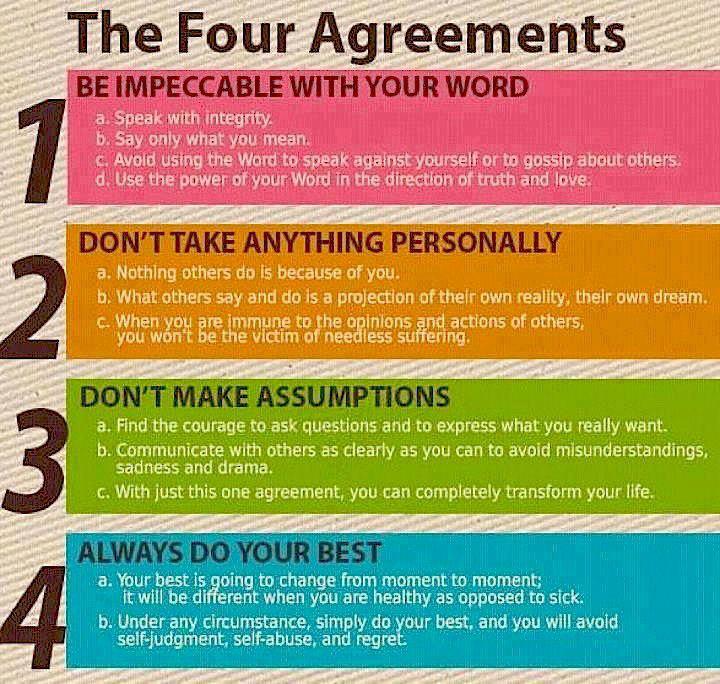
Very little has been written about this book in advance of its publication, but Zelda La Grange's Facebook page gives you some idea of the kind of reaction people are having to the fact of the memoir. Some press reports are coming out now. The reason I thought this memoir would be an interesting one is because on La Grange's Facebook profile she reprints The Four Agreements. I'd heard of the book by this name, but I'd never looked inside that book to see what the four agreements actually were. I really like them, and it seems like Mandela would have liked them, too. This is a a rare opportunity to get an intimate portrait of the man called Madiba.
The Viking Division of Penguin Random House has offered a copy of this book to a reader of my blog to coincide with the the on-sale date in stores. I have not yet read it, but will be reading it along with you this summer. I will choose from among interested readers on June 24th and will contact the winner by email to ask for you address. Viking Penguin Random House will send the book to you directly.
A winner has been chosen! Thank you everyone. There was great interest in this title. I subsequently reviewed this title along with the winner of this giveaway and you can read our reviews here.
You can buy this book here:
Labels:
giveaway,
memoir,
nonfiction,
Penguin,
RH,
South Africa
Wednesday, June 4, 2014
The Secret History of Las Vegas by Chris Abani
The lavishly talented poet, novelist, playwright, and publisher Chris Abani began his writing career in Nigeria at sixteen with a satirical political novel, Masters of the Board, and followed up with political plays meant to be performed on the street. He was jailed in Nigeria three times in the 1980s, then moved to England and onward to the United States. He continues to accumulate awards for his edgy poetry and prose, publishes The Black Goat Poetry Series, an imprint of Akashic Press, and teaches English at Northwestern University. Abani was raised Roman Catholic and while a teen studied in the seminary. Abani’s latest novel is about betrayal and illusion, and how sometimes they might be the same thing. Humans betray all the time, intentionally or not, and we recognize the guilt or pain the characters confront as they examine large and small betrayals in their own lives. Sunil is a mixed-race South African transplant to Las Vegas where he works in a government lab, the Desert Palms Institute, as a scientist and co-director of a research project.
“Now Sunil thought of Las Vegas as home. That’s the thing about having always been a displaced person; home was not a physical space but rather an internal landscape…[though] Vegas is really an African city…a grandiose tomb to itself…Just like in every major city across Africa, from Cairo to his hometown of Johannesburg, the palatial exteriors of the city architecture barely screen the seething poverty, the homelessness, and the despair that spread in townships and shantytowns as far as the eye could see.”
Sunil knows something about a body dump just outside Vegas city limits near Lake Mead. Soon-to-retire Detective Salazar wants to solve the miserable case of multiple murders that has stretched on for years and, when he comes upon a possibly sociopathic pair of conjoined twins near the site, he calls Sunil for help.
It is here that Abani shows his particular sensitivity and skill in recognizing and representing the lives of outsiders. He parallels Sunil’s story as a Black Indian growing up in South Africa (doubly estranged from powerful White society under apartheid) with the conjoined twins who are part of The Downwinder Nation, a group committed to the eradication of dangerous military research in Nevada, Arizona, and Utah. Many of the Downwinders feel betrayed by their government because they are victims of that research, manifesting mutations as a result of being improperly protected from nuclear testing.
Illusion is another theme that runs through the narrative, and the conjoined twins, as freaks in the sideshow of a circus, understand and exploit this aspect of Las Vegas. Sunil himself has photos on the wall of his office that show zebu, the cattle of his childhood, so uniquely marked with spots that from a distance they look like flocks of birds resting on hillside, a spotted Rubik’s Cube, or a tarot deck. The Desert Palms Institute, supposedly working for the good of mankind, may actually be harming it.
Abani writes a dark story about the underside of glittery Las Vegas but ultimately the story is redemptive. South African Security agent Eskia trails Sunil from Joahnnesburg with a vendetta of his own, and Brewster, Sunil’s boss, rules the Desert Palms Institute lab with an unethical expediency. Neither escape the traps they have set for others.
Sunil has more than one woman in love with him, and he is capable of loving each. Sheila is a woman who works with him, and Asia is a prostitute. Sunil has ambiguous feelings about Asia’s work, but resolves it by explaining to Asia that "'prostitute' comes from the Latin verb prostituere. As a verb, it could mean that one is a prostitute only while having sex for money, rather than all the time, as when the word is used as a noun. Sunil is not granted resolution in the matter of the women so that we wonder at the end if these folks will reappear in a novel yet to come.
Abani’s great skill--what sets his work apart from many others--is rooted in his use of language, and his deep and abiding humanity in view of great inhumanity.
You can buy this book here:
Tuesday, March 4, 2014
The Apocalypse Chase by Graham Spence
So what makes a good fishing tale? Perhaps it is a little like real estate: location, location, location (or, as the Australians like to say, “position, position, position...”) But it is more than that…it is the temperament of the fisherman, the poles, the flies, the weather, the obstacles to success…as well as the size of the catch. There also has to be a little time for contemplation, and ruminations about the state of the world, both personally and globally. All this is here for the taking in this first self-published novel by Graham Spence, co-author of several nonfiction titles about the African bush with the fabled conservationist Lawrence Anthony, who died in 2012. I read this story in a day because Spence made this fiction absolutely propulsive. The central character, Chris, sells advertising for a small newspaper in Queens, New York and is bored with his life. He is middle-aged, divorced, and barely speaks to his wife or daughter anymore. After experiencing a “heart incident” in a meeting one day at work, he decides to go ahead and live before he dies. He wants to fish the wild places where fish have never seen a human. This is the tale.
He first chooses South Africa. The narrative shifts between moments of sunny calm with great, satisfying catches and moments of breath-catching, death-defying horror. The absolute best part of this narrative (who really trusts a fisherman/storyteller anyway?) are the details and keen insights that convince us that this is the real thing, the actual location, the true situation. It is fascinating. But Chris doesn’t end there.
The next location is Colombia, South America of all places. Chris thinks that no one in their right mind would go to Colombia with all the FARC activity and kidnappings, so he won't have any competition for fish. He researches locations and decides fishing along the coastline beaches and away from the jungle would probably be safe. His Colombia section just reminds us just what a fisherman (tall tales) Chris really is. But he is so good at storytelling and fishing, we find it hard to put the book down. He survives (!) his travels in Africa and South America and we move on. But I don’t want to give away all his secrets. This is something you need to discover for yourselves. I thought it was a blast.
So I discovered this title when I began researching the authors of The Elephant Whisperer, an exceptionally well-written nonfiction about game conservation and elephant killings in Africa. Graham Spence has a low-key website on which he introduces his two self-published fiction titles, including this one. I really enjoyed Spence's work with Lawrence Anthony so thought, for the princely fee of $1.99/each on Amazon or bn.com, I would like to try his first attempts at fiction. I am so happy I did. I can think of a number of people who would love to read this…if I can only get them to work with an eReader or iPad.
Do yourself a favor. I can guarantee you will have an unusual (and terrific!) day’s reading ahead with a natural raconteur, especially if you like fly fishing stories.
eBook Published September 26th 2012 by Fastpencil (first published August 6th 2012) ISBN 1607465485 (ISBN13: 9781607465485)
You can buy this book here:
Labels:
America,
Canada,
debut novel,
ebook,
FARC,
Fastpencil,
fiction,
fishing,
self-publish,
South Africa,
South America,
travel
Saturday, February 8, 2014
The Elephant Whisperer by Lawrence Anthony with Graham Spence
Paperback, 368 pgs, Pub May 22nd 2012 by St. Martin's Griffin (first published 2009), ISBN13:9781250007810, Lit Awards: Audie Award for Biography/Memoir (2014)
Anthony and Spence do a magnificent job of sharing Anthony's story of settling a herd of seven wild elephants on his 5,000 acres of bush in Zululand, South Africa. I respect his decision to try to extend the reserve to include the neighboring tribal land so that a greater number of wild animals might live comfortably without interference. The elephants get the credit they deserve for being remarkably intelligent and resilient, despite extremely harsh treatment and bad memories early on. It is a source of great happiness that there are such people working tirelessly to create an environment of inclusion in a world that increasingly seems focused on self-aggrandizement.
Nana becomes the troubled herd’s defacto matriarch after the herd’s real matriarch is shot and killed just prior to the herd’s transfer to Thula Thula, Anthony’s game reserve, in 1999. Nana had learned many tricks about escaping from electrified enclosures from her earlier mentor and the herd often worked in concert to outwit their captors. Happily, Anthony seemed to understand that a calming presence and personal connection with the lead elephant could make a difference to the herd’s peace of mind. Slowly, over a period of weeks, he managed to make Nana understand that their new home could be a place of comfort and peace. They stayed and thrived, becoming important members of the reserve’s wildlife bounty.
Anthony shares his experiences in words and photos, and tells of difficulties with poachers, local tribal courts, unruly bushrangers, and with the wild elephants themselves. When money gets tight, he is forced to open a tourist lodge to host foreign guests, but does it with customary goodwill and bonhomie.
Late in the book, Anthony tells us he and one of his rangers went to Baghdad during the early part of the Iraq War to help save the zoo animals, and wrote a book about the experience called Babylon's Ark: The Incredible Wartime Rescue of the Baghdad Zoo. His ranger then went on to Kabul, Afghanistan, to do the same thing there. The experience of living in the bush with these resourceful folks and animals over the period of time it takes to read the book is wonderfully energizing and one hates to leave their company at the end. One feels quite as though one is losing a friend. Anthony is not simply an elephant whisperer, but fortunately a man who spoke to us, too.
Lawrence Anthony died March 2, 2012 at the age of sixty-one. His obituary in The Telegraph of Britain is here. Graham Spence is a journalist and native Zimbabwean who co-wrote three books with Lawrence Anthony. He also writes fiction. A short bio is here.
Paperback, 384 pages, Published May 22nd 2012 by St. Martin's Griffin first published June 11th 2009); ISBN 125000781X (ISBN13: 9781250007810)
You can buy this book here:
Tweet
Anthony and Spence do a magnificent job of sharing Anthony's story of settling a herd of seven wild elephants on his 5,000 acres of bush in Zululand, South Africa. I respect his decision to try to extend the reserve to include the neighboring tribal land so that a greater number of wild animals might live comfortably without interference. The elephants get the credit they deserve for being remarkably intelligent and resilient, despite extremely harsh treatment and bad memories early on. It is a source of great happiness that there are such people working tirelessly to create an environment of inclusion in a world that increasingly seems focused on self-aggrandizement.
Nana becomes the troubled herd’s defacto matriarch after the herd’s real matriarch is shot and killed just prior to the herd’s transfer to Thula Thula, Anthony’s game reserve, in 1999. Nana had learned many tricks about escaping from electrified enclosures from her earlier mentor and the herd often worked in concert to outwit their captors. Happily, Anthony seemed to understand that a calming presence and personal connection with the lead elephant could make a difference to the herd’s peace of mind. Slowly, over a period of weeks, he managed to make Nana understand that their new home could be a place of comfort and peace. They stayed and thrived, becoming important members of the reserve’s wildlife bounty.
Anthony shares his experiences in words and photos, and tells of difficulties with poachers, local tribal courts, unruly bushrangers, and with the wild elephants themselves. When money gets tight, he is forced to open a tourist lodge to host foreign guests, but does it with customary goodwill and bonhomie.
Late in the book, Anthony tells us he and one of his rangers went to Baghdad during the early part of the Iraq War to help save the zoo animals, and wrote a book about the experience called Babylon's Ark: The Incredible Wartime Rescue of the Baghdad Zoo. His ranger then went on to Kabul, Afghanistan, to do the same thing there. The experience of living in the bush with these resourceful folks and animals over the period of time it takes to read the book is wonderfully energizing and one hates to leave their company at the end. One feels quite as though one is losing a friend. Anthony is not simply an elephant whisperer, but fortunately a man who spoke to us, too.
Lawrence Anthony died March 2, 2012 at the age of sixty-one. His obituary in The Telegraph of Britain is here. Graham Spence is a journalist and native Zimbabwean who co-wrote three books with Lawrence Anthony. He also writes fiction. A short bio is here.
Paperback, 384 pages, Published May 22nd 2012 by St. Martin's Griffin first published June 11th 2009); ISBN 125000781X (ISBN13: 9781250007810)
You can buy this book here:
Tweet
Thursday, August 20, 2009
Blood Safari by Deon Meyer
Deon Meyer mysteries are a special treat. The women are strong, the men sexy, the land distinctive. Meyer's latest title, Blood Safari, is especially fascinating for defining at least two sides to the wildlife crisis in the parks areas of southern Africa up through Kenya. His website shows photos of some places he describes in the book, and they are truly magical, places like none others. Photo Gallery
There is always something untamed about a Meyer book...his characters are sometimes barely in control of themselves, their emotions, their physicality. They are real, immediate. I think we identify with their frustration at the evil in people, and wish we could be as edgy. While I have enjoyed all of Meyer's books, I especially enjoyed Heart of the Hunter, one of his first.
Subscribe to:
Posts (Atom)