Friday, June 12, 2015

I Am the Beggar of the World: Landays from Contemporary Afghanistan translated by Eliza Griswold, Photographs by Seamus Murphy

Landays, Afghan two-line poems, some centuries old, have an ephemeral quality, like a scrap of smoke in the air, or a remembered scent, hardly there. They are sung, or recited accompanied by a drum to keep time. Landays began among nomads and farmers and were sung around a campfire, though now both men and women use them in their daily life, as humor, as riposte, as an expression of grief or protest.

Eliza Griswold travelled to Afghanistan with the photographer Seamus Murphy when they’d heard a young woman was persecuted, and died, for writing poems. Her name was Zarmina. Zarmina also recited ancient landays, perhaps changing a word or two to reflect her own life. Griswold began to collect landays and with the collection she has shared with us, we are allowed deep into the national psyche.

Griswold explains her translation process, for which she won the 2015 PEN Award for Poetry in Translation. First the translation would be literal and then she would work with academics, writers, journalists to achieve something in English approaching the power of the poem in Pashto. By every measure, she has succeeded.

It is extremely rare for a journalist to manage to portray with such depth, honesty, clarity, and humanity a culture foreign to readers. Griswold manages it in a slim book of poetry. On two facing pages she has placed one of Seamus Murphy’s photographs, and a two line poem. On the overleaf she explains the context of the poem and its meaning. Griswold’s restraint highlights the power of the landays.

A favorite photograph among the collection that are reprinted in this book I share with you here:


Some landays are just about the length of a tweet:
Your eyes aren’t eyes. They’re bees.
I can find no cure for their sting.


Some landays recited or sung at celebrations are recorded and shared with relatives or friends. Landays are commonly heard on the radio, or are shared now via Facebook or texted on a phone. What was a form of entertainment around a fire during a celebration has lingered in the national consciousness and become a coveted means of self-expression.

What makes this book so precious is the fact that it could have been nothing--a failure. It must have felt that way many times during the time Griswold and Murphy were working on the collecting, translating, polishing of the landays they present to us. But they really did something here: we get a sense of popular culture, and of the centuries-old richness of Afghan ancient culture. We see, finally, the rich internal life under the burqa.

The final landay and story in the book is extremely affecting: a fifteen-year-old calling herself “the new Zarmina” agrees to meet the author in a market town teeming with militants. She is unwilling to have her landays recorded or translated into the “language of the enemy,” though she has several written in a thin notebook with an apple tree on its cover. She instead recites an ancient landay:
Separation, you set fire
In the heart and home of every lover.

Griswold herself is a poet and a journalist. Some years ago I reviewed her account of the area in Africa where the clash of religions seems to originate, called The Tenth Parallel: Dispatches from the Fault Line Between Christianity and Islam. The concept of that book also showed Griswold’s instinct to finger the pulse of a hotspot and take a reading. Griswold is more experienced now and she has gotten very good indeed at finding life where many others cannot. Congratulations to Griswold, Murphy, and the publisher Farrar, Strauss & Giroux for taking such a chance on a risky endeavor.


You can buy this book here: Shop Indie Bookstores

The Infatuations by Javier Marías, translated by Margaret Jull Costa

Marías chooses a female character, Maria, to narrate this European-style psychological thriller with a slow reveal that turns on a dime in the final chapters. Maria works in a publishing company and every day on her break from work she sees an intriguing couple, married, having coffee together. They look so happy and in love that Maria finds herself looking forward to seeing them in the coffee shop. Sometimes she overhears scraps of conversation and pieces together a life for them without them taking notice of her.

On the very first page of this novel we learn a man is murdered. It is the man of the couple Maria is so interested in. Maria tells us the last time she saw the man was the last time his own wife saw him. It didn’t seem fair, she thinks, for them to share that intimacy for she didn’t even know his name until she saw the report of his death on television.

Marías, Maria: the names one suspects are intentionally close in sound and structure for it is very rare to find a character give up her thoughts so completely to an author. In this novel Marías resides inside the mind of Maria, and almost everything that she thinks over a period of weeks and months is recorded here for us to consider. The world from her view gives us a distance from the victim, his wife, his friend, and the perpetrator of the crime.

This novel addresses some themes: the closeness of love and envy; our closest friends could become our greatest enemies; love and distaste; the uncertainty that comes with intimacy. In the following brief video interview composed by his publisher, Penguin Random House, Marías talks about an oft-encountered theme in his work: betrayal.


Marías’ style--reflective, reflexive, recursive, chatty, digressive—would not work if it weren’t at the same time fiercely intelligent and deeply thoughtful. He is funny, too, as though he has caught onto a joke before we had and can explain it to us. The author is like translator himself, seeking for ways to express an idea, a word, a concept. Long, long sentences and paragraphs punctuated with ellipses and em-dashes show the ongoing thoughts of the narrator and her interpretation of what she finds out when she introduces herself to the wife of the murdered man.

After listening to this novel, my first foray into Marías’ work, I went looking for information about the author. His Goodreads site mentions Proust, William Faulkner, and the German writer Thomas Bernhard as influences, and it is not difficult to see these influences in the ebb and flow of internal dialogue that runs alongside the action in this novel.

I listened to the audio of this title produced by Penguin Random House, translated by Margaret Jull Costa and read by Justine Eyre. The translation is extremely impressive for stream-of-consciousness writing and reading, perfectly understandable and involving. A capacious mind and a brilliant translator will keep one occupied for days.


You can buy this book here: Shop Indie Bookstores

Thursday, June 11, 2015

The Ask by Sam Lipsyte

It’s a war out there. And this book is about war crimes. The kind that happen when failed painters take jobs as development agents for the arts departments of mediocre universities, sucking up to successful wealth-creators to ask them to support the drug habits of university arts brats who produce drek. But the tap of money from wealthy donors was running dry, and our failed painter Milo Burke was now a failed development agent.

Milo’s last big “ask” was to Mr. Ramadathan who had mortgaged his electronics store so that his son could “craft affecting screenplays about an emotionally distant, workaholic immigrant’s quest for the American dream.” It had meant a trip to Mr. Ramadathan’s dusty showroom in an outer borough where only used video game consoles and an old floor fan were on display.

I adored this beginning to Lipsyte’s deeply funny and intentional novel, highlighting as it does a reality of sorts behind the absurd “asks” of college development offices, and the wildly improbable and inappropriate demands of many university students in today’s America.

Lipsyte’s narrator, Milo Burke, is hovering close to the edge of despair. Despite his confusion and frustration over the strange things people do and say and how we live, Milo is not a cynical man. He loves his wife and son, and wants nothing more than to be able to provide for them. He worries about being a good dad to Bernie, his lumberjack-mouthed preschooler with a foreskin fixation.

A neighbor Milo liked “could pull off the role of loving and attentive parent with a lit cigarette in his mouth..or in his stubby fingers, which he’d hold with such care away from his daughter’s braids when she charged over to collapse on his lap and file howling grievance against her brother’s style of playhouse play… He was a throwback papa…horseshit of course, but it warmed the cheap parts of me.” That man died with his entire family, “wiped out by a beverage truck on the Brooklyn-Queens Expressway” one day, leaving Milo musing that man never had to worry about being a shitty father, leaving debts because of his cancer from cigarette smoking. But Milo still had to worry about being a shitty father because he was alive. Poor confused Milo was envious of a dead man, an unrepentant cigarette smoker.

Antihero Milo hits up his own mother for a decent-sized contribution, whether to his rent fund or his college-fund, we are unsure.
Mother: "How much?"
Milo: "Ten thousand."
Mother: "Absolutely not...the system’s rigged for white men and you still can’t tap in..."
Milo: "Okay, you wrinkled old spidercunt, have it your way."

I have to say, literature that gives me great swear words is always a draw. Shakespeare did it, Lipsyte does it.

Milo doesn’t believe in cockamamie conspiracy theories, nor those that say happiness might have something to do with acceptance and love. It’s all part of the trick, the scam to get us to believe that our rage and resentment is our own problem--something we might need to deal with because we look f—ing ridiculous blaming anything outside of ourselves for not seizing every opportunity to find true sources of happiness and love and fulfillment in the wealthiest, if not the greatest, country on earth. A war within; a war without.

Lipsyte keeps the metaphor about war working when he introduces a story about a home invasion featuring Milo and his college buddies, one of whom is his next big “ask,” the interweb magnate Purdy. But Purdy, like all big potential donors, has an “ask” of his own before he concedes to any kind of “give.”

Purdy’s illegitimate son Don is an actual soldier, returned from Iraq...without his legs. He has two new ones, made of titanium, but generally speaking, he did not come off the better for that exchange. He is still angry. He is angry because of the insipid American culture he sees around him, his sacrifice made flesh. Don manages his rage another way from what we know Milo will do. He had different training.

I came on this book because I had a long car trip coming up; I flipped through the mostly ghastly offerings at my local audio library and came across this title. Sam Lipsyte’s name rang a distant bell but I couldn’t remember why. I looked him up on Goodreads to make sure I wasn’t going to get a romance (you know, like “The Proposal”) and saw a very queer video interview that made me sure I was going to borrow this book. I present it to you here:


Mark Savras is an author and the man behind the blog The Elegant Variation. That blog never really changed very much while I listed it on my own blog for a year or so-—hoping, perhaps, to catch reflected glory. A Milo move, I think now. I watched this darn video clip a couple of times to make sure I didn’t misinterpret what I thought I saw. Savras was really out to lunch, wasn’t he? A little like our boy Milo?
Milo, looking at his hands: “I stared at my own hands: soft, expressive things, gifted even, like specially bred, lovingly shaved gerbils.”

I listened to this Macmillan Audiobook brilliantly read by the author. I am quite sure Lipsyte is the only one who could have read this with the attitude and emphases it needed to reflect the true confusion and pathos of our antihero, Milo. I saw an Audiofile review complaining the listener had to “pay attention every moment” which seems a queer kind of criticism to me. The audio won a Listen Up Award and a Publisher’s Weekly Award. It is available for Whispersync on Audible.com and I would recommend that choice: you will want to go back and see his jokes in print—he is very funny. And check out that Isaac Babel reference. I plan to.


You can buy this book here: Shop Indie Bookstores

Saturday, June 6, 2015

Visitation by Jenny Erpenbeck translated by Sarah Bernofsky

Sometimes contact with a place transforms us. Erpenbeck traces for us German history in the last century through the lives and loves of people involved with a piece of land by a lake on which sits a summer house with an eyebrow window and a roof of thatch. This slim, quiet, extremely powerful novel carries with it the weight of change and allows us to inhabit history. There is a stillness, reserve, and lack of sentimentality about the story which paradoxically fills us with emotion. The house and gardens on the land by the lake are designed with love in mind, the windows framing the view. “A house is your third skin, after the skin made of flesh and clothing.” But when the second war came, “one could only pity a person who owned a piece of land and not a flying carpet.”

WWII books are so common that it takes something unusual to yank me from the torpor that descends upon me as I contemplate another trip through that wasted landscape. The last book which was able to do that for me was Imre Kertész’s Fatelessness. And now, Erpenbeck’s Visitation. I fear I have used all my superlatives when it comes to talking about books so that when I say "extraordinary" it doesn’t convey the truly astonishing clarity and craft the author exhibits.

Erpenbeck brings Americans something new: the war from the view of German citizens, broken as a citizenry when the Jews were removed, or, as in the case of ‘the architect and his wife’ living in the house they built by the lake, without a full understanding. It hadn’t all been the architect’s land, to begin with. He’d acquired a large piece which included the boat house ("paid a full half of market value") from the cloth merchants who had owned the parcel next door, allowing them to leave the country.
Hermine and Arthur, his parents.
He himself, Ludwig, the firstborn.
His sister Elizabeth, married to Ernst.
Their daughter, his neice, Doris.
Then his wife Anna.
And now the children: Elliot and baby Elizabeth, named for his own sister.
Most never made it out. The war intruded finally, on the land by the lake, in the form of invading Russians, at least one of whom left his seed to grow on the land by the lake.

But this book is not just about war. We move from the Weimar Republic through the Second World War to the Fall of the Wall. This book is about that fourth dimension in architecture, time, and how that adds to height, width, length to make something enduring, or perhaps, not so much.

Any book of this quality must have a translator who can keep pace and give the work its intended gravitas. Sarah Bernofsky, the translator of this novel and three of Erpenbeck’s others, is Co-Chair of the PEN Translation Committee and has won several awards for her work. Most recently she shared the 2014 Independent Foreign Fiction Prize with Erpenbeck for her latest novel, The End of Days, a novel which takes on the theme "what if." Sometimes a life can change direction on the smallest incident.


You can buy this book here: Shop Indie Bookstores

Wednesday, June 3, 2015

Losing Faith by Adam Mitzner

Legal thrillers are not a genre of fiction I read a lot of simply because good ones are so thin on the ground. I do remember picking up Scott Turow’s great thriller Presumed Innocent and being rapt. To this day it sets a standard against which other writers are judged. I should also state for the record that I am no legal scholar. The morass of legal considerations which might keep a confessed criminal from punishment make me anxious.

Adam Mitzner’s third novel is a curious thing. There seemed to be a large hole in the logic of the case he brought to our attention, which I realized later was supposed to create suspicion in the reader’s mind about the facts laid out by the author. Unfortunately, I was instead confused as to how we got here in the first place: it seemed Judge Nichols was well and truly screwed no matter what she did…and then she was murdered.

The successful head of a large New York law firm, Aaron Littman, involves himself sexually with a married federal court judge, Faith Nichols, who happens to be on the short list for the Supreme Court. Six months after they begin their liaison, she is the presiding judge over a case Aaron is arguing. Neither party recuses themselves. Aaron loses the case & his client goes to jail. The relationship ends.

When Faith is murdered, evidence of the relationship comes to light and Aaron is in the frame for the deed. The bulk of the novel revolves around Aaron’s trial.

Mitzner seems to present correctly the technical bits about objections and evidence but I wasn't sure he got the motivations of the characters right. One could argue that a legal thriller is really a psychological drama and the thoughts and motivations of the characters are at least as important as physical evidence, which as we all know, can be ambiguous, tampered with, lost, or destroyed.

I think by now all of us can imagine a powerful man, say the head of a large New York law firm, with a zipper problem. It is harder to imagine the flip side of that: a Supreme Court nominee willing to risk her career and her future for a relationship that could go nowhere. And Aaron’s associate Rachel did not have enough motivation to perjure herself under oath, to my mind. Love, sure. Gratitude, maybe. Promise? Hope? Nah. Maybe a man could do it, like Aaron’s mentor Rosenthal, for instance.

Anyway, it is an interesting set of circumstances that Mitzner provides and it is a good book to take to the beach. It is involving enough to keep you guessing and working out what the characters (and the author) could have done differently.


You can buy this book here: Shop Indie Bookstores

Monday, June 1, 2015

Min Kamp #4 by Karl Ove Knausgaard translated by Don Bartlett

In this installment of his six-volume fiction, Knausgaard is eighteen years old. He relates his first year teaching lower secondary school in Håfjord, a small town by the sea in far north Norway. This is his first full-time paid employment outside of a month’s summertime stint at a nursing home. The excitement of being on his own to earn money, to write, to be all he can be is palpable in the beginning. Only a few short months into the teaching gig he calls his mother: he wants to quit. Ah, callow youth!

It turns out what he really wants to do, what absorbs his attention, is shag girls. "I would have given anything to sleep with a girl. Any girl actually…But it wasn’t something you were given, it was something you took. Exactly how, I didn’t know…" A great deal of the time and energy of his sixteenth, seventeenth, and eighteenth years revolved around this quest. The wider world was there: the colleague he lived with continually asked him to go on tramps in the countryside but he refused: "not my thing." When at Christmas that year he returns to Lavik in southern Norway he notices trees: "I’d had no idea that I had missed trees until I was sitting there and saw them."

Outside of shagging girls what Karl Ove wanted to do is write. And not just write: “I will be the bloody greatest ever…I had to be big. I had to.” Actually, it is this certainty in his own talents that makes Karl Ove interesting to listen to for five hundred-odd pages in this installment. It has been said that a novel is just words on paper until it is read; that is, the reader brings imagination, understanding, and empathy to a novel to make it cohere or not. This installment of Knausgaard’s six-part novel, subtitled Dancing in the Dark, is a particularly good example of the need for reader insight. Karl Ove is a special kind of boy, but he can fail. That we don’t want him to fail is only partly his doing.

This section of the linked novels is also more claustrophobic than earlier installments of Knausgaard’s story. We have less of the older authorial voice, and any distance history might provide. All thought and action takes place entirely within Karl Ove’s own head, and outside of a section in which he moves back to his final year in high school and occasional comments by the then 40-year-old author, we have only the binocular vision of his two eyes and his underdeveloped prefrontal cortex to guide us through six months living in the perpetual dark of the an Arctic winter.

The dark plays a large role in developing this teenager into a man. He has to fight against the dark within and without, and doesn’t always manage it. We readers give him ample room for mistakes in this environment, seeing as how we can hardly imagine ourselves pulling it off. The endless cycles of weekend drinking are both horrible and understandable; we just wish our bright young narrator were not so susceptible to alcohol’s siren song.

Knausgaard finishes Min Kamp Volume #4 on a high note and with a flourish worthy of his hormonal anguish. He has us laughing that he finally scaled the hills and valleys of his testosterone-soaked internal landscape. While the story of his eighteenth year has insufficient perspective in itself to have much meaning, the rest of the volumes and readers themselves provide context and meaning. We learn fractionally more about the elusive Yngve, who has small speaking parts in this novel, and marginally more about his father’s decline. We feel Karl Ove’s desperation and confusion when he realizes the place his mother rented is only home when his mother and brother are there: "...home is no longer a place. It was mum and Yngve. They were my home."

This novel is the written equivalent of Karl Ove staring into the bathroom mirror while washing his hands, looking and being looked at, inside and outside at the same time, purely and unambiguously expressing his inner state. It is forgotten the instant the pen is put down or the book closed until someone else opens the book, picks up the soap, stares at their reflection, and examines their soul.

My Struggle Volume 1
My Struggle Volume 2
My Struggle Volume 3


You can buy this book here: Shop Indie Bookstores

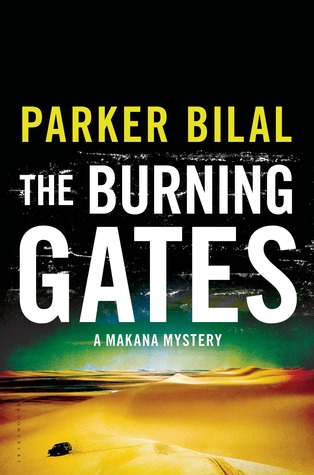
The Burning Gates (Makana #4) by Parker Bilal

London-born, Spain-based Parker Bilal is on my short list of great thriller writers writing today. His Makana Mystery series features a private investigator originally from the Sudan and now working in Cairo. Bilal gives us all kinds of atmosphere, politically-relevant motive, morally-complex characters, and a beating heart. His writing is blessedly free from idiom and extraneous storylines—the exotic setting and complexity of his main character’s life is enough to keep us off balance and searching for familiar ground.

In this installment, U.S. government contractors have gone off the reservation in Iraq to pursue a former high-ranking military official from the old Iraq regime who appears to be profiting from his theft of Kuwaiti ‘war spoils’ which was the impetus for U.S. involvement in the First Gulf War. It is now 2004, and the Egyptian political scene is chaotic while private investigator Makana wends his way between bribe-takers, informants, and status-seekers, seeking justice.

We get a street view of Cairo’s neighborhoods as Makana does his rounds, and have the opportunity to see how Cairenes operate day-to-day. Best of all are characterizations of some of the less wealthy inhabitants of the city: we see where they live, how they live, what they think, and how they eat. Cairo has always been a cosmopolitan place. Its location in the heart of the Middle East give it a unique perspective, and the central character in this series, Makana, allows us to look at the region with an even further remove.

Parker Bilal is the pen name of Jamal Mahjoub, who publishes award-winning literary novels under his own name.


You can buy this book here: Shop Indie Bookstores