Saturday, January 4, 2014

My Brilliant Friend by Elena Ferrante

My Brilliant Friend Lila and Elena, two childhood friends in a neighborhood of 1950s Naples, both wear the moniker “my brilliant friend,” but there is no question which of the two Ferrante meant. Elena continues her schooling through high school in this first installment of the trilogy of novels Ferrante has written about the two, while Lila, incandescent Lila, is held back from further schooling by her family claiming they cannot afford it. We ache for her.

Ferrante captures the uncertainty and confusion of youth through the voice and perspective of Elena. But what we really want is what everyone wants—the thoughts and voice of Lila. We can’t get enough of her, even when we only see her from a distance. We long to know what she thinks. We know, just like Elena does, that Elena is only a conduit, pretty and clever, but a poor substitute for the real thing. If we could only get to Lila, all will become clear. Lila radiates something like unfiltered truth, understanding, knowledge. Her opinions are the ones that matter. But even then, we wonder if we would be accepted into her inner circle. Elena is our conduit.

Ferrante’s Neopolitan novels feel especially real when describing the resentments and jockeying for influence among the boys seeking favors of Elena and Lila, and the confusions these two radiate when considering the options left open to them in a culture not known to value contributions from the female sex beyond housekeeping and baby-making. We yearn to know, too, the thoughts and desires of the parents of Lila and Elena—to know if they are being fairly portrayed by Elena or if there is something more going on which she does not have the understanding yet to relate.

By the end of this, Book I of L’amica genial, we get the uncomfortable feeling that we are on the edge of something unknown, that life will play out for these two much like it does for us: we grasp in the dark for something we cannot see, and hope that it will bring what we imagine, not knowing if the direction is the right one. This marvelous recreation of two lives in a poor neighborhood of Naples a long time ago draws us in completely and involves in in a way that only great literature can.


You can buy this book here: Shop Indie Bookstores

Friday, January 3, 2014

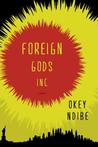
Foreign Gods, Inc. by Okey Ndibe

Foreign Gods, Inc.
Readers of this blog are treated to two reviews for this book, one by guest blogger, Zak, who won the giveaway for this title, and one by myself. Zak gives a well-rounded account of the novel and with our two reactions, you get a good idea of how the novel reads.


ZAK: Okey Ndibe’s Foreign Gods, Inc is a welcome insider’s tale about West Africa and West African émigrés to the US. The setting is specific to southeastern Nigeria, and in some ways the book could be considered a pastiche following the descendants of the people in Things Fall Apart, but most of its themes are universal enough to reveal essential truths all readers should be able to relate to.

The story follows the flailing attempts at success by a New York cab driver from Nigeria named Ikechukwu “Ike” Uzondu. A decade after graduating from Amherst with a degree in economics, Ike is an educated man stuck in a blue-collar job he considers beneath him. Even while in college in the US, he seems to have clung to the delusion that America is a place where immigrants are greeted at the airport with duffle bags full of cash, a Hollywood star for a spouse, and the keys to a mansion with a fully stocked six-car garage. In the shock that followed his eventual disillusionment, Ike allowed himself to be repeatedly conned, bullied, and beaten down. He is on the cusp of middle age with nothing to show for a decade of work except an empty apartment, incipient alcoholism, and a growing gambling problem. (See, the themes DO work for any culture!) Well, he actually does have a lot of generous, gregarious friends who try to reach out to help him and a family back home, but his priorities are for wealth and status, and people are just tools to reaching those ideals. When Ike discovers an ongoing fad among the super-rich for buying up “primitive” idols from foreign cultures, he concocts a scheme to return to his village in Nigeria and steal the image of the local war god; Ngene, which has been in his family’s care for generations; and then to sell it to a gallery owner for a king’s ransom.

So, Ike is not a particularly sympathetic character, and aside from a few good friends in NYC, we don’t encounter many through the rest of the book. The trip home to his village is like Sinclair Lewis’s Main Street recast in contemporary Nigeria; portrayed as a nation of ignoramuses ruled by the vulgar; where the credulous are fleeced by the marginally more clever; a place where there is no ladder to climb; where police exist only to remind people how small and powerless they are; and where every encounter with authority is an exercise in humiliation, prostration, and potential danger. (To be fair NYC is shown in largely the same light.) Is this the whole story of Nigeria? No. But there’s enough truth in the presentation of what life is like for many people living in countries with weak institutions and limited recourse to legal protection to believe that Ndibe knows what he’s talking about.

The only wholly likeable characters are Ike’s grandmother and his old uncle, Osuakwu, who is the custodian of the local god whom Ike plans to steal. Ndibe thankfully resisted any urge to paint the traditionalist Osuakwu as a saint or mystic—the men who gather daily in the shrine with Osuakwu tell crude jokes and pursue petty rivalries—but Ndibe convincingly implies the constancy of their traditional values has let them retain something most of those around them have lost: their sanity. This may include Ike.

The weak point in the book is Ike himself. He is not a hero or even an antihero. We know he was talented enough to win what must have been a coveted scholarship to come study in America, but he shows few hints of any talent or drive other than his attempt to rip off his relatives. Even his “plan” for getting the god isn’t very clever. He is mostly shown as weak-willed, or at least someone whose will has failed him at critical moments in his life. When he’s not crumbling before his bullying wife or a slick art dealer, he’s making inappropriate stands against the wrong people (his religiously deranged mother) at the wrong time (customs agents at the Lagos airport.) If he were a complete loser, he wouldn’t have had such engaging friends, but whatever charms he used to win them over in the first place are never shown, and I felt not so much that I couldn’t relate to Ike as much as he seemed a hollow shell.

The main character’s limited appeal notwithstanding, I’d recommend Foreign Gods, Inc to anyone looking to understand a little more of the African, post-colonial, or immigrant experiences. There were some very interesting parallels between the families “left behind” in this book and those in Zimbabwean writer NoViolet Bulawayo’s We Need New Names, in that those who stayed behind in the old country have absolutely no sympathy or any idea that they should perhaps have sympathy for those who emigrated. It's also very amusing that Nigerians apparently send those same ridiculous emails to each other, not just to foreigners! The language in the book is also great, and I especially like the way Ndibe shows how academic jargon is its own kind of pidgin, but one that expresses class identity more than actual content. This is often a very funny book, but ultimately more bitter than sweet in its outlook.

------------Now, this is my take on this second novel of Ndibe's-----------------

TRISH: This picaresque bildungsroman, spiked with folktales, horrors, and gorgons aplenty, features a young man seeking his fortune in an un-fortun-ate world. The young man discovers instead his own base nature. To be honest, I thought this was going to be a funny, light-hearted read. I have grown accustomed to comic novels that harbor hideous truths. But Ndibe does something entirely different with this fiction. He uses a nineteenth or early twentieth-century sensibility and style in this novel with some success, and creates a tragi-comic naïf for whom we reserve a special pity. Only the time frame of the novel and its actual language are modern: the rest is as old as man himself.

Ike (pronounced Ee-kay) is a Nigerian immigrant to the United States. Although he attended a fancy New England college and graduated magna cum laude in economics, his thick Nigerian accent bars him from landing a job in his field. He struggles to find paying employment, finally landing a job as a taxicab driver. At the same time he searches for a wife to give him the infamous green card legal status he requires for higher paying low-level jobs for which he is (over)qualified.

This lacerating novel peels back the veneer to uncover the reality of immigrant life in the United States and in the home country for an educated man. Ike struggles mightily to rustle up the needed cash to return home in response to repeated requests by his family, but he also uses his visit to Nigeria to steal the effigy of a deity from his native village to sell on the New York art market. With this, he plans to vanish his financial woes and make his fortune.

Whirled about and confused in the maelstrom of humanity on two continents, Ike resembles a modern Don Quixote, though he seeks the good life promised by America rather than the chivalry, human goodness, and true love sought by Quixote. Like Quixote, Ike comes to his senses occasionally, only to sink back into a feverish belief that his dreams will come true. Comic elements abound (two bribe-taking customs sessions, a visit to a corrupt politician’s home, an interview with a Nigerian Christian pastor, as well as the absurdity of a high-end art market for religious deities), and although we are ready to laugh through much of the book, we come to realize this horrible dream is really true, and Ike is desperately spiraling out of control into the black hole of penury and despair.

Foreign Gods reads like a big short story, partly because of the ending, and partly because the time frame is short. We have character development but not resolution. We grow to like, if not admire, the character of Ike. He is more acted upon than actor, since he can’t seem to come to grips with the world in which he lives. He is perhaps not very clever, despite his degree, for he is guilty of the basest naiveté when it comes to his get-rich-quick plan. He is a good man at heart, but we onlookers know that will probably not be enough to get him through.

And if our reactions are not enough, here is Janet Maslin's take at the New York Times. This book was sent to me by Soho Crime in return for an honest review.


You can buy this book here: Shop Indie Bookstores

Sunday, December 29, 2013

Book of Ages: The Life and Opinions of Jane Franklin by Jill Lepore

Book of Ages: The Life and Opinions of Jane Franklin It is difficult to convey the pleasure and excitement with which I read this history of Jane Franklin Mecom. Lepore carefully reconstructs the period in which the Franklins lived and pieces together the life of Franklin’s sister from fragments—using a few of the many letters she wrote to her famous brother, Benjamin Franklin. She forces one realize again what historical research requires, and how much we miss. But one comes away from Jane’s Book of Ages with wonder and awe at how much Lepore was able to capture through her assiduous researches.

Jane was the youngest of eight living children of Abiah and Josiah Franklin, six years younger than the youngest son, her famous and favorite brother, Benjamin. Franklin’s was a family of tradesmen, soapmakers, saddlemakers, candlemakers, and printers. Jane was born in late March 1712, married at fifteen and lived until early May 1794. She was eighty-three.

Jane Mecom née Franklin birthed some thirteen or fourteen children, most of whom preceded her in death. It is now thought that the family may have been tubercular, for they did not thrive, were languishing in health, layabout in deed, and several went mad if they survived beyond their twenties. “Very few we know is Able to beat thro all Impedements and Arive to any Grat Degre of superiority in Understanding.” Providence. So few are able to overcome the meanness of their birth and life to achieve something meaningful. Her brother did. In a different world, she might have been his equal.

Jane was scarcely free from child-raising her entire life. She admits that “tho they give grat Pleasure in common yet the Noise of them is some times troublesome.” And “I write among so much noise & confusion that if I had any thing of consequence I could no Recolect it.” She yearned to hear news of “Politicks” and every detail of the lives of her brother and her extended family. She loved to read and often asked that specific books be sent to her so that she could add them to her library.

This is thrilling history not only because of the momentous times in which Jane lived—through the cloth and tea boycotts in Boston, the battles at Lexington and Bunker Hill, and the longer war for independence that became the birth of the nation. She was a intimate correspondent with one of the most famous designers of the Constitution and loved and was beloved of him all her life.

Perhaps the most remarkable thing about this history is the fact that Lepore was able to construct it at all, given that so little remained of the woman and her chattel. Lepore has labored mightily to reconstruct this intimate portrait of a woman, her life, and locale. And this history does what all great histories do: they make us yearn to read more, discover more, learn all we can.


You can buy this book here: Shop Indie Bookstores

Friday, December 20, 2013

The Heart of the Plate by Mollie Katzen

The Heart of the Plate Houghton Mifflin Harcourt deserves much credit for making this book as beautiful as it is. They have really made it the standard to reach. Katzen has done her cool line drawings--now in color!--on the endpages so with her tasty, (can I say thoughtful?), modern recipes her unique talents are again on display.

Now that I have had a chance to work with it a bit, I decided Katzen has chosen some real winners here. Her soups and salads are lovely to look at and probably worth the price of the book alone. She guides the beginner through the steps so that success can be yours right from the start.

I will say that she picked already favorites of mine, e.g., I cook greens almost every night and I often use the onion, garlic, red pepper combination that she recommends. I don't know if it is really appropriate to complain that some of the dishes are so simple as to make the cookbook shortly irrelevant. Most people are actively looking for simple and memorable and so great we can eat it again and again without dragging the cookbook out each time. She gets that and delivers.

But Mashed Parsnips? She has a whole section about mashing things up...cauliflower, broccoli, peas. At first I thought: if it is fresh, it seems a sin to mash it up. It was such a mystery, I tried it...three vegetables: carrots, parnips and peas. Let me tell you something: it was terrific! I especially liked it left over, room temperature, as a dip for crackers. It is infinitely more interesting, pretty, and exciting than any of the usual dips featuring cheese or (god forbid!) sour cream. And for lunch or as a snack as you are preparing a real dinner, this may just the thing to make you a happy person.

She has an interesting sauces and dressings section which is useful for folks on the go. You can dip crudités or drizzle over roasted veggies...(what is better tasting and easier to cook than roasted veggies?) I like her use of pomegranate molasses. What else I like: sometimes folks have difficulty figuring out what vegans eat. She very naturally makes meals of vegetables and grains that do not include cheese or dairy and reminds us that, by the way, this is vegan. It is a very unobtrusive way to introduce vegan entrees to the mainstream and show everyone how really very simple it can be to cook for vegans.

I also like the "light" quality of the recipes. There were one or two recipes that gave me pause: Bulgur with Spaghetti, and Banana Cheese Empanadas. I think she is just daring us to try them. She also has one that sounds kind of intriguing: Toasted Barley Dumplings. As a side, it can take care of the carb portion of a vegetable meal.

Truth is, The Moosewood Cookbook: Recipes from Moosewood Restaurant, Ithaca, New York was something like the second cookbook I ever owned. Katzen therefore had an outsized influence on my eating habits. I still admire what she can do. What she has produced here is exciting because it gives new clues to intriguing combinations of things I like already.

You can buy this book here: Shop Indie Bookstores

Let's Explore Diabetes with Owls by David Sedaris

Let's Explore Diabetes with Owls David Sedaris just keeps on bringing the ridiculousness of our lives to the fore, forcing us to look, really look at some of our less heroic moments...and laugh. What a (sometimes hysterical) relief it is to know that our own stupidity or failures are not unique to ourselves. He also tells us what we look like to others when we are less than our better selves. I often wonder what it would be like to be laughing along with his listening crowd, only to come to recognize some of the stories he is relating. "I was there!" would certainly better than "That was me!"

My favorite Sedaris bits come when he is talking about his experiences travelling or learning a new language. In this new book he has a section about taking planes that had me shaking with laughter…how people, especially Americans, put on their most ragged clothes to travel across the world or across the country mystifies both him and me. “I want to be comfortable,” I have heard travelers wearing worn sweat pants explain, as though wearing silks and cashmere is not comfortable. Cost is not really an issue: anyone flying to China or Australia can certainly spring for a new sweater.

But I was also surprised this time how some of Sedaris’ jokes felt edgy, jagged, and hurtful. I realize that beating up on his Dad is one of his schticks. And if what he says in the beginning of this series of routines were true, about his Dad beating him and blaspheming him as a kid, then I guess his Dad is getting off easy by being the brunt of his jokes as Sedaris travels around the world broadcasting to everyone who will listen. But I long ago learned that hurtful things said “in jest” are not really funny to anyone but the jester.

Sedaris talks a little about how he makes up his routines by keeping a journal as he travels. He spends time taking brief notes when something strikes him as remarkable, and then he spends a lot of time typing it up into what was so remarkable about it so that he can remember it clearly. His endless stories are not things “that just come to mind:” he really works at it, even if it means he doesn’t have time to see all the sights in those great places he visits on his speaking tours.

My least favorite part of this book was a special section he created because he discovered that young people liked to use his work as dramatic monologues. He didn’t think his previous work had enough of the elements that would make a dramatic monologue successful, so he set about making something new just for those folks interested to try it themselves. I thought perhaps these would be better with someone else doing the reading…a droll young woman, perhaps, or a dull young boy.

Anyway, Sedaris is always interesting for what he sees about the world and dares to speak.


You can buy this book here: Shop Indie Bookstores

Monday, December 16, 2013

Spirit of Steamboat by Craig Johnson

Spirit of Steamboat: A Walt Longmire Story (Walt Longmire #9.1)
Johnson has gifted us a short, white-knuckled Christmas story that is likely to become a classic. We all know Sheriff Longmire and how he took over the chief law enforcement job in Absaroka County from old Lucian Connally. This story brings them back working together again on a cold and stormy night--Christmas Eve in Montana back in 1988.

This mad twosome seems to go out of its way to test the edges of possibility. In this story, they are doing it for all the right reasons, and at a time when most folks want to be cuddling at home with their families. Central to the action is an old copy of A Christmas Carol which you might want to glance at before or after this slim 100-page novella, just to put you in the mood. This story is just long enough to read after you have laid out gifts “from Santa” under the tree and before heading up to bed.

Bourbon is Connally’s drink of choice…you may want to salute him with a glass after reading this little act of crazy heroism. It does make a good story, a nice little gift for Santa to enjoy, just as though he/she were sitting around with his/her ‘buds’ telling tall tales late into the night…

Merry Christmas, one and all! Hope your year was a great one, but if it wasn’t, 2014 is just around the corner and you can begin again. This little novella is a gift you give yourself. It can be downloaded instantly or ordered in paper from the retailer or your choice using those percentage-off coupons you must be getting in your mailbox. Treat yourself!


You can buy this book here: Shop Indie Bookstores

A Tale for theTime Being by Ruth Ozeki

Hardcover, 422 pagesPub March 12th 2013 by Viking ISBN13: 9780670026630

Every picture I’ve seen of Ruth Ozeki shows her smiling broadly, like a woman who knows what happy is. How then, I wondered as I began this wonderful, fabulous, crazy novel, does she have her main characters contemplate suicide? This disconnect was one spur to my reading, and the other was the clarion voice and view of teenager Nao who told us of her life in Japan.

Ozeki does what great authors (e.g., Morrison, Saramago, Kertész) do: she takes critical, current questions we face as human beings on earth and makes us think about them. She also offers answers, something for which I admire her even more. She allows us to realize that there are people of great talent and humility out there who are willing to put their wealth, time, even lives on the line for the least of us. She makes us look at the world in a new way. She gives us hope.

I have placed Ozeki among the greats, but she is less somber than the others often are. She is playful. She is funny. She is real. I attribute this ease of handling big issues to Ozeki’s life as a Zen Buddhist priest. There was not a moment I was not rapt in her vision. This novel is a mystery, slowly unfolding, about a young girl whose diary washes up on a Canadian island some years after the tsunami disaster in Japan. The girl tells of her life and that of her parents after they moved back to Japan from America in the dot com downturn. It is not a happy time, and both the young girl and her father contemplate suicide. Her hundred-and-four-year-old-great-grandmother, a Zen Buddhist nun, discourages this path.

Parallel to this are the lives of Ruth (who rescued the diary), her husband Oliver, and their cat Pesto. All live near Whaletown, a locality on a small island off the coast of Vancouver. She is a writer, he is a land artist, and the cat is a pest. Ruth claims to experience writer’s block, but at the same time she admits to dream-like sessions where she writes for hours, unconscious, only to awake and reread what she has written with surprise and awe. It is difficult for me to imagine a woman with Ozeki’s vivid imagination having writer’s block, but I think many of us can write…we just can’t always write meaningfully on a specific topic whenever we sit down. Writer’s block, dreaming, same thing.

There is also something bigger here, a discussion of wave theory and quantum theory. If one has time, and inclination, there is something larger behind the ordinary story of a girl displaced and despondent, or a woman with writer’s block, though both can be related to these larger theories of how the world works. And I like to think that Haruki Number Two was on to something with his work in origami, bending and folding and placing two dissimilar moments in time next to one another, so closely that they align and form something new.

If I were a graduate student in literature, I might just like to take on the notion of dreams in the works of Pynchon (Bleeding Edge) and Ozeki (For the Time Being). There is something impactful in the dreams we often disregard, and perhaps we should pay attention.

Anyway, there is nothing new in being despairing about the evil in the world, or the possibility of multiple outcomes. “Nothing is new, if you buy the many worlds interpretation of quantum mechanics.” We can use our knowledge for evil or good, and there have to be enough good folks left alive to keep bad folk in check. We must struggle on to make a difference in outcomes.

I.Loved.This.Book.


You can buy this book here: Shop Indie Bookstores