Monday, October 20, 2014

Wheelmen by Reed Albergotti and Vanessa O'Connell

We probably should have known better. When something is too good to be true… I can't help it; I feel like we need to take some of the blame for the failures of Lance Armstrong. We wanted to believe in this level of sports competence…every year…for seven years…by a man who would be considered old in any other sport…and by a cancer survivor.

What surprised me about the information I learned here is Lance’s early home life. His mother never finished high school and was pregnant with Lance at sixteen when her father threw her out. Lance was an exceptional and driven athlete as an early teen, but when he wanted to compete in triathlons with strict age requirements that precluded his participation, his mother modified his birth certificate. So he learned early that the rules did not really apply to him. And that grasping behavior? When enough is never enough? I guess we know where that came from.

I didn't like reading this book one little bit, not only because the writing is more breathless and sensational than it needed to be. The documents collected tell the story of a man who is immensely unappealing and manipulative and the worst sort of role model. We also learn something about the other folks involved in the sport: the teammates, the spouses, the officials, the medical staffs, the press. It was big business, and their business was to sell a product. I may have been a dupe, but I don’t believe for a second all those other folks were.

Even when a former teammate came out with allegations, dates, remembrances of drug doping during races, it was still tricky to prove. One cannot help but feel just a little betrayed by all the folks that agreed to go along with this. They did it because “everyone else did.” Yes, the Tour de France is a hard race. And the world can be a tough place. At least they got to wear spandex in their work rather than body armor.

O’Connell and Albergotti corral a huge amount of material for this exposé. A few less details and a little more reflection would have gone down better with this reader. Journalists don't have a responsibility to tell us what to think, I suppose, but biographers can help us place Lance’s megalomania in perspective. A character of this dimension is unusual and we the public could use a little help in dealing with the details of someone else's life choices, given his great talents. Is the lesson to strive, but not that much? Is celebrity addicting? Armstrong was not just an ordinary guy with a dirty little secret. This misses the size of his delusion, and ours. Forget Lance for a moment. In a sense, his future has already been written. What are our lessons? Did we do this?

I listened to the Penguin Audio of this book, read by Santino Fontana. Fontana read well, though he is perhaps too gleeful in sections of heart-rending discovery. I supplemented listening with the text by Gotham Books, an appropriately-named publisher for a manuscript depicting characters with such outsized lives.


You can buy this book here: Shop Indie Bookstores

Thursday, October 16, 2014

Truth and Lies in Literature by Stephen Vizinczey

I don't usually review older books in this space, but I decided to make an exception for this classic book of reviews and essays by Stephen Vizinczey. Vizinczey is so vital in his expression that one forgets this book was compiled from his work in the 1970's and 80's and that many of his literary heroes wrote a century before him. This is classic, and is about classics, for those who care for such things.

Truth And Lies In Literature: Essays And Reviews This is the way to write book reviews: funny, clever, opinionated, knowledgeable, and often more interesting than the books he writes about. Stephen Vizinczey is a novelist who also taught the art of writing. His essays and reviews are arguably his best work. Selected and introduced by his editor, Christopher Sinclair-Stevenson at the Atlantic Monthly Press, these essays include "A Writer’s Ten Commandments" as well as essays on Vizinczey’s literary heroes ("at least once a year I reread almost everything by Pushkin, Gogol, Tolstoy, Dostoevsky, Stendhal and Balzac. To my mind [Heinrich von] Kleist and these 19th-century French and Russian novelists were the greatest masters of prose, a constellation of unsurpassed geniuses such as we find in music from Bach to Beethoven…").

A section of the book is devoted to Russian writers: Pasternak, Solzhenitsyn, Dostoevsky, Tolstoy, and Vizinczey's beloved Gogol. Every essay brings to light something unique about their writing and something in the authors’ lives which brought this uniqueness to fruition, or how the raw material becomes the art.

Reviewing the book Gogol: The Biography Of A Divided Soul by Henri Troyat and translated by Nanci Amphoux, Vizinczey starts out:
There is hardly a page of this book on which there isn’t something that I find deeply offensive. Henri Troyat’s subject is Gogol, but what this biography is really about is that warm, cosy sense of superiority that mediocre people feel when confronted by genius.
Vizinczey then goes on to discuss Gogol for a page or two, pointing out moments of great comic genius, only to return to M. Troyat and point out ways he missed his mark completely.

In his titular essay commissioned by Lewis Lapham, editor of Harper’s, Vizinczey produced two versions, the one not published in the magazine beginning:
I read Billy Budd, Sailor some fifteen years ago but the passage of time has not softened its impact: I am still overcome by nausea whenever some admiring reference reminds me of it. Melville’s story fleshes out the grossest, meanest lie in all literature, the lie that a man can love his executioner…In Melville’s last book Authority does not ill-treat its subjects out of indifference, venality, incompetence, callousness, but for the common good. However arbitrary and cruel it may seem in its actions, it is always benign at heart… What disabling misconceptions about human nature, and society are inspired by such lies!
Later in the same essay, Vizinczey turns to speak how readers influence the idea of literature:
There are two basic kinds of literature. One helps you to understand, the other helps you to forget; the first helps you to be a free persona and a free citizen, the other helps people to manipulate you. One is like astronomy, the other is like astrology…Orwell said that most people cannot see artistic merit in novels which contradict their views, and this is the beginning of all aesthetics…Reading is a creative act, a continuous exercise of the imagination which gives flesh, feeling, colour, to the dead words on the page; we have to draw on the experience of all our senses to create a world in our mind, and we cannot do this without involving our subconscious and baring our ego. In short, we are extremely vulnerable when we read and are only happy with authors who share our inclinations, concerns, prejudices, illusions, pretentions, dreams, and who have the same values, the same attitudes to sex, politics, death, etc.
Vizinczey goes on to speak of Dickens, Stendhal, Proust, Balzac, but in a way that is so full of life and argument, full of recognition and the thrill of discovery, that one can see what Vizinczey is saying about truth and lies by his pairing of these writers.

Vizinczey is piquant, daring, vociferous on the subject of his literary heroes. In the section on German writers is reprinted his essay on the German writer Heinrich von Kleist commissioned by The Times. Vizinczey compares Kleist favorably with Shakespeare and tells us a time is due in which Kleist will get the approbation he yearned for. Vizinczey is so passionate and persuasive that we forget that Kleist wrote in the early 19th century. “If Stendhal tells us how people become lovers, Kleist tells us how people become murderers. It is hardly ever for a good reason.” He is describing Kleist’s very first play "The Schroffenstein Family" (1802) which
has one of the most potent love scenes ever conceived…Kleist’s Romeo undresses his Juliet and exchanges clothes with her while describing how he will undress her on their wedding night….the boy, knowing that his father is coming to kill the girl, talks her into exchanging clothes with him to save her life…they are murdered by their fathers—each killing his own child, thinking it’s the other. It’s hatred that kills, not love….We cannot understand anything profoundly unless it moves or shocks us so deeply that it touches our subconscious; great writers are not those who tell us we shouldn’t play with fire, but those who make our fingers burn.
Kleist committed suicide at the age of 34. Impecunious and starved of critical attention, he despaired of being able to earn enough money to live. When a young woman of his acquaintance recently diagnosed with uterine cancer mentioned she would like to die but not alone, Kleist agreed that such a thing was better in company and obliged. Vizinczey uses letters, essays, and Kleist’s body of work to compile his history:
No writer can create a single character or a single scene beyond his emotional range. Kleist, whose works are charged with suddenly swelling passions, had an abnormal capacity for extreme emotions—for extreme joy as well extreme despair, extreme love as well as extreme hate. He lived, in the words an army friend, ‘exposed to the storms of his inner self’…Happiness, he now saw, was to ‘till a field, to plant a tree, to father a child’. He soon renounced these simple ambitions, but he felt them so deeply that they survive everywhere in his work, and all the ‘fiendish business’ of his stories and plays is set against the soundest longings of the heart for love, a home and family.

Vizinczy, born in Hungary in 1933, did not begin to learn English until the age of twenty-four. He writes in English, having learned his craft while working with The National Film Board of Canada. His editor compares his nuance in English to Conrad and Nabokov before him. He is a remarkable writer of enormous personality and skill as this book of essays, and his own classic novel, In Praise of Older Women: The Amorous Recollections of András Vajda, attests. Writers will thrill to read his enabling and energizing “Ten Commandments,” and reviewers would gain much from his own loosely-styled criticism so distant and so distinct from what we often read by professional reviewers. These are reviews for the ages.

You can buy this book here: Shop Indie Bookstores

Law of the Jungle by Paul M. Barrett

Law of the Jungle: The $19 Billion Legal Battle Over Oil in the Rain Forest and the Lawyer Who'd Stop at Nothing to Win It is difficult to comprehend how the relatively straightforward attempt by Ecuadorian plaintiffs to extract damages from oil companies for pollution caused in the course of their work became the perfect definition of a clusterf**k. Everybody got screwed.

Barrett goes through the history of the decades-long lawsuit on behalf of Ecuadorian peasants and tribespeople against Texaco, now part of Chevron, and highlights the bad judgment, culpable wrongdoing, bribery, fraud, and coercion committed by and on behalf of the plaintiffs and the defense.

Petroecuador, the national oil company of Ecuador, should have been named as co-defendant in the case to clean up pollution from seeping pits of oil byproduct left by the oil extractors because they partly owned the oil wells and pits and derived revenue from it but also because they already received some compensation from Texaco toward alleviating the environmental damage. They were not named as co-defendants, however, and did nothing to ameliorate the damage or the plaintiffs’ suffering. The plaintiffs were represented in Ecuadorian court by American lawyer Steven R. Donziger, who began as part of a legal team in 1993 and emerged as lead counsel in 2003.

In February of 2011 the Ecuadorian court ruled against Chevron, ordering them to pay damages for clean-up of USD$18.1 billion. The award was later reduced to USD9.5 billion. Chevron filed countersuit in New York District Court, alleging misconduct by the lead lawyer for the plaintiffs, Donziger, and after several iterations of decisions, managed to obtain an injunction against collection of the damages anywhere in the United States. It is not over yet. Chevron may be named in a lawsuit in another South American country which may seek to recover that big payoff from Chevron.

What struck me about this fiasco is that everyone played to their worst selves. In wanting so badly to avoid being victimized, each group managed to create an environment of social toxicity to go with the demonstrated environmental toxicity. The Ecuadorian state did nothing to demand and enforce clean-up from its own state enterprise which was shoveling profits to them, and once the peasants were offered incentives to claim damages, some appeared to develop illnesses attributed to the illegal oil runoff. Everyone was implicated, everyone was venal, everyone failed.

The plaintiffs' lawyer, Donziger, spent so much time and money on the case he had to bring in a series of investors to keep the case going. Donziger promised percentages of the take to investors once the case was settled (read: won)—so much in fact that had investors all been paid back for their capital infusions, nothing would be left for clean-up!

Donziger, just out of Harvard Law School when he entered the case for the plaintiffs, stated early in the proceedings that he wanted this case to be a “business” model for future attempts to secure damages from large corporations operating without sufficient environmental controls overseas. Even a blatant cynic might blanch at the thought of such stupendous arrogance and this surely went some way to alienating and hardening the positions of Chevron executives, who could have easily fixed the environmental damages with some arm-twisting of Petroecuador, because they came to the case knowing Texaco’s legacy in the country.

But one might say the Americans were the dupes in this fight. They were stupid and arrogant and stubborn, but it was the corruption in Ecuador that really brought both sides to their knees and exposed their idiocy. In a state where the legal system is so little developed that politicians, judges, and lawyers are free to line their pockets at the expense of the people they are sworn to protect, all attempt to recoup losses by legal means are chimerical.

The author, Paul Barrett, is also a Harvard Law grad, and now works as an investigating journalist for Bloomberg BusinessWeek. He has written several other nonfiction books, one of which is called Glock. He manages to bring the mass of information produced by this case into manageable form so that we can understand the progress of the case quite well. He does not appear to take sides, though it is clear he found Donziger’s behavior an affront to his profession.

I came away thinking that this should be read by every law student dreaming of working in international or corporate law for the lessons and warnings it contains. A corporation cannot carry on in this manner and escape unscathed. Needless to say, one would want no law student to imagine they could emulate the hubris of Donziger; failure, in this world or the next, must surely be their fate. This history is positively Dante-esque in the venality of the actors.

I listened to the audio presentation of this book, published by Random House Audio and read by Joe Ochman. Ochman does a good job, threading the legal morass and making it comprehensible. The writing, and therefore the reading, was not completely dispassionate: there was some level of editorial disdain for the parties (who could help it?). There were times I wished I had the hard copy while I was listening, so if you have the opportunity to buy or borrow one or the other, you might like to get both. The hard copy is published by Crown.


You can buy this book here: Shop Indie Bookstores

Tuesday, October 14, 2014

The Third Plate by Dan Barber

The Third Plate: Field Notes on the Future of Food The grace and fluency with which James Beard Award-winning Chef Barber relates his experiences in his Blue Hill restaurant in New York City, walking the fields of his Stone Barns organic farm in Great Barrington, Massachusetts, and in his travels to Europe and throughout the United States left me wide-eyed with wonder. This extraordinary memoir and travel account is engrossing in a way that few writers achieve. Barber is gentle in his instruction, but he is telling us what he has learned about the inadequacy of the current concept of food sustainability, and it is a lesson we really need to assimilate and organize around.

Happily, his lessons are filled with well-cogitated thought, possibilities, solutions, humor, and beautiful images. I’d heard Corby Kummer interview the New York restaurateur on the New York Times book podcast back in the spring of ‘14, and thought it sounded like something I’d like to look at. I felt no urgency. Only when I obtained a copy for someone else and began to browse through it did I discover the can’t-put-it-down page-turning clarity, and the irresistible humor in Barber’s writing. I am trying now to figure out how many copies of the book I can give away for Christmas without repeating myself.

This book is divided into four sections, called Soil, Land, Sea, and Seeds. You won’t have heard these stories in quite this way before, and if they seem familiar, you will find it enlightening to see what Barber has chosen to highlight. Barber moves gradually through his dawning realization that the way we have been eating, in restaurants and at home, is not actually going to be able to sustain the land, the ocean, nor the planet, no matter that we gradually move from pesticide-grown vegetables to organics. There has to be a greater understanding of the web of interconnections between the soil and our eating habits. We have to be willing to increase the diversity of our diet and think about eating foods that replenish the balance in the soil along with ones we use more commonly.

It may be obvious to those who have paid attention to the concept of sustainability that we haven’t yet come around to actually managing the task ahead of us. Barber suggests it is more than simply changing our diets from meat-centric to vegetable-centric. He concludes that we “cherry-pick” our vegetables and therefore limit the amount a farm can sustainably produce for a given community. A farm has to grow cover crops on at least some of the land, and that is part of the cost of crops we actually eat. He urges us to think about how this works in fact, and what this reality means for pricing, output, and consumption.

But I may be making it sound boring. In Barber’s hands, it is anything but that. His work is filled with enlightening vignettes about the places, the people, the restaurants that led him to learn so much about sustainability and its opportunities. Barber awakened me to certain understandings about plant pairings that I’d sort of heard about, but never really believed possible: like having four different crops growing in the same space at the same time to preserve and replenish soil vitality. Especially, or perhaps only, in small scale operations where crops are harvested by hand might this be possible…but it is possible, in fact desirable!

Vignettes about the fish farmers and restaurants featuring fish were particularly interesting. I hadn’t followed the latest developments in that field and am astonished, pleased, and heartened to know that there are some doing things which enhance wildlife rather than diminish it. He tells of a fish farm in Spain which hosts vastly increased numbers of migrating birds as well as produces exceptional-tasting fish for market. It gives me hope that the work on the west coast of the USA to preserve and restore the tidal salt marshes near San Francisco might be successful for life of all kinds, including our own.

Barber outlines his own learning curve, his oversights and humiliations, and he is very funny in places, showing the reactions of people with different world views meeting (at Barber’s behest) face to face and trying to be civil, or in speaking of finely tuned chefs at their most passionate or most perplexed:
’Dan,’ [Ángel] said, turning to me, ‘have you ever cooked naked in your kitchen?’
Ángel features in another very funny bit:
”[Santiago] goes to different ponds in Veta la Palma [Spain] at different times of the year. Always at the full moon,” Ángel said.

Thinking of Steiner and his lunar planting schedule, I guessed, “Because the fish have better flavor when the moon is full.”

“No,” [Ángel] said, looking puzzled. “So he can see what he’s catching.”


The section on wheat farming was completely new and fascinating to me. In the very beginning of the book Barber reproduces a photograph of the perennial Midwest native prairie wheat (with root system) alongside higher-yielding grain varieties planted to replace it. I was truly shocked by the difference in the profiles of the two plants, and thought it indicative of what modern agriculture has done, in every aspect of our food profile, to the concept of sustainability. The good news is that there are folks around the country thinking about our food future. Barber managed to create an international community of thoughtful practitioners striving to figure out how we can best produce what we will need to live on earth.

This completely fascinating book happens to be very easy to read. Someone in your family, not just the foodies, will love reading of Barber’s researches and spending time with this thoroughly decent guy who is willing to share his successes and failures in the field.


You can buy this book here: Shop Indie Bookstores

Tuesday, October 7, 2014

Inherent Vice by Thomas Pynchon

Inherent ViceWhy Inherent Vice and why now? ‘Inherent’ is used as it is in legal documents, and Pynchon is making the point that powerful or wealthy actors in our society have an inherent advantage which they may use to good or ill, i.e., police, FBI, property developers, ARPAnet operators all have outsized power that needs monitoring, formally and/or informally. And perhaps, in the tendency within each of us to look after our own interests and feather our own beds, we all harbor the "inherent vice" Pynchon speaks of.

The New York Times recently announced that Paul Thomas Anderson has a film adaptation of the novel being released in December 2014. The IMDB website has already listed it as 8.6 in a scale of 10. Knowing Pynchon's particular fascination with film, you can bet this was raked over carefully.

It's 1969. Larry ‘Doc’ Sportello, private eye, is navigating a world of cops and zombies in L.A. Nixon is President. Reagan is Governor. Doc is stoned much of the time. He buys into nothing, and the paranoia that comes with being blitzed actually serves him well: we can allow ourselves to operate with half a brain and get on with the joy as long as we retain a healthy skepticism about who is managing our lives around us and offering us goodies. Sportello keeps reminding us to “focus in and pay attention” to weird “inexpressible imbalances in the laws of karma.”

Though I began this crime genre novel smirking over Pynchon’s descriptions of sex, drugs, and rock&roll (!) in L.A. (!) in the sexy sixties (!), gradually I became aware (like awakening from a pot-induced lethargy) that Pynchon actually has a point here. “like…far out, man, you’re actually making sense to me.” But mostly, it was just groovy hanging out with this cool dude.

He drops his truths into paragraphs thick with love beads and leis: “Over the years business had obliged him to visit a stately L.A. home or two, and he soon noticed how little sense of what was hip the very well fixed were able to exhibit, and that, roughly proportional to wealth accumulated, the condition only grew worse.” We all know there is a unfettered beauty to having nothing--no matter the storm has taken my roof, the better to see the stars—so we begin to trust this dopehead with more important observations…like what to eat. Check out the “Shoot the Pier, basically avocados, sprouts, jalapenos, pickled artichoke hearts, Monterey jack cheese, and Green Goddess dressing on a sourdough loaf that had first been sliced lengthwise, spread with garlic butter and toasted.”

Doc is in his late twenties, and has ample experience already with the way cops operate. He doesn’t like them because in his experience they lie and find ways around doing the right thing for the folks they were hired “to serve and protect.” They have powerful inducements to serve and protect their own ass, which they often do. But even the folks out to neutralize our dopehead protagonist seem to like him as he pursues for his former “old lady” Shasta the people that threaten her new bf, a millionaire real estate tycoon who has seen the errors of his ways. Several people turn up dead, and others warn “You don’t want to be fucking with this, Doc.”

The names will send one back: Bambi, Jade, Spotted Dick, Golden Fang, and Coy. We get lyrics, too, entire soundtracks that play in our heads as we squint against the smoke in the air. My favorite is “one of the few known attempts at black surf music”:

”Who’s that strollin down the street,
Hi-heel flip-flops on her feet,
Always got a great big smile,
Never gets popped by Juv-en-ile—
Who is it? [Minor-seventh guitar fill]
Soul Gidget!

Who never worries about her karma?
Who be that signifyin on your mama?
Out there looking so bad and big,
Like Sandra Dee in some Afro wig—
Who is it?
Soul Gidget!

And what about this jewel of a set-piece:
”Back at his place, Doc found Scott and Denis in the kitchen investigating the icebox, having just climbed in the alley window after Denis, a bit earlier, down at his own place, had fallen asleep as he often did with a lit joint in his mouth, only this time the joint, instead of dropping onto this chest and burning him and waking him up at least partway, had rolled someplace else among the bedsheets, where soon it began to smolder. After a while Denis woke, got up, and wandered into the bathroom, thought he would take a shower, sort of got into doing that. At some point the bed burst into flame, burning eventually up through the ceiling, directly above which was his neighbor Chico’s water bed, luckily for Chico without him on it, which being plastic melted from the heat, releasing nearly a ton of water through the hole that had by now burned in the ceiling, putting out the fire in Denis’ bedroom while turning the floor into a sort of wading pool. Denis came drifting back from the bathroom, and not able right away to account for what he found, plus getting the fire department, who had now arrived, confused with the police, went running down the alley to Scott Oof’s beach place, where he tried to describe what he thought had happened, basically deliberate sabotage by the Boards, who had never stopped plotting against him.”

The plot, such as it is, is studded with dazzling gems that threaten to distract one from Doc’s inexorable forward slide towards finding out who is actually screwing who: “…the patriots running [Coy] were being run themselves by another level of power altogether, which seemed to feel entitled to fuck with the lives of all who weren’t as good or bright as they were, which meant everybody.” Doc, to his everlasting credit, began to worry who he was helping and who he was hurting in the course of his meandering investigations. Even his buddy Sparky helping him out by following the action on the ARPAnet led to soul-searching. Too much information. About everybody. There must be a reason Pynchon decides to make dentists the money-grubbing felonious brains behind the importation of heroin, but I guess we’ll never know for sure.

And now for one of my favorite passages: Pynchon describes a phenomenon we may not have experienced before, but one which we will recognize forever after with a burst of delight and wonder.
”In the little apartment complexes the wind entered narrowing to whistle through the stairwells and ramps and catwalks, and the leaves of the palm trees outside rattled together with a liquid sound, so that from inside, in the darkened rooms, in louvered light, it sounded like a rainstorm, the wind raging in the concrete geometry, the palms beating together like the rush of a tropical downpour, enough to get you to open the door and look outside, and of course there’d only be the same hot cloudless depth of day, no rain in sight.”

As I sought the source of the Nixon quote (which sounds as tone-deaf as the man actually was) “There are always the whiners and complainers who’ll say, this is fascism. Well, fellow Americans, if it’s Fascism for Freedom? I…can…dig it!” I came across a review which places this novel in the context of Pynchon’s other works. I said in an earlier review (of Bleeding Edge) that Pynchon is remarkably consistent, and the above reviewer tends to agree. Trust, but verify. Stay vigilant. Watch yourself. “ …stay focused and stay active and [do] not take what those powerful around you say at face value.”[The Closed Circuit Game: A Hippie Noir, by Salvatore Ruggiero]


You can buy this book here: Shop Indie Bookstores

Saturday, October 4, 2014

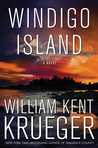
Windigo Island by William Kent Krueger

Windigo Island (Cork O'Connor, #14) When I first read William Kent Krueger’s Cork O’Connor series, Iron Lake, I was struck by the coldness between whites and Indian populations in Minnesota and admit to finding it off-putting. Krueger’s latest novel is fourteenth in the Cork O’Connor series, and the coldness between the races is still there, but I have a completely different perception of it. Now I feel so grateful to Krueger for pointing out such a failing in our management of race relations that the treatment of Indians on reservations and off is still a hideous blemish we have to confront every day in parts of our country. Indian attitudes should be cold. It would be a miracle if they weren’t.

Krueger gives us a window into a world many of us will never experience firsthand, shares words, customs, traditions, and details of Indian life that can be mined for the underpinning of Indian heritage and culture. But he also shares his clear-eyed view of what our country looks like—both physically and psychically—from the waterfront in Duluth and waves breaking on the shores of Lake Superior’s rock-strewn islands to the inside of a home for runaways and a dinner table laid for guests in an Indian home.

In this installment, Krueger brings us to North Dakota where some Indians are working to preserve a landscape that is threatened by oil companies dedicated to oil retrieval in the Bakken Formation through the process of fracking. As it turns out, the worthless land the government gave to the Indians way back when happens to be right on top of the Bakken formation which has emerged as one of the most important oil formations in the United States. This must be God’s little joke on the white folk, though I’ll bet the reservation Indians see precious little that will benefit them and a whole lot more that won’t.

Besides this important piece of information, Krueger also shares the history of child prostitution on the Great Lakes near and around Duluth, or what is sometimes called the human trafficking of young girls, many from differing Indian tribes and reservations that were all shoved together at some point, and which now experience gang or tribe-on-tribe violence similar to an inner city history of interracial gang warfare.

Krueger peoples this modern history with realistic characters including the loving and generous children of lawman-turned-private investigator Cork O’Connor. Though O’Connor himself has a tendency towards hard justice, his children exhibit the gentling influence of their tribal blood and the Indian tradition exemplified by the close family friend “Uncle” Henry Meloux.
"In every human being, there are two wolves constantly fighting. One is fear, and the other is love. The one which will win is the one you feed."

Uncle Henry is closing on 100 years old, though no one knows for sure. He is of the Anishinaabeg Tribe, or what is sometimes called the Iron Lake Ojibwe. He lives alone in a cabin in the woods by a lake and is considered by his tribe members and many others to be an elder of enormous moral understanding and weight. His thinking is elliptical and his pronouncements often indirect, carrying a hard-won wisdom that puts one in mind of great Buddhist leaders, signaling an inclusiveness in the circle of life that is not typical of "the white man."

Krueger introduces a rich cast of characters that seem to have their basis in real life. Sometimes Cork’s twenty-something daughter Jenny seemed not to grasp the menace of the situation in which her crew found themselves while journeying to find men responsible for holding captive some young girls, but she was wily and careful and was forced into action by the end. I tend toward Cork’s end of the spectrum of justice dispensation, but we always need someone questioning those choices.

Krueger’s series gives us a very interesting look at the modern Midwest, in all its glorious dishabille.


You can buy this book here: Shop Indie Bookstores

Wednesday, October 1, 2014

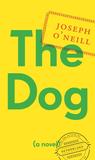
The Dog by Joseph O'Neill

The Dog We never learn the real name of the narrator in Joseph O’Neill’s new novel, but we do learn that his professional name begins with the letter X. He won’t reveal his given name under pain of humiliation. X. thinks of himself, with a little help from his former lover, as “the dog,” as in “it appears I’m in the doghouse.” He thinks fairly rationally (probably due to his legal training) but with long trailing parenthetical asides, sometimes requiring up to five (or six!) parentheses together to finally close the ellipses of his ruminations and bring him back to the point.

And the point is…our man, just an ordinary man by the sounds of him, has got himself out on a very thin limb and…he really has no friends. Or rather, he does have friends, but only the kind that helpfully change the subject when it looks as though someone might actually say something revealing or personal. You know—the kind of friends that might offer you a job but might not be the kind you actually want to work for. Which he did. Take the job. In Dubai.

That is to say, he quit the job he had in the law firm he shared with his nine-year not-quite-wife, abandoned his rent-controlled one-bedroom in Gramercy Park, initially escaping to a luxury rental in New Jersey near the Lincoln Tunnel, and then he moved to Dubai. As X. himself writes,
“a person usually needs a special incentive to be here—or, perhaps more accurately, not to be elsewhere—and surely this is all the more true for the American who, rather than trying his luck in California or Texas or New York, chooses to come to this strange desert metropolis. Either way, fortune will play its expected role. I suppose I say all this from experience….One way to sum up the stupidity of this phase of my life, a phase I’m afraid is ongoing, would be to call it the phase of insights.”

There is something vaguely embarrassing yet deliciously sexy to witness this man’s emotional strip-tease. He is not a hard-edged corporate lawyer, the “I can handle anything” type of man, but one who is perplexed and bewildered to find himself living a life he doesn’t actually like nor want. He is clearly still a little in love with his longtime former lover, Jenn, and recognizes that he bears some blame for being emotionally blank and linguistically blocked when it came to expressing 1) his lack of interest in moving away from his rent-controlled one-bedroom to a larger apartment and 2) his lack of interest in starting a family at 36 years old.

Once he begins to see that, in fact, he is not enjoying himself at all despite living in an expensive apartment in an expensive city and outwardly living the life of Riley, lets down his normal reserve, and starts telling us about it…well…it is frankly hysterically funny. Because, yes, if one looks at it from a purely voyeuristic point of view, he simply has nothing at all despite the aforementioned apartment in the gleaming city by the sea…and the desert. (”It’s almost nauseating to see the sand wherever the efforts to cover it has not yet succeeded.”) When he begins to think aloud how liberating it is that he could actually hang himself at any time because he has no kids nor spouse to worry about in terms of timing, we can’t help but chuckle. Not a good reaction to have, but this guy is already eviscerated. We’d just witness the burial.

X.’s apartment in Dubai looks out on a city constantly under construction. The buildings are tall and spectacular, and one construction site catches X.’s imagination. He calls it Project X. After one day sending his “man”, Ali, out to find out what it will be, Ali comes back with the news that the building is a mock-up, a “scale representation” of another building. “Project X isn’t a project at all. It’s a dummy run…The action has moved somewhere else.” Sadly, our minds flit to X. himself, imagining his now-empty 36 years as a mock-up for a life of promise and fulfillment and honor. Later, when he faces legal action himself, his shocked outburst, “this is my good name we’re talking about!” prompts his employer to respond, “Your name? What name?”

If one ever wondered what, exactly, it would be like to live in Dubai, here you will have one answer. X. calmly and pointedly gives us Dubai’s “crimes of nature against man” and the “Dubaian counterattack on the natural,” as well as his increasingly distressed and alienated view of the expat scene. But when he returns to New York on a business trip and expresses horror at the lumpy streets and soot-blackened store fronts, with some regret we note his former home is home no more. Alas.

Modern man, as we wish we never saw him. O’Neill, our Scheherazade, unravelling his gossamer veils one by one. I wish it didn’t end.

The Random House Audio production of this book is beautifully, dolefully, read by Erik Davies. I found myself wanting to quote long sections of this novel for this review...but there was too much. Gorgeous language, and clear. Hideously clear.

You can buy this book here: Shop Indie Bookstores